
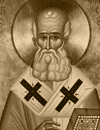
Select Works And Letters Or Athanasius
Collected writings and letters of the early church father Athanasius, Bishop of Alexandria, providing important theological and historical documentation from the patristic period and his defense of Nicene orthodoxy against Arianism.
421 Chapters
Table of Contents
1
Editorial Preface.
2
Select Writings and Letters
3
Preface.
4
1. Editions, &c. (A) Before 1601 only Latin translations. The first,
5
Section 2. Translations. The principal Latin versions have been referred to in §1. Of those in foreign languages it is not easy to procure adequate information. Fialon
6
Section 4. History of the Period
7
Section 5. History of Doctrine. For ancient sources see articles Heresiology and Person of Christ in D.C.B.
8
Chapter II.
9
Section 1. Early years, 298-319.
10
Section 2. The Arian Controversy before Nicæa, 319-325.
11
Section 3 (1) The Council of Nicæa.
12
Section 3 (2). The situation after the Council of Nicæa.
13
Section 4. Early years of his Episcopate. The Anti-Nicene reaction, 328-335.
14
Section 5. The Council of Tyre and First Exile of Athanasius, 335-337.
15
Section 6. Renewal of Troubles. Second Exile. Pistus and Gregory, Culmination of Eusebian Intrigue. Rome and Sardica. (337-346).
16
Section 7. The Golden Decade, 346-356.
17
Section 8. The Third Exile, 356-362.
18
Section 9. Athanasius under Julian and his successors; Fourth and Fifth Exiles. Feb. 21, 362, to Feb. 1, 366.
19
Section 10. Last Years, Feb. 1, 366-May 2, 373.
20
Section 1. It will be attempted to give a complete list of his writings in
21
Section 2. Athanasius as an Author. Style and Characteristics.
22
Section 3. Personal characteristics (see Stanley's Eastern Church, Lect. vii.).
23
Section 1. General Considerations.
24
Section 2. Fundamental ideas of man and his redemption.
25
Section 3. Fundamental Ideas of God, the World, and Creation.
26
Section 4. Vehicles of Revelation; Scripture, the Church, Tradition.
27
Section 5. Content of Revelation. God Three in One and the Incarnation.
28
Section 6. Derivative Doctrines. Grace and the Means of Grace; The Christian Life; The Last Things.
29
Chapter V.
30
Section 1. Sources.
31
Section 2. Principles and Method.
32
Section 3. Applications.
33
I. General Chronological Table of the Life of S. Athanasius.
34
II. Synoptical Table of the Bishops of the Chief Sees.
35
Appendix.
36
Introduction to the Treatise
37
Section 1. Introduction:--The purpose of the book a vindication of Christian
38
Section 2. Evil no part of the essential nature of things. The original creation and constitution of man in grace and in the knowledge of God.
39
Section 3. The decline of man from the above condition, owing to his absorption in material things.
40
Section 4. The gradual abasement of the Soul from Truth to Falsehood by the abuse of her freedom of Choice.
41
Section 5. Evil, then consists essentially in the choice of what is lower in preference to what is higher.
42
Section 6. False views of the nature of evil: viz., that evil is something in the nature of things, and has substantive existence. (a) Heathen thinkers: (evil resides in matter). Their refutation. (b) Heretical teachers: (Dualism). Refutation from Scriptu
43
Section 7. Refutation of dualism from reason. Impossibility of two Gods. The truth as to evil is that which the Church teaches: that it originates, and resides, in the perverted choice of the darkened soul.
44
Section 8. The origin of idolatry is similar. The soul, materialised by forgetting God, and engrossed in earthly things, makes them into gods. The race of men descends into a hopeless depth of delusion and superstition.
45
Section 9. The various developments of idolatry: worship of the heavenly bodies, the elements, natural objects, fabulous creatures, personified lusts, men living and dead. The case of Antinous, and of the deified Emperors.
46
Section 10. Similar human origin of the Greek gods, by decree of Theseus. The process by which mortals became deified.
47
Section 11. The deeds of heathen deities, and particularly of Zeus.
48
Section 12. Other shameful actions ascribed to heathen deities. All prove that they are but men of former times, and not even good men.
49
Section 13. The folly of image worship and its dishonour to art.
50
Section 14. Image worship condemned by Scripture.
51
Section 15. The details about the gods conveyed in the representations of them by poets and artists shew that they are without life, and that they are not gods, nor even decent men and women.
52
Section 16. Heathen arguments in palliation of the above: and (1) the poets are responsible for these unedifying tales.' But are the names and existence of the gods any better authenticated? Both stand or fall together. Either the actions must be defended
53
Section 17. The truth probably is, that the scandalous tales are true, while the divine attributes ascribed to them are due to the flattery of the poets.
54
Section 18. Heathen defence continued. (2) The gods are worshipped for having invented the Arts of Life.' But this is a human and natural, not a divine, achievement. And why, on this principle, are not all inventors deified?
55
Section 19. The inconsistency of image worship. Arguments in palliation. (1) The divine nature must be expressed in a visible sign. (2) The image a means of supernatural communications to men through angels.
56
Section 20. But where does this supposed virtue of the image reside? in the material, or in the form, or in the maker's skill? Untenability of all these views.
57
Section 21. The idea of communications through angels involves yet wilder inconsistency, nor does it, even if true, justify the worship of the image.
58
Section 22. The image cannot represent the true form of God, else God would be corruptible.
59
Section 23. The variety of idolatrous cults proves that they are false.
60
Section 24. The so-called gods of one place are used as victims in another.
61
Section 25. Human sacrifice. Its absurdity. Its prevalence. Its calamitous results.
62
Section 26. The moral corruptions of Paganism all admittedly originated with the gods.
63
Section 27. The refutation of popular Paganism being taken as conclusive, we come to the higher form of nature-worship. How Nature witnesses to God by the mutual dependence of all her parts, which forbid us to think of any one of them as the supreme God.
64
Section 28. But neither can the cosmic organism be God. For that would make God consist of dissimilar parts, and subject Him to possible dissolution.
65
Section 29. The balance of powers in Nature shews that it is not God, either collectively, or in parts.
66
Part II.
67
Section 31. Proof of the existence of the rational soul. (1) Difference of man from the brutes. (2) Man's power of objective thought. Thought is to sense as the musician to his instrument. The phenomena of dreams bear this out.
68
Section 32. (3) The body cannot originate such phenomena; and in fact the action of the rational soul is seen in its over-ruling the instincts of the bodily organs.
69
Section 33. The soul immortal. Proved by (1) its being distinct from the body, (2) its being the source of motion, (3) its power to go beyond the body in imagination and thought.
70
Section 34. The soul, then, if only it get rid of the stains of sin is able to know God directly, its own rational nature imaging back the Word of God, after whose image it was created. But even if it cannot pierce the cloud which sin draws over its visio
71
Part III.
72
Section 36. This the more striking, if we consider the opposing forces out of which this order is produced.
73
Section 37. The same subject continued.
74
Section 38. The Unity of God shewn by the Harmony of the order of Nature.
75
Section 39. Impossibility of a plurality of Gods.
76
Section 40. The rationality and order of the Universe proves that it is the work of the Reason or Word of God.
77
Section 41. The Presence of the Word in nature necessary, not only for its original Creation, but also for its permanence.
78
Section 42. This function of the Word described at length.
79
Section 43. Three similes to illustrate the Word's relation to the Universe.
80
Section 44. The similes applied to the whole Universe, seen and unseen.
81
Section 45. Conclusion. Doctrine of Scripture on the subject of Part I.
82
Section 46. Doctrine of Scripture on the subject of Part 3.
83
Section 47. Necessity of a return to the Word if our corrupt nature is to be restored.
84
Introduction to the Treatise on the Incarnation of the Word.
85
Section 1. Introductory.--The subject of this treatise: the humiliation and
86
Section 2. Erroneous views of Creation rejected. (1) Epicurean (fortuitous generation). But diversity of bodies and parts argues a creating intellect. (2.) Platonists (pre-existent matter.) But this subjects God to human limitations, making Him not a crea
87
Section 3. The true doctrine. Creation out of nothing, of God's lavish bounty of being. Man created above the rest, but incapable of independent perseverance. Hence the exceptional and supra-natural gift of being in God's Image, with the promise of bliss
88
Section 4. Our creation and God's Incarnation most intimately connected. As by the Word man was called from non-existence into being, and further received the grace of a divine life, so by the one fault which forfeited that life they again incurred corrup
89
Section 5. For God has not only made us out of nothing; but He gave us freely
90
Section 6. The human race then was wasting
91
Section 7. On the other hand there was the consistency of God's nature
92
Section 8. The Word, then, visited that earth in which He was yet always present ; and saw all these evils. He takes a body of our Nature, and that of a spotless Virgin, in whose womb He makes it His own, wherein to reveal Himself, conquer death, and rest
93
Section 9. The Word, since death alone could stay the plague, took a mortal body which, united with Him, should avail for all, and by partaking of His immortality stay the corruption of the Race. By being above all, He made His Flesh an offering for our s
94
Section 10. By a like simile, the reasonableness of the work of redemption is shewn. How Christ wiped away our ruin, and provided its antidote by His own teaching. Scripture proofs of the Incarnation of the Word, and of the Sacrifice He wrought.
95
Section 11. Second reason for the Incarnation. God
96
Section 12. For though man was created in grace, God, foreseeing his forgetfulness, provided also the works of creation to remind man of him. Yet further, He ordained a Law and Prophets, whose ministry was meant for all the world. Yet men heeded only thei
97
Section 13. Here again
98
Section 14. A portrait once effaced must be restored from the original. Thus the Son of the Father came to seek
99
Section 15. Thus the Word condescended to man's engrossment in corporeal things, by even taking a body. All man's superstitions He met halfway; whether men were inclined to worship Nature, Man, Demons, or the dead, He shewed Himself Lord of all these.
100
Section 16. He came then to attract man's sense-bound attention to Himself as man, and so to lead him on to know Him as God.
101
Section 17. How the Incarnation did not limit the ubiquity of the Word, nor diminish His Purity. (Simile of the Sun.)
102
Section 18. How the Word and Power of God works in His human actions: by casting out devils, by Miracles, by His Birth of the Virgin.
103
Section 19. Man, unmoved by nature, was to be taught to know God by that sacred Manhood, Whose deity all nature confessed, especially in His Death.
104
Section 20. None
105
Section 21. Death brought to nought by the death of Christ. Why then did not Christ die privately, or in a more honourable way? He was not subject to natural death, but had to die at the hands of others. Why then did He die? Nay but for that purpose He ca
106
Section 22. But why did He not withdraw His body from the Jews
107
Section 23. Necessity of a public death for the doctrine of the Resurrection.
108
Section 24. Further objections anticipated. He did not choose His manner of death; for He was to prove Conqueror of death in all or any of its forms: (simile of a good wrestler). The death chosen to disgrace Him proved the Trophy against death: moreover i
109
Section 25. Why the Cross, of all deaths? (1) He had to bear the curse for us. (2) On it He held out His hands to unite all, Jews and Gentiles, in Himself. (3) He defeated the |Prince of the powers of the air| in His own region, clearing the way to heaven
110
Section 26. Reasons for His rising on the Third Day. (1) Not sooner for else His real death would be denied, nor (2) later; to (a) guard the identity of His body, (b) not to keep His disciples too long in suspense, nor (c) to wait till the witnesses of Hi
111
Section 27. The change wrought by the Cross in the relation of Death to Man.
112
Section 28. This exceptional fact must be tested by experience. Let those who doubt it become Christians.
113
Section 29. Here then are wonderful effects, and a sufficient cause, the Cross, to account for them, as sunrise accounts for daylight.
114
Section 30. The reality of the resurrection proved by facts: (1) the victory over death described above: (2) the Wonders of Grace are the work of One Living, of One who is God: (3) if the gods be (as alleged) real and living, a fortiori He Who shatters th
115
Section 31. If Power is the sign of life, what do we learn from the impotence of idols, for good or evil, and the constraining power of Christ and of the Sign of the Cross? Death and the demons are by this proved to have lost their sovereignty. Coincidenc
116
Section 32. But who is to see Him risen, so as to believe? Nay, God is ever invisible and known by His works only: and here the works cry out in proof. If you do not believe, look at those who do, and perceive the Godhead of Christ. The demons see this, t
117
Section 33. Unbelief of Jews and scoffing of Greeks. The former confounded by their own Scriptures. Prophecies of His coming as God and as Man.
118
Section 34. Prophecies of His passion and death in all its circumstances.
119
Section 35. Prophecies of the Cross. How these prophecies are satisfied in Christ alone.
120
Section 36. Prophecies of Christ's sovereignty, flight into Egypt, &c.
121
Section 37. Psalm xxii. 16, &c. Majesty of His birth and death. Confusion of oracles and demons in Egypt.
122
Section 38. Other clear prophecies of the coming of God in the flesh. Christ's miracles unprecedented.
123
Section 39. Do you look for another? But Daniel foretells the exact time. Objections to this removed.
124
Section 40. Argument (1) from the withdrawal of prophecy and destruction of Jerusalem, (2) from the conversion of the Gentiles, and that to the God of Moses. What more remains for the Messiah to do, that Christ has not done?
125
Section 41. Answer to the Greeks. Do they recognise the Logos? If He manifests Himself in the organism of the Universe, why not in one Body? for a human body is a part of the same whole.
126
Section 42. His union with the body is based upon His relation to Creation as a whole. He used a human body, since to man it was that He wished to reveal Himself.
127
Section 43. He came in human rather than in any nobler form, because (I) He came to save, not to impress ; (2) man alone of creatures had sinned. As men would not recognise His works in the Universe, He came and worked among them as Man; in the sphere to
128
Section 44. As God made man by a word
129
Section 45. Thus once again every part of creation manifests the glory of God. Nature, the witness to her Creator, yields (by miracles) a second testimony to God Incarnate. The witness of Nature, perverted by man's sin, was thus forced back to truth. If t
130
Section 46. Discredit, from the date of the Incarnation, of idol-cultus, oracles, mythologies, demoniacal energy, magic, and Gentile philosophy. And whereas the old cults were strictly local and independent, the worship of Christ is catholic and uniform.
131
Section 47. The numerous oracles
132
Section 48. Further facts. Christian continence of virgins and ascetics. Martyrs. The power of the Cross against demons and magic. Christ by His Power shews Himself more than a man, more than a magician, more than a spirit. For all these are totally subje
133
Section 49. His Birth and Miracles. You call Asclepius, Heracles, and Dionysus gods for their works. Contrast their works with His, and the wonders at His death, &c.
134
Section 50. Impotence and rivalries of the Sophists put to shame by the Death of Christ. His Resurrection unparalleled even in Greek legend.
135
Section 51. The new virtue of continence. Revolution of Society, purified and pacified by Christianity.
136
Section 52. Wars, &c., roused by demons, lulled by Christianity.
137
Section 53. The whole fabric of Gentilism levelled at a blow by Christ secretly addressing the conscience of Man.
138
Section 54. The Word Incarnate, as is the case with the Invisible God, is known to us by His works. By them we recognise His deifying mission. Let us be content to enumerate a few of them, leaving their dazzling plentitude to him who will behold.
139
Section 55. Summary of foregoing. Cessation of pagan oracles, &c.: propagation of the faith. The true King has come forth and silenced all usurpers.
140
Section 56. Search then, the Scriptures, if you can, and so fill up this sketch. Learn to look for the Second Advent and Judgment.
141
Section 57. Above all, so live that you may have the right to eat of this tree of knowledge and life, and so come to eternal joys. Doxology.
142
Depositio Arii.
143
Deposition of Arius.
144
Epistola Eusebii.
145
Council of Nicæa.
146
Excursus A.
147
Introduction to Expositio Fidei.
148
Statement of Faith.
149
Introduction to In Illud Omnia,' Etc.
150
Section 1. This text refers not to the eternal Word but to the Incarnate.
151
Section 2. Sense in which, and end for which all things were delivered to the Incarnate Son.
152
Section 3. By all things' is meant the redemptive attributes and power of Christ.
153
Section 4. The text John xvi. 15, shews clearly the essential relation of the Son to the Father.
154
Section 5. The same text further explained.
155
Section 6. The Trisagion wrongly explained by Arians. Its true significance.
156
Introduction to the Encyclical Epistle to the Bishops Throughout the World.
157
Circular Letter.
158
Section 1. The whole Church affected by what has occurred.
159
Section 2. Violent and Uncanonical Intrusion of Gregory.
160
Section 3. Outrages which took place at the time of Gregory's arrival.
161
Section 4. Outrages on Good Friday and Easter Day, 339.
162
Section 5. Retirement of Athanasius, and tyranny of Gregory and Philagrius.
163
Section 6. All the above illegalities were carried on in the interest of Arianism.
164
Section 7. Appeal to the bishops of the whole Church to unite against Gregory.
165
Introduction to Apologia Contra Arianos.
166
Defence Against the Arians.
167
Chapter II.--Letter of Julius to the Eusebians at Antioch.
168
Chapter III.--Letters of the Council of Sardica to the Churches of Egypt and of Alexandria, and to all Churches.
169
Chapter IV.--Imperial and Ecclesiastical Acts in Consequence of the Decision of the Council of Sardica.
170
Part II.
171
Chapter VI.--Documents connected with the Council of Tyre.
172
Additional Note on Apol. C. Arianos, §50.
173
Introduction to de Decretis or Defence of the Nicene Definition.
174
De Decretis or Defence of the Nicene Definition
175
Chapter II.--Conduct of the Arians towards the Nicene Council. Ignorant as well as irreligious to attempt to reverse an Ecumenical Council: proceedings at Nicæa: Eusebians then signed what they now complain of: on the unanimity of true teachers and
176
Chapter III.--Two senses of the word Son, 1. adoptive; 2. essential; attempts of Arians to find a third meaning between these; e.g. that our Lord only was created immediately by God (Asterius's view), or that our Lord alone partakes the Father. The second
177
Chapter IV.--Proof of the Catholic Sense of the Word Son. Power, Word or Reason, and Wisdom, the names of the Son, imply eternity; as well as the Father's title of Fountain. The Arians reply, that these do not formally belong to the essence of the Son, bu
178
Chapter V.--Defence of the Council's Phrases, |from the essence,| And |one in essence.| Objection that the phrases are not scriptural; we ought to look at the sense more than the wording; evasion of the Arians as to the phrase |of God| which is in Scriptu
179
Chapter VI.--Authorities in Support of the Council. Theognostus; Dionysius of Alexandria; Dionysius of Rome; Origen.
180
Chapter VII.--On the Arian Symbol |Unoriginate.| This term afterwards adopted by them; and why; three senses of it. A fourth sense. Unoriginate denotes God in contrast to His creatures, not to His Son; Father the scriptural title instead; Conclusion.
181
Introduction to the de Sententia Dionysii.
182
On the Opinion of Dionysius.
183
Introduction to Vita S. Antoni.
184
Life of Antony.
185
Life of Antony.
186
Life of Antony. Section 1. Antony you must know was by descent an Egyptian
187
Life of Antony. Section 3. And again as he went into the church
188
Life of Antony. Section 5. But the devil, who hates and envies what is good
189
Life of Antony. Section 7. This was Antony's first struggle against the devil
190
Life of Antony. Section 8. Thus tightening his hold upon himself, Antony departed to the tombs
191
Life of Antony. Section 11. And on the day following he went forth still more eagerly bent on the
192
Life of Antony. Section 14. And so for nearly twenty years he continued training himself in solitude
193
Life of Antony. Section 16. One day when he had gone forth because all the monks had assembled to
194
Life of Antony. Section 17. Wherefore, children, let us not faint nor deem that the time is long
195
Life of Antony. Section 18. And so from such things let a man persuade himself not to make light
196
Life of Antony. Section 19. Wherefore, children, let us hold fast our discipline
197
Life of Antony. Section 20. Wherefore having already begun and set out in the way of virtue
198
Life of Antony. Section 21. And let us strive that wrath rule us not nor lust overcome us
199
Life of Antony. Section 22. First, therefore, we must know this: that the demons have not been created like
200
Life of Antony. Section 23. The demons, therefore, if they see all Christians
201
Life of Antony. Section 24. And he said they often appeared as the Lord revealed the devil to Job
202
Life of Antony. Section 25. Again they are treacherous, and are ready to change themselves into all forms and
203
Life of Antony. Section 26. Wherefore the prophet sent by the Lord declared them to be wretched
204
Life of Antony. Section 27. The Lord therefore, as God, stayed the mouths of the demons
205
Life of Antony. Section 28. Already in passing I have spoken on these things
206
Life of Antony. Section 29. But if any one having in mind the history of Job should say
207
Life of Antony. Section 30. So then we ought to fear God only
208
Life of Antony. Section 31. Wherefore if they pretend to foretell the future
209
Life of Antony. Section 32. So, too, with respect to the water of the river
210
Life of Antony. Section 33. Thus in days gone by arose the oracles of the Greeks
211
Life of Antony. Section 34. Wherefore there is no need to set much value on these things
212
Life of Antony. Section 35. When, therefore, they come by night to you and wish to tell the future
213
Life of Antony. Section 36. But the inroad and the display of the evil spirits is fraught with confusion
214
Life of Antony. Section 37. And let this also be a token for you
215
Life of Antony. Section 38. And it is not fitting to boast at the casting forth of the demons
216
Life of Antony. Section 39. I should have liked to speak no further and to say nothing from my
217
Life of Antony. Section 40. Once a demon exceeding high appeared with pomp
218
Life of Antony. Section 41. And since I have become a fool in detailing these things
219
Life of Antony. Section 42. If, therefore, the devil himself confesses that his power is gone
220
Life of Antony. Section 43. And for your fearlessness against them hold this sure sign -- whenever there is
221
Life of Antony. Section 44. While Antony was thus speaking all rejoiced; in some the love of virtue increased
222
Life of Antony. Section 45. Antony, however, according to his custom, returned alone to his own cell
223
Life of Antony. Section 51. So he was alone in the inner mountain
224
Life of Antony. Section 54. And once being asked by the monks to come down and visit them and
225
Life of Antony. Section 57. Wherefore a man, Fronto by name, who was an officer of the Court and
226
Life of Antony. Section 61. And Archelaus too, the Count, on a time having found him in the outer
227
Life of Antony. Section 63. Afterwards, on another occasion, having descended to the outer cells
228
Life of Antony. Section 65. And many monks have related with the greatest agreement and unanimity that many other
229
Life of Antony. Section 66. And he had also this favour granted him.
230
Life of Antony. Section 68. And he was altogether wonderful in faith and religious
231
Life of Antony. Section 70. All the people, therefore, rejoiced when they heard the anti-Christian heresy anathematised by such
232
Life of Antony. Section 72. And Antony also was exceeding prudent, and the wonder was that although he had
233
Life of Antony. Section 80. And these signs are sufficient to prove that the faith of Christ alone is
234
Life of Antony. Section 81. And the fame of Antony came even unto kings.
235
Life of Antony. Section 83. Such are the words of Antony, and we ought not to doubt whether such
236
Life of Antony. Section 85. At another time, suffering the same compulsion at the hands of them who had
237
Life of Antony. Section 87. Thus, therefore, he warned the cruel. But the rest who came to him he
238
Life of Antony. Section 91. But he, knowing the custom, and fearing that his body would be treated this
239
Life of Antony. Section 92. Having said this, when they had kissed him
240
Chapter I.
241
2. Arian statements.
242
Introduction to Apologia Ad Constantium.
243
Defence Before Constantius.
244
2. The first charge, of setting Constans against Constantius.
245
3. He never saw Constans alone.
246
4. The movements of Athanasius refute this charge.
247
5. No possible time or place for the alleged offence.
248
6. The second charge, of corresponding with Magnentius.
249
7. This charge utterly incredible and absurd.
250
8. Disproof of It.
251
9. Athanasius could not write to one who did not even know him.
252
10. His loyalty towards Constantius and his brother.
253
11. Challenge to the accusers as to the alleged letter.
254
12. Truth the defence of Thrones.
255
13. This charge rests on forgery.
256
14. The third charge, of using an undedicated Church.
257
15. Want of room the cause, precedent the justification.
258
16. Better to pray together than separately.
259
17. Better to pray in a building than in the desert.
260
18. Prayers first do not interfere with dedication afterwards.
261
19. Fourth charge, of having disobeyed an Imperial order.
262
20. History of his disobeying it.
263
21. Forasmuch then as the letter owed its origin to a false story, and contained no order that I should come to you, I concluded that it was not the wish of your Piety that I should come. For in that you gave me no absolute command, but merely wrote as in
264
23. A copy of the letter as follows:
265
24. Why Athanasius did not obey the Imperial Order.
266
25. The irruption of Syrianus.
267
26. How Athanasius acted when this took place.
268
27. Athanasius leaves Alexandria to go to Constantius, but is stopped by the news of the banishment of the Bishops.
269
28. The news of the intrusion of George.
270
29. Athanasius has heard of his own proscription.
271
30. A copy of the letter of Constantius against Athanasius.
272
31. Letter of Constantius to the Ethiopians against Frumentius.
273
32. He defends his Flight.
274
33. Conduct of the Arians towards the consecrated Virgins.
275
34. He expostulates with Constantius.
276
35. It was therefore better for me to hide myself, and to wait for this opportunity. Yes, I am sure that from your knowledge of the sacred Scriptures you will assent and approve of my conduct in this respect. For you will perceive that, now those who exas
277
Introduction to Apologia de Fuga.
278
Defence of His Flight. 1. Athanasius charged with cowardice for escaping.
279
2. Insincerity of this charge.
280
3. Outrages of the Arians against the Bishops.
281
4. Proceedings after the Council of Milan.
282
5. In praise of Hosius.
283
6. Outrages of George upon the Alexandrians.
284
7. Outrages of George.
285
8. If it is wrong to flee, it is worse to persecute.
286
9. The accusation shews the mind of the accusers.
287
10. Their real grievance is not that Athanasius is a coward, but that he is free.
288
11. Examples of Scripture Saints in defence of flight.
289
12. The Lord an example of timely flight.
290
13. Example of Our Lord.
291
14. An hour and a time for all men.
292
15. The Lord's hour and time.
293
6. The Lord's example followed by the Saints.
294
17. A time to flee and a time to stay.
295
18. The Saints who fled were no cowards.
296
19. The Saints courageous in their flight, and divinely favoured.
297
20. Same Subject Continued.
298
21. The Saints fled for our sakes.
299
22. Same subject concluded.
300
23. Persecution is from the Devil.
301
24. Irruption of Syrianus.
302
25. Athanasius's wonderful escape.
303
26. He acted according to the example of the Saints. Character of his accusers.
304
27. Conclusion.
305
Introduction to Historia Arianorum.
306
History of the Arians.
307
Part II.
308
Part III.
309
Part IV.
310
Part V.
311
Part VI.
312
Part VII.
313
Part VIII.
314
Introduction to Four Discourses Against the Arians.
315
Four Discourses Against the Arians.
316
Chapter II.--Extracts from the Thalia of Arius. Arius maintains that God became a Father, and the Son was not always; the Son out of nothing; once He was not; He was not before his generation; He was created; named Wisdom and Word after God's attributes;
317
Chapter III.--The Importance of the Subject. The Arians affect Scripture language, but their doctrine new, as well as unscriptural. Statement of the Catholic doctrine, that the Son is proper to the Father's substance, and eternal. Restatement of Arianism
318
Chapter IV.--That the Son is Eternal and Increate. These attributes, being the points in dispute, are first proved by direct texts of Scripture. Concerning the eternal power' of God in Rom. i. 20, which is shewn to mean the Son. Remarks on the Arian formu
319
Chapter V.--Subject Continued. Objection, that the Son's eternity makes Him coordinate with the Father, introduces the subject of His Divine Sonship, as a second proof of His eternity. The word Son is introduced in a secondary, but is to be understood in
320
Chapter VI.--Subject Continued. Third proof of the Son's eternity, viz. from other titles indicative of His coessentiality; as the Creator; One of the Blessed Trinity; as Wisdom; as Word; as Image. If the Son is a perfect Image of the Father, why is He no
321
Chapter VII.--Objections to the Foregoing Proof. Whether, in the generation of the Son, God made One that was already, or One that was not.
322
Chapter VIII.--Objections Continued. Whether we may decide the question by the parallel of human sons, which are born later than their parents. No, for the force of the analogy lies in the idea of connaturality. Time is not involved in the idea of Son, bu
323
Chapter IX.--Objections Continued. Whether is the Unoriginate one or two? Inconsistent in Arians to use an unscriptural word; necessary to define its meaning. Different senses of the word. If it means without Father,' there is but One Unoriginate; if with
324
Chapter X.--Objections Continued. How the Word has free will, yet without being alterable. He is unalterable because the Image of the Father, proved from texts.
325
Chapter XI.--Texts Explained; And First...
326
Chapter XII.--Texts Explained; Secondly, Psalm xlv. 7, 8. Whether the words therefore,' anointed,' &c., imply that the Word has been rewarded. Argued against first from the word fellows' or partakers.' He is anointed with the Spirit in His manhood to sanc
327
Chapter XIII.--Texts Explained; Thirdly...
328
Excursus B. On §22 (Note 3).
329
Discourse II.
330
Chapter XV.--Texts explained; Fifthly, Acts ii. 36. The Regula Fidei must be observed; madeapplies to our Lord's manhood; and to His manifestation; and to His office relative to us; and is relative to the Jews. Parallel instance in Gen. xxvii. 29, 37. The
331
Chapter XVI.--Introductory to Proverbs viii. 22, that the Son is not a Creature. Arian formula, a creature but not as one of the creatures; but each creature is unlike all other creatures; and no creature can create. The Word then differs from all creatur
332
Chapter XVII.--Introduction to Proverbs viii. 22 continued. Absurdity of supposing a Son or Word created in order to the creation of other creatures; as to the creation being unable to bear God's immediate hand...
333
Chapter XVIII.--Introduction to Proverbs viii. 22 continued. Contrast between the Father's operations immediately and naturally in the Son...
334
Chapter XIX.--Texts explained; Sixthly...
335
Chapter XX.--Texts Explained; Sixthly, Proverbs viii. 22 Continued. Our Lord is said to be created for the works,' i.e. with a particular purpose, which no mere creatures are ever said to be. Parallel of Isai. xlix. 5, &c. When His manhood is spoken of, a
336
Chapter XXI.--Texts Explained; Sixthly...
337
Chapter XXII.--Texts Explained; Sixthly, the Context of Proverbs viii. 22 Vz. 22-30 It is right to interpret this passage by the Regula Fidei. Founded' is used in contrast to superstructure; and it implies, as in the case of stones in building, previous e
338
Discourse III.
339
Chapter XXIV.--Texts Explained; Eighthly, John xvii. 3. and the Like. Our Lord's divinity cannot interfere with His Father's prerogatives, as the One God, which were so earnestly upheld by the Son. One' is used in contrast to false gods and idols, not to
340
Chapter XXV.--Texts Explained; Ninthly...
341
Chapter XXVI.--Introductory to Texts from the Gospels on the Incarnation. Enumeration of texts still to be explained. Arians compared to the Jews. We must recur to the Regula Fidei. Our Lord did not come into, but became, man, and therefore had the acts a
342
Chapter XXVII.--Texts Explained; Tenthly, Matthew xi. 27; John iii. 35, &c. These texts intended to preclude the Sabellian notion of the Son; they fall in with the Catholic doctrine concerning the Son; they are explained by so' in John v. 26. (Anticipatio
343
Chapter XXVIII.--Texts Explained; Eleventhly...
344
Chapter XXIX.--Texts Explained; Twelfthly, Matthew xxvi. 39; John xii. 27, &c. Arian inferences are against the Regula Fidei, as before. He wept and the like, as man. Other texts prove Him God. God could not fear. He feared because His flesh feared.
345
Chapter XXX.--Objections continued...
346
Excursus C.
347
Section 1. Introductory. Thesis: the co-eternal personality of the Son or Word.
348
Discourse IV.
349
Section §6, 7. When the Word and Son hungered, wept, and was wearied, He acted as our Mediator, taking on Him what was ours, that He might impart to us what was His.
350
Section 8. Arians date the Son's beginning earlier than Marcellus, &c.
351
Section §9, 10. Unless Father and Son are two in name only, or as parts and so each imperfect, or two gods, they are coessential, one in Godhead, and the Son from the Father.
352
Section §11, 12. Marcellus and his disciples, like Arians, say that the Word was, not indeed created, but issued, to create us, as if the Divine silence were a state of inaction, and when God spake by the Word, He acted; or that there was a going for
353
Section §13, 14. Such a doctrine precludes all real distinctions of personality in the Divine Nature. Illustration of the Scripture doctrine from 2 Cor. vi. 11, &c.
354
Section §15-24. Since the Word is from God
355
Section 25. Marcellian illustration from 1 Cor. xii. 4, refuted.
356
Section §26-36. That the Son is the Co-existing Word
357
Introduction to de Synodis.
358
Section 1. The reason of any new council having been called.
359
Councils of Ariminum and Seleucia.
360
Part II. History of Arian Opinions.
361
Part III. On the Symbols Of the Essence' And Coessential.'
362
Introduction to Tomus Ad Antiochenos.
363
Tome or Synodal Letter to the People of Antioch.
364
Appendix.
365
Introduction to Ad Afros Epistola Synodica.
366
To the Bishops of Africa.
367
Letters of Athanasius,
368
A.--The Historia Acephala.
369
Historia Acephala.
370
B.--The Festal Letters, and Their Index,
371
Index.
372
I. Festal Letters.
373
Letter II.--For 330. Easter-day xxiv Pharmuthi; xiii Kal. Mai; Æra Dioclet. 46; Coss. Gallicianus, Valerius Symmachus; Præfect, Magninianus; Indict. iii.
374
Letter III.--For 331. Easter-day xvi Pharmuthi; iii Id. April; Æra Dioclet. 47; Coss. Annius Bassus, Ablabius; Præfect, Florentius; Indict. iv.
375
Letter IV.--For 332. Easter-day vii Pharmuthi , iv Non. Apr.; Æra Dioclet. 48; Coss. Fabius Pacatianus, Mæcilius Hilarianus; Præfect, Hyginus ; Indict. v.
376
Letter V.--For 333. Easter-day , Coss. Dalmatius and Zenophilus; Præfect, Paternus ; vi Indict.; xvii Kal. Maii, xx Pharmuthi; xv Moon; vii Gods; Æra Dioclet. 49.
377
Letter VI.--For 334. Easter-day, xii Pharmuthi, vii Id. April; xvii Moon; Æra Dioclet. 50; Coss. Optatus Patricius, Anicius Paulinus; Præfect, Philagrius , the Cappadocian; vii Indict.
378
Letter VII.--For 335. Easter-day iv Pharmuthi, iii Kal. April; xx Moon; Ær. Dioclet. 51; Coss. Julius Constantius, the brother of Augustus, Rufinus Albinus; Præfect, the same Philagrius; viii Indict.
379
Letter X.--For 338. Coss. Ursus and Polemius; Præf. the same Theodorus, of Heliopolis, and of the Catholics . After him, for the second year, Philagrius; Indict. xi; Easter-day, vii Kal. Ap. xxx Phamenoth; Moon 18½; Æra Dioclet. 54.
380
Letter XI.--For 339. Coss. Constantius Augustus II, Constans I; Præfect, Philagrius the Cappadocian, for the second time; Indict. xii; Easter-day xvii Kal. Mai, xx Pharmuthi; Æra Dioclet. 55.
381
*XII.--(Probably for 340 a.d.) To the Beloved Brother, and our fellow Minister Serapion .
382
Letter XIII.--(For 341.) Coss. Marcellinus, Probinus; Præf. Longinus; Indict. xiv; Easter-day, xiii Kal. Maii, xxiv Pharmuthi; Æra Dioclet. 57.
383
Letter XIV.--(For 342.) Coss. Augustus Constantius III, Constans II, Præf. the same Longinus; Indict. xv; Easter-day iii Id. Apr., xvi Pharmuthi; Æra Dioclet. 58.
384
Letter XVII.--(For 345.) Coss. Amantius, Albinus; Præf. Nestorius of Gaza; Indict. iii; Easter-day, vii Id. Apr., xii Pharmuthi; Moon 19; Æra Dioclet. 61.
385
Letter XVIII.--(For 346.) Coss. Augustus Constantius IV, Constans III; Præf. the same Nestorius; Indict. iv; Easter-day iii Kal. Apr., iv Pharmuthi; Moon 21; Æra Dioclet. 62.
386
Letter XIX.--(For 347.) Coss. Rufinus, Eusebius; Præf. the same Nestorius; Indict. v; Easter-day, Prid. Id. Apr., Pharmuthi xvii; Æra Dioclet. 63; Moon 15.
387
Letter XX.--(For 348.) Coss. Philippus, Salia; Præfect the same Nestorius; Indict. vi; Easter-day iii Non. Apr., viii Pharmuthi; Æra Dioclet. 64; Moon 18.
388
From Letter XXII .--(For 350.)
389
From Letter XXIV .--(For 352.)
390
From Letter XXVII.--(For 355.) From the twenty-seventh Festal Letter of Athanasius, Bishop of Alexandria and Confessor; of which the commencement is, Again the season of the day of the living Passover .'
391
From Letter XXVIII .--(For 356.)
392
Another Fragment.
393
From Letter XXIX .--(For 357.) From the twenty-ninth Letter, of which the beginning is, Sufficient for this present time is that which we have already written.'
394
Another Fragment .
395
Another Fragment .
396
From Letter XXXIX.--(For 367.) Of the particular books and their number, which are accepted by the Church. From the thirty-ninth Letter of Holy Athanasius, Bishop of Alexandria, on the Paschal festival; wherein he defines canonically what are the divine b
397
From Letter XL .--(For 368.)
398
From Letter XLII.--(For 370.)
399
From Letter XLIII.--(For 371.)
400
From Letter XLIV.--(For 372.) And again, from the forty-fourth Letter, of which the commencement is, All that our Lord and Saviour Jesus Christ did instead of us and for us .'
401
From Letter XLV.--(For 373.)
402
II. Personal Letters.
403
Letter XLVII.--To the Church of Alexandria on the same occasion.
404
Letter XLVIII.--Letter to Amun . Written before 354 a.d.
405
Letter XLIX.--Letter to Dracontius . Written a.d. 354 or 355.
406
Letter L.--First Letter to Lucifer .
407
Letter LI.--Second Letter to Lucifer.
408
Letter LII.--First Letter to Monks . (Written 358-360).
409
Letter LIII.--Second Letter to Monks.
410
Letter LIV.--To Serapion, concerning the death of Arius.
411
Letter LV.--Letter to Rufinianus.
412
Letter LVI.--To the Emperor Jovian.
413
Letter LVII.--First Letter to Orsisius .
414
Letter LVIII.--Second Letter to Orsisius.
415
Letter LIX.--To Epictetus.
416
Letter LX.--To Adelphius , Bishop and Confessor: against the Arians.
417
Letter LXI.--Letter to Maximus. (Written about 371 a.d.)
418
Letter LXII.--To John and Antiochus.
419
Letter LXIII.--Letter to the Presbyter Palladius .
420
Letter LXIV.--To Diodorus (fragment).
421
Memorandum.--On other Letters ascribed to Athanasius.