
Tides and Waves
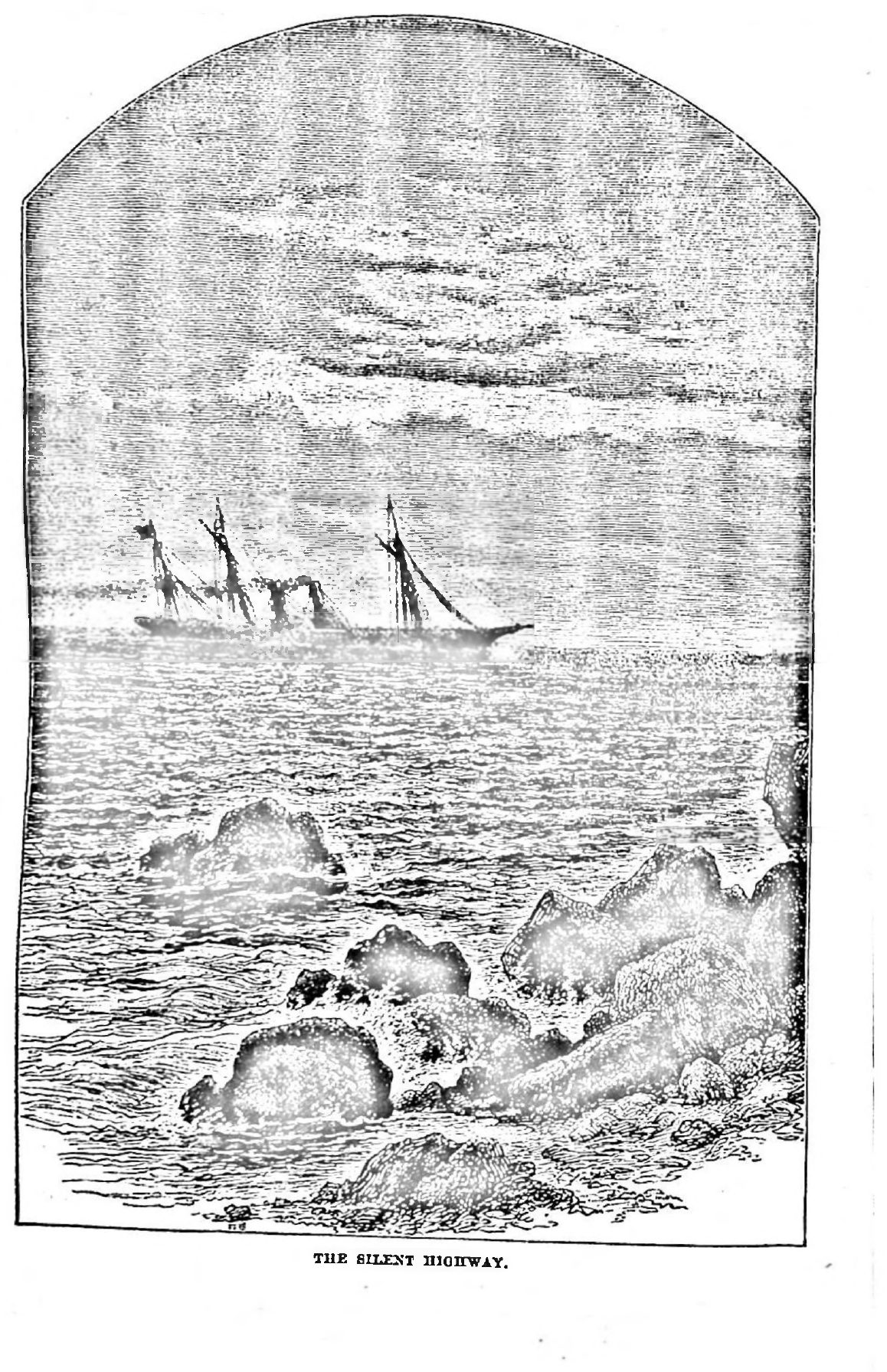
THE volume from which our engraving is borrowed is the twelfth of that elegant drawing-room series, which having been projected by the late lamented Dr. Manning, have been issued year after year by the Religious Tract Society. The present subject is as happily chosen as it is ably treated; and such a book will be sure to find acceptance during the present season, because there are many who, while intensely interested in the ocean, prefer the study of its ever-varying phenomena at the safe distance of the fireside to actual experience on the waves themselves. To such, Dr. Macaulay will prove a competent entertainer; and what that veteran has prepared will have its absorbing interest enhanced by the magnificent gallery of engravings by which it is accompanied. The various sections of the work include the Sea in Poetry; its Physical Geography; its Harvest; and its History.
Speaking of waves, tides, and currents, Dr. Macaulay says:—
"After the storm, calm is pleasant; and there are few who do not prefer smooth to rough waters. Yet a sea ever waveless, tideless, and motionless, would be not only doleful but dangerous. Just as the atmosphere if always at rest would become charged with disease and death, so the ocean would lose its salubrity, if never disturbed by the winds and the waves. The storm and the tempest may bring danger and disaster; but greater would be the destruction and death if either the air or the sea were never cleared and purified by change and motion. But for this, the very deep would rot, and death would brood over a putrid and slimy sea. 'Water, water, everywhere,' but it would be like that in which the 'ancient mariner' found himself:—
'Down dropped the breeze, the sails dropped down,
'Twas sad as sad could be;
And we did speak only to break
The silence of the sea!
Day after day, day after day,
We stuck, nor breath, nor motion;
As idle as a painted ship
Upon a painted ocean.'
"Happily for man, and for the greatest good of the greatest number of living creatures, whether on the land or in the water, the ocean is not in perpetual rest; and, while even the hurricane is better than the pestilence, storms are comparatively rare on land or sea, both of which are, nevertheless, kept in constant and wholesome motion. This movement is produced and maintained principally by the action of waves, tides, and currents."
Is there not spiritual instruction here? What would become of us if life were all pleasure, and the salutary stir of trial no longer tossed us to and fro. Could some of us reach heaven if there were no healthy storms for us to brave? If we did get safe to port, would not the voyage be a dull and unprofitable affair?
* "Sea Pictures Drawn with Pen and Pencil." By James Macaulay, M.D., editor of The Leisure Hour. The Religious Tract Society. Price 8s.
The sea is full of interest, because of the multitudes to whom it is a home. We say "multitudes," and the word is thoughtfully chosen.
It is estimated that three millions of men and boys, apart from the women and children dependent upon them, are engaged upon the sea; and no less than a tenth part of this total are on board of vessels belonging to the United Kingdom. What a host are they that go down to the sea in ships! Never let us forget sailors in our prayers. Let us pray for them now.
"In our hopes for the future, there is no brighter feature than the improvement of the sea-faring people of these islands," adds Dr. Macaulay. "The typical sailor of our day is utterly unlike the Jack Tar of a century ago; not in strength or pluck, not in skill or will, but in social condition and moral character. Much has been done by our Government, much has been done by the Admiralty, and by the better class of our naval commanders; but most of all by the many and various kind and wise operations of Christian societies, having at heart the welfare of sailors. Hence not only the Life-Boat services, the aids to shipwrecked mariners, the Orphanages, the Hospitals, the Homes, the Savings' Banks, and other beneficent agencies, but the directly Christian work among sea-faring people has become a large and effective influence for good." Let no one forget the Sailor's Society, for it furnishes the means of grace to many who need and prize it. There is salt in our blood; let seafaring men have a place in our hearts. "God speed the ship."