
6. The Sincerity of Ministry
Pragmatism vs. Principle
I did not have a lasting career in the world of theater, but I did enjoy the time I spent in it. At one point, I had the privilege of being cast in a community production of The Fantasticks.
If you are unfamiliar with the musical, the first act models the plot of Romeo and Juliet but ends more comically than the Shakespearean tragedy. Two young lovers pursue each other while their feuding families attempt to keep them apart. Through their perseverance, they happily marry. However, the couple struggles to keep their relationship together in the second act when they discover the family conflict was all a ruse. Their fathers only pretended to fight in order to matchmake the rebellious youths, who they were certain would do exactly what they told them not to do and fall in love with exactly whom they told them not to fall in love with.
The word “pragmatic” best describes the two fathers in The Fantasticks. While other parents might be driven by principles such as honesty or liberty, these fathers were dead set on accomplishing the match through whatever means they had available to them. This divide between pragmatism and principle applies to our consideration of Paul’s ministry.
Most people would not regard the apostle Paul as a devious manipulator. Regardless, many label his refusal of funds as an act of pragmatism—an otherwise morally neutral course of action taken in order to advance the gospel with minimal impediment. Sometimes Paul refuses funds in order to promote an industrious work ethic, sometimes he refuses funds in order to satisfy the expectations of his audience, sometimes he refuses funds in order to accommodate the impoverished, sometimes he refuses funds in order to avoid conflicts of interest, and so on.
In the course of this book, I have taken a different approach, rejecting the notion that Paul primarily acts out of various pragmatic motivations. Rather, I have identified the apostle as a principled actor following a singular moral code set by Christ. Yet, this code itself is not without its own underlying motivation. Paul does not promote obedience to an arbitrary rule but instead highlights the virtue that undergirds the dorean principle and its rejection of reciprocity. While he indeed speaks of gospel reach and other motivations, he primarily emphasizes the importance of sincerity. He states the matter most directly in his second epistle to the Corinthians.
For we are not, like so many, peddlers of God’s word, but as men of sincerity, as commissioned by God, in the sight of God we speak in Christ. (2 Cor. 2:17)
Paul identifies the peddling of God’s word—i.e., receiving in exchange for ministry—as the opposite of sincerity. While the apostle occasionally mentions other factors that motivate his policy, this goal sits at the core of his intentions.
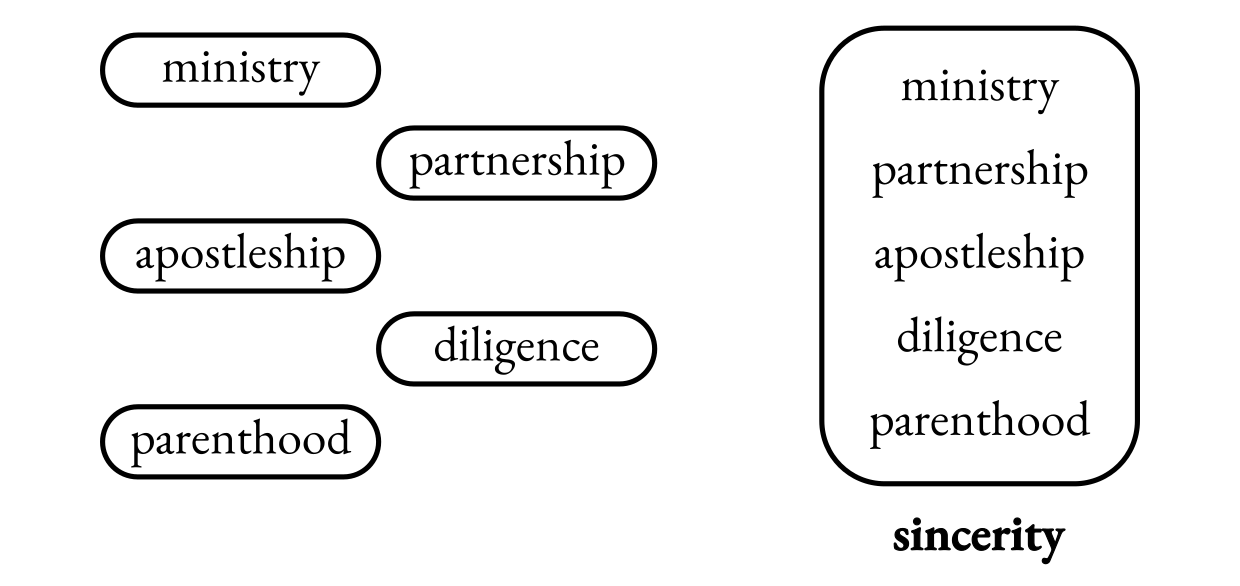
Figure 6.1: Disparate Motivations vs. Unified Motivation
In this chapter, we will explore a handful of Paul’s stated motivations, examining how they align with the virtue of sincerity. These motivations certainly voice Paul’s concern for the spread of the gospel, but they ultimately clear his name from charges of pragmatism. More importantly, they reveal sincerity’s discord with reciprocity as well as its harmony with colabor.
Sincere Ministry
In the previous chapter, we saw that Paul waives his right to support in order to maintain his status as a servant. It naturally follows that he must abide by the dorean principle in order to serve sincerely. While he primarily speaks of his service to the Lord in 1 Corinthians 9, he also speaks of his service to others (1 Cor. 9:19). This continues in 2 Corinthians 11, where the apostle claims that he preaches free of charge in order to “exalt” others.
Or did I commit a sin in humbling myself so that you might be exalted, because I preached God’s gospel to you free of charge? (2 Cor. 11:7)
While Paul’s humility is physical, the Corinthians’ exaltation is spiritual. That is, the apostle exalts the Corinthians through their salvation; they have been raised up and seated in the heavenly places (Eph. 2:6). The preceding context redefines this exaltation in terms of betrothal to Christ (2 Cor. 11:2). If his goal is the salvation of the Corinthians, then Paul rejects funds in order that he can rightly or effectively preach the gospel.
On either of these counts, Paul’s free preaching extends from his sincerity. If it is necessary to preach freely in order to preach rightly, he will do so because he ministers sincerely, without ulterior motive. If it is necessary to preach freely in order to preach effectively, he will do so because he sincerely desires Corinthian exaltation. Paul argues that his rejection of payment is an expression of love for the Corinthians (2 Cor. 11:11; cf. Gal. 4:16). Anything else would be insincere (cf. 2 Cor. 2:17), not truly a pursuit of love.
Sincere Apostleship
As Paul’s ministry is in his apostleship, it stands to reason that sincere ministry demands sincere apostleship. Thus, when false apostles began leading people astray in Corinth, Paul appeals to his fidelity to the dorean principle in order to demonstrate the truth of his apostleship. As his opponents have not lived up to the same standard, this same principle demonstrates their false apostleship. Speaking of his rejection of funds, Paul writes,
And what I am doing I will continue to do, in order to undermine the claim of those who would like to claim that in their boasted mission they work on the same terms as we do. (2 Cor. 11:12)
Paul chooses rejection of payment as a marker of delineation between himself and others who claim to have a similar apostolic ministry—and his choice of this particular distinctive is not arbitrary. If his actions are to cut off opportunity from his opponents to claim apostolicity, what he does must actually mark his ministry as true, not merely different.
As the Greek word apostolos indicates, an apostle is sent, and this commission entails a certain behavior toward those to whom he is sent. He must share his message indiscriminately and without return from the recipients of his message, not adopting the commercial practices of one who has ulterior motives. This practice and attitude distinguish Paul from his opponents in 2 Corinthians. With this contrast in mind, he pens the following words: “For we are not, like so many, peddlers of God’s word,” (2 Cor. 2:17a).
Sincere Parenthood
Later in 2 Corinthians, Paul speaks of his spiritual fatherhood.
Here for the third time I am ready to come to you. And I will not be a burden, for I seek not what is yours but you. For children are not obligated to save up for their parents, but parents for their children. (2 Cor. 12:14; cf. 1 Thess. 2:5–7, 9–12).
This language of paternity highlights Paul’s role in the conversion of the Corinthians. Thus, he says that he became a father to the Corinthians in the gospel (1 Cor. 4:15). Similarly, he birthed his Galatian children through the formation of Christ within them (Gal. 4:19), and he became Onesimus’s father upon Onesimus’s conversion (Philem. 10–11).
This metaphor of paternity provides an illustration of why it would be particularly inappropriate for Paul to engage in ministerial reciprocity with his church plants. While others might receive payment from their converts, Paul declines because this would be akin to a father burdening his child. He rejects their money out of love (2 Cor. 11:11). He repeats this paternal ethic to the Thessalonians, contrasting greed and parenthood.
As their spiritual father, Paul must act sincerely as a parent rather than with a “pretext for greed.”
For we never came with words of flattery, as you know, nor with a pretext for greed—God is witness. Nor did we seek glory from people, whether from you or from others, though we could have made demands as apostles of Christ. But we were gentle among you, like a nursing mother taking care of her own children. (1 Thess. 2:5–7)
Yet in a sense, Paul does demand a form of repayment for his fatherly love: “In return (I speak as to children) widen your hearts also.” (2 Cor. 6:13). While the apostle does not burden his children by accepting payment for his ministry, he demands the repayment of love and honor. In context, they are to do this by receiving his appeal to be reconciled to God (2 Cor. 5:20). In other words, sincere parenthood warrants sincere childlike deference. If Paul desires to secure the cooperation of his converts, he must reject their payment as a loving father.
Sincere Diligence
In Thessalonica, Paul refuses funds in order to set an example of hard work.
For you yourselves know how you ought to imitate us, because we were not idle when we were with you, nor did we eat anyone’s bread without paying for it, but with toil and labor we worked night and day, that we might not be a burden to any of you. It was not because we do not have that right, but to give you in ourselves an example to imitate. (2 Thess. 3:7–9)
Some have taken these comments to mean that though Paul has no obligation to engage in manual labor, he does so in order to offer a lesson on work ethic. However, if preaching and teaching are labors worthy of reward (cf. 1 Tim. 5:17), why are they not sufficient examples for the Thessalonians? Since Paul could undoubtedly work diligently as an apostle while refraining from physical labor, there must be some illegitimacy in accepting payment for his ministry.
Indeed, there is. The preceding epistle to the Thessalonians clarifies the matter, contrasting “a pretext for greed” (1 Thess. 2:5) with Paul’s statement that “we worked night and day” (1 Thess. 2:9; cf. 2 Thess. 3:8). To receive payment from converts would be greedy and therefore lazy, contrary to the diligence required of God’s servants. Sincere diligence demands forgoing ministerial reciprocity.
Paul’s ethic appears again as an example in his parting message to Ephesus.
I coveted no one’s silver or gold or apparel. You yourselves know that these hands ministered to my necessities and to those who were with me. In all things I have shown you that by working hard in this way we must help the weak and remember the words of the Lord Jesus, how he himself said, ‘It is more blessed to give than to receive.’ (Acts 20:33–35)
The apostle pits manual labor (ministering to his own needs) against covetousness. In other words, sincere diligence in the work of ministry requires the rejection of unmediated payment. He identifies anything else as greed. Furthermore, he must help the weak by ministering freely; to minister for pay would not be sufficient.
By rejecting support in contexts where it would constitute direct payment, Paul sets an example of hard work. However, this example is not grounded in arbitrary illustrative toil but in the sincere diligence required by the dorean principle.
Sincere Partnership
Finally, returning to 1 Corinthians 9, Paul selectively refuses financial support so that he may be a partner in the work of the gospel. He gives priority to this motivation when he chooses to summarize his concerns with the following words.
I do all things for the sake of the gospel, so that I may become a fellow partaker of it. (1 Cor. 9:23, NASB)
The Greek word for “fellow partaker” here derives from koinonia, the word used to refer to partnership in Philippians. In this verse, many translations speak of the gospel and sharing in “its blessings.” However, this elaboration shifts the focus from the proclamation of the gospel to the rewards of the gospel and potentially misses the point of Paul’s argument. Having stated his sincere desire for the salvation of others, he does not suddenly reveal that he is primarily concerned for his own salvation or that he hopes to benefit as his converts do. Here and in the following context, he speaks of sharing in the gospel as a minister of it. Describing himself as an athlete striving for a reward in vv. 24–27, Paul does not imagine himself meriting the gift of salvation, but winning the special prize due to faithful ministers (cf. 1 Cor. 3:14).
In 1 Corinthians 9:23, it is best to see Paul as sharing in the work of the gospel. The preceding context confirms this. The apostle has explained that causing another to stumble is to oppose the gospel, but here he offers the alternative: to lead one to salvation is to be its partner. Furthermore, this use of the word “gospel” without an attendant verb frequently indicates the proclamation of the gospel (Rom. 1:1; 1 Cor. 9:14; 2 Cor. 2:12; 10:14; Gal. 2:7; Phil. 2:22; 4:15).1 In the words of one pair of commentators, “Paul’s overriding allegiance is as a partner of the gospel.”2
On many occasions, Paul rejects financial support so that he might sincerely partner in the work of ministry. Other times, his reception of funds does not compromise that goal. On those occasions, those who support him are his partners (cf. Phil. 4:15). Evidencing the notion of colabor, this passage reveals Paul’s motivation of sincerity. Rather than only putting on the appearance of a fellow worker, he selectively accepts support so he might engage in sincere partnership.
Conclusion
Notions of earnestness and veracity resound behind all of Paul’s explicit motivations for rejecting payment. The apostle operates as a sincere servant, a sincere apostle, a sincere father, and a sincere partner. To wholeheartedly do what he has been called to do and genuinely be what he has been called to be, he must reject ministerial reciprocity.
Sincerity propels the dorean principle. That is, dorean ministry is sincere ministry. In the next chapter, we will see that the Bible identifies all non-dorean ministry as insincere, the work of false teachers.