
8. The Apostles of Corinth
Partiality vs. Equity
Are you familiar with the riddle of the green glass door? It goes something like this. I announce that there’s a green glass door and that only certain things can go through the green glass door. For example, I can bring a kitten but not a cat. I can bring the moon but not the sun. I can bring a wheel but not a tire. The puzzle challenges others to figure out what kinds of things may be brought through the green glass door. They guess an object, and I tell them whether it can go through the door.
When first encountering this riddle, you might think you see some pattern. For example, the way I have set this up you might be inclined to think that the green glass door favors objects in miniature. In fact, I would agree with you that I can bring something small through the door but not something large. However, you will likely be frustrated as you test this and find that you can bring a gorilla through the door but not a chimp!
Eventually, someone in the group will discover the objects themselves don’t matter at all, only their spelling. Words with double letters are permitted through, while words without double letters are not. (That’s why it’s called the green glass door.)
Similarly, if we only examine prominent features of the transactions he condones, Paul’s financial policy may appear to operate by some arbitrary partiality. Perhaps he favors true ministers or perhaps he favors mature churches. However, beyond these red herrings lies his true objective: the dorean principle.
In Chapters 2 and 4, we used the dorean principle to resolve two apparent discrepancies in Paul’s financial policy:
Why does Paul reject Corinthian money, yet accept Corinthian propempo support?
Why does Paul reject Corinthian and Thessalonian money, yet accept Philippian money?
We saw that Paul rejected Corinthian funds because such would constitute reciprocity, but he was willing to accept Corinthian propempo support because it would constitute colabor. Similarly, Paul rejected money from the Thessalonian church since it would only serve as repayment for the gospel, but he was willing to accept money from the Philippians because they contributed to Paul’s resources in an act of colabor.
In this chapter, we will use the dorean principle to clear up two additional enigmas:
Why does Paul reject Corinthian money, yet permits other apostles to receive it?
Why does Paul condone the reception of Corinthian money by other apostles, yet condemn the “super-apostles” for accepting it?
Many attempts to present a unified understanding of Paul’s financial policy fail because they propose solutions that can only account for a few of these apparent discrepancies. However, the dorean principle explains Paul’s behavior in each instance. Though I believe I have sufficiently established the truth of the dorean principle from other texts, resolving these last two apparent discrepancies should afford us an extra level of confidence.
Paul’s Disposition Toward Other Ministers
If the dorean principle dictates Paul’s behavior rather than pragmatic concerns, we should see the apostle require the same behavior from his associates. Indeed, this is what we find. In fact, when he describes this policy, he frequently employs the language of “we,” referring to the others who traveled with him (1 Cor. 9:11–12). For example, he explicitly names Barnabas as one who has performed manual labor to avoid taking money from the Corinthians (1 Cor. 9:6). Further, Paul remarks that he has not even been a burden through those whom he has sent, specifically mentioning Titus as one example (2 Cor. 12:17–18). And just as Paul willingly accepts propempo support, he commands that Timothy receive it as well (1 Cor. 16:11).
However, Paul has no objection to the Jerusalem apostles receiving freely from the Corinthians.
Do we not have the right to eat and drink? Do we not have the right to take along a believing wife, as do the other apostles and the brothers of the Lord and Cephas? (1 Cor. 9:4–5)
Paul mentions Cephas—another name for Peter—and the brothers of the Lord—likely including James (cf. Gal. 1:19). These apostles from Jerusalem have apparently visited Corinth and received support rather than engaging in secular labor to pay their own way. Of course, Paul does not really suggest he has no right to eat or drink or have a wife. Instead, he refers to the expenses incurred by each of these things and the financial support required. In all this, Paul implicitly condones the Jerusalem apostles’ reception of Corinthian support.
However, when a different group of teachers accepts money from the Corinthians, Paul condemns them harshly. These are the “super-apostles,” false apostles who compete with Paul for prominence in Corinth. Toward the end of 2 Corinthians, he offers a full defense of his own rejection of funds, implicitly comparing himself to his opponents who have received funds (cf. 2 Cor. 11:7). However, even at the beginning of the epistle, he criticizes their reception of Corinthian money.
For we are not, like so many, peddlers of God’s word, but as men of sincerity, as commissioned by God, in the sight of God we speak in Christ. (2 Cor. 2:17)
Why does Paul respond so differently toward his opponents in Corinth? It might appear that he engages in partiality by labeling them “peddlers” yet turning a blind eye to the Jerusalem apostles when they accept money from the Corinthians. This accusation would stand if he condemns the super-apostles’ reception of funds simply because they propagate false doctrine. However, the accusation of partiality falls apart if instead he has identified a fundamental error in their fundraising activities.
Paul’s Consistency Toward the Jerusalem Apostles
After imposing a strict policy on himself and his companions, does Paul give a free pass to the apostles from Jerusalem? Once again, the dorean principle resolves this matter neatly.
In Corinth, Paul’s continued refusal of money revolves around the particular sum offered on his initial visit. He regards this as payment for the gospel (cf. 1 Cor. 9:18), ministerial reciprocity. The apostle never receives money from those he is converting.1 However, as we have already noted, Paul willingly receives money from his churches when the context does not indicate that they intend to repay him for his ministry or for their conversion.
The Jerusalem apostles arrived at an established church and would have not received the same offer that Paul received. The finances given to them must have been granted in another context, likely in the weekly contributions a church collects in order to support the proclamation of the gospel. In short, Paul condones other apostles accepting money from the Corinthians because this money would have been given as colabor. In contrast to the reciprocal offering of a grateful convert, these funds constitute the assistance of an established Christian. The former implies a direct obligation to the minister who first shared the gospel, but the latter acknowledges an obligation mediated by God.
Paul’s Consistency Toward the Super-Apostles
We see that Paul allows the Jerusalem apostles to receive money from Corinth but condemns the super-apostles when they do the same. On one hand, it seems appealing to assume Paul grants privileges to true teachers that he does not grant to false teachers. However, he calls their reception of material support burdensome, even an act of devouring (2 Cor. 11:20).2 Labeling their financial practices abusive, he leaves no room for a true apostle to engage in the same behavior. Certainly, false apostles should not receive support due a true minister, but Paul objects to their financial practice in its own right.
In fact, Paul explicitly confirms that he holds them to the same financial standard he holds himself to.
And what I am doing I will continue to do, in order to undermine the claim of those who would like to claim that in their boasted mission they work on the same terms as we do. (2 Cor. 11:12)
That is, Paul maintains his policy of refusing payment to show that his opponents do not live up to the same code of conduct.
In order for Paul to act consistently in this matter, he must identify the Corinthian contributions to the super-apostles as acts of ministerial reciprocity. Indeed, he does. When he responds to the objections of the super-apostles, he compares their practice of charging for the gospel to his own practice of preaching freely.
Or did I commit a sin in humbling myself so that you might be exalted, because I preached God’s gospel to you free of charge? (2 Cor. 11:7)
In saying that he has not charged for his preaching, Paul implies that the super-apostles have charged for their preaching. Additionally, when he accuses them of “peddling” the gospel (2 Cor. 2:17), he condemns their activities as commercial transactions.
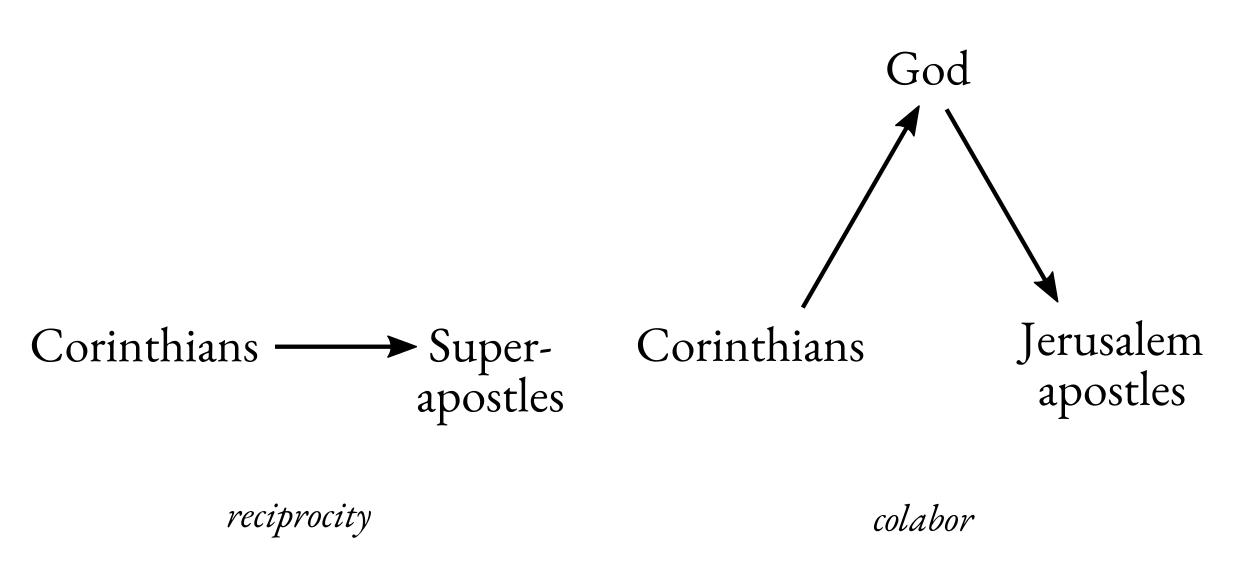
Figure 8.1: The Super-Apostles vs. The Jerusalem Apostles
The super-apostles have not erred in receiving money in general but in receiving it in direct exchange for the gospel. If they instead sought to colabor with the Corinthians, Paul would not raise the same objections. The dorean principle sufficiently accounts for the disparity in the apostle’s attitude toward the financial practices of his friends and toward those of his opponents.
A False Claim on Corinth
Examining the relationship between the super-apostles and Corinth, we can see why the exchange between them constitutes payment. The “ministry” of the super-apostles more closely imitates the ministry of Paul than it does that of the Jerusalem apostles. That is, the super-apostles implicitly claim his spiritual fatherhood as their own, masquerading as church planters.
Paul demonstrates this pretense most directly in 2 Corinthians 10. Arguing that the fruit of his labor serves as sufficient proof of his status, the apostle objects to his opponents’ practice of self-commendation in v. 12 and v. 18. Between these bookends, he offers a comparison to his own practices.
But we will not boast beyond limits, but will boast only with regard to the area of influence God assigned to us, to reach even to you. For we are not overextending ourselves, as though we did not reach you. For we were the first to come all the way to you with the gospel of Christ. We do not boast beyond limit in the labors of others. But our hope is that as your faith increases, our area of influence among you may be greatly enlarged, so that we may preach the gospel in lands beyond you, without boasting of work already done in another’s area of influence. “Let the one who boasts, boast in the Lord.” (2 Cor. 10:13–17)
When Paul claims that he does not boast beyond limits, he implies that the super-apostles do boast beyond limits. Terms such as “limits,” “area,” “overextending,” “reach,” etc., indicate some geographic extent, especially given that Paul pairs them with the notion of the gospel expanding beyond Corinth and Achaia (2 Cor. 10:16; 11:10). In other words, the apostle considers the church in Corinth his divinely appointed domain,3 but his opponents consider it the fruit of their labors. Paul expresses similar concerns elsewhere, declaring that as a church planter, he does not go where Christ has been named, building on another’s foundation (Rom. 15:20). On the other hand, his opponents are eager to operate as pseudo-missionaries who lay claim to another’s work.
To be clear, Paul takes no issue with others building on his foundation (1 Cor. 3:6, 12–13). Rather, he objects to those who would wrongly assume the status of one who lays a foundation, hence his focus on boasting. Perhaps it is too implausible to suggest that the false apostles have explicitly labeled themselves the founders or spiritual fathers of the Corinthian church, but by his comparisons, Paul at least charges them with having implicitly done so. They overextend themselves, claiming dominion over a region they did not reach first (2 Cor. 10:14). They boast beyond limit in the labors of others (2 Cor. 10:15). They take credit for work already done (2 Cor. 10:16). What is that work, other than the work of church planting? If nothing else, we may say Paul’s opponents encroach on the achievements of his ministry, taking evangelical credit for the spiritual prosperity of Corinth.
Placing themselves in Paul’s position, the super-apostles eagerly run into the ethical transgression Paul avoided: They accept payment from their supposed converts.
A False Gospel
This brings us to a final observation: Paul never explicitly defines the false gospel of the super-apostles. He claims that his opponents come with “another Jesus,” “a different spirit,” and “a different gospel” (2 Cor. 11:4), but never elaborates beyond this. Perhaps Paul and the Corinthians share a mutual understanding of an unspoken issue, but the idea of leaving unaddressed some doctrinal error spreading in Corinth flies in the face of Paul’s pattern and agenda. A false doctrine must be countered, and given his response to Galatia, a false gospel is so detrimental that it calls for the formal pronouncement of anathema (Gal. 1:8–9).
It seems more likely that the super-apostles represent a different Christ by falsely claiming they have been sent by Christ. Likewise, their false spirit and false gospel may be their promotion of external appearances over inner truth. Instead of exalting Christ, they exalt themselves. In this case, Paul does address their false gospel, head-on.
Rather than imagining some overt heresy that remains unspoken in the course of this epistle, we should recognize as primary those problems the apostle explicitly addresses. The false gospel of Paul’s opponents is no straightforward doctrinal error but the very thing that concerns him throughout the epistle: a disposition that boasts in self instead of in the Lord.
This claim to the church in Corinth sets the capstone of intruders’ transgressions. First, it is the greatest manifestation of their boasting: It does not merely misidentify external appearances as being worthy of honor but goes beyond even that which is true. As a puffed-up peacock’s feathers extend glamorously above its head, the super-apostles’ boasts reach far beyond limit. Second, this is the greatest manifestation of their false apostleship. They do not merely claim to have authority from Christ but even claim to do the exact work Christ commissioned Paul to do.
Conclusion
Paul condemns the super-apostles’ reception of support because they accept it as payment, setting themselves up as church planters owed by their converts. Conversely, he condones the Jerusalem apostles’ reception of support because they accept it as colabor.
At this point, the dorean principle has resolved four apparent discrepancies in Paul’s disposition toward financial support. In the next chapter, we will broaden our exploration to see that this fundraising ethic is not merely showcased in a few edge cases of apostolic ministry but pervades the whole of the New Testament and even appears in the Old Testament.