
Scripture forbids the fear that keeps a believer from trusting and obeying God, and gives the reason: God is with His people. The preachers quoted here trace such fear to sin and unbelief, deal with the fear of man, of death, of the future and of our own weakness, and say it is overcome by fearing God, trusting Him, knowing Christ's presence and love, praying, and going on in duty.
Fear is overcome by faith in God, who is with His people and is greater than anything they dread. Scripture does not say that there is nothing to be afraid of. It gives a reason for not being afraid. God says, "Do not fear, for I am with you; do not be afraid, for I am your God." (Isaiah 41:10). Alexander Maclaren wrote of faith that it "takes away fear by taking away danger."1
Two kinds of fear
Scripture commands one fear and forbids another. The fear of God is reverence and awe, and it has its own page, linked below. Charles Spurgeon said, "There is a kind of fear towards God from which we must not wish to be free."2 He then named the other kind: "The fear which is to be avoided, is slavish fear—the fear which perfect love casts out, as Sarah cast out the bondwoman and her son."2 Andrew Murray wrote, "The childlike, believing fear of God will lead you into the love and joy of God, while slavish, unbelieving, cowardly fear is utterly cast out."3 Maclaren wrote, "There is a fear that makes cowards and apostates; there is a fear which makes heroes and apostles."4
This page is about the second kind: the fear of man, of death, of the future and of our own weakness. It is the dread that keeps a believer from trusting and obeying God.
Where fear came from
Fear entered the world with sin. After he had eaten the forbidden fruit, Adam hid among the trees and told God why: "I was afraid because I was naked; so I hid myself." (Genesis 3:10). Spurgeon said, "Adam never was afraid of his God till he had broken His commands."5 John Bunyan wrote, "Sin is a fearful thing, it will quash and quail the courage of a man, and make him afraid to approach the presence of him whom he has offended, though the offended is but a man."6
In a believer, fear is fed by unbelief. When the disciples woke the Lord in the storm, He asked them, "Do you still have no faith?" (Mark 4:40). Spurgeon said, "It is usually sinful to be afraid and dismayed, because such a state of mind almost always results from unbelief."5 John Flavel wrote, "Christ therefore took the right method to rid his disciples of their fear by rebuking their unbelief."7 Stephen Charnock wrote, "Fear of man is a crediting the might of man with a dishonour of the arm of God, it takes away the glory of his might, and renders the creature stronger than God; and God more feeble than a mortal; as if the arm of man were a rod of iron, and the arm of God a brittle reed."8
What fear does
Fear weakens. It does not make anyone safer, and it stops him doing what he should. In the Lord's parable the servant who buried his master's money gave this account of himself: "So I was afraid and went out and hid your talent in the ground." (Matthew 25:25). Spurgeon said, "Faith can do anything, but fear, sinful fear, can do just nothing at all, but even prevent faith from performing its labors."9 William Gurnall wrote, "A soul deeply possessed with fear, and dispirited with strong apprehensions of danger, is in no posture for counsel."10 Maclaren wrote, "There is nothing more ridiculous, nothing more likely to destroy a man, than the indulgence in an idle fear which does nothing to prevent its own fulfilment."11
Much of what is feared never comes. Spurgeon said, "our groundless fears are our chief tormentors"12 and he said of Jacob, who dreaded meeting Esau, "He was dreading it more than he need have done, for God never meant the trouble he feared to come upon him at all."13 Fear also shuts the mouth. Zac Poonen wrote, "Fear is one of Satan's master-weapons, with which he enslaves many believers."14 He went on, "It is this spirit of fear that prevents many believers from boldly testifying for the Lord in the meetings of the church and from being bold witnesses for the Lord in their places of work."14
God says, Do not fear
God speaks to this fear directly. "Do not fear, for I am with you; do not be afraid, for I am your God. I will strengthen you; I will surely help you; I will uphold you with My right hand of righteousness." (Isaiah 41:10). And again, "For I am the LORD your God, who takes hold of your right hand and tells you: Do not fear, I will help you." (Isaiah 41:13). A.B. Simpson wrote on that verse, "We need to hear it over and over again and He never tires saying it to His troubled children until He has cheered away all our fears and sorrows."15
The command commonly comes with a reason. Maclaren wrote, "It is waste of breath to say, Don't be afraid, and to do nothing to remove the occasions of fear."16 G. Campbell Morgan wrote, "Christ never tells us not to fear, until He Himself has fathomed all the mystery."17 The reason given most often is God's own presence: I am with you.
God has not given a spirit of fear
Paul wrote to Timothy, "For God has not given us a spirit of fear, but of power, love, and self-control." (2 Timothy 1:7). Samuel Chadwick wrote, "The Spirit of God is not a spirit of fear, or a spirit of bondage, but the Spirit of Adoption, the Spirit of Truth, the Spirit of Power, and the Spirit of Love."18 J.C. Philpot said, "It is not the work of the Spirit to produce doubts and fears, but to overcome them."19
Paul says the same to the Romans: "you did not receive a spirit of slavery that returns you to fear, but you received the Spirit of sonship" (Romans 8:15). Jonathan Edwards wrote, "The spirit of bondage works by fear, the slave fears the rod: but love cries, Abba, Father; it disposes us to go to God, and behave ourselves towards God as children; and it gives us clear evidence of our union to God as his children, and so casts out fear."20 J.C. Ryle wrote of the believer, "He has the Spirit of adoption, by which he regards God as a reconciled Father, and looks up to Him without fear."21
The first church proved it. When the rulers threatened them, they prayed, "And now, Lord, consider their threats, and enable Your servants to speak Your word with complete boldness" (Acts 4:29). Luke records the answer: "After they had prayed, their meeting place was shaken, and they were all filled with the Holy Spirit and spoke the word of God boldly." (Acts 4:31). E.M. Bounds wrote, "The cure for fear in the face of threatenings of the enemies of the Lord is being filled with the Spirit."22
The fear of man
Solomon wrote, "The fear of man is a snare, but whoever trusts in the LORD is set securely on high." (Proverbs 29:25). Spurgeon said, "What a common evil the fear of man is—the fear of losing human approbation, the fear of incurring human wrath."23 Bunyan wrote, "There is fear of man, fear of losing his favour, his love, his good-will, his help, his friendship; this is seen everywhere."24 J.H. Jowett wrote, "The fear of a man bringeth a most insidious snare, and too often the fear is created by the mere accidents of circumstance and not by any essential gifts of character."25
It keeps people from Christ and it silences those who believe. John writes of the rulers of the Jews, "Nevertheless, many of the leaders believed in Him; but because of the Pharisees they did not confess Him, for fear that they would be put out of the synagogue." (John 12:42). He gives the cause: "For they loved praise from men more than praise from God." (John 12:43). R.A. Torrey said, "The fear of man is keeping many a man and woman in London from coming to Christ and obtaining eternal life."26 Charles Finney said of some professing Christians, "They are afraid of the censures of the church or of the world, their faith in God being so weak, and their apprehensions of God being so dim that they practically fear man more than God."27 Spurgeon said, "No man shall be faithful to God, if he is fearful of man; no man shall find his arm sufficient for him, and his might equal to his emergencies unless he can confidently believe, and quietly wait."28 Poonen wrote, "A lot of our spiritual authority is taken away from us by Satan, because we fear men, or seek to please them or impress them, or justify ourselves before them."29
God asks His people why they are afraid of men. "Why should you be afraid of mortal man, of a son of man who withers like grass?" (Isaiah 51:12). He tells them what lies behind it: "But you have forgotten the LORD, your Maker" (Isaiah 51:13). Bunyan wrote, "To fear man, is to forget God"30. Spurgeon said on that passage, "There is some oppressor, as the text puts it, whom we dread and fear continually, yet we forget the Almighty God who is on our side, who is stronger than all the oppressors who have ever lived and who has all people and all things under His control!"12 Gurnall wrote, "God counts himself reproached when his children fear a sorry man"31.
The greater fear drives out the lesser
The Lord Jesus did not tell His disciples to fear nothing. He told them whom to fear. "I tell you, My friends, do not be afraid of those who kill the body and after that can do no more." (Luke 12:4). He went on, "But I will show you whom you should fear: Fear the One who, after you have been killed, has authority to throw you into hell." (Luke 12:5). Isaiah had said the same: "The LORD of Hosts is the One you shall regard as holy. Only He should be feared; only He should be dreaded." (Isaiah 8:13).
Ryle wrote on the Lord's words, "We must supplant the fear of man by a higher and more powerful principle--the fear of God."32 He added, "Seeing Him that is invisible, we shall find the lesser fear melting away before the greater, and the weaker before the stronger."33 Thomas Manton wrote, "the fear of God driveth out the fear of man, as a great nail driveth out the less."34 Thomas Brooks wrote, "The best remedy against the slavish fear of tyrants, is to set that great God up as the object of our fear, who is able to destroy both soul and body in hell."35 Maclaren wrote, "He who fears God, with the awe that has no torment and is own sister to love, is afraid of nothing and of no man."36 Poonen wrote, "When faith dwells in our hearts, fear cannot dwell there, even though we may have occasional moments of fear."37
David sang, "The LORD is my light and my salvation— whom shall I fear?" (Psalm 27:1). Samuel Rutherford wrote in a letter, "Fear not men, for the Lord is your light and salvation."38 Spurgeon said, "God save us from it and make us so brave that we shall never fear any man so as to do a wrong action!"23
The fear of death
The writer to the Hebrews says that Christ took flesh and blood so that by His death He might destroy the devil, who held the power of death, "and free those who all their lives were held in slavery by their fear of death." (Hebrews 2:15). Poonen wrote, "The greatest of all fears however is the fear of death."39 George Morrison said, "The fear of death is not a religious thing, although religion has infinitely deepened it."40 He did not think that Christ takes away the natural shrinking from death. He said, "Christ then does not deliver us from the deep instinct of self-preservation."40 He went on, "It is only when that fear becomes a bondage, and when that instinct grows into a tyranny, that Christ steps in, and breaks the chains that bind us, and sets our trembling feet in a large room."40
Christ has done it by dying and rising. He said to John on Patmos, "I was dead, and behold, now I am alive forever and ever! And I hold the keys of Death and of Hades." (Revelation 1:18). Horatius Bonar wrote of those words, "It is what He tells us about Himself that He expects to soothe us and to banish alarm"41 Manton wrote, "We need not fear death, for by his dying and rising again the powers of the grave are shaken, and death itself is become mortal."42 Spurgeon said, "Jesus Christ has trodden on the old serpent's head and, to the Christian, in the matter of death, the devil is completely destroyed, for he that believes in Christ shall never die!"43 George Whitefield said, "It is no reflection at all upon the divine goodness, that believers, as well as hypocrites, must pass through the valley of the shadow of death; for Christ has taken away the sting of death, so that we need fear no evil."44
Good people still feel this fear at times. Spurgeon said, "But there is a fear of death in some good people's minds and they cannot always shake it off."12 He urged, "Get rid of that fear of death, Beloved, for it is not becoming in a Christian."12 Bonar wrote, "We cannot but hate death, even when we have ceased to fear it, and know that for us its sting has been extracted."45 David wrote, "Even though I walk through the valley of the shadow of death, I will fear no evil, for You are with me" (Psalm 23:4). A fuller answer on facing death is linked below.
The fear of what may come
The psalmist says of the man who fears the LORD, "He does not fear bad news; his heart is steadfast, trusting in the LORD." (Psalm 112:7). Morgan said on that verse, "If a man sees only the things that are happening, then, if they are not going according to his idea, he is perturbed, filled with fear—evil tidings render him hopeless."46 He said, "The man who has heard those tidings from the Lord goes out and does his work, and is not afraid of evil tidings; his heart is fixed, trusting in the Lord."47 Edwards said, "A great part of our lives is spent in sorrowing for present or past evils, and in fearing those which are future."48 He gave the answer: "He, whose heart is fixed, trusting in Christ, need not be afraid of any evil tidings."48
The future is not in the hands of chance. The Lord told His disciples that not one sparrow falls to the ground apart from their Father's will, and concluded, "So do not be afraid; you are worth more than many sparrows." (Matthew 10:31). David Wilkerson wrote, "The future is also under His control, so we need not fear."49 He also wrote, "The shadow of the Almighty is bigger than any fearful shadow this age can project."50 Maclaren wrote, "Those who have such a past as every Christian has should put fear far from them, and go forth to meet any future with quiet hearts, and minds kept in perfect peace because they are stayed on God."51 Spurgeon said, "Further, you must not give way to these doubts and alarms and fears, for if you do you will be unfit to meet the trouble."52
The sons of Korah sang, "God is our refuge and strength, an ever-present help in times of trouble." (Psalm 46:1). They drew the conclusion: "Therefore we will not fear, though the earth is transformed and the mountains are toppled into the depths of the seas" (Psalm 46:2).
The fear of our own weakness
Some fear failure more than danger. Spurgeon said, "Another fear that every good man has at times, unless he is buoyed up by faith, arises from a sense of personal weakness."5 Scripture shows this fear in men whom God went on to use. Moses said he was slow of speech, and God answered, "I will help you as you speak, and I will teach you what to say." (Exodus 4:12). Jeremiah said he was only a child, and God answered, "Do not be afraid of them, for I am with you to deliver you" (Jeremiah 1:8). Gideon called himself the least in his father's house and was told, "Surely I will be with you" (Judges 6:16). Spurgeon said, "Once assure him that God is with him, and Gideon has no fear but hastens to the battle, bravest of the brave!"53
In each case God did not tell the man that he was stronger than he thought. He promised to be with him. So He said to Joshua, "Do not be afraid; do not be discouraged, for the LORD your God is with you wherever you go." (Joshua 1:9). And Paul was told, "My grace is sufficient for you, for My power is perfected in weakness." (2 Corinthians 12:9). John Newton wrote, "Whereas, if we go forth doubting and fearing, and are afraid to trust any farther than we can feel, we are weak as water, and easily overcome."54 Hudson Taylor wrote, "We need not be afraid, if He gives great blessing that He will let us become puffed up; or that great difficulties will be too much for us while trusting in Him."55
When I am afraid, I will trust
David did not pretend to be without fear. He wrote, "When I am afraid, I put my trust in You." (Psalm 56:3). Spurgeon admired his honesty in owning it, and said of the opposite kind of man, "Generally there is no greater coward in this world than the man who never will acknowledge that he is afraid."56 Maclaren wrote, "True faith, by a mighty effort of the will, fixes its gaze on the divine Helper, and there finds it possible and wise to lose its fears."57 He added, "There is no reason why any man should be emancipated from his fears either about this world or about the next, except in proportion as he has faith."58 Spurgeon said, "It is a sure sign of Grace when a man can trust in his God, for the natural man, when afraid, falls back on some human trust, or he thinks that he will be able to laugh at the occasion of fear."56
David goes on in the next verse: "in God I trust. I will not be afraid. What can man do to me?" (Psalm 56:4). Isaiah says, "I will trust and not be afraid." (Isaiah 12:2). Spurgeon set the two side by side: "When David is afraid, He trusts in God, but Isaiah trusts in God, first, and then he is not afraid at all!"59 Trust begins as the cure for fear and grows until it prevents it.
It is I; do not be afraid
When the disciples saw Jesus walking on the sea in the night they cried out in terror. He said to them, "Take courage! It is I. Do not be afraid." (Matthew 14:27). Maclaren wrote of that night, "We mistake our best friend, and we are afraid of Him as we dimly see Him; and sometimes we think that the tokens of His presence are only phantasms of our own imagination."60 He wrote, "The consciousness of His presence banishes all fear."61 And he drew a rule from it: "It is of no use to preach courage unless we preach Christ first."62 Spurgeon said, "To love, to trust, to hope, are all easy in the Presence of a real living Christ, but if, like the disciples at midnight on the Galilean lake, we think Him to be a mere specter or apparition, we shall be afraid and cry out in fear!"63
The promise holds for every believer. God has said, "Never will I leave you, never will I forsake you." (Hebrews 13:5). The writer to the Hebrews draws the conclusion: "The Lord is my helper; I will not be afraid. What can man do to me?" (Hebrews 13:6). Brooks wrote, "You will not fear the power of men, nor the policy of men, nor the threats of men, nor the wrath of men, if you do but enjoy this gracious, this signal presence of God"64
Elisha's servant saw an army round the city and was terrified. Elisha answered, "for those who are with us are more than those who are with them." (2 Kings 6:16). Maclaren wrote, "The wonder is, not that we should sometimes be afraid, but that we should ever be free from fear, if we look only at visible facts."65
Perfect love drives out fear
John writes, "There is no fear in love, but perfect love drives out fear, because fear involves punishment. The one who fears has not been perfected in love." (1 John 4:18). Maclaren defined the fear in view: "Fear is a shrinking apprehension of evil as befalling us, from the person or thing which we dread."66 He wrote, "We cannot both love and fear the same person or thing, and where love comes in, the darker form slips out at the door; and where Love comes in, it brings hand in hand with itself Courage with her radiant face."67 He owned that many believers have both: "The experience of hosts of professing Christians is only too forcible a comment upon the possibility of a partial Love lodging in the heart side by side with a fellow-lodger, Fear, whom it ought to have expelled."68
The love that does this begins with God. John has just said, "we have come to know and believe the love that God has for us." (1 John 4:16). He adds, "We love because He first loved us." (1 John 4:19). Maclaren wrote, "The only way to get perfect love that casts out fear is to be quite sure of the Father-love in heaven that begets it."69 Spurgeon said, "An assured confidence in the goodness of God casts out fear and brings forth everything that is child-like in us."2 Richard Sibbes wrote, "The sense of the love of Christ is sweeter than wine; it banisheth fears, and sorrow, and care."70 Hugh Binning wrote, "Nothing is so easy but it becomes uneasy to a soul under fear, and nothing so difficult but it becomes easy to a soul wherein perfect love has cast out fear."71
Seek the Lord
Fear should send a believer to prayer. David wrote, "I sought the LORD, and He answered me; He delivered me from all my fears." (Psalm 34:4). When a great army came against Judah, "Jehoshaphat was alarmed and set his face to seek the LORD." (2 Chronicles 20:3). Spurgeon said, "There is this which is commendable to be said about Jacob's fear—it led him to prayer."13 Manton wrote, "The soul must actually magnify God's attributes in every prayer, and distinctly urge them against the present doubt and fear."72 Bounds wrote, "The energy for work, the mastery over self, the deliverance from fear, all spiritual results and graces, are much advanced by prayer."73
Go on in the path of duty
Fear is not overcome by waiting until it has gone. The Lord told Paul at Corinth, "Do not be afraid; keep on speaking; do not be silent." (Acts 18:9). He gave the reason: "For I am with you" (Acts 18:10). Maclaren wrote, "Fear which makes a Christian dumb is always cowardly, and always exaggerated."74 He went on, "Speech which comes from trembling lips may be very powerful, and there is no better remedy for terror than work for Christ."75 Spurgeon said, "It is not fear, but faith, that is the cure for cowardice."23 He said, "Stand in your proper place, do your duty, obey His will and He will not fail you, but bring you safely to the place where fears shall never come to you anymore."12 Poonen wrote, "The important question is what dominates our thinking: Is it fear or faith?"37
The Lord's last words to His disciples before the cross included this: "Do not let your hearts be troubled; do not be afraid." (John 14:27). He had said earlier, "Do not be afraid, little flock, for your Father is pleased to give you the kingdom." (Luke 12:32).
- Alexander Maclaren, Expositions Of Holy Scripture J, "Fear and faith".
- C.H. Spurgeon, "God Incarnate, The End Of Fear" (sermon).
- Andrew Murray, "The Fear of the Lord" (sermon).
- Alexander Maclaren, Expositions Of Holy Scripture B, "The widened mission, its perils and defences".
- C.H. Spurgeon, "Away With Fear" (sermon).
- John Bunyan, The Works Of John Bunyan Volumes 1-3, "Christ a complete saviour:".
- John Flavel, Writings of John Flavel, "S. Evil Effects of Unbelief".
- Stephen Charnock, Writings of Stephen Charnock, "Discourse On the Power of God".
- C.H. Spurgeon, "Five Fears" (sermon).
- William Gurnall, "The Christian in Complete Armour - Part 1" (sermon).
- Alexander Maclaren, Expositions Of Holy Scripture Ephesians Peter, "Love and fear".
- C.H. Spurgeon, "Needless Fears" (sermon).
- C.H. Spurgeon, "Jacob's Fear and Faith" (sermon).
- Zac Poonen, "(The Lord and His Church) 5. the Suffering Church" (sermon).
- A.B. Simpson, "Isaiah Chapter 26 the 'Fear Nots' of Isaiah" (sermon).
- Alexander Maclaren, Expositions Of Holy Scripture K, "The word that scatters fear".
- G. Campbell Morgan, Writings of G Campbell Morgan - Volume 1, "The smyrna letter".
- Samuel Chadwick, "The Spirit of Love" (sermon).
- J.C. Philpot, "The Wisdom of Men and the Power of God" (sermon).
- Jonathan Edwards, Writings of Jonathan Edwards - Volume 1, "PART III(b)".
- J.C. Ryle, "Do You Believe?" (sermon).
- E.M. Bounds, "Answered Prayer (Continued) 1" (sermon).
- C.H. Spurgeon, "Two Ancient Proverbs" (sermon).
- John Bunyan, The Works Of John Bunyan Volumes 1-3, "The acceptable sacrifice;".
- J.H. Jowett, Writings of J H Jowett, "The Preacher in the Home".
- R.A. Torrey, "One of the Saddest Utterances That Ever Fell From the Lips of the Son of God" (sermon).
- Charles Finney, "On Becoming Acquainted With God" (sermon).
- C.H. Spurgeon, "Fear Not (1857)" (sermon).
- Zac Poonen, "(A Spiritual Leader) 11. Freed From All Fears" (sermon).
- John Bunyan, The Works Of John Bunyan Volumes 1-3, "The desire of the righteous granted;".
- William Gurnall, "The Christian in Complete Armour - Part 4" (sermon).
- J.C. Ryle, Expository Thoughts On Luke, "Luke 12:1-7".
- J.C. Ryle, Expository Thoughts On Luke, "Luke 12:1-7".
- Thomas Manton, The Complete Works of Thomas Manton, D.D. Vol. VIII, "Sermon cxlix".
- Thomas Brooks, Writings of Thomas Brooks, "Volume 5".
- Alexander Maclaren, Expositions Of Holy Scripture B, "The widened mission, its perils and defences".
- Zac Poonen, "(A Spiritual Leader) 12. Freeing Others From Fear" (sermon).
- Samuel Rutherford, Letters of Samuel Rutherford, "CCCLXIII.—To MR. ROBERT CAMPBELL".
- Zac Poonen, "(Know Your Enemy) 6. the Defeat of Satan" (sermon).
- George H. Morrison, "Christ and the Fear of Death" (sermon).
- Horatius Bonar, "Rev. 1:17-18. Fear and Its Remedy" (sermon).
- Thomas Manton, The Complete Works of Thomas Manton, D.D. Vol. II, "Sermon xii".
- Charles Haddon Spurgeon, Spurgeon's Sermons Volume 58: 1912, "The Fear of Death".
- George Whitefield, "The Wise and Foolish Virgins. (Matt. 25:13)" (sermon).
- Horatius Bonar, "Rev. 20:14. Death and the Grave" (sermon).
- Campbell G. Morgan, Westminster Pulpit, "Psalm 112:7. The Fixed Heart In The Day Of Frightfulness".
- Campbell G. Morgan, Westminster Pulpit, "Psalm 112:7. The Fixed Heart In The Day Of Frightfulness".
- Jonathan Edwards, "Safety, Fulness, and Sweet Refreshment, to Be Found in Christ" (sermon).
- David Wilkerson, A Large Collection of Sermons By Pastor David Wilkerson - Volume 1, "PRE-033-30. Will There Be A Depression".
- David Wilkerson, A Large Collection of Sermons By Pastor David Wilkerson - Volume 1, "PRE-033-30. Will There Be A Depression".
- Alexander Maclaren, Expositions Of Holy Scripture The Acts, "After the wreck".
- C.H. Spurgeon, "Heart'S Ease" (sermon).
- C.H. Spurgeon, "The Dream of the Barley Cake" (sermon).
- John Newton, "Strength in Trial" (sermon).
- J. Hudson Taylor, A Ribband of Blue and Other Bible Studies, "Under the sheperd's care".
- C.H. Spurgeon, "Faith Hand in Hand With Fear" (sermon).
- Alexander Maclaren, Expositions Of Holy Scripture J, "Fear and faith".
- Alexander Maclaren, Expositions Of Holy Scripture J, "Fear and faith".
- C.H. Spurgeon, "Fearing and Trusting—trusting and Not Fearing" (sermon).
- Alexander Maclaren, Expositions Of Holy Scripture B, "The king's highway".
- Alexander Maclaren, Expositions Of Holy Scripture B, "The king's highway".
- Alexander Maclaren, Expositions Of Holy Scripture B, "The king's highway".
- C.H. Spurgeon, "John's First Doxology" (sermon).
- Thomas Brooks, Writings of Thomas Brooks, "Volume 5".
- Alexander Maclaren, Expositions Of Holy Scripture F, "Sight and blindness".
- Alexander Maclaren, Expositions Of Holy Scripture Ephesians Peter, "Love and fear".
- Alexander Maclaren, Expositions Of Holy Scripture Ephesians Peter, "Love and fear".
- Alexander Maclaren, Expositions Of Holy Scripture Ephesians Peter, "Love and fear".
- Alexander Maclaren, Expositions Of Holy Scripture B, "Why the talent was buried".
- Sibbes, Union with Christ, "The third sermon".
- Hugh Binning, The Works Of The Rev Hugh Binning, "Sermon VII. |Take my yoke upon you, and learn of me,| &c".
- Thomas Manton, The Complete Works of Thomas Manton, D.D. Vol. IV, "CHAPTER I: James, a servant of God, and of the Lord Jesus Christ, to...".
- E.M. Bounds, Writings of E M Bounds - Volume 1, "Chapter 5".
- Alexander Maclaren, Expositions Of Holy Scripture The Acts, "Paul at corinth".
- Alexander Maclaren, Expositions Of Holy Scripture The Acts, "Paul at corinth".
In their own words
Each line below is quoted exactly from a sermon on this site. Follow the link to hear or read it where it was said.
There is a kind of fear towards God from which we must not wish to be free.
 C.H. Spurgeon
in God Incarnate, The End Of Fear
Read in context
The fear which is to be avoided, is slavish fear—the fear which perfect love casts out, as Sarah cast out the bondwoman and her son.
C.H. Spurgeon
in God Incarnate, The End Of Fear
Read in context
An assured confidence in the goodness of God casts out fear and brings forth everything that is child-like in us.
C.H. Spurgeon
in God Incarnate, The End Of Fear
Read in context
The childlike, believing fear of God will lead you into the love and joy of God, while slavish, unbelieving, cowardly fear is utterly cast out.
 Andrew Murray
in The Fear of the Lord
Read in context
Adam never was afraid of his God till he had broken His commands.
C.H. Spurgeon
in Away With Fear
Read in context
It is usually sinful to be afraid and dismayed, because such a state of mind almost always results from unbelief.
C.H. Spurgeon
in Away With Fear
Read in context
Another fear that every good man has at times, unless he is buoyed up by faith, arises from a sense of personal weakness.
C.H. Spurgeon
in Away With Fear
Read in context
Faith can do anything, but fear, sinful fear, can do just nothing at all, but even prevent faith from performing its labors.
C.H. Spurgeon
in Five Fears
Read in context
A soul deeply possessed with fear, and dispirited with strong apprehensions of danger, is in no posture for counsel.
 William Gurnall
in The Christian in Complete Armour - Part 1
Read in context
There is some oppressor, as the text puts it, whom we dread and fear continually, yet we forget the Almighty God who is on our side, who is stronger than all the oppressors who have ever lived and who has all people and all things under His control!
C.H. Spurgeon
in Needless Fears
Read in context
But there is a fear of death in some good people's minds and they cannot always shake it off.
C.H. Spurgeon
in Needless Fears
Read in context
Get rid of that fear of death, Beloved, for it is not becoming in a Christian.
C.H. Spurgeon
in Needless Fears
Read in context
Stand in your proper place, do your duty, obey His will and He will not fail you, but bring you safely to the place where fears shall never come to you anymore.
C.H. Spurgeon
in Needless Fears
Read in context
He was dreading it more than he need have done, for God never meant the trouble he feared to come upon him at all.
C.H. Spurgeon
in Jacob's Fear and Faith
Read in context
There is this which is commendable to be said about Jacob's fear—it led him to prayer.
C.H. Spurgeon
in Jacob's Fear and Faith
Read in context
Fear is one of Satan's master-weapons, with which he enslaves many believers.
 Zac Poonen
in (The Lord and His Church) 5. the Suffering Church
Read in context
It is this spirit of fear that prevents many believers from boldly testifying for the Lord in the meetings of the church and from being bold witnesses for the Lord in their places of work.
Zac Poonen
in (The Lord and His Church) 5. the Suffering Church
Read in context
We need to hear it over and over again and He never tires saying it to His troubled children until He has cheered away all our fears and sorrows.
 A.B. Simpson
in Isaiah Chapter 26 the 'Fear Nots' of Isaiah
Read in context
The Spirit of God is not a spirit of fear, or a spirit of bondage, but the Spirit of Adoption, the Spirit of Truth, the Spirit of Power, and the Spirit of Love.
 Samuel Chadwick
in The Spirit of Love
Read in context
It is not the work of the Spirit to produce doubts and fears, but to overcome them.
 J.C. Philpot
in The Wisdom of Men and the Power of God
Read in context
He has the Spirit of adoption, by which he regards God as a reconciled Father, and looks up to Him without fear.
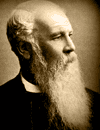 J.C. Ryle
in Do You Believe?
Read in context
The cure for fear in the face of threatenings of the enemies of the Lord is being filled with the Spirit.
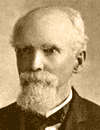 E.M. Bounds
in Answered Prayer (Continued) 1
Read in context
What a common evil the fear of man is—the fear of losing human approbation, the fear of incurring human wrath.
C.H. Spurgeon
in Two Ancient Proverbs
Read in context
God save us from it and make us so brave that we shall never fear any man so as to do a wrong action!
C.H. Spurgeon
in Two Ancient Proverbs
Read in context
It is not fear, but faith, that is the cure for cowardice.
C.H. Spurgeon
in Two Ancient Proverbs
Read in context
The fear of man is keeping many a man and woman in London from coming to Christ and obtaining eternal life.
 R.A. Torrey
in One of the Saddest Utterances That Ever Fell From the Lips of the Son of God
Read in context
They are afraid of the censures of the church or of the world, their faith in God being so weak, and their apprehensions of God being so dim that they practically fear man more than God.
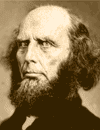 Charles Finney
in On Becoming Acquainted With God
Read in context
No man shall be faithful to God, if he is fearful of man; no man shall find his arm sufficient for him, and his might equal to his emergencies unless he can confidently believe, and quietly wait.
C.H. Spurgeon
in Fear Not (1857)
Read in context
A lot of our spiritual authority is taken away from us by Satan, because we fear men, or seek to please them or impress them, or justify ourselves before them.
Zac Poonen
in (A Spiritual Leader) 11. Freed From All Fears
Read in context
When faith dwells in our hearts, fear cannot dwell there, even though we may have occasional moments of fear.
Zac Poonen
in (A Spiritual Leader) 12. Freeing Others From Fear
Read in context
The important question is what dominates our thinking: Is it fear or faith?
Zac Poonen
in (A Spiritual Leader) 12. Freeing Others From Fear
Read in context
The greatest of all fears however is the fear of death.
Zac Poonen
in (Know Your Enemy) 6. the Defeat of Satan
Read in context
The fear of death is not a religious thing, although religion has infinitely deepened it.
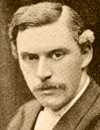 George H. Morrison
in Christ and the Fear of Death
Read in context
Christ then does not deliver us from the deep instinct of self-preservation.
George H. Morrison
in Christ and the Fear of Death
Read in context
It is only when that fear becomes a bondage, and when that instinct grows into a tyranny, that Christ steps in, and breaks the chains that bind us, and sets our trembling feet in a large room.
George H. Morrison
in Christ and the Fear of Death
Read in context
It is no reflection at all upon the divine goodness, that believers, as well as hypocrites, must pass through the valley of the shadow of death; for Christ has taken away the sting of death, so that we need fear no evil.
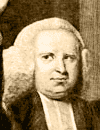 George Whitefield
in The Wise and Foolish Virgins. (Matt. 25:13)
Read in context
We cannot but hate death, even when we have ceased to fear it, and know that for us its sting has been extracted.
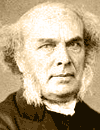 Horatius Bonar
in Rev. 20:14. Death and the Grave
Read in context
A great part of our lives is spent in sorrowing for present or past evils, and in fearing those which are future.
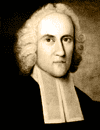 Jonathan Edwards
in Safety, Fulness, and Sweet Refreshment, to Be Found in Christ
Read in context
He, whose heart is fixed, trusting in Christ, need not be afraid of any evil tidings.
Jonathan Edwards
in Safety, Fulness, and Sweet Refreshment, to Be Found in Christ
Read in context
Further, you must not give way to these doubts and alarms and fears, for if you do you will be unfit to meet the trouble.
C.H. Spurgeon
in Heart'S Ease
Read in context
Once assure him that God is with him, and Gideon has no fear but hastens to the battle, bravest of the brave!
C.H. Spurgeon
in The Dream of the Barley Cake
Read in context
Whereas, if we go forth doubting and fearing, and are afraid to trust any farther than we can feel, we are weak as water, and easily overcome.
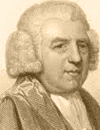 John Newton
in Strength in Trial
Read in context
Generally there is no greater coward in this world than the man who never will acknowledge that he is afraid.
C.H. Spurgeon
in Faith Hand in Hand With Fear
Read in context
It is a sure sign of Grace when a man can trust in his God, for the natural man, when afraid, falls back on some human trust, or he thinks that he will be able to laugh at the occasion of fear.
C.H. Spurgeon
in Faith Hand in Hand With Fear
Read in context
When David is afraid, He trusts in God, but Isaiah trusts in God, first, and then he is not afraid at all!
C.H. Spurgeon
in Fearing and Trusting—trusting and Not Fearing
Read in context
To love, to trust, to hope, are all easy in the Presence of a real living Christ, but if, like the disciples at midnight on the Galilean lake, we think Him to be a mere specter or apparition, we shall be afraid and cry out in fear!
C.H. Spurgeon
in John's First Doxology
Read in context
What Scripture says
- Isaiah 41:10 do not fear, for I am with you
- 2 Timothy 1:7 God has not given us a spirit of fear
- Psalm 56:3 when I am afraid, I put my trust in You
- Proverbs 29:25 the fear of man is a snare
- Luke 12:5 whom you should fear
- Hebrews 2:15 freed from slavery to the fear of death
- Psalm 112:7 he does not fear bad news
- 1 John 4:18 perfect love drives out fear
- Psalm 34:4 He delivered me from all my fears
- Psalm 27:1 the LORD is my light and my salvation
- Hebrews 13:6 the Lord is my helper; I will not be afraid
How this page is made: the quotes are taken word for word from sermons on SermonIndex and checked against them by program before the page is published. The transcripts of audio and video sermons are machine-made, so follow the link to hear the words as they were spoken. The answer above the quotes is an overview with its sources listed; it is not a statement of doctrine by SermonIndex.