
Yes. Scripture says that it is God-breathed, and the Lord Jesus and His apostles treated it as the word of God in every part. The preachers quoted here explain what inspiration means, how God used the human writers, the evidences of fulfilled prophecy, unity and power, and the authority and trust that follow.
Yes. The Bible says of itself that it came from God, and the Lord Jesus and His apostles treated it as the word of God in every part. Paul wrote, "All Scripture is God-breathed and is useful for instruction, for conviction, for correction, and for training in righteousness," (2 Timothy 3:16). Charles Hodge wrote, "The infallibility and divine authority of the Scriptures are due to the fact that they are the word of God; and they are the word of God because they were given by the inspiration of the Holy Ghost."1 A.W. Pink wrote, "It is impossible to over-estimate the importance of the doctrine of the Divine inspiration of Scripture."2
What inspiration means
Paul says that all Scripture is God-breathed. Peter says that men spoke from God as they were carried along by the Holy Spirit. A.A. Hodge wrote, "The Scriptures of the Old and New Testaments, having been given by inspiration, are in the strictest and most direct sense God's Word to us."3 He added, "They are absolutely divine, both as to their infallible truth and supreme authority."4 J.C. Ryle wrote of the Bible, "When you read it, you are not reading the self-taught compositions of poor imperfect men like yourself, but the words of the eternal God."5
Inspiration is not the same thing as the light God gives to every believer who reads. Charles Hodge wrote, "The subjects of inspiration are a few selected persons; the subjects of spiritual illumination are all true believers."1 A.A. Hodge wrote, "Inspiration is a special influence of the Holy Spirit peculiar to the prophets and apostles, and attending them only in the exercise of their functions as accredited teachers."6 L. Gaussen wrote, "A prophet is more or less enlightened by God; but what he says is not more or less inspired."7
Scripture claims it for itself
The claim does not come from later admirers. It runs through the books themselves. God said to Jeremiah, "I have put My words in your mouth." (Jeremiah 1:9). David said at the end of his life, "The Spirit of the LORD spoke through me; His word was on my tongue." (2 Samuel 23:2). W.H. Griffith Thomas wrote, "The Old Testament prophets claimed to be the recipients of divine revelation."8 Pink wrote, "The teaching of the Bible concerning the inspiration of the Scriptures is clear and simple, and uniform throughout."9 He also wrote, "The instruments which God employed to bring to us the Word were themselves conscious of and frankly owned to the fact that they were but His mouthpieces or penmen."10
Gaussen took his stand here and nowhere else. He wrote, "It is solely on the declarations of holy Scripture, therefore, that we have to take our stand."11 He addressed readers who already held the Scriptures to be true, and wrote, "To these we attest, that, being true, they say that they are inspired; and that, being inspired, they declare that they are so throughout: whence we conclude that they necessarily must be so."12
Men spoke from God
Peter tells how the prophetic word came. "For no such prophecy was ever brought forth by the will of man, but men spoke from God as they were carried along by the Holy Spirit." (2 Peter 1:21). The source was God, and the speakers were men. Charles Hodge defined the office: "A prophet, then, in the Scriptural sense of the term, is a spokesman, one who speaks for another, in his name, and by his authority; so that it is not the spokesman but the person for whom he acts, who is responsible for the truth of what is said."1 Charles Spurgeon said, "The Holy Ghost revealed the mind of God to the minds of holy men; he spake the word into their hearts, and thus he made them think as he would have them think and to write what he willed them to write: so that what they spoke and wrote was spoken and written as they were moved by the Holy Ghost."13 He went on, "The Holy Ghost has made this Book himself: every portion of it bears his initial and impress; and thus he has a sword worthy of his own hand, a true Jerusalem blade of heavenly fabric."14
The New Testament often quotes the Old without naming the human writer at all. Peter said in the upper room, "the Scripture had to be fulfilled which the Holy Spirit foretold through the mouth of David" (Acts 1:16). Hebrews introduces a psalm with the words "as the Holy Spirit says" (Hebrews 3:7). Griffith Thomas wrote, "In some passages there is no reference to the human writer of the Scripture, but only to the divine Author."15 He drew the conclusion from the passage in Hebrews: "This use shows that the writer is concerned, not with what the Psalmist said, but with the Holy Spirit's utterances, and this means that the Holy Spirit is the Author of Scripture."16 Pink wrote, "Whoever were the human spokesmen or writers, the language of the Scriptures is the very Word of God."10
How the Lord Jesus treated Scripture
The strongest reason a Christian has is the testimony of Christ. He met the tempter three times with what was written. He said, "Everything must be fulfilled that is written about Me in the Law of Moses, the Prophets, and the Psalms." (Luke 24:44). He said of Moses, "If you had believed Moses, you would believe Me, because he wrote about Me." (John 5:46). Griffith Thomas gave this as the first of three reasons for believing the Scriptures to be God-breathed. He said of the Lord, "Not only before, but after His resurrection, He bore His testimony to the old Testament Scriptures in such a way that they were for Him the absolute and supreme authority."17 Spurgeon said, "Our Lord made the written Word to be the reason for many of his acts: he did this, and he did not do that, because of what the Scriptures had said."18 In another sermon he said, "Not a word derogatory of Scripture ever fell from the lips of Jesus Christ—He always manifested the most reverent regard for every jot and tittle of the Inspired Volume."19 Alexander Whyte said, "And, then, when the Messiah actually came in the flesh He sought out all those Scriptures concerning Himself, and took them home to Himself, and believed them, and made every jot and tittle of them His very own."20
Charles Hodge wrote that we believe Christ, and believe everything else on His authority. He wrote of Him, "He hands us the Old Testament and tells us that it is the Word of God; that its authors spoke by the Spirit; that the Scriptures cannot be broken."1 John Broadus said, "Jesus says that the Scripture is God's Word and cannot be broken and I am content."21 R.A. Torrey wrote, "So if we accept the authority of Christ we must accept the Divine authority of the entire Old Testament."22 A.A. Hodge wrote, "Whatever Christ affirms of the Old Testament, and whatever he promises to the Apostles, and whatever they assert as to the divine influence acting in and through themselves, or as to the infallibility and authority of their writings, must be true."23
Not a stroke of a pen
The Lord did not speak of the Scriptures in general terms only. He said, "For I tell you truly, until heaven and earth pass away, not a single jot, not a stroke of a pen, will disappear from the Law until everything is accomplished." (Matthew 5:18). When the Jews charged Him with blasphemy He rested His answer on a single word in a psalm, and added, "the Scripture cannot be broken" (John 10:35). Charles Hodge wrote of that argument, "The use of that word, therefore, according to Christ's view of the Scripture, was determined by the Spirit of God."1 Spurgeon said, "He comes not to take away the law and the prophets, yea, not a jot or a tittle does he destroy, so careful is he of the Scriptures of truth."24 He continued, "We learn from him to believe not only in inspired words, but in inspired jots and tittles."25
Luke records the same teaching: "But it is easier for heaven and earth to pass away than for a single stroke of a pen to drop out of the Law." (Luke 16:17). Horatius Bonar wrote, "Heaven and earth may pass away, but one jot or one tittle of what is written in Scripture cannot."26
The apostles and the New Testament
The Lord promised His apostles the same Spirit who had spoken by the prophets. "But the Advocate, the Holy Spirit, whom the Father will send in My name, will teach you all things and will remind you of everything I have told you." (John 14:26). Benjamin B. Warfield wrote, "It is because the apostles were Christ's representatives, that what they did and said and wrote as such, comes to us with divine authority."27
The apostles knew what they had been given. Paul wrote, "And this is what we speak, not in words taught us by human wisdom, but in words taught by the Spirit, expressing spiritual truths in spiritual words." (1 Corinthians 2:13). Charles Hodge wrote of that passage, "The thoughts, the truths made known, and the words in which they are recorded, are declared to be equally from the Spirit."1 Paul told the Corinthians, "If anyone considers himself a prophet or spiritual person, let him acknowledge that what I am writing you is the Lord's command." (1 Corinthians 14:37). He thanked God for the way the Thessalonians had heard him: "And we continually thank God because, when you received the word of God that you heard from us, you accepted it not as the word of men, but as the true word of God—the word which is now at work in you who believe." (1 Thessalonians 2:13). J.C. Philpot wrote, "To this point then we are come, that the gospel which Paul preached was not the word of men, that is of natural, unenlightened, uninspired men, but the word of God."28 Thomas Manton wrote that there is "a receiving of the word as the word of man, and a receiving of the word as the word of God"29. Peter set Paul's letters beside the older books. He says that unstable people distort them "as they do the rest of the Scriptures" (2 Peter 3:16). Spurgeon said of the way Hebrews argues from single words, "Those who reject verbal Inspiration must, in effect, condemn the great Apostle of the Gentiles, whose teaching is so frequently based upon a Word of God."30
Torrey summed up where the Lord's testimony leads: "You cannot deny the Divine origin of this book, its Divine sufficiency and Inerrancy without discrediting Jesus Christ."31
The human writers
God did not set aside the men He used. Moses, David, Isaiah, Luke and Paul each write in their own manner. Hebrews says, "On many past occasions and in many different ways, God spoke to our fathers through the prophets." (Hebrews 1:1). Ryle wrote, "Just in the same way the books of the Old and New Testaments are all inspired truth, and yet the aspect of that truth varies according to the mind through which the Holy Ghost makes it flow."32 He went on, "The handwriting and style of the writers differ enough to prove that each had a distinct individual being; but the Divine Guide who dictates and directs the whole is always one."33 Spurgeon wrote, "Although the many books, which compose the library, called the Bible, were written by some forty or more authors, and each writer has his own idiosyncracy of utterance, yet the style of the entire volume is one."34
The preachers quoted here do not teach that the writers were turned into machines. Pink wrote, "The Scriptures are the inspired Word of God, yet were they written by men who were something more than machines in the hand of the Spirit."35 In another place he wrote of the Scriptures, "They are Divinely inspired in every jot and tittle, yet the superintending control of the Spirit over the penmen did not exclude nor interfere with the natural exercise of their faculties."36 A.A. Hodge wrote, "The human writers have produced each his part in the free and natural exercise of his personal faculties under his historical conditions."37 He gave the reason: "And if he inspires human agents to communicate his revelation in writing, he must use them in a manner consistent with their nature as rational and spontaneous agents."38 Griffith Thomas wrote, "God used the natural characteristics of the writers, and through them conveyed his truth."39 Charles Hodge wrote, "If in fact the sacred writers retain each his own style and mode of thought, then we must renounce any theory which assumes that inspiration obliterates or suppresses all individual peculiarities."1
Gaussen thought that much confusion came from looking in the wrong place. He wrote, "It is because people have almost always wished to view inspiration in the man, while it ought to have been seen only in the book."40 He said of the reader's part, "It is the book that is inspired, and altogether inspired: to be assured of this ought to satisfy us."41 Arthur Pierson wrote, "We see that each of these sixty-six books is a member of one organic body of Scripture, and each of the forty human writers a mouthpiece of one Divine speaker."42
All of it, and the words
Paul says all Scripture. The preachers quoted here refuse to mark off some parts as more inspired than others. Charles Hodge wrote, "The Church doctrine denies that inspiration is confined to parts of the Bible; and affirms that it applies to all the books of the sacred canon."1 A.A. Hodge wrote, "It is injurious to distinguish between different degrees of inspiration, as if the several portions of the Scriptures were in different degrees God's word, while in truth the whole is equally and absolutely so."43 Spurgeon wrote, "The Scriptures are as true in Genesis as in Revelation, and the five books of Moses are as inspired as the four Gospels."44 Gaussen wrote, "The history of the fall of Ananias and Sapphira is as divinely inspired, as is that of the fall of Satan and his angels."45
They also hold that inspiration reaches the words. They argue that thoughts are given in words, and they point to places where the Lord and the apostles rest an argument on a single word. Spurgeon speaks of verbal inspiration, and Griffith Thomas of verbal or plenary inspiration. Torrey uses the word inerrancy, and A.A. Hodge speaks of the original autograph copies. These are the terms of the preachers quoted. Pink wrote, "A writing that is inspired by God self-evidently implies, in the very expression, that the words are the words of God."9 Griffith Thomas wrote, "But in Scripture we do not have mechanical dictation, but inspiration; and whether we call it verbal or plenary, the phrase is not intended to say how God does it, but how far it had gone."46 He asked how the thoughts could be sure if the words were not, and wrote, "Surely inspiration cannot mean an uninspired account of inspired thoughts."47 Ryle wrote, "It is useless to quote texts if we once admit that not all the words of which they are composed were given by inspiration."48 A.A. Hodge wrote of the influence under which the sacred writers wrote, "The effect being that in the original autograph copies the language expresses the thought God intended to convey with infallible accuracy, so that the words as well as the thoughts are God's revelation to us."49
Pink rejected the saying that the Bible only contains the word of God. He wrote, "To say that the Bible is not the Word of God but merely contains the Word of God is the figment of an ill-employed ingenuity and an unholy attempt to depreciate and invalidate the supreme authority of the Oracles of God."9 The psalmist had said it long before: "The entirety of Your word is truth, and all Your righteous judgments endure forever." (Psalm 119:160).
Fulfilled prophecy
Preachers give evidences as well as texts. The first is prophecy. God Himself appeals to it: "I declare the end from the beginning, and ancient times from what is still to come." (Isaiah 46:10). Peter said in the temple, "But in this way God has fulfilled what He foretold through all the prophets, saying that His Christ would suffer." (Acts 3:18). Torrey wrote, "The Bible, both the Old Testament and the New Testament, is very largely taken up with predictions."50 Benjamin Keach wrote, "Another demonstration or proof, that the Scriptures are from God, is the exact and punctual fulfilling of the prophecies therein contained."51 Pierson wrote, "A prophecy is not confirmed as a proof of revelation until fulfilled; and then it evidences God's hand, in proportion to the extent and accuracy of its predictions."52 Charles Hodge wrote, "The coincidence between the prophecies and the fulfilment admits of no rational solution, except that the Bible is the work of God; or, that holy men of old spake as they were moved by the Holy Ghost."53 Zac Poonen wrote, "Secondly, we accept the Bible as God's infallible Word because so large a number of detailed prophecies contained in it have been fulfilled."54
The unity of the Bible
The second evidence is that so many books by so many hands make one book. Torrey wrote of it, "On the surface there is oftentimes apparent contradiction, and the unity only comes out after deep and protracted study."22 He added, "More wonderful yet is the organic character of this unity, beginning in the first book and growing till you come to its culmination in the last book of the Bible."22 Charles Hodge wrote, "The several books of which the Scriptures are composed were written by some fifty different authors living in the course of fifteen hundred years and yet they are found to be an organic whole, the product of one mind."55 Pink wrote, "Yet despite these varying circumstances, conditions and workmen, the Bible is one Book, behind its many parts there is an unmistakable organic unity."56 He added, "The more one really studies the Bible the more one is convinced that behind the many human mouths there is One overruling, controlling Mind."56 Pierson wrote, "The Bible is a structure planned and wrought out in the mind of a divine Architect, who, through the ages, superintended His own workmen and work."57 Griffith Thomas found the centre of that unity in a Person: "Christ is thus the key to the whole Bible, and gives it its historical and spiritual unity."58 The Lord had shown it to two disciples on the road to Emmaus. "And beginning with Moses and all the Prophets, He explained to them what was written in all the Scriptures about Himself." (Luke 24:27).
Its contents, its power and its preservation
The Bible tells what no man could have found out, and it does what no other book does. Ryle wrote, "The extraordinary contents of the Bible are a great fact which can only be explained by admitting its inspiration."48 He wrote, "It is a simple broad fact that, in the matter of contents, the Bible stands entirely alone, and no other book is fit to be named in the same day with it."48 He also wrote, "To tell us that man's unassisted mind could have written the Bible is simply ridiculous."48 Torrey wrote of its power to change lives, "A stream never rises higher than its source, and a book that has a power to lift men up to God that no other book has, must have come down from God in a way that no other book was."22
It has also outlived every attempt to destroy it. Keach wrote, "The Scriptures did not only survive, but have triumphed over, all the oppositions of the devil and the world."59 Torrey wrote, "The Book that has so triumphantly withstood the terrific assaults of eighteen centuries is not likely to succumb in a day."60 Isaiah had said, "The grass withers and the flowers fall, but the word of our God stands forever." (Isaiah 40:8).
The witness of the Spirit
Arguments can silence an objector. They cannot of themselves give a man the settled persuasion that God is speaking to him in this book. That is the work of the Spirit who gave it. Jesus said, "If anyone desires to do His will, he will know whether My teaching is from God or whether I speak on My own." (John 7:17). Torrey wrote, "The Holy Spirit sets His seal in the soul of every believer to the Divine authority of the Bible."22 He went on, "It is possible to get to a place where we need no argument to prove that the Bible is God's Word."22 He had noticed which way men move: "The nearer men live to God the more confident they are that the Bible is God's Word; the farther they get away from Him the more confident they are that it is not."22 Spurgeon said, "They that have been much with Christ always show a profound reverence for the Word of God."61
Difficulties
No one quoted here pretends that the doctrine is free from hard questions. How the Spirit worked on the minds of the writers is not explained to us. Griffith Thomas said, "We must distinguish between our theories of the method and the blessed reality of the fact of inspiration; and this is exactly according to what we know of other aspects of experience."17 Ryle wrote, "It is poor philosophy to say we will believe nothing unless we can understand everything!"48 A.J. Gordon wrote, "He who starts out and proceeds under the conviction that the Bible is the infallible word of God, will find discrepancies constantly turning into unisons under his study."62
What follows
If Scripture is God-breathed, it has God's authority. Pink wrote, "The knowledge that the Scriptures are inspired by the Holy Spirit involves definite obligations."63 He wrote, "It is useless to discuss any doctrine taught by the Bible until you are prepared to acknowledge, unreservedly, that the Bible is the final court of appeal."2 A.W. Tozer wrote of the Bible, "It is the infallible declaration of His mind for us put into our familiar human words."64 Edward Payson wrote of the way the Bible must be received: "You must also receive it not as the word of man, but as the word of God, as a book which speaks with all his authority, and from whose decisions there is no appeal."65 A.A. Hodge wrote, "Saving faith receives as true all the contents of God's Word, without exception."66
It is also to be trusted. Torrey wrote, "The proof that the whole Bible is the Word of God is, as we have recently seen, unanswerable and, therefore, the whole Bible is worthy of your absolute confidence."67 He wrote of those who know it, "The men who know the Bible best are the men who trust it most and love it best."60 Spurgeon wrote, "It is ours in these evil days to hold to the infallible inspiration of the Word, and to affirm it in unmistakable terms."68 He said, "The word, the simple, pure, infallible word of God, we must live upon if we are to become strong against error, and tenacious of truth."69
And it is to be read and obeyed. Pink wrote, "To neglect God's Word is virtually to tell Him that He made a mistake in being at so much trouble to communicate it."63 Ryle wrote, "A land of unwalled villages is not more defenceless against an enemy than a man who neglects his Bible."48 Griffith Thomas said, "The Scriptures known, trusted, obeyed, and continued in; these things are the secret of personal power."17 The Lord prayed for His disciples, "Sanctify them by the truth; Your word is truth." (John 17:17).
- Charles Hodge, "The Protestant Rule of Faith" (sermon).
- A.W. Pink, "The Divine Inspiration of the Bible INTRODUCTION" (sermon).
- A.A. Hodge, Writings of A A Hodge, "Of Saving Faith".
- A.A. Hodge, Writings of A A Hodge, "Of Saving Faith".
- J.C. Ryle, Gods Book, The Bible, "No Book Like The Bible".
- A.A. Hodge, Writings of A A Hodge, "S. The Inspiration of The Bible".
- L. Gaussen, The Divine Inspiration of the Bible, "Brief Didactic Abstract of the Doctrine of the Divine Inspiration".
- Griffith, Writings of griffith, "Inspiration of the Bible".
- A.W. Pink, "The Divine Inspiration of the Bible CHAPTER THIRTEEN: VERBAL INSPIRATION" (sermon).
- A.W. Pink, "THE DOCTRINE OF REVELATION Chapter 8 THE HOLY BIBLE DECLARES IT COMES FROM GOD HIMSELF" (sermon).
- L. Gaussen, The Divine Inspiration of the Bible, "Definition Of Theopneustia".
- L. Gaussen, The Divine Inspiration of the Bible, "Definition Of Theopneustia".
- C.H. Spurgeon, Spurgeons Sermons Volume 37 1891, "The Sword of the Spirit".
- C.H. Spurgeon, Spurgeons Sermons Volume 37 1891, "The Sword of the Spirit".
- Griffith, Writings of griffith, "Inspiration of the Bible".
- Griffith, Writings of griffith, "Inspiration of the Bible".
- W.H. Griffith Thomas, "The Ministry in the Pastoral Epistles" (sermon).
- C.H. Spurgeon, Spurgeons Sermons Volume 37 1891, "The Private Thoughts and Words of Jesus".
- C.H. Spurgeon, Charles Spurgeon Sermons (63 Volumes) Part2 - Volume 1, "Luke 24,36-44 #1958 - The First Appearance of the".
- Alexander Whyte, "Our Lord as a Believing Man" (sermon).
- John A. Broadus, "One Jesus" (sermon).
- R.A. Torrey, "Ten Reasons Why I Believe the Bible Is the Word of God" (sermon).
- A.A. Hodge, Writings of A A Hodge, "S. The Inspiration of The Bible".
- C.H. Spurgeon, Spurgeons Sermons Volume 37 1891, "The Private Thoughts and Words of Jesus".
- C.H. Spurgeon, Spurgeons Sermons Volume 37 1891, "The Private Thoughts and Words of Jesus".
- Horatius Bonar, "The Gospel of the Holy Spirit's Love" (sermon).
- Benjamin B. Warfield, A Benjamin Warfield Collection, "The Authority & Inspiration of the Scriptures".
- J.C. Philpot, "The Word of Men and the Word of God" (sermon).
- Thomas Manton, Writings of Thomas Manton - Volume 1, "Sermon 08".
- C.H. Spurgeon, "First, King of Righteousness, and after That, King of Peace" (sermon).
- R.A. Torrey, Is the Bible the Inerrant Word of God, "Who Says, The Bible is the Inerrant Word of God".
- J.C. Ryle, Gods Book, The Bible, "No Book Like The Bible".
- J.C. Ryle, Gods Book, The Bible, "No Book Like The Bible".
- C.H. Spurgeon, The Clue of the Maze (70 Articles), "Clues #31-40".
- A.W. Pink, "The Attributes of God 2. the Decrees of God" (sermon).
- A.W. Pink, Writings of A W Pink - Volume 1, "Chapter 2".
- A.A. Hodge, Writings of A A Hodge, "S. The Inspiration of The Bible".
- A.A. Hodge, Writings of A A Hodge, "S. The Inspiration of The Bible".
- Griffith, Writings of griffith, "Inspiration of the Bible".
- L. Gaussen, The Divine Inspiration of the Bible, "Definition Of Theopneustia".
- L. Gaussen, The Divine Inspiration of the Bible, "Definition Of Theopneustia".
- Arthur Pierson, Knowing the Scriptures - Rules Methods Bible Study, "Recurrence of Thought and Idea".
- A.A. Hodge, Writings of A A Hodge, "S. The Inspiration of The Bible".
- C.H. Spurgeon, The Golden Alphabet, "Exposition of Psalm 119:153-160".
- L. Gaussen, The Divine Inspiration of the Bible, "On Sacred Criticism, in the Relations it Bears to Divine Inspiration".
- Griffith, Writings of griffith, "Inspiration of the Bible".
- Griffith, Writings of griffith, "Inspiration of the Bible".
- J.C. Ryle, "Inspiration" (sermon).
- A.A. Hodge, Writings of A A Hodge, "S. The Inspiration of The Bible".
- R.A. Torrey, Is the Bible the Inerrant Word of God, "Who Says, The Bible is the Inerrant Word of God".
- Benjamin Keach, Writings of Benjamin Keach - Volume 1, "The divine authority of the holy scriptures".
- Arthur T. Pierson, Writings of Arthur T Pierson - Volume 1, "Chapter ii.the prophetic seal".
- Charles Hodge, Writings of Charles Hodge - Volume 1, "Deistical Rationalism".
- Zac Poonen, "(The Supreme Priorities) 2. One Thing Is Needful" (sermon).
- Charles Hodge, Writings of Charles Hodge - Volume 1, "Deistical Rationalism".
- A.W. Pink, "The Divine Inspiration of the Bible CHAPTER SEVEN: THE WONDERFUL UNITY OF THE BIBLE…" (sermon).
- Arthur T. Pierson, Writings of Arthur T Pierson - Volume 1, "Chapter vii.the moral beauty of the bible".
- Griffith, Writings of griffith, "Unity of the Bible".
- Benjamin Keach, Writings of Benjamin Keach - Volume 1, "The divine authority of the holy scriptures".
- R.A. Torrey, "Is the Bible in Danger?" (sermon).
- C.H. Spurgeon, Spurgeons Sermons Volume 37 1891, "The Private Thoughts and Words of Jesus".
- Adoniram J. Gordon, Writings of Adoniram J Gordon, "The Inspiration of the Spirit".
- A.W. Pink, "The Divine Inspiration of the Bible CHAPTER FOURTEEN: APPLICATION OF THE ARGUMENT" (sermon).
- A.W. Tozer, "The Speaking Voice" (sermon).
- Edward Payson, Writings of Edward Payson, "S. The condition of Men without the BIBLE".
- A.A. Hodge, Writings of A A Hodge, "Of Saving Faith".
- R.A. Torrey, Is the Bible the Inerrant Word of God, "What To Do With The Bible".
- C.H. Spurgeon, My Sermon Notes, "Psalms (Sections 46-54)".
- C.H. Spurgeon, "The Talking Book" (sermon).
In their own words
Each line below is quoted exactly from a sermon on this site. Follow the link to hear or read it where it was said.
The infallibility and divine authority of the Scriptures are due to the fact that they are the word of God; and they are the word of God because they were given by the inspiration of the Holy Ghost.
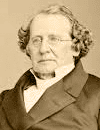 Charles Hodge
in The Protestant Rule of Faith
Read in context
The subjects of inspiration are a few selected persons; the subjects of spiritual illumination are all true believers.
Charles Hodge
in The Protestant Rule of Faith
Read in context
A prophet, then, in the Scriptural sense of the term, is a spokesman, one who speaks for another, in his name, and by his authority; so that it is not the spokesman but the person for whom he acts, who is responsible for the truth of what is said.
Charles Hodge
in The Protestant Rule of Faith
Read in context
He hands us the Old Testament and tells us that it is the Word of God; that its authors spoke by the Spirit; that the Scriptures cannot be broken.
Charles Hodge
in The Protestant Rule of Faith
Read in context
The use of that word, therefore, according to Christ's view of the Scripture, was determined by the Spirit of God.
Charles Hodge
in The Protestant Rule of Faith
Read in context
The thoughts, the truths made known, and the words in which they are recorded, are declared to be equally from the Spirit.
Charles Hodge
in The Protestant Rule of Faith
Read in context
If in fact the sacred writers retain each his own style and mode of thought, then we must renounce any theory which assumes that inspiration obliterates or suppresses all individual peculiarities.
Charles Hodge
in The Protestant Rule of Faith
Read in context
The Church doctrine denies that inspiration is confined to parts of the Bible; and affirms that it applies to all the books of the sacred canon.
Charles Hodge
in The Protestant Rule of Faith
Read in context
It is impossible to over-estimate the importance of the doctrine of the Divine inspiration of Scripture.
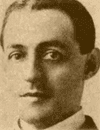 A.W. Pink
in The Divine Inspiration of the Bible INTRODUCTION
Read in context
It is useless to discuss any doctrine taught by the Bible until you are prepared to acknowledge, unreservedly, that the Bible is the final court of appeal.
A.W. Pink
in The Divine Inspiration of the Bible INTRODUCTION
Read in context
The teaching of the Bible concerning the inspiration of the Scriptures is clear and simple, and uniform throughout.
A.W. Pink
in The Divine Inspiration of the Bible CHAPTER THIRTEEN: VERBAL INSPIRATION
Read in context
A writing that is inspired by God self-evidently implies, in the very expression, that the words are the words of God.
A.W. Pink
in The Divine Inspiration of the Bible CHAPTER THIRTEEN: VERBAL INSPIRATION
Read in context
To say that the Bible is not the Word of God but merely contains the Word of God is the figment of an ill-employed ingenuity and an unholy attempt to depreciate and invalidate the supreme authority of the Oracles of God.
A.W. Pink
in The Divine Inspiration of the Bible CHAPTER THIRTEEN: VERBAL INSPIRATION
Read in context
The instruments which God employed to bring to us the Word were themselves conscious of and frankly owned to the fact that they were but His mouthpieces or penmen.
A.W. Pink
in THE DOCTRINE OF REVELATION Chapter 8 THE HOLY BIBLE DECLARES IT COMES FROM GOD HIMSELF
Read in context
Whoever were the human spokesmen or writers, the language of the Scriptures is the very Word of God.
A.W. Pink
in THE DOCTRINE OF REVELATION Chapter 8 THE HOLY BIBLE DECLARES IT COMES FROM GOD HIMSELF
Read in context
Not only before, but after His resurrection, He bore His testimony to the old Testament Scriptures in such a way that they were for Him the absolute and supreme authority.
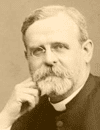 W.H. Griffith Thomas
in The Ministry in the Pastoral Epistles
Read in context
We must distinguish between our theories of the method and the blessed reality of the fact of inspiration; and this is exactly according to what we know of other aspects of experience.
W.H. Griffith Thomas
in The Ministry in the Pastoral Epistles
Read in context
The Scriptures known, trusted, obeyed, and continued in; these things are the secret of personal power.
W.H. Griffith Thomas
in The Ministry in the Pastoral Epistles
Read in context
And, then, when the Messiah actually came in the flesh He sought out all those Scriptures concerning Himself, and took them home to Himself, and believed them, and made every jot and tittle of them His very own.
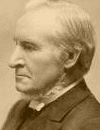 Alexander Whyte
in Our Lord as a Believing Man
Read in context
Jesus says that the Scripture is God's Word and cannot be broken and I am content.
 John A. Broadus
in One Jesus
Read in context
So if we accept the authority of Christ we must accept the Divine authority of the entire Old Testament.
 R.A. Torrey
in Ten Reasons Why I Believe the Bible Is the Word of God
Read in context
On the surface there is oftentimes apparent contradiction, and the unity only comes out after deep and protracted study.
R.A. Torrey
in Ten Reasons Why I Believe the Bible Is the Word of God
Read in context
More wonderful yet is the organic character of this unity, beginning in the first book and growing till you come to its culmination in the last book of the Bible.
R.A. Torrey
in Ten Reasons Why I Believe the Bible Is the Word of God
Read in context
A stream never rises higher than its source, and a book that has a power to lift men up to God that no other book has, must have come down from God in a way that no other book was.
R.A. Torrey
in Ten Reasons Why I Believe the Bible Is the Word of God
Read in context
The Holy Spirit sets His seal in the soul of every believer to the Divine authority of the Bible.
R.A. Torrey
in Ten Reasons Why I Believe the Bible Is the Word of God
Read in context
It is possible to get to a place where we need no argument to prove that the Bible is God's Word.
R.A. Torrey
in Ten Reasons Why I Believe the Bible Is the Word of God
Read in context
The nearer men live to God the more confident they are that the Bible is God's Word; the farther they get away from Him the more confident they are that it is not.
R.A. Torrey
in Ten Reasons Why I Believe the Bible Is the Word of God
Read in context
Heaven and earth may pass away, but one jot or one tittle of what is written in Scripture cannot.
 Horatius Bonar
in The Gospel of the Holy Spirit's Love
Read in context
To this point then we are come, that the gospel which Paul preached was not the word of men, that is of natural, unenlightened, uninspired men, but the word of God.
 J.C. Philpot
in The Word of Men and the Word of God
Read in context
Those who reject verbal Inspiration must, in effect, condemn the great Apostle of the Gentiles, whose teaching is so frequently based upon a Word of God.
 C.H. Spurgeon
in First, King of Righteousness, and after That, King of Peace
Read in context
The Scriptures are the inspired Word of God, yet were they written by men who were something more than machines in the hand of the Spirit.
A.W. Pink
in The Attributes of God 2. the Decrees of God
Read in context
It is useless to quote texts if we once admit that not all the words of which they are composed were given by inspiration.
 J.C. Ryle
in Inspiration
Read in context
The extraordinary contents of the Bible are a great fact which can only be explained by admitting its inspiration.
J.C. Ryle
in Inspiration
Read in context
It is a simple broad fact that, in the matter of contents, the Bible stands entirely alone, and no other book is fit to be named in the same day with it.
J.C. Ryle
in Inspiration
Read in context
To tell us that man's unassisted mind could have written the Bible is simply ridiculous.
J.C. Ryle
in Inspiration
Read in context
It is poor philosophy to say we will believe nothing unless we can understand everything!
J.C. Ryle
in Inspiration
Read in context
A land of unwalled villages is not more defenceless against an enemy than a man who neglects his Bible.
J.C. Ryle
in Inspiration
Read in context
Secondly, we accept the Bible as God's infallible Word because so large a number of detailed prophecies contained in it have been fulfilled.
 Zac Poonen
in (The Supreme Priorities) 2. One Thing Is Needful
Read in context
Yet despite these varying circumstances, conditions and workmen, the Bible is one Book, behind its many parts there is an unmistakable organic unity.
A.W. Pink
in The Divine Inspiration of the Bible CHAPTER SEVEN: THE WONDERFUL UNITY OF THE BIBLE…
Read in context
The more one really studies the Bible the more one is convinced that behind the many human mouths there is One overruling, controlling Mind.
A.W. Pink
in The Divine Inspiration of the Bible CHAPTER SEVEN: THE WONDERFUL UNITY OF THE BIBLE…
Read in context
The Book that has so triumphantly withstood the terrific assaults of eighteen centuries is not likely to succumb in a day.
R.A. Torrey
in Is the Bible in Danger?
Read in context
The men who know the Bible best are the men who trust it most and love it best.
R.A. Torrey
in Is the Bible in Danger?
Read in context
The knowledge that the Scriptures are inspired by the Holy Spirit involves definite obligations.
A.W. Pink
in The Divine Inspiration of the Bible CHAPTER FOURTEEN: APPLICATION OF THE ARGUMENT
Read in context
To neglect God's Word is virtually to tell Him that He made a mistake in being at so much trouble to communicate it.
A.W. Pink
in The Divine Inspiration of the Bible CHAPTER FOURTEEN: APPLICATION OF THE ARGUMENT
Read in context
It is the infallible declaration of His mind for us put into our familiar human words.
 A.W. Tozer
in The Speaking Voice
Read in context
The word, the simple, pure, infallible word of God, we must live upon if we are to become strong against error, and tenacious of truth.
C.H. Spurgeon
in The Talking Book
Read in context
What Scripture says
- 2 Timothy 3:16 all Scripture is God-breathed
- 2 Peter 1:21 men spoke from God as they were carried along by the Holy Spirit
- John 10:35 the Scripture cannot be broken
- Matthew 5:18 not a jot or a stroke of a pen will disappear from the Law
- 2 Samuel 23:2 the Spirit of the LORD spoke through David
- 1 Corinthians 2:13 words taught by the Spirit
- 1 Thessalonians 2:13 received not as the word of men but as the word of God
- Hebrews 1:1 God spoke to the fathers through the prophets
- Luke 24:44 everything written about Christ must be fulfilled
- Psalm 119:160 the entirety of Your word is truth
- John 17:17 Your word is truth
How this page is made: the quotes are taken word for word from sermons on SermonIndex and checked against them by program before the page is published. The transcripts of audio and video sermons are machine-made, so follow the link to hear the words as they were spoken. The answer above the quotes is an overview with its sources listed; it is not a statement of doctrine by SermonIndex.