
To ask, seek and knock is to come to God in prayer as a child to his father and to keep on with growing earnestness until He answers. The preachers quoted here explain each of the three words, the promise to everyone who asks, the Father who gives bread and not a stone, the good things and the Holy Spirit He gives, and why He makes us knock.
To ask, seek and knock is to come to God in prayer as a child comes to his father, and to keep coming with growing earnestness until He answers. Jesus gave the command with a promise attached to each word: "Ask, and it will be given to you; seek, and you will find; knock, and the door will be opened to you." (Matthew 7:7). He grounded it on the goodness of the Father, who gives good things to those who ask Him. John Calvin wrote, "Accordingly, Christ, in order to excite us powerfully to this part of our duty, not only enjoins what we ought to do, but promises that our prayers shall not be fruitless."1
Where the words stand
Jesus spoke these words twice. In Matthew they come in the Sermon on the Mount, after His warnings about judging others. In Luke they follow the prayer He gave when a disciple said, "Lord, teach us to pray" (Luke 11:1) and the story of the friend who knocked at midnight. That story and the lesson of persistence are opened on the page on importunate prayer. This page looks at the three words themselves and at the Father who answers them.
Alexander Maclaren wrote, "Now, it is to be remembered that these words occur in that great discourse of our Lord's which is called the Sermon on the Mount."2 Calvin noted who was being taught: "But as Christ here addresses disciples, he merely reminds us in what manner our heavenly Father is pleased to bestow upon us his gifts."3 Andrew Murray wrote of the setting, "To see what this childlike living is, in which childlike asking and believing have their ground, we have only to notice what our Lord teaches in the Sermon on the Mount of the Father and His children."4 He added, "In it the prayer-promises are imbedded in the life-precepts; the two are inseparable."4
A command to pray
The first thing in the text is a command. Jesus does not only permit prayer. He tells His disciples to ask. Calvin wrote, "Ask, and it shall be given you It is an exhortation to prayer: and as in this exercise of religion, which ought to be our first concern, we are so careless and sluggish, Christ presses the same thing upon us under three forms of expression."5 E.M. Bounds wrote, "Prayer is asking, seeking and knocking at a door for something we have not, which we desire, and which God has promised to us."6
God has tied many of His gifts to the asking. James says, "You do not have, because you do not ask." (James 4:2). Charles Spurgeon said, "It is the usual rule with God to make us pray before He gives the blessing."7 Richard Sibbes wrote, "As some fathers will give nothing to their children, but they will have them first ask it of them, so God will give us nothing but what we pray for."8 Calvin wrote, "These words imply, that those who are destitute of what is necessary, and yet do not resort to this remedy for their poverty, are justly punished for their slothfulness."9
The command is also an encouragement. Calvin wrote, "Again, whenever we engage in prayer, or whenever we feel that our ardor in prayer is not sufficiently strong, we ought to remember the gentle invitation, by which Christ assures us of God's fatherly kindness."10 Alexander Whyte wrote, "It is almost past belief, that the best rewarded of all our works, should just be to ask, and to seek, and to knock."11
Ask
To ask is the simplest of the three. It is to tell God what we need and to request it of Him. Maclaren wrote, "To ask implies the will of a person that will hear and respond and has the power to bestow."12 Spurgeon said, "Ask—that is, in the quiet of your spirit, speak with God concerning your needs and humbly beg Him to grant your desires—this is a good and acceptable form of prayer."7 He told his hearers how to come: "Ask as a poor mendicant who is hungry and pleads for bread."7
Asking is the language of a child. Samuel Chadwick wrote, "It is natural for a child to ask of its father, and it is reasonable for the father to listen to the request of his child."13 He also wrote, "Whatever difficulties may remain, intercourse must be possible between father and child, and to suggest that a child may not ask of a father would be to empty the terms of all meaning."14 Spurgeon said, "Ask for everything you need, whatever it may be—if it is a right and good thing, it is promised to the sincere asker!"7
Seek
To seek is more than to ask. It adds effort to the request. Maclaren wrote, "To 'seek' is more than to ask, for it includes active exertion; and for want of seeking by conduct appropriate to our prayers, we often ask in vain."15 In another place he wrote, "To seek is not, as I think, quite the same thing, but rather expresses the idea of effort, the personal effort which ought to accompany and will accompany all real prayer."16 Spurgeon said, "Seek with all diligence, adding to the earnestness of the beggar, the careful watchfulness of the jeweler who is seeking for a gem."7 He told his hearers to use every means God has given: "Add to asking the study of the promises of God, a diligent hearing of His Word, a devout meditation upon the way of salvation and all such means of Grace as may bring you the blessing."7
Seeking also has God Himself as its end, and not only His gifts. God said through Jeremiah, "You will seek Me and find Me when you search for Me with all your heart." (Jeremiah 29:13). Murray wrote, "SEEK is the word Scripture uses of God Himself; Christ assures me that I can find Himself."17 Campbell Morgan, preaching on Hebrews 11:6, said, "God is a rewarder of such as investigate, crave, demand Him; or, in the simpler words of Jesus, such as ask, seek, knock."18 Hebrews says that God "rewards those who earnestly seek Him." (Hebrews 11:6).
Knock
To knock is to stand at a door that seems shut and to keep on until it opens. Maclaren wrote, "Knocking is more than either, for it implies a continuous hammering on the door, like Peter's when he stood in the morning twilight at Mary's gate."19 When Peter was set free from prison he did just that. "But Peter kept on knocking, and when they opened the door and saw him, they were astounded." (Acts 12:16). Murray wrote, "But it is not enough to find God in time of need, without coming to abiding fellowship: KNOCK speaks of admission to dwell with Him and in Him."17
The man who knocks cannot open the door himself. Spurgeon said, "Here you need the Lord's own interference—you can ask and receive, you can seek and find—but you cannot knock and open!"7 He went on, "The Lord must open the door, Himself, or you are shut out forever."7 J.C. Ryle wrote, "Let us knock loudly at the door of grace, like Mercy in Pilgrim's Progress, as if we must perish unless heard."20 Thomas Brooks wrote, "An importunate soul in prayer is like the poor beggar who prays and knocks, who prays and waits, who prays and works, who knocks and begs—and will not stir from the door until he has an alms."21
Three words that rise
Many preachers see a rising scale in the three words. Spurgeon said, "In these three exhortations there would appear to be a gradation—it is the same thought put into another shape and made more forcible."7 Bounds wrote, "Asking, seeking, knocking, are ascending rounds in the ladder of successful prayer."22 In another book he wrote, "We are to ask, but to the asking we must add seeking, and seeking must pass into the full force of effort in knocking."23 Maclaren wrote of Luke's account, "The efforts enjoined are in an ascending scale, and 'ask' and 'knock' allude to the parable."24
Spurgeon gave a second way of seeing the order: "Once again, ask for what you need, seek for what you have lost, knock for that from which you are excluded."7 However the order is read, the three words together call for prayer that does not give up.
A promise to every one
The second verse repeats the first as a law of the kingdom. "For everyone who asks receives; he who seeks finds; and to him who knocks, the door will be opened." (Matthew 7:8). Spurgeon said, "We are assured that asking is attended with receiving, that seeking is attended with finding, that knocking will lead to opening."25 He noticed that the promise is given to each word separately. "The clauses of the promise before us are not put, as we say, in law, jointly—he that asks and seeks and knocks shall receive—but they are put severally—he that asks shall have, he that seeks shall find, he that knocks shall have it opened."26
Murray wrote, "Next to the revelation of the Father's love, there is, in the whole course of the school of prayer, not a more important lesson than this: Every one that asketh, receiveth."17 He also wrote, "Let every learner in the school of Christ therefore take the Master's word in all simplicity: Every one that asketh, receiveth."17 John Wesley said, "So that here is no room for any to be discouraged, as though they might ask or seek or knock in vain."27 Edward Payson said of the man who will not ask God for light, "If he did, he would infallibly obtain it; for every one that asketh, receiveth."28
Asking aright
The promise is wide, but it is not a promise to every wish. Wesley wrote on the verse, "For every one that asketh receiveth - Provided he ask aright, and ask what is agreeable to God's will."29 John says, "And this is the confidence that we have before Him: If we ask anything according to His will, He hears us." (1 John 5:14). James warns, "And when you do ask, you do not receive, because you ask with wrong motives, that you may squander it on your pleasures." (James 4:3).
Murray held that a believer should not settle down without an answer. He wrote, "This is the fixed eternal law of the kingdom: if you ask and receive not, it must be because there is something amiss or wanting in the prayer."17 He also gave the other side: "There may be cases in which the answer is a refusal, because the request is not according to God's Word, as when Moses asked to enter Canaan."17 He went on, "Our Father lets His child know when He cannot give him what he asks, and he withdraws his petition, even as the Son did in Gethsemane."17 Calvin wrote, "He who desires to approach God with the conviction that he will be heard, must learn to restrain his heart from asking any thing that is not agreeable to his will."30
The Father who gives
Jesus then turns from the command to the One who answers. Murray wrote, "To remove all doubt, and show us on what sure ground His promise rests, He appeals to what every one has seen and experienced here on earth."4 He went on, "We are fathers, or continually see them; and everywhere we look upon it as the most natural thing there can be, for a father to hear his child."4
The whole promise rests on the relation of a child to his father. Murray wrote, "The Lord would remind us that the prayer of a child owes its influence entirely to the relation in which he stands to the parent."4 He added, "The child that by preference forsakes the father's house, that finds no pleasure in the presence and love and obedience of the father, and still thinks to ask and obtain what he will, will surely be disappointed."4 and "On the contrary, he to whom the intercourse and will and honour and love of the father are the joy of his life, will find that it is the father's joy to grant his requests."4 Maclaren wrote of the Lord's Prayer, "Our prayers are, then, after the pattern only when they are the free, unembarrassed, confident, and utterly frank whispers of a child to its father."31
Bread, not a stone
Jesus asked, "Which of you, if his son asks for bread, will give him a stone?" (Matthew 7:9) and "Or if he asks for a fish, will give him a snake?" (Matthew 7:10). Luke adds, "Or if he asks for an egg, will give him a scorpion?" (Luke 11:12). Maclaren wrote, "In each case something similar in appearance, but useless or hurtful, is contrasted with the thing asked by the child."32 He explained, "The round loaves of the East are not unlike rounded, wave-washed stones, water-serpents are fishlike, and the oval body of a quiescent scorpion is similar to an egg."33 In another place he wrote, "However imperfect a father's love, he will neither be cruel enough to cheat his unsuspecting child with what looks like an answer to his wish but is useless or hurtful, nor foolish enough to make a mistake."34
Spurgeon read the verses as a word about the answer, not about a foolish request. He said, "The child is not represented as asking for a stone, but as seeking, as he should, a most proper gift, namely, bread."35 He went on, "The Truth here taught is not that God will refuse us evil things if in our mistake we ask for them."36 He said that this is true, but is not the point here. He also said, "You do not mock them by giving them something that may look like what they asked for, but is only a deception."37 and "He will not put you off with evil things when you ask for good, but He will grant you in Truth the good gifts which you are seeking after."38
How much more
Then comes the argument from the lesser to the greater. "So if you who are evil know how to give good gifts to your children, how much more will your Father in heaven give good things to those who ask Him!" (Matthew 7:11). Jesus calls His hearers evil, and yet they treat their children well. Spurgeon said, "You who have children, whether you are upright or otherwise in others' estimation, you are all evil, and yet, being evil, you still have such affection and judgment that you give your children good gifts."39 He went on, "Much more shall He who is infinitely good give good things to you when you seek them."40 He also said, "As high as God is above us, so high is the certainty that He will give us good above the certainty that we will give good things to our children."41
Maclaren noticed what Jesus chose to stress. "It is noteworthy, also, that the emphasis is laid, not on the earthly father's willingness, but on his knowing how to give good gifts."42 He went on, "Our Lord seems to think that He need not assure us of the plain truth that of course our Father in heaven is willing, just because He is our Father, to give us all good; but He heartens us with the assurance that His love is wisdom, and that He cannot make any mistakes."43 He also wrote, "Our heavenly Father's love, the archetype of all parental affection, is tainted by no evil and darkened by no ignorance."44
Good things, and the wisdom that refuses
Because the Father is wise, He gives good things, and that means He does not give everything that is asked. Calvin wrote, "Your Father will give good things This is expressly mentioned by Christ, that believers may not give way to foolish and improper desires in prayer."45 He went on, "There is nothing which we do not allow ourselves to ask from God; and if he does not humor our folly, we exclaim against him."46 and "Christ therefore enjoins us to submit our desires to the will of God, that he may give us nothing more than he knows to be advantageous."47 He added, "We must not think that he takes no notice of us, when he does not answer our wishes: for he has a right to distinguish what we actually need."48
Maclaren wrote, "He knows how to give good gifts, and an essential condition of that divine knowledge of how to give good gifts is the knowledge of how to refuse mistaken and foolish wishes."49 He noted that God's lower gifts are often given to the unthankful and refused to His children, and then said that the promise holds without exception for His highest gifts. He wrote, "In men's giving it is not universally true that petitions are answered, nor that gifts are not given unasked."50 and "Nor is it true about God's lower gifts, which are often bestowed on the unthankful, and not seldom refused to His children."51 In another place he wrote, "For the meaning of prayer is not that I shall force my will upon God, but that I shall bend my will to His."52
Spurgeon applied this to believers in trouble. He said, "These present circumstances, which God has appointed for you are what you have asked for."53 and "Were you as able to judge as He is, you would perceive that He has given you that which is for your lasting good, and has appointed the best thing possible for you."54
The Holy Spirit to those who ask
Where Matthew says good things, Luke says that the Father will "give the Holy Spirit to those who ask Him!" (Luke 11:13). Murray wrote, "The best gift a good and wise father can bestow on a child on earth is his own spirit."55 He also wrote, "The Father can bestow no higher or more wonderful gift than this: His own Holy Spirit, the Spirit of sonship."55 and "The Holy Spirit is therefore the gift we ought first and chiefly to seek."55
Paul tells believers that "you received the Spirit of sonship" (Romans 8:15). Asking for the Spirit is not therefore the prayer of an orphan. Murray wrote of it as a prayer "for the Holy Spirit, whom we as children have received, to stream into us and out from us in greater fulness."55 Spurgeon said, "For as sure as it is that God will give good things to those that ask for good things, He will surest of all give the Holy Spirit to them that ask for the Holy Spirit."56 He also said, "There is no attribute of the Spirit of God which shall not be put forth for us if we ask it."57 Maclaren wrote of the gift of the Spirit, "It cannot be given without our petition, it will never be withheld from our petition."58
To whom the words are spoken
The Sermon on the Mount is spoken to disciples, and Maclaren drew a lesson from that. He wrote, "The first exhortation which Christianity addresses to a man is not 'ask.' The first duty that a man has to discharge in regard to Christ and His grace, and the revelation that is in Him, is neither to seek nor to knock, but it is to take and to open."59 He went on, "God does not wait to be asked for His mercy and His pardon."60 and "The door of God's grace is thus wide open, and the treasure of God's mercy has come down, and the rain of God's forgiving love has dropped upon all of us, and made the wilderness to rejoice."61
Spurgeon used the same words to call those outside to come in. He said to seekers, "The Lord is glad to open the gate to every knocking soul!"7 He also said, "It would be of no use to knock at a wall, but you may wisely knock at a door, for it is arranged for opening."7 But he warned them that knocking does not take the place of trust in Christ: "The moment you have trusted Him with your whole heart and soul, you are within the blessed portals of the Father's house!"7 and "But however many years you may be asking, seeking and knocking, you will never enter in till faith comes, for unbelief keeps the chain on the door and there is no entering in while it rules your spirit."7
Seeking with the life
The verbs reach beyond the place of prayer into the whole life. Maclaren wrote, "There are a great many things in the Kingdom of Grace that Jesus Christ cannot give to a mere wish."62 He went on, "You know that effort and perseverance are wanted there, and you do not grudge them; they are wanted just as much here."63 Spurgeon said, "Use every effort to win that which you seek after, for remember that doing is praying; living to God is a high form of seeking and the bent of the entire mind is knocking."7 He added, "God often gives to His people, when they keep His Commandments, that which He denies to them if they walk carelessly."7
Bounds wrote, "The point of urgency is made by our Lord that men are to pray in earnest, by asking, seeking, knocking, in order to hallow God's name, bring His will to pass, and to forward His kingdom among men."64 Jesus said in the same sermon, "But seek first the kingdom of God and His righteousness, and all these things will be added unto you." (Matthew 6:33).
Why God makes us knock
Some ask why God, who knows what we need, waits to be asked. Jesus said, "Do not be like them, for your Father knows what you need before you ask Him." (Matthew 6:8). Spurgeon answered, "Is it not God's way in the world to give great blessings, but always to make men knock for them?"7 He said that the waiting does the seeker good: "Besides, to make us knock at Mercy's gate is a great blessing to ourselves upon the spot."7 and "It is a going to school for us when we are set to plead with God for a while without realized success."7
Murray wrote, "It is in prayer and its answer that the interchange of love between the Father and His child takes place."17 Calvin also reminded his readers that God is not idle while we sleep: "It is certain, indeed, that often, when believers are asleep, God keeps watch over their salvation, and anticipates their wishes."65
Keep on asking
The tenses of the command call for continuing prayer. Maclaren wrote, "Asking and seeking must be continuous if they are to be rewarded."66 Wesley said, "Knock; continue in prayer, and in every other way of the Lord: Be not weary or faint in your mind."27 He ended, "Only remember always to pray, to seek, to knock, and not to faint."27 Bounds wrote, "It is a lesson of getting that for which we ask, of finding that for which we seek, and of entering the door at which we knock."67
Spurgeon said, "The asking, the knocking, the seeking must come before the reception—the opening of the door and the finding."68 The door at which Christ bids His disciples knock is a door He means to open. "For everyone who asks receives; he who seeks finds; and to him who knocks, the door will be opened." (Matthew 7:8).
- John Calvin, Commentary On Matthew Mark Luke Volume 1, "Matthew 7:7-11; luke 11:5-13".
- Alexander Maclaren, Expositions Of Holy Scripture A, "Our knocking".
- John Calvin, Commentary On Matthew Mark Luke Volume 1, "Matthew 7:7-11; luke 11:5-13".
- Andrew Murray, "How Much More?" (sermon).
- John Calvin, Commentary On Matthew Mark Luke Volume 1, "Matthew 7:7-11; luke 11:5-13".
- E.M. Bounds, "Prayer--Its Possibilities" (sermon).
- C.H. Spurgeon, "Knock!" (sermon).
- Richard Sibbes, Josiah's Reformation, "The art of mourning".
- John Calvin, Commentary On Matthew Mark Luke Volume 1, "Matthew 7:7-11; luke 11:5-13".
- John Calvin, Commentary On Matthew Mark Luke Volume 1, "Matthew 7:7-11; luke 11:5-13".
- Alexander Whyte, The Walk, Conversation and Character of Jesus Christ our Lord, "I Always Do the Things that Please Him".
- Alexander Maclaren, Expositions Of Holy Scripture A, "Our knocking".
- Samuel Chadwick, "The Sign of Prayer" (sermon).
- Samuel Chadwick, "Praying to God Our Father" (sermon).
- Alexander Maclaren, Expositions Of Holy Scripture E, "How to pray".
- Alexander Maclaren, Expositions Of Holy Scripture A, "Our knocking".
- Andrew Murray, "Ask, and It Shall Be Given You" (sermon).
- Campbell G. Morgan, Westminster Pulpit, "Hebrews 11:6. The Conditions Of Coming To God".
- Alexander Maclaren, Expositions Of Holy Scripture E, "How to pray".
- J.C. Ryle, "A Call to Prayer" (sermon).
- Thomas Brooks, Heaven on Earth, "Chapter 6:".
- E.M. Bounds, "Prayer and Importunity (Continued)" (sermon).
- E.M. Bounds, Purpose In Prayer, "Chapter XIII Lord Jesus, cause me to know in my daily experience the...".
- Alexander Maclaren, Expositions Of Holy Scripture E, "How to pray".
- Charles Haddon Spurgeon, Spurgeon's Sermons Volume 16: 1870, "Right Replies To Right Requests".
- C.H. Spurgeon, "Prayer Certified Of Success" (sermon).
- John Wesley, "Sermon on the Mount, 10" (sermon).
- Edward Payson, "The Wicked Through Pride Refuse to Seek God" (sermon).
- John Wesley, "John Wesley's Explanatory Notes - Matthew 7" (sermon).
- John Calvin, Commentary On Matthew Mark Luke Volume 1, "Matthew 7:7-11; luke 11:5-13".
- Alexander Maclaren, Expositions Of Holy Scripture E, "How to pray".
- Alexander Maclaren, Expositions Of Holy Scripture E, "How to pray".
- Alexander Maclaren, Expositions Of Holy Scripture E, "How to pray".
- Alexander Maclaren, Expositions Of Holy Scripture A, "Judging, asking, and giving".
- Charles Haddon Spurgeon, Spurgeon's Sermons Volume 16: 1870, "Right Replies To Right Requests".
- Charles Haddon Spurgeon, Spurgeon's Sermons Volume 16: 1870, "Right Replies To Right Requests".
- Charles Haddon Spurgeon, Spurgeon's Sermons Volume 16: 1870, "Right Replies To Right Requests".
- Charles Haddon Spurgeon, Spurgeon's Sermons Volume 16: 1870, "Right Replies To Right Requests".
- Charles Haddon Spurgeon, Spurgeon's Sermons Volume 16: 1870, "Right Replies To Right Requests".
- Charles Haddon Spurgeon, Spurgeon's Sermons Volume 16: 1870, "Right Replies To Right Requests".
- Charles Haddon Spurgeon, Spurgeon's Sermons Volume 16: 1870, "Right Replies To Right Requests".
- Alexander Maclaren, Expositions Of Holy Scripture A, "Judging, asking, and giving".
- Alexander Maclaren, Expositions Of Holy Scripture A, "Judging, asking, and giving".
- Alexander Maclaren, Expositions Of Holy Scripture E, "How to pray".
- John Calvin, Commentary On Matthew Mark Luke Volume 1, "Matthew 7:7-11; luke 11:5-13".
- John Calvin, Commentary On Matthew Mark Luke Volume 1, "Matthew 7:7-11; luke 11:5-13".
- John Calvin, Commentary On Matthew Mark Luke Volume 1, "Matthew 7:7-11; luke 11:5-13".
- John Calvin, Commentary On Matthew Mark Luke Volume 1, "Matthew 7:7-11; luke 11:5-13".
- Alexander Maclaren, Expositions Of Holy Scripture A, "Our knocking".
- Alexander Maclaren, Expositions Of Holy Scripture E, "How to pray".
- Alexander Maclaren, Expositions Of Holy Scripture E, "How to pray".
- Alexander Maclaren, Expositions Of Holy Scripture A, "Our knocking".
- Charles Haddon Spurgeon, Spurgeon's Sermons Volume 16: 1870, "Right Replies To Right Requests".
- Charles Haddon Spurgeon, Spurgeon's Sermons Volume 16: 1870, "Right Replies To Right Requests".
- Andrew Murray, "How Much More the Holy Spirit" (sermon).
- Charles Haddon Spurgeon, Spurgeon's Sermons Volume 16: 1870, "Right Replies To Right Requests".
- Charles Haddon Spurgeon, Spurgeon's Sermons Volume 16: 1870, "Right Replies To Right Requests".
- Alexander Maclaren, Expositions Of Holy Scripture E, "How to pray".
- Alexander Maclaren, Expositions Of Holy Scripture A, "Our knocking".
- Alexander Maclaren, Expositions Of Holy Scripture A, "Our knocking".
- Alexander Maclaren, Expositions Of Holy Scripture A, "Our knocking".
- Alexander Maclaren, Expositions Of Holy Scripture A, "Our knocking".
- Alexander Maclaren, Expositions Of Holy Scripture A, "Our knocking".
- E.M. Bounds, The Weapon Of Prayer, "Viii. prayerlessness in the pulpit".
- John Calvin, Commentary On Matthew Mark Luke Volume 1, "Matthew 7:7-11; luke 11:5-13".
- Alexander Maclaren, Expositions Of Holy Scripture E, "How to pray".
- E.M. Bounds, The Reality Of Prayer, "VI. JESUS CHRIST, THE DIVINE TEACHER OF PRAYER (Continued)".
- C.H. Spurgeon, "Shall and Will" (sermon).
In their own words
Each line below is quoted exactly from a sermon on this site. Follow the link to hear or read it where it was said.
To see what this childlike living is, in which childlike asking and believing have their ground, we have only to notice what our Lord teaches in the Sermon on the Mount of the Father and His children.
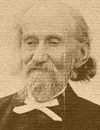 Andrew Murray
in How Much More?
Read in context
In it the prayer-promises are imbedded in the life-precepts; the two are inseparable.
Andrew Murray
in How Much More?
Read in context
To remove all doubt, and show us on what sure ground His promise rests, He appeals to what every one has seen and experienced here on earth.
Andrew Murray
in How Much More?
Read in context
We are fathers, or continually see them; and everywhere we look upon it as the most natural thing there can be, for a father to hear his child.
Andrew Murray
in How Much More?
Read in context
The Lord would remind us that the prayer of a child owes its influence entirely to the relation in which he stands to the parent.
Andrew Murray
in How Much More?
Read in context
The child that by preference forsakes the father's house, that finds no pleasure in the presence and love and obedience of the father, and still thinks to ask and obtain what he will, will surely be disappointed.
Andrew Murray
in How Much More?
Read in context
On the contrary, he to whom the intercourse and will and honour and love of the father are the joy of his life, will find that it is the father's joy to grant his requests.
Andrew Murray
in How Much More?
Read in context
Prayer is asking, seeking and knocking at a door for something we have not, which we desire, and which God has promised to us.
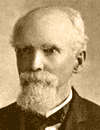 E.M. Bounds
in Prayer--Its Possibilities
Read in context
It is the usual rule with God to make us pray before He gives the blessing.
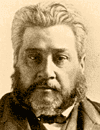 C.H. Spurgeon
in Knock!
Read in context
Ask—that is, in the quiet of your spirit, speak with God concerning your needs and humbly beg Him to grant your desires—this is a good and acceptable form of prayer.
C.H. Spurgeon
in Knock!
Read in context
Ask as a poor mendicant who is hungry and pleads for bread.
C.H. Spurgeon
in Knock!
Read in context
Ask for everything you need, whatever it may be—if it is a right and good thing, it is promised to the sincere asker!
C.H. Spurgeon
in Knock!
Read in context
Seek with all diligence, adding to the earnestness of the beggar, the careful watchfulness of the jeweler who is seeking for a gem.
C.H. Spurgeon
in Knock!
Read in context
Add to asking the study of the promises of God, a diligent hearing of His Word, a devout meditation upon the way of salvation and all such means of Grace as may bring you the blessing.
C.H. Spurgeon
in Knock!
Read in context
Here you need the Lord's own interference—you can ask and receive, you can seek and find—but you cannot knock and open!
C.H. Spurgeon
in Knock!
Read in context
The Lord must open the door, Himself, or you are shut out forever.
C.H. Spurgeon
in Knock!
Read in context
In these three exhortations there would appear to be a gradation—it is the same thought put into another shape and made more forcible.
C.H. Spurgeon
in Knock!
Read in context
Once again, ask for what you need, seek for what you have lost, knock for that from which you are excluded.
C.H. Spurgeon
in Knock!
Read in context
The Lord is glad to open the gate to every knocking soul!
C.H. Spurgeon
in Knock!
Read in context
It would be of no use to knock at a wall, but you may wisely knock at a door, for it is arranged for opening.
C.H. Spurgeon
in Knock!
Read in context
The moment you have trusted Him with your whole heart and soul, you are within the blessed portals of the Father's house!
C.H. Spurgeon
in Knock!
Read in context
But however many years you may be asking, seeking and knocking, you will never enter in till faith comes, for unbelief keeps the chain on the door and there is no entering in while it rules your spirit.
C.H. Spurgeon
in Knock!
Read in context
Use every effort to win that which you seek after, for remember that doing is praying; living to God is a high form of seeking and the bent of the entire mind is knocking.
C.H. Spurgeon
in Knock!
Read in context
God often gives to His people, when they keep His Commandments, that which He denies to them if they walk carelessly.
C.H. Spurgeon
in Knock!
Read in context
Is it not God's way in the world to give great blessings, but always to make men knock for them?
C.H. Spurgeon
in Knock!
Read in context
Besides, to make us knock at Mercy's gate is a great blessing to ourselves upon the spot.
C.H. Spurgeon
in Knock!
Read in context
It is a going to school for us when we are set to plead with God for a while without realized success.
C.H. Spurgeon
in Knock!
Read in context
It is natural for a child to ask of its father, and it is reasonable for the father to listen to the request of his child.
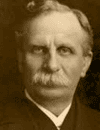 Samuel Chadwick
in The Sign of Prayer
Read in context
Whatever difficulties may remain, intercourse must be possible between father and child, and to suggest that a child may not ask of a father would be to empty the terms of all meaning.
Samuel Chadwick
in Praying to God Our Father
Read in context
SEEK is the word Scripture uses of God Himself; Christ assures me that I can find Himself.
Andrew Murray
in Ask, and It Shall Be Given You
Read in context
But it is not enough to find God in time of need, without coming to abiding fellowship: KNOCK speaks of admission to dwell with Him and in Him.
Andrew Murray
in Ask, and It Shall Be Given You
Read in context
Next to the revelation of the Father's love, there is, in the whole course of the school of prayer, not a more important lesson than this: Every one that asketh, receiveth.
Andrew Murray
in Ask, and It Shall Be Given You
Read in context
Let every learner in the school of Christ therefore take the Master's word in all simplicity: Every one that asketh, receiveth.
Andrew Murray
in Ask, and It Shall Be Given You
Read in context
This is the fixed eternal law of the kingdom: if you ask and receive not, it must be because there is something amiss or wanting in the prayer.
Andrew Murray
in Ask, and It Shall Be Given You
Read in context
There may be cases in which the answer is a refusal, because the request is not according to God's Word, as when Moses asked to enter Canaan.
Andrew Murray
in Ask, and It Shall Be Given You
Read in context
Our Father lets His child know when He cannot give him what he asks, and he withdraws his petition, even as the Son did in Gethsemane.
Andrew Murray
in Ask, and It Shall Be Given You
Read in context
It is in prayer and its answer that the interchange of love between the Father and His child takes place.
Andrew Murray
in Ask, and It Shall Be Given You
Read in context
Let us knock loudly at the door of grace, like Mercy in Pilgrim's Progress, as if we must perish unless heard.
 J.C. Ryle
in A Call to Prayer
Read in context
Asking, seeking, knocking, are ascending rounds in the ladder of successful prayer.
E.M. Bounds
in Prayer and Importunity (Continued)
Read in context
The clauses of the promise before us are not put, as we say, in law, jointly—he that asks and seeks and knocks shall receive—but they are put severally—he that asks shall have, he that seeks shall find, he that knocks shall have it opened.
C.H. Spurgeon
in Prayer Certified Of Success
Read in context
So that here is no room for any to be discouraged, as though they might ask or seek or knock in vain.
 John Wesley
in Sermon on the Mount, 10
Read in context
Knock; continue in prayer, and in every other way of the Lord: Be not weary or faint in your mind.
John Wesley
in Sermon on the Mount, 10
Read in context
Only remember always to pray, to seek, to knock, and not to faint.
John Wesley
in Sermon on the Mount, 10
Read in context
If he did, he would infallibly obtain it; for every one that asketh, receiveth.
 Edward Payson
in The Wicked Through Pride Refuse to Seek God.
Read in context
For every one that asketh receiveth - Provided he ask aright, and ask what is agreeable to God's will.
John Wesley
in John Wesley's Explanatory Notes - Matthew 7
Read in context
The best gift a good and wise father can bestow on a child on earth is his own spirit.
Andrew Murray
in How Much More the Holy Spirit
Read in context
The Father can bestow no higher or more wonderful gift than this: His own Holy Spirit, the Spirit of sonship.
Andrew Murray
in How Much More the Holy Spirit
Read in context
The Holy Spirit is therefore the gift we ought first and chiefly to seek.
Andrew Murray
in How Much More the Holy Spirit
Read in context
The asking, the knocking, the seeking must come before the reception—the opening of the door and the finding.
C.H. Spurgeon
in Shall and Will
Read in context
What Scripture says
- Matthew 7:7 Ask, and it will be given to you; seek, and you will find; knock, and the door will be opened to you
- Matthew 7:8 everyone who asks receives; he who seeks finds
- Matthew 7:9 if his son asks for bread, will give him a stone?
- Matthew 7:11 how much more will your Father in heaven give good things to those who ask Him
- Luke 11:9 the same command, after the friend at midnight
- Luke 11:13 your Father in heaven will give the Holy Spirit to those who ask Him
- James 4:2 You do not have, because you do not ask
- 1 John 5:14 if we ask anything according to His will, He hears us
- Jeremiah 29:13 You will seek Me and find Me when you search for Me with all your heart
- Hebrews 11:6 He rewards those who earnestly seek Him
How this page is made: the quotes are taken word for word from sermons on SermonIndex and checked against them by program before the page is published. The transcripts of audio and video sermons are machine-made, so follow the link to hear the words as they were spoken. The answer above the quotes is an overview with its sources listed; it is not a statement of doctrine by SermonIndex.