
A wilderness experience is a hard, dry or lonely season through which God leads a believer, as He led Israel for forty years, to humble him, show him his own heart and teach him to live by God's word. The preachers quoted here trace it in Moses, Elijah, David and the Lord Jesus, warn that some barrenness comes from sin and unbelief, and say that God is present in the wilderness and brings His people out leaning on Christ.
A wilderness experience is a season in which God leads a believer through a hard, dry or lonely place in order to humble him, show him his own heart and teach him to depend on God alone. The name comes from Israel's forty years between Egypt and Canaan. Moses told the people what those years were for: "Remember that these forty years the LORD your God led you all the way in the wilderness, so that He might humble you and test you in order to know what was in your heart, whether or not you would keep His commandments." (Deuteronomy 8:2). Charles Spurgeon said, "The experiences of God's servants are very like the wanderings of the children of Israel in the wilderness—they were led here, and there, and round about—and yet their road was the best way to Canaan."1 Andrew Miller wrote, "The great lesson to be learnt in the wilderness is entire dependence on the Lord."2
The pattern is Israel's forty years
Scripture itself treats Israel's journey as the pattern. God brought the people out of Egypt by His own hand and then took them into a land where nothing grew. Moses described it: "He led you through the vast and terrifying wilderness with its venomous snakes and scorpions, a thirsty and waterless land." (Deuteronomy 8:15). The nation had no fields, no wells and no city, and it had God. Thomas Watson applied the picture to the whole of a believer's life here: "The world is only a passage-room to eternity; the world is to us as the wilderness was to Israel, not to rest in—but to travel through to the glorious Canaan."3 Spurgeon said of this world, "It is a wilderness and there are scorpions in it, perhaps one of them has bitten you today."4 Matthew Henry's commentary says, "God can make bitter to us that from which we promise ourselves most, and often does so in the wilderness of this world, that our wants, and disappointments in the creature, may drive us to the Creator, in whose favour alone true comfort is to be had."5
Within that long journey there are particular seasons that are harder and drier than the rest. These are what Christians usually mean by a wilderness experience. T. Austin-Sparks spoke of the way God deals with some of His people: "The Lord finds a little company, speaking generally, amongst His people and brings them into the difficult school of a spiritual wilderness, to increase their spiritual measure in the light of a need which is coming."6
God leads His people there
The first thing Scripture says about the wilderness is that God led Israel into it. He chose the road. "So God led the people around by the way of the wilderness toward the Red Sea." (Exodus 13:18). A shorter road lay through the land of the Philistines, and God did not take it. Henry's commentary says of the two roads, "The Egyptians were to be drowned in the Red sea; the Israelites were to be humbled and proved in the wilderness."7 Edward Payson said of the way God brings His people to heaven, "He leads them round for many years, through a wilderness beset with temptations, trials and sufferings, with a view to humble them, prove them, and show them all that is in their hearts."8 J.C. Ryle wrote of the Holy Spirit's leading of the children of God, "When they are taken into the wilderness, and taught to see their own emptiness, it is the leading of the Spirit."9
This matters to the believer who finds himself in a hard place and concludes that he has missed the will of God. Walter Beuttler said, "For this, at times He has to lead us into a wilderness, a place in which we just do not know where we are at."10 He said God was doing a work in us, and that this was the reason. The wilderness is on the road God chose. It is not a sign that the road has been lost.
To humble
Moses gave the first purpose in one word: "He humbled you, and in your hunger He gave you manna to eat" (Deuteronomy 8:3). Hunger came first and manna came after it. A people who had nothing could boast of nothing. Thomas Brooks wrote, "God led the Israelites about and about in the wilderness forty years together, but it was to humble them, and prove them, and do them good in their latter end, Deu 8:2 , Deu 8:16 ."11 Spurgeon, preaching on this passage, said, "The first thing to humble us is the remembrance that we have, all along, been receiving gifts."4 He added, "The more God blesses you, if you are a man of God, the humbler you will be."4 He ended that part of the sermon with a prayer: "God bless, then, all our wilderness experience to our humbling!"4
Beuttler said, "God gets us into situations and deals with us to humble us."10 The humbling is a mercy. A man who is full of himself has no room for God, and the wilderness empties him.
To show what is in the heart
The second purpose is to test, "in order to know what was in your heart" (Deuteronomy 8:2). God does not need to learn anything. The testing brings out what was hidden, so that the man himself may see it. Spurgeon spoke of the evil that the old nature will work if it gets the opportunity, and said, "God leads us through the wilderness that we may discover this."4
Israel's heart came out in its words. When food ran short the people said, "Can God really prepare a table in the wilderness?" (Psalm 78:19). Beuttler said, "One reason for the wilderness experience is for God to find out what is in us, and to make us see what is in us."12 In the same talk he said, "When we go through the wilderness with the howling winds of fears and doubts and questions, God is watching to see what is in our heart."12 A believer who has only known easy days does not know how much unbelief and complaint lie in him. The dry season shows it, and what is shown can be confessed and put away.
To teach dependence
The third purpose is that Israel "might understand that man does not live on bread alone, but on every word that comes from the mouth of the LORD." (Deuteronomy 8:3). In Egypt the people had lived by the river and the field. In the wilderness they lived by what God sent each morning. He told Moses, "Each day the people are to go out and gather enough for that day." (Exodus 16:4). A.B. Simpson wrote, "The children of Israel were utterly dependent upon Jehovah as they marched through the wilderness."13 Spurgeon wrote, "It is our privilege to depend upon the Lord for everything as much as Israel did in the wilderness."14 In a sermon on the manna he said, "The most grand life is a life of dependence upon God, for that is true independence!"15 He warned against living on yesterday's supply: "I know no dish that is worse than cold experience—you need to have a daily realization of the things of God."15
Alexander Maclaren asked why God gives in daily portions and answered, "He does so, not because of any good to Him from our faith, except that the Infinite love loves infinitely to be loved; but for our sakes, that we may taste the peace and strength of continual dependence, and the joy of continual receiving."16 Simpson said that believers often look for other supplies first: "Instead of looking up, we have hunted in the desert to find springs, and found many, and God had to turn them into gall, and show us that the only real help could come from Him."17 He said of the lesson God means to teach, "How little you can depend upon your resolutions, and plans; but He is enough for your trials and difficulties, and even for the weakness and worthlessness of your poor unreliable nature."17
To speak to the heart
Through Hosea God spoke of a wilderness that He would use to win back an unfaithful people. "I will allure her and lead her to the wilderness, and speak to her tenderly." (Hosea 2:14). He promised more: "There I will give back her vineyards and make the Valley of Achor into a gateway of hope." (Hosea 2:15). The wilderness here is a place where other voices are shut out and God's voice is heard.
Brooks wrote of Christ and His church, "Whenever he leads his spouse into a wilderness, it is that he may speak friendly and comfortably to her, or that he may speak to her heart, as the Hebrew runs."18 He went on: "The great design of the Lord in bringing her into a wilderness was that he might make such discoveries of himself, of his love, and of his sovereign grace, as might cheer up her heart, yea, as might even make her heart leap and dance within her."19 He drew this conclusion: "By all which it is most evident that there is no such evil in a wilderness estate, in an afflicted condition, as many imagine."20 In another place he wrote, "God will make all afflictions, even a wilderness, to be an inlet to more of his own self."21
Moses in the desert
God has trained many of His servants in lonely places before He used them. Moses had been brought up in Pharaoh's house. Then he fled to Midian, and Scripture next shows him keeping sheep. "He led the flock to the far side of the wilderness and came to Horeb, the mountain of God." (Exodus 3:1). Stephen says the burning bush came "After forty years had passed" (Acts 7:30). Austin-Sparks wrote, "A Moses, full of Egypt's sufficiency, must go for forty years to the backside of the desert to be emptied out and made to confess his complete inadequacy before he can become an instrument for the display of the glory of God."22 J.B. Stoney wrote of Moses leaving Midian for Egypt, "Being prepared and made ready in a private school, as it were, he is now to demonstrate in a large and useful sphere the result of his tuition."23 Spurgeon told his students, "The Lord is revealed in the backside of the desert, while his servant keepeth the sheep and waits in solitary awe."24
Art Katz applied this to all who want to be sent by God: "There is no prospect of our being sent at all in any true sense unless we are first willing to be prepared by God in the wilderness, just as Moses himself was."25 He described the place: "The desert is a place in which there is no subterfuge, no disguise, nothing gilded, nothing false, nothing fancy, nothing put-on."25 He said of the years spent there, "You might find that there is no service at all but just a stumbling about in an obscure place, totally unseen and unknown, while God is shaping the character of the man or woman."25
Elijah at the brook, David in the dry land
Elijah stood before Ahab, and then God sent him out of sight. "Leave here, turn eastward, and hide yourself by the Brook of Cherith, east of the Jordan." (1 Kings 17:3). Ravens fed him there. Then the supply itself failed: "Some time later, however, the brook dried up because there had been no rain in the land." (1 Kings 17:7). F.B. Meyer wrote, "Not one of us can dispense with some Cherith where the sounds of earthly toil and human voices are exchanged for the murmur of the waters of quietness which are fed from the throne and where we may taste the sweets and imbibe the power of a life hidden in Christ by the power of the Holy Ghost."26 He wrote of the days when the water sank lower, "Ah, it is hard to sit beside a drying brook, much harder than to face the prophets of Baal on Carmel."26 Spurgeon said to believers who looked back over many years, "The brook Cherith has been dried, but there has been sustenance found for you in the barrel of meal and the cruse of oil somewhere else."27
David knew the same country. The heading of Psalm 63 places him in the wilderness of Judah, and he prayed, "O God, You are my God. Earnestly I seek You; my soul thirsts for You. My body yearns for You in a dry and weary land without water." (Psalm 63:1). Spurgeon wrote, "In the Psalm now open before us, David was banished from the means of grace to a dry and thirsty land, where no water was."28 Yet David sang there: "Because Your loving devotion is better than life, my lips will glorify You." (Psalm 63:3). Brooks wrote on that verse, "The loving-kindness of God, the presence of God in a wilderness, is better than lives, than many lives, than all lives with the appurtenances."29
Christ in the wilderness
The Lord Jesus went this way Himself. After His baptism, "Then Jesus was led by the Spirit into the wilderness to be tempted by the devil." (Matthew 4:1). Luke adds that He went there "full of the Holy Spirit" (Luke 4:1). J.R. Miller wrote, "We are told that He was led; Mark says driven by the Spirit into the wilderness, to be tempted by the devil."30 Spurgeon said of being led into the wilderness full of the Spirit, "Yet it is a sadder thing to be led into a wilderness when you are not filled with the Spirit, and a sadder thing to be tempted when the Spirit of God is not resting upon you."31 His first answer to the tempter came from Deuteronomy 8, the chapter that explains Israel's wilderness. Where Israel had failed, He stood. Luke then records, "Jesus returned to Galilee in the power of the Spirit" (Luke 4:14).
Miller wrote of what the Lord gained there for His people, "These are hints of what Christ brought from the wilderness, in the way of preparation for His great work of priestly help."30 The writer to the Hebrews says, "For we do not have a high priest who is unable to sympathize with our weaknesses, but we have one who was tempted in every way that we are, yet was without sin." (Hebrews 4:15). The believer in a wilderness has a Saviour who has been in one.
Hidden and alone with God
A wilderness is a solitary place. John the Baptist "lived in the wilderness until the time of his public appearance to Israel." (Luke 1:80). Paul wrote of the time after his conversion, "I went into Arabia and later returned to Damascus." (Galatians 1:17). Andrew Miller wrote, "Moses in Midian, Paul in Arabia, and John in Patmos, are divine lessons for all the Lord's servants."32 David Wilkerson wrote of John the Baptist and of those who are like him, "The greatest rewards will probably go to those who are hidden and unknown, glorifying the Lord by their simple witness to his faithfulness."33
Being hidden is hard for people who want to be useful and to be seen to be useful. Austin-Sparks said that the knowledge of God gained in such a place is what others will later need: "A need is going to arise, and that need is only going to be met by people who know the Lord in a peculiar way, who have proved and come to know the Lord in a wilderness, a spiritual wilderness."6 A.W. Tozer wrote, "God has so ordered things that His children may grow as successfully in the middle of a desert as in the most fruitful land."34
God is with His people there
The wilderness was terrible, and Israel was never alone in it. "The LORD your God has been with you these forty years, and you have lacked nothing." (Deuteronomy 2:7). Nehemiah's generation remembered the same thing: "For forty years You sustained them in the wilderness, so that they lacked nothing. Their clothes did not wear out and their feet did not swell." (Nehemiah 9:21). Moses sang of God and Israel, "He found him in a desert land, in a barren, howling wilderness; He surrounded him, He instructed him, He guarded him as the apple of His eye." (Deuteronomy 32:10). Beuttler said from that verse, "God will find you in the wilderness, and keep you as the apple of his eye."35 Andrew Bonar wrote of God sending His angel to Hagar in the wilderness, "The Holy Ghost has recorded all this minutely, to teach us what to expect when we too are in a wilderness, losing our way, and trying to manage our own cares."36
Spurgeon said of sickness, "A very wilderness sickness is of itself, but God can find us daily manna."37 He said to the whole church, "We are still in the wilderness, let us daily gather the heavenly manna."38 Beuttler spoke of remembering: "When we go through the wilderness, or the darkness today, there is such a thing as reflecting on the past and remembering how God brought us through when we thought all hope had gone, and yet we came through."35 He summed up what God is doing: "In the wilderness, God is seeking to add a new dimension of whatever kind to our Christian experience."35
Not every dry season is God's leading
Scripture also knows a barrenness that comes from sin. "your iniquities have built barriers between you and your God, and your sins have hidden His face from you" (Isaiah 59:2). A believer in a dry place should ask honestly which kind it is. John Wesley preached on what he called the wilderness state, a loss of faith, love, joy and peace in those who had once known them. He was speaking of inward darkness, and he gave sin as its usual cause: "The most usual cause of inward darkness is sin, of one kind or another."39 He named one sin of omission in particular: "Perhaps no sin of omission more frequently occasions this than the neglect of private prayer; the want whereof cannot be supplied by any other ordinance whatever."39 Spurgeon said, "Beloved, the simple reason of Christ's conscious absence from our souls is, in most cases, sin."40 The two differ on one point. Spurgeon allowed in the same place that Christ may sometimes hide Himself in His sovereignty. Wesley in his sermon would not count the bare sovereign will of God among the causes and said that God never deserts His people. This page does not decide between them. Where sin is the cause, the answer is repentance.
Andrew Murray used the wilderness as a picture of a divided Christian life. He described it: "Sometimes you are, perhaps, enjoying fellowship with God, and sometimes you are separated from Him; sometimes you have nearness to Him, and at other times great distance from Him; sometimes you have a willingness to walk closely with Him, but sometimes there is even unwillingness."41 He called his hearers to leave it by trusting God to bring them into rest.
Do not settle there
Israel's wilderness should have been short. It became forty years because the people would not believe God at the border of the land. "So we see that it was because of their unbelief that they were unable to enter." (Hebrews 3:19). The warning is written for Christians: "See to it, brothers, that none of you has a wicked heart of unbelief that turns away from the living God." (Hebrews 3:12). A testing season is meant to be passed through with faith. Thomas Manton wrote, "God led his people out of Egypt, not to keep them in the wilderness, but to carry them through the wilderness into Canaan."42 Wilkerson wrote, "God never intended for us to become stuck in a wilderness of emptiness and drought."43 Carter Conlon said, "The wilderness is a place where even when the old ways begin to look better than where you are, the promises of God have the power in your heart to keep you from turning back."44 Spurgeon, taking up the command to turn northward, said, "Forty years wandering up and down in the wilderness is enough, now turn your faces towards Canaan and march heavenward."27
Coming out
The wilderness has an end. Moses said God's purpose in it all was "so that in the end He might cause you to prosper." (Deuteronomy 8:16). Manton wrote, "All is wont to end well with the children of God, let God alone with his own methods; after a walk in the wilderness, he will bring his people into a land of rest."45 Conlon said, "The wilderness is only temporary and it's appointed by God and we learn our lessons there."44 Isaiah promised, "The wilderness and the land will be glad; the desert will rejoice and blossom like a rose." (Isaiah 35:1). Beuttler said, "God makes the wilderness and the desert into a place of roses, but that comes after we are through it."12 Simpson wrote, "When the desert affords no food, and all is a waste of desolation, then God will make it blossom as the rose."17
The Song of Solomon shows a bride coming up from the wilderness leaning on her beloved (Song of Solomon 8:5). That is how the believer comes out: weaker in himself and resting on Christ. Spurgeon said, "How sweetly does faith, sometimes, come up from the wilderness, leaning upon her Beloved and acknowledging to Him that she is His and He is hers!"46 In a sermon on that text he said, "To lean implies the throwing of one's weight from one's self on to another and this is the Christian's life."47 He added, "Beloved, there is no part of the pilgrimage of a saint in which he can afford to walk in any other way but in the way of leaning."47
Moses' charge to the people who had come through was to remember. "Remember that these forty years the LORD your God led you all the way in the wilderness" (Deuteronomy 8:2). The lessons of the dry place are meant to be kept in the good land. God has promised, "I will make a way in the wilderness and streams in the desert." (Isaiah 43:19).
- C.H. Spurgeon, "A Feast For Faith" (sermon).
- Andrew Miller, Writings of Andrew Miller, "Psalm 23:3".
- Thomas Watson, Body of Practical Divinity, "God and His Creation Part 4".
- C.H. Spurgeon, "Moses' Dying Charge to Israel" (sermon).
- Matthew Henry , Matthew Henrys Concise Commentary On The Bible, "Exodus Chapter 15".
- T. Austin-Sparks, "From the Wilderness to the Land" (sermon).
- Matthew Henry , Matthew Henrys Concise Commentary On The Bible, "Exodus Chapter 13".
- Edward Payson, "God's Ways Above Man's" (sermon).
- J.C. Ryle, "Child of God" (sermon).
- Walter Beuttler, "To Prove Thee in the Wilderness - Part 3" (sermon).
- Thomas Brooks, Writings of Thomas Brooks, "Volume 6".
- Walter Beuttler, "The Way of the Lord in the Wilderness - Part 1" (sermon).
- A.B. Simpson, "But God" (sermon).
- C.H. Spurgeon, The Interpreter--Morning and Evening by Charles H. Spurgeon - Volume 1, "February 13--Evening".
- C.H. Spurgeon, "Lessons From the Manna" (sermon).
- Alexander Maclaren, Expositions Of Holy Scripture K, "The bread of god".
- A.B. Simpson, "Emblems From the Wilderness" (sermon).
- Thomas Brooks, Writings of Thomas Brooks, "Volume 5".
- Thomas Brooks, Writings of Thomas Brooks, "Volume 5".
- Thomas Brooks, Writings of Thomas Brooks, "Volume 5".
- Thomas Brooks, Writings of Thomas Brooks, "Volume 6".
- T. Austin-Sparks, "'By My Spirit' (Zechariah 4)" (sermon).
- J.B. Stoney, "Discipline in the School of God - Part 2" (sermon).
- Charles H. Spurgeon, Lectures to my students by charles spurgeon (4 Volumes), "Vol 01 - LECTURE 11 - THE MINISTER'S FAINTING FITS".
- Art Katz, "Moses at the Burning Bush" (sermon).
- F.B. Meyer, "Beside the Drying Brook" (sermon).
- C.H. Spurgeon, "Forty Years" (sermon).
- C.H. Spurgeon, Till He Come, "Under His Shadow".
- Thomas Brooks, Writings of Thomas Brooks, "Volume 5".
- J.R. Miller, "Tempted Like as We Are" (sermon).
- C.H. Spurgeon, "Satan Departing, Angels Ministering" (sermon).
- Andrew Miller, Writings of Andrew Miller, "Luther at Wartburg".
- David Wilkerson, "A Voice in the Wilderness" (sermon).
- A.W. Tozer, "Growing Despite the Obstacles" (sermon).
- Walter Beuttler, "Coming Out of the Wilderness - Part 4" (sermon).
- Andrew Bonar, "The Word Brought Nigh to the Sorrowful" (sermon).
- C.H. Spurgeon, "How the Lambs Feed" (sermon).
- C.H. Spurgeon, "Grappling Irons" (sermon).
- John Wesley, "The Wilderness State" (sermon).
- C.H. Spurgeon, "The Soul's Desertion" (sermon).
- Andrew Murray, "Are You Ready to Leave the Wilderness?" (sermon).
- Thomas Manton, The Works of Thomas Manton, D.D. Vol. XX, "Sermon vii".
- David Wilkerson, "Faith for the Impossible" (sermon).
- Carter Conlon, "A Temporary, God-Appointed Wilderness" (sermon).
- Thomas Manton, The Works of Thomas Manton, D.D. Vol. VII, "Sermon lviii".
- C.H. Spurgeon, "A Pressed Man Yielding to Christ" (sermon).
- C.H. Spurgeon, "Leaning On Our Beloved" (sermon).
In their own words
Each line below is quoted exactly from a sermon on this site. Follow the link to hear or read it where it was said.
The experiences of God's servants are very like the wanderings of the children of Israel in the wilderness—they were led here, and there, and round about—and yet their road was the best way to Canaan.
 C.H. Spurgeon
in A Feast For Faith
Read in context
It is a wilderness and there are scorpions in it, perhaps one of them has bitten you today.
C.H. Spurgeon
in Moses' Dying Charge to Israel
Read in context
The first thing to humble us is the remembrance that we have, all along, been receiving gifts.
C.H. Spurgeon
in Moses' Dying Charge to Israel
Read in context
The more God blesses you, if you are a man of God, the humbler you will be.
C.H. Spurgeon
in Moses' Dying Charge to Israel
Read in context
God bless, then, all our wilderness experience to our humbling!
C.H. Spurgeon
in Moses' Dying Charge to Israel
Read in context
God leads us through the wilderness that we may discover this.
C.H. Spurgeon
in Moses' Dying Charge to Israel
Read in context
The Lord finds a little company, speaking generally, amongst His people and brings them into the difficult school of a spiritual wilderness, to increase their spiritual measure in the light of a need which is coming.
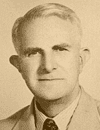 T. Austin-Sparks
in From the Wilderness to the Land
Read in context
A need is going to arise, and that need is only going to be met by people who know the Lord in a peculiar way, who have proved and come to know the Lord in a wilderness, a spiritual wilderness.
T. Austin-Sparks
in From the Wilderness to the Land
Read in context
He leads them round for many years, through a wilderness beset with temptations, trials and sufferings, with a view to humble them, prove them, and show them all that is in their hearts.
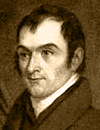 Edward Payson
in God's Ways Above Man's
Read in context
When they are taken into the wilderness, and taught to see their own emptiness, it is the leading of the Spirit.
 J.C. Ryle
in Child of God
Read in context
For this, at times He has to lead us into a wilderness, a place in which we just do not know where we are at.
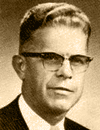 Walter Beuttler
in To Prove Thee in the Wilderness - Part 3
Read in context
God gets us into situations and deals with us to humble us.
Walter Beuttler
in To Prove Thee in the Wilderness - Part 3
Read in context
One reason for the wilderness experience is for God to find out what is in us, and to make us see what is in us.
Walter Beuttler
in The Way of the Lord in the Wilderness - Part 1
Read in context
When we go through the wilderness with the howling winds of fears and doubts and questions, God is watching to see what is in our heart.
Walter Beuttler
in The Way of the Lord in the Wilderness - Part 1
Read in context
God makes the wilderness and the desert into a place of roses, but that comes after we are through it.
Walter Beuttler
in The Way of the Lord in the Wilderness - Part 1
Read in context
The children of Israel were utterly dependent upon Jehovah as they marched through the wilderness.
 A.B. Simpson
in But God
Read in context
The most grand life is a life of dependence upon God, for that is true independence!
C.H. Spurgeon
in Lessons From the Manna
Read in context
I know no dish that is worse than cold experience—you need to have a daily realization of the things of God.
C.H. Spurgeon
in Lessons From the Manna
Read in context
Instead of looking up, we have hunted in the desert to find springs, and found many, and God had to turn them into gall, and show us that the only real help could come from Him.
A.B. Simpson
in Emblems From the Wilderness
Read in context
How little you can depend upon your resolutions, and plans; but He is enough for your trials and difficulties, and even for the weakness and worthlessness of your poor unreliable nature.
A.B. Simpson
in Emblems From the Wilderness
Read in context
When the desert affords no food, and all is a waste of desolation, then God will make it blossom as the rose.
A.B. Simpson
in Emblems From the Wilderness
Read in context
A Moses, full of Egypt's sufficiency, must go for forty years to the backside of the desert to be emptied out and made to confess his complete inadequacy before he can become an instrument for the display of the glory of God.
T. Austin-Sparks
in 'By My Spirit' (Zechariah 4)
Read in context
Being prepared and made ready in a private school, as it were, he is now to demonstrate in a large and useful sphere the result of his tuition.
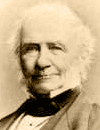 J.B. Stoney
in Discipline in the School of God - Part 2
Read in context
There is no prospect of our being sent at all in any true sense unless we are first willing to be prepared by God in the wilderness, just as Moses himself was.
 Art Katz
in Moses at the Burning Bush
Read in context
The desert is a place in which there is no subterfuge, no disguise, nothing gilded, nothing false, nothing fancy, nothing put-on.
Art Katz
in Moses at the Burning Bush
Read in context
You might find that there is no service at all but just a stumbling about in an obscure place, totally unseen and unknown, while God is shaping the character of the man or woman.
Art Katz
in Moses at the Burning Bush
Read in context
Not one of us can dispense with some Cherith where the sounds of earthly toil and human voices are exchanged for the murmur of the waters of quietness which are fed from the throne and where we may taste the sweets and imbibe the power of a life hidden in Christ by the power of the Holy Ghost.
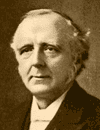 F.B. Meyer
in Beside the Drying Brook
Read in context
Ah, it is hard to sit beside a drying brook, much harder than to face the prophets of Baal on Carmel.
F.B. Meyer
in Beside the Drying Brook
Read in context
The brook Cherith has been dried, but there has been sustenance found for you in the barrel of meal and the cruse of oil somewhere else.
C.H. Spurgeon
in Forty Years
Read in context
Forty years wandering up and down in the wilderness is enough, now turn your faces towards Canaan and march heavenward.
C.H. Spurgeon
in Forty Years
Read in context
We are told that He was led; Mark says driven by the Spirit into the wilderness, to be tempted by the devil.
 J.R. Miller
in Tempted Like as We Are
Read in context
These are hints of what Christ brought from the wilderness, in the way of preparation for His great work of priestly help.
J.R. Miller
in Tempted Like as We Are
Read in context
Yet it is a sadder thing to be led into a wilderness when you are not filled with the Spirit, and a sadder thing to be tempted when the Spirit of God is not resting upon you.
C.H. Spurgeon
in Satan Departing, Angels Ministering
Read in context
The greatest rewards will probably go to those who are hidden and unknown, glorifying the Lord by their simple witness to his faithfulness.
 David Wilkerson
in A Voice in the Wilderness
Read in context
God has so ordered things that His children may grow as successfully in the middle of a desert as in the most fruitful land.
 A.W. Tozer
in Growing Despite the Obstacles
Read in context
God will find you in the wilderness, and keep you as the apple of his eye.
Walter Beuttler
in Coming Out of the Wilderness - Part 4
Read in context
When we go through the wilderness, or the darkness today, there is such a thing as reflecting on the past and remembering how God brought us through when we thought all hope had gone, and yet we came through.
Walter Beuttler
in Coming Out of the Wilderness - Part 4
Read in context
In the wilderness, God is seeking to add a new dimension of whatever kind to our Christian experience.
Walter Beuttler
in Coming Out of the Wilderness - Part 4
Read in context
The Holy Ghost has recorded all this minutely, to teach us what to expect when we too are in a wilderness, losing our way, and trying to manage our own cares.
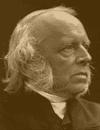 Andrew Bonar
in The Word Brought Nigh to the Sorrowful
Read in context
A very wilderness sickness is of itself, but God can find us daily manna.
C.H. Spurgeon
in How the Lambs Feed
Read in context
We are still in the wilderness, let us daily gather the heavenly manna.
C.H. Spurgeon
in Grappling Irons
Read in context
The most usual cause of inward darkness is sin, of one kind or another.
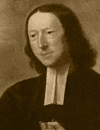 John Wesley
in The Wilderness State
Read in context
Perhaps no sin of omission more frequently occasions this than the neglect of private prayer; the want whereof cannot be supplied by any other ordinance whatever.
John Wesley
in The Wilderness State
Read in context
Beloved, the simple reason of Christ's conscious absence from our souls is, in most cases, sin.
C.H. Spurgeon
in The Soul's Desertion
Read in context
Sometimes you are, perhaps, enjoying fellowship with God, and sometimes you are separated from Him; sometimes you have nearness to Him, and at other times great distance from Him; sometimes you have a willingness to walk closely with Him, but sometimes there is even unwillingness.
 Andrew Murray
in Are You Ready to Leave the Wilderness?
Read in context
God never intended for us to become stuck in a wilderness of emptiness and drought.
David Wilkerson
in Faith for the Impossible
Read in context
The wilderness is a place where even when the old ways begin to look better than where you are, the promises of God have the power in your heart to keep you from turning back.
 Carter Conlon
in A Temporary, God-Appointed Wilderness
Listen at 20:13
The wilderness is only temporary and it's appointed by God and we learn our lessons there.
Carter Conlon
in A Temporary, God-Appointed Wilderness
Listen at 31:57
How sweetly does faith, sometimes, come up from the wilderness, leaning upon her Beloved and acknowledging to Him that she is His and He is hers!
C.H. Spurgeon
in A Pressed Man Yielding to Christ
Read in context
To lean implies the throwing of one's weight from one's self on to another and this is the Christian's life.
C.H. Spurgeon
in Leaning On Our Beloved
Read in context
Beloved, there is no part of the pilgrimage of a saint in which he can afford to walk in any other way but in the way of leaning.
C.H. Spurgeon
in Leaning On Our Beloved
Read in context
What Scripture says
- Deuteronomy 8:2 God led Israel in the wilderness to humble and test them
- Deuteronomy 8:3 man does not live on bread alone
- Deuteronomy 8:16 so that in the end He might cause you to prosper
- Hosea 2:14 God leads her to the wilderness and speaks tenderly
- Matthew 4:1 Jesus was led by the Spirit into the wilderness
- Deuteronomy 32:10 He found him in a howling wilderness and guarded him
- Psalm 63:1 David thirsts for God in a dry and weary land
- Deuteronomy 2:7 forty years, and you have lacked nothing
- Hebrews 3:19 unbelief kept them from entering
- Isaiah 43:19 a way in the wilderness and streams in the desert
- Isaiah 35:1 the desert will rejoice and blossom
How this page is made: the quotes are taken word for word from sermons on SermonIndex and checked against them by program before the page is published. The transcripts of audio and video sermons are machine-made, so follow the link to hear the words as they were spoken. The answer above the quotes is an overview with its sources listed; it is not a statement of doctrine by SermonIndex.