
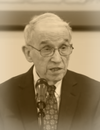
Atmosphere in the assembly
A.J. Higgins emphasizes that the atmosphere in the Christian assembly should be marked by praise, prayer, and thanksgiving, fostering a spirit of encouragement, dependence on God, and mutual grace among believers.
In this teaching, A.J. Higgins explores the biblical principles that should shape the atmosphere within the Christian assembly. Drawing from 1 Thessalonians 5, he highlights the importance of cultivating attitudes of praise, prayer, and thanksgiving to foster a spirit of unity and grace. Higgins challenges believers to avoid negativity and self-pity, embrace dependence on God, and practice forgiveness, thereby creating a welcoming and encouraging environment for all.
Full Transcript
Now I'm going to ask you to turn to 1st Thessalonians and chapter 5. 1st Thessalonians in chapter 5, commencing our reading together at verse number 16. Rejoice evermore, pray without ceasing, in everything give thanks, for this is the will of God in Christ Jesus concerning you. Quench not the spirit, despise not prophesying, prove all things, hold fast that which is good, abstain from all appearance, or perhaps a better translation, abstain from every form of evil, and himself, the very God of peace, sanctify you holy.
That would mean the entire company. And I pray God, your whole, this is each individual now, spirit, soul, and body, be preserved blameless unto the coming of our Lord Jesus Christ, faithful is he that calleth you, who also will do it. Brethren, pray for us.
Greet all the brethren with a holy kiss. I charge you by the Lord that this epistle be read unto all the holy brethren, the grace of our Lord Jesus Christ be with you. Amen.
Now I'm sure that God will bless the public reading of his word along with what has already preceded. If we were looking at this chapter in a Bible reading, we would notice the first 11 verses of 1st Thessalonians 5 bring us an anticipation, an anticipation, not the fear of passing through tribulation, but the assurance that we have been saved, not appointed to wrath, but to obtain salvation through our Lord Jesus. So verses 1 to 11 are about an anticipation that was meant to comfort them amidst their trial and amidst their confusion.
When you come to verses 13 to verse number 15, we have there an awareness, an awareness that was meant to challenge them. They were to be aware of those that labored amongst them and to respect them and esteem them, and then those that were in leadership were to have responsibilities given to them as they understood those whom they cared for, and so there was an awareness that was to challenge them. But when you come to verses 16 to the end, he's dealing now with an atmosphere which should control in God's assembly.
So let me just ask you as I introduce this subject, what's the atmosphere like in the assembly you're in fellowship with? Do people have to walk on tiptoe around you? Is there a feeling of bitterness? Is there an atmosphere that seems to cloud the assembly, an atmosphere to cultivate? So let me talk to you about how to clear the atmosphere, how to clear the atmosphere. Three things that I just want to leave with you. First of all, we find here an attitude that should be cultivated in verses 16 to 18.
When you come to verses 19 to 21, there is an acknowledgment to regulate, and when you come to verses 23 to 28, there is an appreciation to motivate. Now come again. When you have the first few verses where you are looking at an attitude to cultivate, it is the will of God for us.
When you're looking at verses 19 to 22, an acknowledgment to regulate, it's the Word of God to us, and when you come to the end of the chapter, verses 23 to 28, it is an appreciation to motivate. It is the work of God in us. So there is the will of God for us, there is the Word of God to us, and finally there is the work of God in us.
Come again. When you're looking at the first section, it is all about thanks. This is the will of God in Christ Jesus concerning you, and we have Thanksgiving in that section.
When you come to verses 19 to 22, it is all about truth, the Word of God, and how we will approach it, how we will receive it, and when you come to verses 23 to 28, it is all about testimony for God. So it is an attitude that we should cultivate, an acknowledgment that should regulate, an appreciation to motivate, the will of God for us, the Word of God to us, and the work of God in us. Come again.
Look at this first section, very simple, three things. It isn't there. He says, rejoice evermore, pray without ceasing, and everything give thanks.
And I would take it the word that follows, this is the will of God, embraces all three of those imperatives, all three of those exhortations. Rejoice evermore, pray without ceasing, and everything give thanks. Praise.
You know the great value of praise? If nothing else, it avoids the deadly disease of self-pity. Self-pity. Feeling sorry for yourself.
Nobody appreciates me here. No one values my gift. No one knows all I am doing and in any way acknowledges me.
And you just get mired in your self-pity. As someone has said, it feels so good to feel so bad. And you all know what that's like for about a nanosecond, and then reality strikes.
And what good does it do? But mired in self-pity, what really occurs from that really is a grumbling, complaining, negative spirit. In many ways, self-pity has pride at the bottom of it. You think you deserve something more than you're getting, and you think you're really better than you are.
But we're all so prone to that terrible disease of self-pity. Negativism. Anybody that's negative in your assembly? Any cloud, any atmosphere of negativity in your assembly? I told someone, if you want to know what negativity is, just just go out and buy The Hobbit.
I'm sorry, not The Hobbit. I was thinking of Calvin and Hobbes. Just go out and buy Calvin and Hobbes and read about dear Calvin or read Winnie the Pooh and look at Eeyore.
Someone that always sees things in the worst possible light. Everything negative, everything going down. What's the use? No use trying, no use doing it.
Hasn't worked before, will never work again. Why bother? And so negativity becomes almost a stamp upon an assembly. A cloud that hinders and a cloud that covers.
An atmosphere of negativity that destroys. But are you negative about your brother and sister as well? Just looking for the flaws? Just keying on what is wrong? I remember a dear sister, miles from here. She was allegedly blind, but if a sister walked into the meeting with her skirt a tad short, she knew it.
Maybe she could smell it. I don't know, but she was supposedly blind, but she knew it and was hot on the heels and critical of everything. Instead of, I'm not I'm not in any way lowering the standard of dress, but I am saying we can become so keyed on the negative that Christians move in the assembly fearful.
An assembly should be a safe haven. It should be a place where a believer could go that if there's no other place in the world, no other place on planet Earth that they could go and feel safe, secure, loved, appreciated, welcomed, valued. If your assembly isn't that, then we have missed the mark of what God intends an assembly to be.
If believers move in the fear of criticism, the fear of judgmental attitudes, the fear of negativity, the fear of being nailed to the wall the first time they make a mistake, is that what God intends an assembly to be? Paul says your assembly should be marked by praise. It should be marked, but there should be a spirit of praise that fills the assembly, not self-pity and not negativism and not criticism. No, I'm not saying that anything goes and everything goes.
Someone has said if you stand for nothing, you'll fall for anything. So yes, we do need to have standards and do need to have the Word of God to guide us, but what I'm saying is what what is the atmosphere of the assembly? What characterizes it? An assembly marked by praise, an assembly marked by prayer, and if praise avoids self-pity, prayer avoids self-reliance. It avoids self-reliance.
Prayer is an attitude of heart. Is that what marks me in God's assembly? They may say, is this about an assembly? Absolutely. This is all about the assembly at Thessalonica, and we'll see that even more as we look at it.
Prayer should be what marks an assembly, an attitude of heart. It should be an expression of dependence. It is a spirit of worship.
It is all of that. We've been hearing of those valiant men, Ezra, Nehemiah, actually beginning with Zerubbabel, and Ezra and Nehemiah, and of course when you think of Nehemiah, you think of a leader who is marked by prayer. Three types of prayer the Word of God speaks of.
Speaks of closet prayer. That's where it all begins. Entering into your closet, shutting the door, alone with God.
That's where prayer begins, in the closet. It speaks of collective prayer, doesn't it? The prayer meetings should be there as well. But then when you come to Nehemiah, you think of crisis prayer, a man who could lift his heart at any moment in prayer to God.
As a result of closet prayer, he was able to lift his heart in crisis prayer to God. But prayer should mark the assembly, avoiding self-reliance. Remember when the Lord Jesus said to his disciples there on that occasion, pray that you enter not into temptation.
Now you will understand he was not telling them to pray, and the subject of their prayer would be that we don't enter into temptation. He was telling them that if they prayed, the attitude of prayer and dependence itself would prevent them from entering into temptation. Be in touch with heaven as a dependent, needy person, and the result of that will be you will be preserved from so much.
So praise prayer and perception. Perception in everything, give thanks. Contentment with every circumstance the Lord allows in my life.
Can you do that? Can I do that? That's a tremendously challenging standard. To be content that everything that is allowed to come into my life has come from the hand of God. You see, there is a recognition that there is something going on bigger than I am.
Now let me just give you how this came to me, came to me in a very, very marked way. Some of you maybe can identify with this. I'm at the age of so-called retirement, and you're about to make your plans for retirement, and your company's 401k goes south, and all of a sudden you're faced with circumstances you never thought you would face.
Doesn't God know what's going on in my life? Doesn't he know that in my obsessive compulsive way I had planned my life in divisions, and soon I'm supposed to be retiring and giving a little more time to what I'd like to do? Doesn't God realize what's happening? And then it dawns on you. You smell the coffee. Hey, it's not all about me.
And I was faced with this question. I know supposedly we're getting out of the recession. If as a result of the economic downturn in the world, God used that to speak to souls to bring them to Christ.
Am I willing to lose 50 percent of my pension, something bigger than me in the world, and there's someone wiser than I am in the world controlling what is happening? Can you give thanks amidst every set of circumstances? Can you step back and realize, have the perception that really if it's all about me, I've got a lot of reason to complain. Life is not going my way right now. But really, it's not all about me.
God is moving everything forward with this tremendous plan in mind, his Son, to have the place of utter ultimate preeminence, and every knee bow, and every tongue confess. But I could make this even a bit more practical. I was going to say if I had the time, but then Mary will shoot me for saying that.
So let me just quickly give it to you, okay? What about being thankful for the other saints in the assembly? It is easy to give thanks for the beauty that you see in some believers, isn't it? You know, as you see someone who is saved from a life of sin, and you begin to see qualities developing and traits being developed, Christ-likeness, the old things falling away and developing a love for the things of God, it's easy, isn't it, to bow your knee and give thanks for the beauty that you see in other saints. Relatively easy as well to give thanks for the blessing that other saints are to you, isn't it? If you think of it, think of the blessing, you may not consciously think of it, but just think of the blessing of other believers upon you. Now, if you're a parent, you will readily think, won't you, that when you were raising your children, there were others that were praying for your children to be saved as well as you.
When one of my daughters was saved, I got emails from places I hardly ever expected to get them, far-flung corners of the world telling me they were so happy to hear they had been praying. I hardly believe it, hardly believe it that people in distant parts of the world were praying for my family. Think of the blessing of other saints.
Think of the encouragement when you're down. Think of the difficulties when you're in trial. Think of when you're sick, laid aside, and what other believers are.
Easy to give thanks for the blessings of other believers, but how about giving thanks for the blemishes in other believers? You know, if everyone were perfect, there would be no opportunity for you to show grace, no opportunity for you to forbear, no opportunity for you to be godlike in showing patience with other believers. So the very blemishes that are in believers are a reason for thanksgiving. There are things being developed in you and in me that could only be developed because we're dealing with each other, with all of our blemishes.
Ah, but wait, the best is yet to come. Easy to give thanks for the beauty, fairly easy to give thanks for the blessings when we think of it, a little difficult to give thanks for the blemishes, hardest still to give thanks for the bruises that we get from other believers. You say we bruise each other? We mangle each other at times.
Our brother was mentioning the company that he works for, the CEO company that he works for. I was thinking that many times we work for this, we are the CEOs of the Sledgehammer Ministry. We bruise each other unthinkingly, unconsciously, with total insensitivity.
You may say, how can you give thanks for that? Paul says, not just forbearing, but forgiving one another. If no one ever wronged you, you could never show Christlike forgiveness. You may say, should I go out and hurt someone so they can show Christlike forgiveness? No, that's not the idea.
You'll do it without even trying, don't worry. You needn't make a special effort. But when others do wrong you, when others do bruise you, it's an opportunity for you to be Christlike, not to complain, not to become bitter, not to wait for your time to get even.
Forgiveness means that you refuse to exact payment for what's been done to you. Now, depending on what's been done, you may have to confront it and restore fellowship, but it does mean that you will not exact payment for what's been done. In everything, give thanks for this is the will of God in Christ Jesus concerning you.
Verses 19 to 22, an acknowledgment to regulate the Word of God to us. Now, some may say, I don't see the Word of God here. How do you mean the Word of God to us when it speaks about quench not the spirit, despise not prophesying, prove all things, hold fast that which is good, abstain from every form of evil? What does that have to do with the Word of God? Well, we could look at 1 Corinthians 14, and there Paul speaks about how the Word of God would come to believers in this day prior to the Word of God being written.
I will just read it to you for the sake of time. And Paul says, now, brethren, if I come speaking with tongues, what shall I profit you except I speak either by revelation, knowledge, prophesying, or doctrine? Now, just quickly follow me on what Paul is saying. Paul says, if I come, the only thing that will be a profit is this, if what I get is a revelation, that's the truth that is revealed.
And he says, on the basis of that, there is knowledge that is imparted. On the basis of that, I tell forth the truth of God, and on the basis of that, we build doctrine. So, the sequence of events is God reveals it, it becomes something I know, it becomes something I prophesy, it becomes something we then teach as doctrine.
Now, come back to 1 Thessalonians 5. Here's an assembly. No one can get up and say, let's turn to 1 Timothy, let's turn to Titus. All they had was the Old Testament.
And at this point in time, in about A.D. 58, there might have been one or two Gospels floating around, but for the most part, they had just the Old Testament. When it came to what we're looking at, New Testament truth, a man would get up and he would say, I have a word from God, here is the message from God for us, and he would then speak it forth. Now, that has ceased with the word of God being complete, but that's what Paul is referring to here.
And so he says, don't quench the spirit. When a man gets up and says he has a word from God, don't write him off. Can't be him.
He could never know what's going on. Forget him. And he says, when he's spoken, don't despise, don't think lightly of what he has said.
Really consider it. And he says, but just don't buy everything. Put everything to the test.
And he says, when you put it to the test, hold fast what is good and don't compromise it. Abstain from every form of evil. So let me put it in some other terms for you.
Number one is, when the word of God is being ministered, avoid indifferent listening. Avoid indifferent listening. In other words, don't just sit back and, let's see, dinner is 420.
Let me see what I can do in the meantime. Avoid indifferent listening. But he's stressing as well, avoid critical judgment.
Now, we've been hearing, and rightly so, the need for critical thinking. But I'm using critical in the other way of a negative, demeaning type of approach to everything everyone says. Avoid critical judgment.
Avoid passive listening. Just don't buy everything. I think I speak for all who have occupied this platform today when I say, if what we have said, what we have sought to teach is not according to the word of God, if it is just our own bias, if it is just our own preferences, then you have no reason to believe it or to live it.
If what we have taught comes from the word of God, then it carries the authority of God behind it. So avoid passive listening. But he says as well, avoid sermon sampling.
You know what I mean by sermon sampling? A little bit of this. Let me you know, I think Denison gets 9.3, and I think McCandless, he was pretty close. He might, I'm not sure, either be there or above.
You know, we come to a conference and we just rate everybody's message. And we've come to just sit back and sermon sample, never coming really thinking, I would like the word of God to change me today. I would like the word of God to actually have an impact on my life today.
Have you come with that attitude that you would like the word of God to actually change your life today? Or have you just come to sample the messages, to be able to give a score to each preacher, decide who bombs and who really was good? Paul says, avoid sermon sampling. He says, prove all things, but you hold fast to that which is good. And then he says as well, avoid counterfeit Christianity, avoid compromising truth.
We are prone to extremes as believers. We are prone to either gullible listening or critical disdain. We are prone to sermon sampling or sometimes going the opposite way.
Compromise versus legalism. Paul says, what is going to balance the assembly at Thessalonica is giving place to the word of God, bowing to the word of God, allowing the word of God to control the atmosphere of your assembly. What's it like when someone gets up in your assembly to handle the word of God? Do you wonder who he's hitting? Who's he after? Who's he got in mind by that comment? What acts does he have to grind that he's using a public platform to get at someone? Or when someone rises their feet in your assembly, is the atmosphere such that you sit there and you're ready for the word of God to feed your soul? Let me just mention one or two things.
I intend to leave time for our brother. Let me move quickly to an appreciation to motivate. Not now the will of God for us, and not now the word of God to us, but the work of God in us.
Paul says, number one, I want you passionate about sanctity. I would like to see the assembly at Thessalonica passionate about sanctity. Young Christians, you may find this a bit of a surprise, so just listen, and if it upsets you, go home and think about it.
God's goal for your life is not happiness. God's goal for your life is holiness. Not happiness, but holiness.
And when you get to my age, you will find that some of the things in life that made you the most unhappy, that brought you the greatest sorrow, were some of the things that promoted the greatest holiness in your life for God. Now I'm going to end there. I'll just mention and then sit down.
Passionate about sanctity, prayerful for servants, love for the saints, and holding dear the scripture. An atmosphere that should mark God's assembly. If you would like a clear atmosphere in your assembly, 1 Thessalonians 5 gives you all that is needed to seek to bring that into your assembly.
And as another has said, if it's going to happen, let it begin with me.
Sermon Outline
-
I. Attitude to Cultivate
- Rejoice always
- Pray without ceasing
- Give thanks in everything
-
II. Acknowledgment to Regulate
- Do not quench the Spirit
- Do not despise prophesying
- Test all things and hold fast to good
-
III. Appreciation to Motivate
- Sanctification by God
- Prayer for preservation
- Mutual encouragement in the assembly
-
IV. Practical Application
- Avoid negativity and self-pity
- Show grace and forgiveness
- Depend on God through prayer
Key Quotes
“Rejoice evermore, pray without ceasing, and in everything give thanks; for this is the will of God in Christ Jesus concerning you.” — A.J. Higgins
“An assembly should be a safe haven where a believer feels safe, secure, loved, appreciated, welcomed, and valued.” — A.J. Higgins
“If no one ever wronged you, you could never show Christlike forgiveness.” — A.J. Higgins
Application Points
- Cultivate a spirit of continual praise and thanksgiving in your local church fellowship.
- Approach all teachings and prophetic words with discernment, testing them against Scripture.
- Practice forgiveness and grace towards fellow believers to maintain unity and peace.