
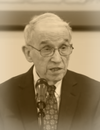
Isaac - Possession & Progress of sonship
A.J. Higgins explores the life of Isaac to reveal the spiritual truths of sonship, emphasizing that believers receive all blessings and dignity of sonship at conversion through God's sovereign grace.
In this insightful sermon, A.J. Higgins examines the life of Isaac to uncover profound truths about spiritual sonship and the blessings believers receive at conversion. He highlights that sonship is more than birthright; it encompasses dignity, maturity, and inheritance granted by God's sovereign grace. Higgins encourages believers to recognize the fullness of their spiritual blessings received at salvation and to live in a way that honors the Holy Spirit dwelling within them. Drawing from Genesis and New Testament teachings, this message offers both encouragement and practical guidance for growing in faith.
Full Transcript
Thank you for being here. We'll turn to the book of Genesis and chapter number 17. Look just one or two verses here in this chapter.
Verse 19, And God said, Sarah thy wife shall bear thee a son indeed. Thou shalt call his name Isaac, and I will establish my covenant with him for an everlasting covenant, and with his seed after him. Chapter 21 and verse number 1, And the Lord visited Sarah as he had said, and the Lord did unto Sarah as he had spoken.
And Sarah conceived, and Abraham a son in his old age, at the set time of which God had spoken to him. Abraham called the name of his son that was born unto him, whom Sarah bear to him, Isaac. And Abraham circumcised his son Isaac, being eight days old as God had commanded him.
And Abraham was a hundred years old when his son Isaac was born unto him. And Sarah said, God hath made me to laugh, so that all that hear me will laugh with me. And she said, Who would have said unto Abraham that Sarah should have given children suck? For I have borne him a son in his own age.
And the child grew, and was weaned. And Abraham made a great feast the same day that Isaac was weaned. And Sarah saw the son of Hagar, the Egyptian, which he had borne unto Abraham, mocking.
Wherefore, she said unto Abraham, Cast out this bondwoman and her son. For the son of this bondwoman shall not be heir with my son, even with Isaac. And the thing was very grievous in Abraham's sight because of his son.
Now just turn over to chapter number 26 for just a couple of verses. Verse 12 of chapter number 26. And Isaac sowed in that land and received in the same year a hundredfold.
And the Lord blessed him. And the man waxed great and went forward and grew until he became very great. For he had possessions of flocks, possessions of herds, and a great store of servants.
And the Philistines envied him. Now we do trust God will bless the reading of very familiar portions of the Word of God to all of us tonight. As was intimated already, we are going to look at the little expression, the child grew.
It occurs six times in your Bible. And I'll just do a preemptive strike. Someone's going to come to me and say it's seven times.
The seventh time, not necessarily in order. It's a little different variation relative to Jacob and Esau where it says the boys grew. But we're going to be very strict and just use the six occasions where it will say the child grew.
The first time is here where we are looking in the life of Isaac. We will look at Moses, says of him the child grew. We will look at Samson, it says of him and the child grew and the Spirit of God began to move him.
We could look, we will look as well at Samuel. The child grew and the child grew on and the Lord was with him and so on. We'll look at John the Baptist.
The child grew and was in the deserts at the time of his showing. And the sixth will be the Lord Jesus Christ himself and the child grew. And we will look at all of these and lessons that are linked, gathered around this little expression, the child grew.
When we are looking now at the life of Isaac, I'm going to suggest to you it is the possession and the progress of sonship. When you come to the New Testament, sonship is somewhat different than being a child. We are children by birth into the family of God.
We are all children of God by faith in the Lord Jesus Christ. We are children by birth but we are sons by adoption. And sonship involves more than just being a member of the family, just being a child.
When you're looking at sonship, you're looking first of all at the thought of dignity. Dignity of sonship. Ephesians chapter 1 and verse number 5, predestined to the adoption of sons.
We have been predestined to be sons of God. Dignity that is involved. When you are looking, for example, at Galatians chapter 4, where you have sonship, it's not so much dignity, it's maturity.
It's in contrast to being a child and the child having no more right to the inheritance than the slave. But now as a son, he comes into an inheritance and so when you are looking at Galatians chapter 4, it is maturity. But as well, when you're in Romans chapter 8, it is the legacy.
If sons, then heirs. Heirship is based upon sonship. And just as a little side excursion, that's why when you come to Hebrews chapter 1, you have clear indication of the eternal sonship of Christ.
Because sonship must precede heirship and God has appointed him heir of all things from before the world began. So he must be son to be heir. Sonship is necessary for heirship.
But to look now at what we have here relative to Isaac as time is moving and we'll have to respect the time, I want you to think of the lessons that are gathered around the life of this man Isaac and especially his growth. I want you to think first of all of his conception and birth. His conception and birth.
Because really what you have is a son born by sovereign grace and power. It was absolutely hopeless as far as humanity was concerned and natural procreation was concerned. Here was a son born apart from all natural ability.
God used the natural in a sense but it was only as a result of divine power empowering it in this particular case. He was a son born according to promise. We read it in chapter 17, at a set time I will return and Sarah shall have a son and so on.
And you hardly need me do you? Now to connect the dots. Here is someone born as a result of sovereign grace. Here is someone born according to divine purpose and promise.
And of course we begin to see ourselves in Isaac relative to his conception and to his birth. The uniqueness of it that each one of us has been born not of natural means, not of a matter of a natural decision or someone's dealing with us. Remember what John says in John chapter 1, which are born not of flesh nor blood nor the will of man but of God.
Those who are genuinely born of God are born as a result of sovereign grace and sovereign dealings and sovereign power. But what I want you to see especially and we'll spend a few minutes here is linked with his birth and his conception is his circumcision. Eight days he was circumcised as a sign of the covenant.
Isaac came into all of God's purposes and blessings as a result of his birth, not merit. Everything that God intended for Isaac he received because of birth. The covenant was his.
All the blessings of God were his before ever he did anything for God. Everything was given to him by God. So let me just take a few minutes here and remind you that everything God ever wanted to give.
Now I say this carefully but I want you to grasp it. Everything God ever wanted to give a human being, he gave you the moment he saved you. You do not have to wait and pray for blessings.
You do not have to somehow tarry for the spirit. You do not have to pray for God to put a blessing upon you. Ephesians chapter 1, blessed with all spiritual blessings in the heavenlies in Christ.
The moment Isaac was born, he became heir to every divine purpose and promise and privilege that God could give in that dispensation. And amazing as it is, God has something even better for this dispensation. And if you think of a God who is absolutely all wise, all wisdom, who is all goodness, who is all powerful, and he brings together a package and he confers it upon you and me at conversion.
Now it'll take the rest of eternity to unpackage the package, okay? But we got it all the moment we were saved. And far more than we have ever yet appreciated here upon earth, you receive that at conversions day. Maybe the most obvious and the thing that you would perhaps rejoice the most in is what we read in Ephesians chapter 1, in whom we have redemption through his blood, the forgiveness of sins.
You received forgiveness the moment you trusted Christ. But you receive not only forgiveness, but Ephesians 1 tells us we received a new footing, a new foundation before God. Tells us that we are accepted in the beloved, not just forgiven, not just that the past is erased.
But now when God looks at you and looks at me, he doesn't see us. To be accepted in the beloved means that all he sees is Christ. We're not just accepted by the beloved.
We're not just accepted with the beloved. Those would be wonderful things. But to be accepted in the beloved carries with it the idea of a container and you put something in the middle of it.
And no matter what angle you look at it, all you can see is the container. Or all you can see is what's surrounding it. It's the idea of being accepted in the beloved.
All that God looks upon, all that God sees when he looks at us, he sees Christ. A whole new footing, a new forgiveness, a new footing. More than that, we have a new fellowship.
Not just with God above, but Ephesians 1 reminds us of this. Reminds us that at the moment of believing in Christ, we were sealed with that Holy Spirit of promise. So there is now a divine guest who has come to take up residence in you and in me.
There's actually a divine guest who is inhabiting each one of us. Our bodies have become temples of the Holy Spirit. And everywhere we go, we take with us a divine guest.
Everything I watch, everything I listen to, everything I read, I'm exposing a divine guest to. Now you know what it's like, especially those of you who are given to hospitality, our sisters, you know what it's like when a guest is coming. If your home is anything like mine, you go in a bit of a frenzy cleaning, right? You clean the place and you straighten it up and it's got to be just right for the guest.
And your schedule gets a bit altered and you try to do everything to accommodate the guest, to make them feel at home and to kind of pamper them a bit. You know, if they stay for three days, that's okay. Longer than that, they're on their own.
But you know, you just do a little bit to make them feel special and make them feel welcome and you change your schedule to fit theirs. How much house cleaning have we done for the divine guest? How much altering of our schedules have we done for the divine guest? How much do I make that divine guest feel at home and do nothing to make him feel ill at ease by my life and by my behavior? In that same epistle, Paul was going to remind the believers that they are not to grieve that Holy Spirit of God with which they have been sealed until the day of redemption. And he's going to deal with a number of things, but one of the primary things he will deal with as far as grieving that divine guest is our speech, our lips, what we say, how we talk to each other, how we communicate, corrupt communication and lying communication and double-meaning communication and all the rest.
And he is going to remind us that that guest can be easily grieved. So we are reminded then that we have a forgiveness, a new foundation, new fellowship. You also have a new faculty.
Paul tells them in Ephesians chapter 1 that the eyes of our understanding, the eyes of our heart is one of the translations, being enlightened that she may know, that she may know now suddenly as a result of the Spirit of God's indwelling, as a result of divine life, there is a new faculty and ability to appreciate divine things and to appreciate divine persons and divine treasures that we have in this book. We have as well new food, this book, and we have a new future as well. I mean, we could go on and on of all that has come to us at conversions moments.
Now, it's vital to see that because we do not somehow need to strive and serve in order to have God bless us with certain things. God has blessed us in His kindness, in His grace, with everything His heart could ever desire to give human beings. And He gave it to us the moment of conversion.
Even spiritual gift as far as usefulness is concerned, that all came at the moment of conversion. Now, it takes the rest of your life to develop it, to work it out. But you received everything the moment you were saved.
So you will understand why I am stressing that. We live in a time when the charismatic movement, the charismatic excitement is very, very prevalent in many areas, tarrying for the Spirit, praying for the Spirit, praying for the gift of tongues, praying for this, praying for that. There is no blessing we need to pray for.
And always remember, we can never merit a blessing. Even day to day, I'll call them blessings, whether it's the salvation of our families, whether it's improvement in health, whether it's the need of a job, and we think of those as daily blessings. Even those blessings, we can never merit.
Every blessing is on the ground of mercy, not merit. And you might say, well, I thought if I live the right way, then God would bless me. No.
The most we can do is live in such a way that we do not hinder God from being able to bless us. But we can never obligate God. Never feel you can obligate God to bless you.
I don't know if this has any relevance to people here, but there are parents who have taken their children faithfully to gospel meetings from the time they could first sit and listen. They'd be out every Sunday night. They'd be out during series of meetings.
They would be cared for in the home, reading and praying together around the table, and all the things that we think of as being the perfect way to raise your children. They haven't seen their children saved. And there are some other families, and if it's convenient, they'll be out on Sunday night, and if it's convenient during a series of meetings, they might be out a few nights.
Their children get saved. And it seems so incongruous, paradoxical that people who are so faithful with their children, they don't see them saved. And people who seem to have less exercising concern, their children get saved.
Remember, you can never merit it. You can't make God sign on a dotted line that if I do this, He will do this. Yes, God has promised, them that honor me, I will honor.
But God's honor is not always the way we think it ought to be. God will always honor faithfulness, but He honors it in His own way and His own time. Bible is strewn with individuals who honored God and seemed to have been overlooked.
Think of a man like Uriah the Hittite. Talk about faithfulness. Brought home by David because David's trying to cover his sin, and Uriah will not go down to his house.
The ark of God and Joab, they're dwelling in tents. How can I go down to my house? I'm going to stay here. Faithful to God, faithful to the people of God, faithful to the battle, and yet carries his own death warrant back to the battle, and he's put to death, and he seems to be just forgotten.
God will honor in His own time and way. So blessings then come. All of these spiritual blessings that we have spoken of are all the result of conversions day and of being in Christ.
You can elaborate on them. We could spend more time on them. Let me just mention one other thing.
The moment you receive Christ, your worth, your worth as an individual was established. Much of what we do, even in Christian life, unfortunately, much of what we do is to try to establish our self-worth. I'll call it our significance, and we have bought into 21st century, was even 20th century, but 21st century Western thinking that what I have, what I own, what I accomplish, where I have been, that all makes me significant, right? You know, whoever dies with the most toys wins, and boys with their toys, and you've got to have things, and we begin to think significance lies in things.
You and I received our significance the moment we trusted Christ. You could not be more valuable to God than you are at this very moment. Never think that somehow God will love you more if you accomplish more for him, or that you will be more precious to him if somehow you do something great.
Every believer is infinitely precious to God as a result of being in Christ. We do not increase our worth by what we do. We do not increase God's affection for us by what we accomplish.
Now, it is true, the way I live, the way you live, will either give God pleasure or give him grief. We're not talking about the pleasure I bring to God, or the pleasure God gets from my life. We're talking about worth.
And I can say, no matter who I'm speaking to tonight, you are as valuable to God as the most prominent of evangelists, teachers, elders. There are no little people with God. In a way, there's no big people with God either.
Everyone is important to God at the same level. Everyone is of infinite worth. So that our worth was established.
Isaac's worth was established because of his birth, because of being born into the covenant. Now, natural birth doesn't bring us into a covenant, you understand. I'm using the natural here to link with the spiritual.
But his worth was established. His wealth was established as well, wasn't it? All the blessings of the covenant were his at conversion. So his worth was established.
His wealth was established. He received God's wisdom to direct him in his life. And God's will was revealed to him as we'll see.
So not just his conception, but his circumcision. But linked with what we have in verse number eight, what is linked with this man, Isaac, and the expression the child grew, is the next expression, and he was weaned. Now, three occasions in the Word of God where you read about weaning.
It says of Samuel that his mother Hannah would not bring him up yet until he was weaned. You have in Psalm 131, David saying, I have behaved and quieted myself like a weaned child, even like a child that is weaned of its mother. So what's the thought then of weaning? It's the idea of someone who has learned self-control.
The infant prior to being weaned is impulsive, demanding, and insisting. But when the child is weaned, it has learned self-control. It has learned to wait.
It has learned to be patient. It has learned the wisdom of its mother and no longer having to make demands on those it will be cared for. So when Isaac was weaned, it is the thought now of someone born for submission.
Not just born by sovereign grace, not just born into spiritual blessing, but born for submission. Learning to submit, learning to wait. The great secret of contentment.
Learning to wait God's time and God's way. Contentment with all that God brings into my life. We have the strange difficulty of being very content with our spiritual attainments and being very discontent with our circumstances.
And the Word of God would teach us to be content with our circumstances and to be very discontent with our spiritual progress. But here was a man who a child really as he grew, he was marked by contentment. No frustration, no fretting, no fuming, no fantasy.
No if only I, if only this were true, if only I had this gift, if only I could speak like that, if only I had this personality, if only I had a different job, if only I had a different family life, if only I had a different and you can fill in the blanks, right? I mean, we all have some if only in our lives and we use that as a very convenient excuse for our lack of contentment. Here was Isaac, the child grew and was weaned. Those circumstances that you chafed against, those things in your life that you wish and tell yourself, if that wasn't there, I could really be a better Christian.
And if it weren't for this, I think I could really begin to get my Christian life on track and live for God. Remember that sovereignty controls your circumstances. Faith controls your conduct.
Sovereignty controls the circumstances of your life. How you respond to those circumstances is the result of faith. So sovereignty controls circumstances.
Faith controls my conduct. We cannot control circumstances. They are God's.
Now, I'm not speaking of things we bring on ourselves, not speaking about circumstances we have caused and things that we ourselves have brought upon ourselves by poor decisions and wrong choices in life, but I'm talking about just those things we cannot control, those types of... You can't control who lives next door to you and you can't control who works with you necessarily unless you're the boss and can fire them. You can't control circumstances such as that. How you respond to them, how you react, how you deal with them, how you face them, that is your responsibility.
And to recognize that whatever God has allowed in your life is for your blessing and your good. You remember, don't you, the story... We all sing it, you know, 12 spies went to spy on Canaan, 10 were bad, 2 were good. You recall that what the 2 said, when the 10 came back, you know so well, they complained about the giants and so forth and they couldn't possibly envision being able to overcome the giants.
What was it that Caleb said? He said, let us go up. They will be bread for us. Not just that we can beat them, but that by facing them, we will become stronger.
They are bread for us. God is going to feed our faith, going to feed our strength. The circumstances you think are so negative and are so impossible, the giants of the land that are so formidable, Caleb said, God is going to strengthen us when we face them.
He's going to strengthen us by defeating them and we will feed, our faith will feed on that type of thing. They are bread for us. So circumstances then are something we need to learn to accept from God.
Psalm 16 is... The title of that Psalm is Mictum, which means golden. And Psalm 16 is the psalm of the contented man. And that's gold.
If you can be content, that's gold worth going in for, okay? That's better than Olympic gold, to be a contented person. The psalm, you can look at it when you have an opportunity. He's contented with God's portion.
The Lord is the portion of my inheritance in my cup. He's content with God's person. He's content with God's pathway.
But also he's content with God's people. That means he's not saying, you know, if so-and-so weren't in the assembly, it would be a lot easier. And if so-and-so weren't part of the fellowship, I think I could be a little happier and be more useful here.
Content. Content with things we cannot control, but exercise and burden about what we can control in our lives. Now I have to move, because I want you to notice also, linked now with this child growing and the child weaning, was that Abraham made a great feast.
And we will move from conception and circumcision and contentment, and now there's conflict. There's conflict. Immediately upon the child being weaned and the feast being made, persecution begins.
Ishmael, we read there, the son, actually it's not even mentioned, just called the son of Agar, was mocking Isaac. When did this conflict begin? When did this conflict of the natural man against the spiritual man begin? It's interesting, it didn't begin, at least it doesn't tell us it began the moment of birth. It began as he began to grow.
As he began to grow, suddenly there was a conflict. Now from a natural standpoint, likely you would say, well, Ishmael maybe thought nothing of the small infant when it first was born, but as he sees the child begin to grow and realizes that this is the heir, now he has a rival and so he is going to persecute. You can look at that on a natural level, but I think on the spiritual level, we are reminded that when a believer begins to grow is when they begin to experience conflict in the Christian life.
When the flesh wars against the spirit and the spirit against the flesh and they are the contrary one to the other, according to Galatians chapter 5, and it occurs here when spiritual growth begins to occur. But you'll notice as well something very significant and I think this is worth pointing out. We read here in our Bibles in Genesis that the son of Agar, the Egyptian, was mocking.
Mocking. No rotten tomatoes, no eggs, no spit, no physical abuse, just mocking. Now I point that out because when you come to the New Testament, here is the spirit of God's commentary.
He that was born after the flesh persecuted. Persecuted. Him that was born after the spirit.
So the spirit of God says just that mocking, just that mocking, that sneer, that condescending look that you get, that behind the back laugh that they give you at work, that whispered discussion that others might have at school about you and how strange you are and weird. God says persecution. Now I'm not trying to minimize believers who do go through physical torture and physical persecution in our world even now.
I'm not trying to minimize that at all. I'm just telling you what the spirit of God has said. He has taken the mockery, the verbal abuse of Ishmael and has told us it was persecution.
So the conflict began. But I think the reason the conflict began is this. You'll notice it wasn't just the child growing.
That was part of it. But you'll notice that probably it was the feast. It says that Abraham made a great feast and the same day that Isaac was weaned and Sarah saw the son of Hagar.
So it perhaps was the feast. Do I need to apply that? Maybe I should. You are going to have to feed either your spiritual life or your natural life.
And the more you feed your spiritual life, the more you are going to be aware of a conflict. We call it the flesh against the spirit. You may want to call it the old nature against the new nature.
We won't become too technical here. But the principle is this. You have to feed one or the other.
So the question is, what are you feeding? You see, if you don't feel the conflict, it may be because you're not feeding the spiritual life. But as you feed the spiritual life, you will become more and more conscious of a tremendous conflict. I know Christians have peace, but Christians also are at war.
It's a strange... There are many paradoxes of the Christian life, and that's one of them, that there is a constant conflict. And you hardly need to leave your house in the morning to engage in it, do you? And it's there. And as you nourish spiritual life, yes, you gain the victory over flesh, but you're very conscious of that conflict and the demands and how the flesh seems to intrude into everything.
And it's always there, always trying to get some credit, always trying to take some honor from what has happened. And you're so aware of it as you're seeking to feed the spiritual side of your life. Really, that's the teaching, isn't it, of what we have in Romans chapter 6? How does a believer manage to overcome sin? Not just your sins, but overcome sin as a monarch or as a master in your life.
That's the teaching of Romans 6. Sin the monarch, sin the master. How do you gain liberty? How do you gain freedom over it? Well, Paul doesn't have any great mystical teaching. He says, first of all, knowing certain things.
Knowing that your old man, all that you were in Adam, was crucified with Christ. You're standing in Adam. God is done with it.
God is no longer interested in you as a man in Adam. He says, know that. Know that something has happened.
And then he says, reckon it to be true. It's not a matter of imagining it, not a matter of somehow conjuring it up in your mind or feeling it. He says, it happened.
Now live in the good of it. Now, almost everyone here knows what that's like. I mean, every woman here who's married knows what it's like to know something and then to reckon it.
You knew you were married and you began living like a married woman. You began taking another name, living a different way. That's the idea, knowing something and then living in the good of it.
And then he says, yield your members as instruments of righteousness. And then he says, obey. So there is the knowing, there is the reckoning, there is the yielding, there is the obeying.
And as you do that, he says, you'll no longer have your fruit or the result of that will no longer be the sin that you once did, but it will be fruit unto righteousness and unto holiness. And so he is saying to live in the good of what occurred when Christ died and your old man was crucified with him, that God was done with all that you once were, so that the dominion, the power of sin in your life can be broken. He says, there's going to be this conflict.
And the only way you can overcome is by feeding the spiritual and accepting what God has done for you in Christ and living in the good of that. So there is conflict. But then, I don't know if you've ever noticed, but aside from what we have read in chapter 21, just the child grew and was weaned and the feast, we don't read of Isaac again.
No mention of his teenage years, no mention of his young adulthood. The next time we see Isaac, he's carrying wood and going up to an altar and yielding himself to an altar, not just born by supernatural power, not just born, as we have seen already, to submission, not just born into all spiritual blessings, not just born into a spiritual warfare, but born for sacrifice, born for the altar. We move from chapter 21 and his birth to chapter 22 and his consecration on an altar for God.
Now, we normally think, and rightly so, of Genesis 22 being a tremendous trial for Abraham. And it was, not diminishing that in the least. But chapter 22 was also a great trial for Isaac.
Would he surrender and just yield himself unreservedly to his father's will, a son born for sacrifice? I hesitate because I feel I fail here, so I'm not speaking from experience, I'm speaking from what the Scripture says. Sacrifice should be the norm for Christian living. It has become the exception.
I'm not speaking of sacrifice to death. I'm not speaking of sacrifice going out as a missionary, day-to-day sacrifices, sacrificing our money, sacrificing our time, sacrificing our self-interests, sacrificing our own agendas, sacrificing our own lives, living for others. That has become the exception.
And we take great personal pride when we have made a sacrifice, and yet, yet we are linked with a Redeemer and linked with a salvation that is based on sacrifice. And every one of us should be marked by sacrifice, from the youngest to the oldest. Sacrifice should be our way of life.
So whether you're in college and paying exorbitant tuition bills and you think you have very little to put into the Lord's offering on a Lord's Day or to send to a missionary or a preacher, and you decide, well, I'm just going to do without, you know, my Friday night pizza with everybody else, I'm just going to take that money and put it aside, sacrifice. Now, no one can tell you and legislate sacrifice because then it's not sacrifice. Sacrifice is something that is the result of, as Isaac did, the result of devotion and the result of submission.
Moriah was a test for Abraham, but it was a test as well for Isaac. Something that was very difficult for me to understand, and maybe it's an insight into my own carnality. I often wondered, Noah preserved alive on the ark for a little over a year all the different animals, comes out of the ark, builds an altar, and then offers some of the animals on the altar.
And I used to wonder, that seems strange. Why, why preserve those animals alive if you're going to kill them in the end? Seems almost like, and then it dawned on me, the very reason they were preserved was so they could be upon the altar. The very reason you and I have been preserved is so that in some life, some measure, our lives can be on the altar.
Sacrificed in usefulness for God. So here was the test then for Isaac, the test of consecration. I do have to, though, balance that.
When we are looking at the thought of the child growing, we are mainly going to be looking at character, a Christian's character, not so much his capability. I don't want to put so much stress on service that we lose balance and fail to realize that far more important than service, far more important than what I do is what I am. God is far more concerned with my enjoyment of him than my employment for him.
And so we want to just keep things in the right balance. But nevertheless, here it is, and we need to look at it and to underline it. Let me come to what we have then in chapter 26, in closing.
We read there that Isaac sowed, reaped a hundredfold, and waxed great, and went forward and grew. Interesting thing here, and you can check me up on this. As far as I know, Isaac is the only man in Scripture who reaps a hundredfold.
That's quite a harvest, and I'm not a farmer. I grew up in concrete city. The only piece of grass we saw was a weed that would grow up between the cracks in the cement, okay? So you'll understand, but I still...a hundredfold to me seems like a pretty big number.
And Isaac's the only man in the Word of God of whom it says that he reaped a hundredfold. Wouldn't it be nice to be a hundredfold believer? I'm not talking about what you accomplish, just talking about what you are. The teaching of John 15, fruit, much fruit, more fruit, more and more like Christ.
As my life goes on, reaping a hundredfold. You'll notice that he waxed great, and went forward, and grew. Growth never stopped in this man's life.
Complacency is a tremendous enemy to spiritual growth. The moment you think you've arrived, you've hardly begun. God intends growth to be continual and progressive.
So just on an everyday level, what that would mean is, whoever in this room has been saved the longest should be the most like Christ. Whoever's been saved the longest should be the most like Christ, and have the most fruit in their life to please God. Here was a man who grew all the way to the end of life.
I would hate to think that somehow growth just gets stunted because of complacency as you get into the cynical old age years that some of us are approaching. I like to think you can keep going, and keep enjoying, and keep developing for God. To go out, to go out looking your best.
If the Lord takes me, don't come to the funeral and say how naturally it looks. Forget that. I'd like to go out looking my best for God while I'm still living.
How I look in the coffin, not a problem. Okay, we'll let that go. But you'll understand what I mean.
I like to look my best at the end of life. And you'll notice that he waxed great, and went forward. Unidirectional growth.
He just went forward. Unidirectional growth. A wonderful thing.
When I look at that, I'm reminded of a quote from Abraham Lincoln in his unique, wry humor. He said, I may walk slow, but I never walk backwards. So if your progress is slow, no problem.
Just don't walk backwards. That's what Isaac was marked by. Just went one way.
The man increased and went forward. Are we all moving forward? Not cruise control forward, but are we all moving forward? Or are we taking a slight vacation from Christian growth? The child grew, and then Isaac, later in life, he waxed great. He went forward, and he grew until he became very great.
What a wonderful testimony at the end of life. So could I just emphasize one or two things? Could I just underline again that you and I have been born into every blessing that God can give. And Christian life is all about learning to live in the good of them, discovering them, living in the good of them, enjoying them, and growing by them.
We received all that at conversion. That growth is the sign of life, that God expects growth, and that growth should be continuous. If there is no feast, there is no fight.
So feeding the spiritual life through this book that God has given us is vital. And moving forward, growth that knows no hiatus, unidirectional, that is for God's glory, his honor, and to his eternal praise. Now we'll speak to God in prayer, sing a hymn, and then our brother will have a few announcements.
Sermon Outline
-
I. The Birth and Covenant of Isaac
- Isaac born by sovereign grace and divine promise
- Circumcision as sign of covenant and divine blessing
- Isaac’s birth symbolizes spiritual sonship and inheritance
-
II. The Meaning of Sonship
- Sonship involves dignity, maturity, and heirship
- New Testament sonship is adoption into God’s family
- Sonship precedes and enables heirship and legacy
-
III. Spiritual Blessings at Conversion
- Believers receive all spiritual blessings at salvation
- Forgiveness, acceptance, fellowship, and sealing by the Spirit
- No need to earn or pray for blessings after conversion
-
IV. Practical Lessons from Isaac’s Growth
- Growth symbolizes progress in sonship and maturity
- Weaning represents learning self-control and patience
- Believers must honor the divine guest—the Holy Spirit
Key Quotes
“Everything God ever wanted to give a human being, he gave you the moment he saved you.” — A.J. Higgins
“You are as valuable to God as the most prominent of evangelists, teachers, elders. There are no little people with God.” — A.J. Higgins
“Sonship must precede heirship and God has appointed him heir of all things from before the world began.” — A.J. Higgins
Application Points
- Recognize that all spiritual blessings are granted at conversion and live confidently in that reality.
- Honor the Holy Spirit as a divine guest by living a life of self-control and avoiding actions that grieve Him.
- Understand your worth and significance come from being a child of God, not from your accomplishments or possessions.