
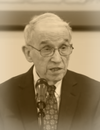
Jacob in Bethlehem
A.J. Higgins teaches that Jacob's journey to Bethlehem reveals the costly price of compromise, the pathway of restoration with God, and the paradox of sorrow intertwined with grace and progress in the Christian life.
In this biographical sermon, A.J. Higgins explores the story of Jacob's journey to Bethlehem as recorded in Genesis 35. He highlights the costly consequences of compromise, the faithfulness of God in restoration, and the paradoxical presence of sorrow in the Christian walk. Higgins encourages believers to trust in God's grace and progress despite life's difficulties, using Jacob's life as a powerful example of leadership, obedience, and consecration.
Full Transcript
Our Father, we join together quietly in Thy presence now. We would pray that the result of our time together would be that the voice of God, not the voice of men, might be heard and the people of God spoken to, whether for encouragement or comfort or exhortation or correction. Whatever may be the need, we do thank Thee for the ability of the Spirit of God to take the very same verses and to apply them in different ways to different hearts, depending upon the need.
We are dependent upon Thee. We are those who have been brought into the family of God, but as such we are dependent children and must look to Thee for guidance, for direction, for instruction, for food. We thank Thee, Lord, that Jesus Christ has told us that we need never hunger, need never thirst.
There is abundance in Him. And so as we come to Thy Word, we pray that that which relates to Him, that which reveals Him, that which reminds us of Him, might be our portion as we give thanks to Thee and look to Thee now for the help so needed. In the name of our Lord Jesus, amen.
Book of Genesis in chapter number 35. A closed-circuit TV has taken note that everyone was here, and if you leave after you've gotten a lovely lunch, you'll be remembered. You'll have to come back after lunch.
If you have responsibilities, that's understood. Now we're going to start where we're going to end, and that is in verse number 16, just so you can see that this has to do with Bethlehem. And they journeyed, that is, Jacob and his family.
They journeyed from Bethel, and there was but a little way to come to Ephrath. And Rachel travailed and was in hard labor, and came to pass. When she was in hard labor, his midwife said unto her, Fear not, thou shalt have this son also.
It came to pass that her soul was in the parting, for she died. That's the Bible's definition of death. It came to pass that her soul was in the parting, for she died, that she called his name Benoni, but his father called him Benjamin.
And Rachel died and was buried in the way to Ephrath, which is Bethlehem. And Jacob set up a pillar upon her grave, that is, the pillar of Rachel's grave, unto this day. And Israel journeyed, spread his tent toward the tower of Edom.
And it came to pass, when Israel dwelt in that land, that Reuben went and lay with Bella, his father's concubine. And Israel heard it. Now back to the beginning of the chapter, so we can see the, not just Bethlehem, but the journey to Bethlehem.
And God said unto Jacob, Arise, go up to Bethel, and dwell there, and make there an altar unto God, that appeared unto thee, when thou fledst from the face of Esau thy brother. And Jacob sent unto his household, and to all that were with him, Put away the strange gods that are among you, and be clean. Change your garments, and let us arise, and go up to Bethel.
And I will make there an altar unto God, who answered me in the day of my distress, and was with me in the way which I went. And they gave unto Jacob all the strange gods which were in their hand, all their earrings which were in their ears. And Jacob hid them under the oak, which was by Shechem.
And they journeyed. And terror of God was upon the cities that were round about, and they did not pursue after the sons of Jacob. And Jacob came to Luz, which is the land of Canaan.
That is, Bethel. He and all the people who were with him. And he built there an altar, and called that place El Bethel, because there God appeared unto him, when he fled from the face of his brother.
But Deborah, the reckless nurse, died, and she was buried beneath Bethel under an oak. And the name of it was called Alon Bacchath. And God appeared unto Jacob again, when he came out of Patanarum, and blessed him.
And God said unto him, Thy name is Jacob. Thy name shall not be called any more Jacob, but Israel shall be thy name. And he called his name Israel.
And God said unto him, I am God Almighty, fruitful and multiply, a nation to come to thee, a nation shall be of thee, kings shall come out of thy loins, and the land which I gave Abraham and Isaac to thee I will give it, that I see it after thee will I give the land. And God went up from the moon in the place where he talked with him. And Jacob set up a pillar in the place where he talked with him, even a pillar of stone, and poured a drink offering thereon, and poured oil thereon.
And Jacob called the name of that place where God spoke with him, Bethel. And we have what we read already about the death of Rachel at Bethlehem. And just one final verse at the end of the chapter, well, three verses.
Verse 27, Jacob came unto Isaac his father, unto Mamre, unto the city of Arba, which is Hebron, where Abraham and Isaac sojourned. The days of Isaac were a hundred and four square years, and Isaac gave up the ghost and died, was gathered unto his people being old and full of days, and his sons Esau and Jacob buried him. The memorial to sorrow and separation at Bethlehem.
Lessons that can be learned from this brief story of Jacob, and we'll have to fill in some of the details, but just some things that we can emphasize from the story of Jacob. Number one is the price of compromise. We'll look at that in a moment and consider where he made a compromise.
The pathway of restoration. This is a man getting back into fellowship with God. The pathway of restoration to God.
The paradoxes. We wouldn't think that there would be sorrow when a man gets right with God, but we'll see the paradoxes that are linked with getting right with God. The principle of grace that is found throughout the chapter, and finally, the progress that is possible at any point in life.
Wonderful to think that restoration, usefulness, growth, is something that is possible at every point in life. Now just to give you some of the background that is here. Back in chapter 31, do you recall, even before that, do you recall that Jacob had, by deceit, stolen the boat of birthright from his brother Esau.
As a result, he fled for his life to Padinarum, to Laban, where he worked in Laban's farm, his business, for 20 years. God spoke to him and told him to return to Bethel, and he began his journey back, but he stopped, sadly, in an area short of Bethel. That's the sad story of chapter number 34.
And there, the price of compromise was seen. It's a very, very sad chapter to read. The defiling of his daughter Dinah, the deceitfulness and the treachery of two of his sons, Simeon and Levi, the disgrace of his testimony among the nations, and his having to leave in shame and escape, really, for his life.
And he comes then, we have here in chapter 35, God says unto Jacob, get up to Bethel. Return to Bethel. That's what he was supposed to have done.
It's possible, it's difficult at times to be accurate in terms of chronology, but it's possible he lost 7 to 10 years of his life in chapter 34. It's possible. Silent years, years that instead of being fruitful for God, were years of shame and disgrace.
Now, I don't say that glibly or with any pleasure, but it does remind us that it's possible for God to take a very, very ruined life and to restore it, and to make it a life that is useful for God, tremendous the grace of God. We can hardly begin to appreciate the magnitude of God's goodness and grace. So, that is the background here.
So we are introduced, first of all, into the government of God. Jacob's theory. Halfway obedience is really disobedience.
And Jacob is going to pay a huge price for his disobedience in chapter number 34. He settles down, and the result is a blot upon his family, a blot upon his testimony, and two of his sons will never totally recover from the results of their actions. Levi and Simeon.
Although God in grace does come in, in the case of Levi, and turn a curse into a blessing. It is interesting to notice, and I just mention this, because to me it's an exceedingly, exceedingly important point. And that is that virtually every failure in the book of Genesis was a failure in leadership.
Whether you think of Adam following Eve's lead and forfeiting leadership, Abraham with Sarah, taking her advice, going into Hagar, and on you go through the book of Genesis. Failure in leadership, time and again, led to problems. And here as well, Jacob, as the leader in his family, had failed.
He failed to take the lead and obey God. And then when tragedy struck his family in terms of the defilement of his daughter, he forfeits leadership and allows his two sons to try to handle the situation in a very ungodly manner. And so we're reminded of the tremendous importance of leadership.
But coming back into my point, failure in compromise. You have the same thing with Abraham. In Genesis 11, God had said to Abraham, get thee out.
Abraham settled down, possibly waiting until his father had passed away. And he spends all those years in Aaron, for forever he comes into the land of Israel. And he had gotten goods and so forth there, became rich there as well.
And so we are reminded then of the tremendous danger of the failure of compromise. There's also the filth of Shechem, that somehow wore off on these boys, the cruelty, the hardness and all that marked them. And the family's fault, the treachery of Simeon and Levi, all of that.
But despite all of that, overshadowing it is the faithfulness of God. God says, arise, go up to Bethel. And make there an altar unto the God that appeared unto you when you fled from your brother Esau.
So we have God's faithfulness seen here. But in the background also, we've got to remember Rachel's folly. Two things.
Number one, her words. And number two, her work. Her words, chapter 30, verse number one.
Give me children or else I die. A lesson, always be careful what you say to God. Give me children or I die.
Secondly, she stole away her father's idols, the gods of her father. That's what we come to hear. And it may be, and again we're reading between the lines, it may be that Jacob knew, with idolatry that had spread lightly to the family, because he speaks here about the strange gods, plural, it may be that Jacob realized with the idolatry that she had introduced into the family, they really were not fit for Bethel.
They really weren't fit for it. Until now, tragedy strikes and God's governmental hand is seen in his life and he realizes things are desperate. God speaks and he arises and he makes his way up to Bethel.
Chapter 35 is a chapter not only of the government of God, but of graves. Graves. Now, a clue to that is the fact that as you come to the end of the chapter and the death of Isaac, it doesn't really occur at the end of chapter 35.
It occurs many years later. If you put ages together, Isaac was alive when Jacob was sold down into Egypt. I'm sorry.
Isaac was alive, had not died, when Joseph was sold down into Egypt in chapter 37. So the Spirit of God is bringing together a number of burials into a chapter to remind us of a principle. First of all, you've got the burial of their idols and their earrings.
You've got the burial of Deborah. You've got the burial of Rachel. You've got the burial of Isaac.
You've even got the burial of Jacob's name. His name is buried. Now you're Israel.
So God is reminding us of burials on the pathway to restoration. Things that need to be buried. Things that he didn't expect to have to bury.
In chapter 32, you recall that chapter where he wrestles with the angel by Jabba, by the brook. In chapter 32, he is broken and he is blessed. In chapter 35, he is bereaved and he is blessed.
He's going to get a great blessing in this chapter. One of the reasons for the blessing is to prepare him for what is coming. But another is to show him that in restoration, God is able to give far more than he ever had before.
And so we'll see that as we come to the chapter. So it's a chapter where there are graves that are strewn along the chapter. At least four literal graves.
And a metaphorical one as well, relative to his own name. And hopefully what God intended was the old Jacob. The old character buried as well, out of sight.
So chapter 35 then, we have seen the government of God. We have seen the graves that strew themselves along the way. And of course, then linked with that, there is the grief that is seen throughout the chapter.
Getting back to God actually meant sorrow. I'm sure it meant joy, but it also meant sorrow for Jacob. You recall the disciples were told to get in the boat and go to the other side.
They were being obedient. They were being submissive to God. And yet, they hit a storm.
A storm that overcame even their own natural ability as fishermen on the lake to somehow navigate. And you would think when we're obeying God, when we are walking in God's pathway, when we're finding the pathway of restoration back to God, you'd think everything would go smoothly. Yet the exact opposite.
Here he is. He is knowing grief. The loss of Rachel.
Mystery of God's ways. Difficult at times to explain. Now there are some different possibilities.
It may be that God took her at her word. We mentioned that in chapter 30. She says, give me children or I die.
Okay. Well, here are the children. Now you're going to die.
That may be. I don't know. It may also be that God's intention was that Leah, who had suffered so long at the hands of Jacob as second-class wife, if you can call it that, that she was going to know her own years of having Jacob to herself.
We don't know what the case there is. But nevertheless, there were partings along the way that were very, very difficult. A Christian theologian once said, Life can only be understood backwards, but it has to be lived forwards.
Understand? Life can only be understood backwards, looking back at things. Rearview mirror Christianity, if you will. Everything seems to fall into place when you look back.
But you've got to look it forwards. And you don't have all the answers. You don't have all the explanations for why things happen as they do.
Why the sorrows of the way, why the bereavements of the way, why things that are so inexplicable occur in the Christian life. We have to live our lives forward. And here is a man, and he's faced with tremendous difficulties in terms of how do you understand all of this.
Sir Robert Anderson, who wrote some very remarkable books, said, The greatest challenge that Christians face is the silence of heaven. I don't know if that ever strikes you with all that is going on in our world today, the silence of heaven. Heaven is silence, no intervention.
I know at times God does intervene in his providence, in his sovereignty, but you're faced with the tremendous test of your faith by the silence of heaven. So here he is, and he's faced with a parting that he never expected. There are four pillars.
It's interesting that this chapter that we're looking at contains two of the four pillars in Jacob's life. There's a pillar he erected back in chapter 32, back in chapter 28, when he first came to this place, Bethel, when he was running from his brother, and that was the day he got saved. A pillar of salvation.
There was a pillar that he raised when he and Laban made an agreement that they would not cross over, a pillar of separation. This chapter contains a pillar of consecration. You read about it there in verse number 14.
He set up a pillar in the place where God talked with him, a pillar of stone, poured a drink offering thereon, and so on. Here was the pillar of consecration, and then, of course, when it comes to the pillar he raised over his wife's frame, a pillar of lamentation. Pillars in the life of Jacob.
They all could stand a sermon on their own, but those are pillars you will have in your life. A pillar of salvation. A pillar of separation.
A pillar, hopefully, of consecration. And ultimately, we'll all have to face pillars of lamentation, sorrow, sadness in Christian life. And so we're reminded here, then, of the great pillars of his life.
You get something of the... I should have read... In fact, why don't we read it, because I think it's so touching. Turn over to chapter number 48 of Genesis. I should have read this earlier, I apologize.
This is Jacob at the end of his life. Look at verse number 7. Jacob is here speaking to Joseph. He's brought his two sons in to be blessed.
Ephraim and Manasseh. And in verse number 7 he says, As for me, when I came from Paddan, Rachel died by me in the land of Canaan, in the way, when there was but a little way to come to Ephrath. And I buried her there in the way of Ephrath, the same as Bethlehem.
Again, I would feel something of a pathos, something of a tremendous grief. He's still looking back, years later. He's looking back on the death of his favorite wife.
And he's still filled with grief and sorrow as he thinks of what happened. Something of the tremendous grief that he knew on that occasion. Almost as though it's ironic.
The house of bread, as he speaks of there. The place of fullness. The place of fruitfulness.
That's where I lost her. And so we see something of what it meant. The awful, tremendous grief he knew in his life.
And then, of course, we mentioned already these two paradoxes. One is the loss of his wife. And the second is the behavior of his son.
Verse number 27. Reuben's infidelity or incest and so on. Here he's knowing some of the greatest tragedies of life in the pathway of restoration.
Seems so paradoxical. And it is. And there's no explanations.
But it's here upon the page of scripture to teach us that in the pathway of obedience, in the pathway of restoration, in the pathway of consecration, there may well be sorrows and difficulties we have to face. Someone said God had only one son without sin. But he has no sons without sorrow.
Every one of us are going to know at times in life the sorrows that we see here linked with even the life of this man, Jacob. How do we deal with sorrow? How do we deal with tragedy? How do we deal with the unexplained, the inexplicable? I don't have any great answers. Let me just say about one of the most remarkable ones that I've ever read of.
I don't know if the name of Jonathan Edwards means anything to Midwesterners. Jonathan Edwards is very likely, in the esteem of some, one of the greatest theologians that America has ever known. He lived back in the 1700s.
In 1758, he volunteered. He was going to assume, I know this sounds strange, the presidency of Princeton University in New Jersey, which was then a theological seminary. I can tell you how far Princeton has come.
Real progress over the last 250 years. Prior to going, he volunteered to become a subject in a study on the efficacy of smallpox vaccine. Smallpox was a huge scourge in the world at that time.
And Jeter's vaccine was just being developed, and Jonathan Edwards agreed to be a volunteer. On his way to Princeton, he never got there. He died of smallpox.
Because they were giving a live virus, and inoculating you with it, and trying to find the right dose, he died of smallpox. His wife got the word later. As she considered what had happened, she wrote to her daughter.
Here's what she wrote. My dear child, what shall I say? A holy and good God has covered us with a dark cloud. Now this is what she writes.
Oh, that we may kiss the rod, and lay our hands upon our mouths. To kiss the rod that smites. That's spiritual.
That's rising far above the natural, the sentimental. To be able to bow and worship when God chooses to move in such a way. Her daughter, to whom she wrote, died three weeks later.
She knew sorrow upon sorrow. Yet she rose to every occasion, despite all that she was called to pass through. How do we deal with sorrow? How do we deal with the inexplicable? That which we have no answer for, that which we cannot explain? Both Peter and James use the same expression.
The trial of your faith. The trial of your faith. Peter speaks of it as being much more precious than the gold that perishes.
James speaks of it in the context of being all joyful. How do we handle that which we can't explain, of tragedy, of sorrow, of setbacks? Test our faith. Do we really think God is in control? Do we really believe that God is a God who loves and cares? I mean, if I have a flat tire, the first thing I think about is, doesn't God know I'm in a hurry? Talk about a test of faith.
I mean, you've got a very weak person in front of you, okay? The first thing you think about is, doesn't God know, doesn't God care what's going on? So all of these things test our confidence in God. If I could respond the way a Sarah Edwards would respond, let us kiss the rod and put our hands upon our mouths and thank a good and a kind God for new ways. So we're reminded here of the grief that he knew and the pathway of restoration.
But linked with that, I have to come to the gladness that he knew as well. You will notice that there were two names given to this son. Danonei, son of my sorrow, Benjamin, son of my right hand.
Now let me just digress for a moment because I think those of you who like to study things a little further for yourselves, just a few things along the way. Every time you see the Lord Jesus Christ and Mary in the New Testament, to Mary he is the Danonei, son of my sorrow, but to God he's the son of my strength. Just trace that out in the life of the Lord Jesus.
Every time you see him in contact with Mary, she is disappointed. She is let down. She is, if you can use the word, sorrowful.
But as far as what God saw, God saw one who was the son of his strength. And so here she names him Danonei as she is departing, as she's dying, son of my sorrow. But Jacob calls him Benjamin, son of my strength.
Now what is going on here? I don't think for one moment that somehow he was being insensitive, he was being indifferent to his wife's grief, that somehow he was just ignoring her. I don't think that's the case at all. I can hardly imagine Jacob having those kinds of feelings towards his wife.
Could I suggest that he saw potential? He saw potential in a newborn child. Do I see potential in newborn souls? It's one of the great responsibilities of leadership in God's assembly, to look for, to nurture, to encourage, and to in any way possible help potential in newborn souls. Whether a young man with a gift, a young sister with a gift, whatever it may be, to be able to nurture that, to appreciate it, not to feel in some way threatened because some young man has a greater gift than you or a greater knowledge of Scripture than you, but to nurture it, to encourage it.
The same thing when we come to the book of Ruth. You remember what the women of the city said, the Lord make this child, like Rachel and Leah, which two did build the house of Israel. Imagine that.
Imagine saying, we hope the son that's being born to you is going to start the nation all over again. Do you ever think of some of the little children running around, getting under your feet, making you spill coffee during coffee hour and all the rest. That there could be one of those young children, someone who would rebuild the assembly to greater heights than it's ever been.
The potential in every newborn soul. I think that's what Jacob saw here. Here is the son of my right hand.
Here is someone who can bring strength, someone who can bring blessings, someone who can confirm and further the work of God. Tremendous to think of that. But also possibly he was sensitive to removing from Benjamin's thinking any thought that you're responsible for the death of your mother.
We don't know the reason why, totally why he changed his name. But I do want to bring you to this. The place of greatest sorrows can also become the place of greatest joy.
For that was true of the Lord Jesus at Calvary. And please do not ask me to explain how the place of his greatest sorrow could also be the place of his greatest joy. Bringing untold delight, the thought that he was bringing untold delight to his father's death must have thrilled him with intense joy.
I delight to do thy will, O my God. And if he could say that in the environs of safety and, what would you say, as he was just moving amongst men, if he could say that when things were going well, it was still true at the cross, when he was doing the Father's will. Still true then, when he was delighted to do his will.
He was a blessed man, delighting in the law of the Lord. Think of all that brought him delight. And all was true at Calvary.
The place of his greatest sorrow is the place of his greatest joy. And in life, for us, sometimes from the place of our greatest sorrows, there can come the place of greatest joy. Remind us, as well, that God is able to provide compensating joys for sorrows.
I don't want to get too philosophic, and I'm not sure that what I'm saying is totally accurate, but I think one reason for sorrow, one reason for sorrow, is to increase our capacity for joy. Now, that takes some thinking. If you do not know sorrow, you hardly can appreciate joy.
It's just like being able to appreciate other things because of their poor opposites. We appreciate joy more when we pass through sorrow. So, God allows joy for different reasons.
As I mentioned, here as we see with Jacob, the place of his greatest sorrow can become the place of his greatest joy. So, the government of God, the graves that were strewn through the chapter, they're so necessary, they're putting away the things on the way to recovery and the way to restoration. We didn't take time to look at them, but you can look at them at your leisure.
The grief. Let me just mention the grace that shines throughout this chapter. We read there that God appeared unto him after he came out of Patenaro.
What about Shechem? What about your failure, Jacob? What about those years that were lost there? God never brings them up. This is after he came out of Shechem, after he came out of Patenaro. I don't know if I can make that point clear.
It's as though the wasted years in between were blank pages. I don't want you to get the idea that failure and sin does not grieve the heart of God. But I do want you to realize that God is a God of such amazing grace and restoration that those years were blank pages.
Let me take you to the book of Hebrews. By faith, they kept the Passover and the sprinkling of blood. Let's see if it's the story of the firstborn, and so forth.
By faith, they passed through the Red Sea. It's 40 years in between. God doesn't once mention the failure of the children of Israel in the wilderness.
In fact, with almost no exception that I can think of. God never points to the failure of an Old Testament saint in the New Testament. He mentions them in the Old Testament.
They're blaringly there, blaringly there. But when you come to the New Testament, God never brings up the failure of Old Testament saints. He always comes to what he can find pleasuring and what he can commend and what he can speak well of.
Their sins and iniquities will I remember no more. I fear that at the judgment seat of Christ there will be a lot of blank pages in my biography. But there won't be any sins brought up.
Blank pages. Pages I wish were filled with something that could have been done for God, but because of failure, they're blank. God is such a gracious God.
Their sins and iniquities, I will remember no more. There are things that you and I remember from our past. Failures along the Christian way.
The times we've become paralyzed by the past. God says no. I remember, some of you will remember a very unique individual by the name of Clay Fite.
He was local to where I live and he was a great help to me. I was very fond of him, spent a lot of time in his presence. He told me once about speaking to a man and the man was going over and over his past sin and his failure.
He says, you know, I've confessed that thing to the Lord a hundred times. Mr. Fite in his own way said the last 99 didn't count. Once was enough.
Don't have to live with the past. Don't have to wallow in the failure of past years. I should have, didn't I? No, no, no.
Here is God in His grace. Just speaking, after you threw out a pad and arrow, here's what, check him as a blank page, check him as a, it's something that God says, there was nothing there for me. I'm only interested in what's for me.
And he jumps from pad and arrow to here, Bethel, and back in the land. You notice as well that we don't have time to look at the entire life of Jacob. When you come to verses 11 to 13 of Genesis 35, the fullest revelation of God to Jacob.
And there are likely, well this isn't the last, there are likely about 8 times where God spoke to Jacob, revealed Himself. This is the fullest revelation of God given to Jacob. At a moment of sorrow, at a moment of recovery, God reveals Himself to Jacob, not only in a fresh way, but in the fullest way possible.
Here then, is the fullest revelation God gives. Renewed promises, fuller light, fuller truth given to him here. It may be that God gave him this full revelation in light of the trial that he was going to face in just a few moments with Rachel and the loss of Rachel.
But nevertheless, whatever the case, in the pathway of restoration, God blesses him richly with a full revelation of Himself. And not only that, God not only forgave him, God not only restored him, God not only blessed him, but we see here, God added blessings to him. Jacob, your name, Lord, will be called Jacob.
But Israel, as a prince, you have power with God. And so here, we are reminded of this new character, new name that's given to him here, and the fact that God spoke with him here at Bethel. God is able to bless, God is able to abundantly bless each of us in the pathway of restoration.
God is going to bring Jacob to center stage. Now I know we think of the remainder of the book of Genesis being all about Joseph. The next time you go through it, think about it being about Jacob.
Okay? Jacob is going to occupy chapters 47, 48, 49, even into chapter 50. God is going to bring Jacob to a place where he becomes a blessing to the entire world. And so God is going to bring Jacob front and center.
This erstwhile failing patriarch is going to walk into the throne room of the most important potentate of the day and bless him. That's what God is doing with this man, Jacob. Bringing him to the position that God intended for him to be a blessing to the nations.
And God is working through all of these things. Using sorrow, using grief, using trial, using the explicit. God is bringing all of these things together to create the man who is going to be a blessing to the world, to his family, ultimately through Christ.
And God is going to associate himself with Jacob from this moment on as the God of Jacob. Do you know something that is very remarkable? I just noticed this recently. We read about the God of Abraham, the God of Isaac.
We read about the God of David. I think twice over, the God of Moses. Aside from the God and Father of our Lord Jesus Christ, the most common designation in Scripture is the God of Jacob.
Twenty-eight times God says, I'm the God of Jacob. I know it says, I'm the God of Abraham, Isaac, and Jacob, but I'm the God of Jacob. That's incredible grace.
That God linked himself upon the page of Scripture with a fairly mortal man, but who ended his life in a blaze of glory. Jacob went home to heaven, looking his very best for God. That's a nice way to think of him in your life, isn't it? Not bad being good for God throughout life, but to end your life the very best.
At my age, it's not likely I'm going to conquer new mountains or rise to greater heights. But I was thinking the other day, there's nothing that says I still can't grow for God. Nothing that says I can't continue to grow as a believer, likeness of Christ, until the very end.
I've used this illustration before, so forgive me. One of the benefits of age is you can blame your age for being redundant. It's my age, okay? The home we lived in for 40 years, we had two very special trees in our backyard.
One was a Japanese cherry tree, and the other was a Vermont sugar maple. The Japanese cherry tree had beautiful, beautiful blossoms in the spring. And the blossoms lasted for a brief time, they fell off, and the leaves were okay, you know, your nondescript green leaves that got kind of brown in the fall and fell off.
The Vermont sugar maple didn't look too impressive in the spring. It looked okay in the summer. But come October, absolutely gorgeous.
Golden, yellow, mixed with golden red leaves, depending on how the sun hit it, absolutely gorgeous, just before the leaves would fall. And I often thought I looked at those trees, I hoped, at the end of life, I'm like the sugar maple. I look better at the very end than at the beginning.
Jacob looked his best at the end of life. And really, that's when we come to, just in the final minute or so, Jacob buried Rachel. But you notice what it says, that, verse number 21, verse 20 says, Jacob set up a pillar upon her grave, the grave of rape, but Israel journeyed, and spread his hands.
Jacob reads, Israel journeyed. Could I just encourage us all, progress at every point in life is possible. We never need to be paralyzed by the past.
I know we can be limited in some ways by things that are public and wrong in our past, but we can go forward. You all know the epitaph on David Livingston's tomb, right? Came from the occasion when he was trying to navigate a river, and his servants, trying to navigate the boat, they were, this sounds gross, I know, forgive me, the river was clogged by the bodies of dead slaves that were thrown overboard by the slave traders. And they wanted to know, what shall we do, where do you want to go? And he said, it doesn't matter where we go as long as it's forward.
That one word, forward, on his epitaph, on his tombstone. We can all go forward. The past need not hinder us.
The pathway of restoration may have trials, may have difficulties, may have things we cannot explain, but progress with God is always possible. Jacob, Darby. Jacob set up a monument, but Israel journeyed.
You recall how it occurs there in Genesis 32, when the broken man rises the next day to go forward. He's had his time with God. His hip has been touched.
He limps out, and it says, the sun rose. The sun rose. Our new day of usefulness for God.
May God help us all to take courage, and to seek to be like, recognizing the tremendous price of compromise. Recognizing the pathway of restoration. Facing the paradoxes that are in the pathway, but recognizing the possibility of progress for God at any moment in our Christian life.
Sermon Outline
-
I. The Price of Compromise
- Jacob's failure in leadership and partial obedience
- Consequences of chapter 34's disgrace and family turmoil
- The danger of idolatry introduced by Rachel
-
II. The Pathway of Restoration
- God's call to return to Bethel and build an altar
- The burial of idols and old ways as a symbol of renewal
- God's faithfulness despite human failure
-
III. The Paradoxes of Obedience
- Sorrow and grief accompany restoration
- The mystery of God's ways and unanswered questions
- The silence of heaven as a test of faith
-
IV. The Principles of Grace and Progress
- God's blessing on Jacob despite past failures
- The possibility of growth and usefulness at any life stage
- The significance of spiritual pillars in Jacob's life
Key Quotes
“Halfway obedience is really disobedience.” — A.J. Higgins
“God is able to give far more than he ever had before.” — A.J. Higgins
“Someone said God had only one son without sin. But he has no sons without sorrow.” — A.J. Higgins
Application Points
- Examine areas of compromise in your life and commit to wholehearted obedience to God.
- Trust God's faithfulness to restore and bless you despite past failures or setbacks.
- Embrace the paradox of sorrow in your spiritual journey, knowing it can lead to growth and deeper faith.