
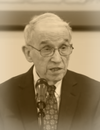
Jesus in Bethlehem
A.J. Higgins emphasizes God's sovereign control over history and the self-humbling nature of Christ's incarnation as revealed in the birth narrative of Jesus in Bethlehem.
In this sermon, A.J. Higgins explores the profound truths found in the birth narrative of Jesus as recorded in Luke chapter 2. He contrasts the accounts of Matthew and Luke to reveal the complementary nature of Scripture, emphasizing God's sovereign control over history and the self-humbling nature of Christ's incarnation. Higgins invites listeners to appreciate the beauty and design of the biblical text and to apply these truths to their faith and daily living.
Full Transcript
Now I'll just take a moment to speak to God at the opening of the gathering. Our Father, we come to Thee, we look back upon the day, and are very thankful for any help given. Anything that is of spiritual value will be the result of the Spirit of God working and taking the Word of God and applying it to all our hearts.
And so for this we give thanks. We are so thankful. We are not left to ourselves, to oratorical skill or lack thereof, or preparation in any measure of what is necessary.
The true blessing that will come from the meeting is the result of the work of Thy Spirit in our hearts. And so we give thanks to Thee for this. We thank Thee that as a result of a glorified Saviour, there is a Spirit that has been poured out, not only into our hearts, but into our very gathering, and is able to use the Word of God for the blessing of all.
The needs are great. We see many different faces, and we are reminded that as the faces differ, so do the needs of Thy people. Individuals perhaps in similar circumstances but with, even though the circumstances may be similar, their needs are unique and distinct.
And so we pray that the Word of God would address and comfort and encourage. We live in difficult days. We thank Thee for the rich provision in the Word of God that will enable us to live and to honor Thee, whatever the conditions of our day.
And so we just commit ourselves to Thee now, asking for the good hand of God to continue to give blessing. We ask for the assembly here and its internal growth that we would see as the Apostle Paul could pray, they would be filled with all the fullness of God. What a prayer, what a desire for the people of God to be as full as God can make men and women full.
And so we give thanks to Thee for this tremendous potential. Bless us well with increasing numbers and increasing interest. Remember the Gospel outreach work and all that is linked with it here in the community.
We commend this to Thee. Remember those who have been traveling. At the close of the meeting, if it's safe for you, we pray, as we return our thanks now.
In the name of our Lord Jesus Christ, amen. Luke's Gospel, Chapter 2. I assure you this message is not seasonally adjusted. Even though we're reading in Luke Chapter 2. And there's nothing wrong with the Christmas story, even though it's Christmas time.
There are tremendous lessons and truths to be learned. Luke's Gospel, Chapter 2, and commencing in verse number 1. Now it came to pass in those days that without a decree from Caesar or Justus, though all the world should be taxed, though really the idea is enrolled in a census. This enrollment was first made when Cyrenius was governor of Syria.
And all went to be enrolled, everyone into his own city. And Joseph also went from Galilee, the city of Nazareth, into Judea, under the city of David, which is called Bethlehem, because it was of a house and lineage of David, to be taxed with Mary as a spouse's wife, being great with child. And so it was that while they were there, the days were accomplished, that she should be delivered.
And she brought forth her firstborn son, wrapped him in swaddling clothes, laid him in a manger, because there was no room for them in the inn. And there were in the same country shepherds abiding in the field, keeping watch over their flock by night. And lo, the angel of the Lord came upon them.
The glory of the Lord shone round about them, and they were sore afraid. And the angel said unto them, Fear not. Behold, I bring you good tidings of great joy, which shall be to all the people.
For unto you was born this day in the city of David the Savior, which is Christ the Lord. This shall be a sign unto you. You shall find the babe wrapped in swaddling clothes, lying in a manger.
And suddenly there was with the angel a multitude of the heavenly host, praising God and saying, Glory to God in the highest, on earth peace, good will toward men. It came to pass, as the angels were going away from them into heaven, the shepherds said one to another, Let us now go even unto Bethlehem, and see this thing which has come to pass, which the Lord hath made known unto us. And they came in haste, and found Mary and Joseph and the babe lying in a manger.
When they had seen it, they made known abroad the saying which was told them concerning a child. And all they that heard it wondered at those things which were told them by the shepherds. But Mary kept all these things, and pondered them in her heart.
And the shepherds returned, glorifying and praising God for all the things that they had heard and seen, as it was told unto them. And we know that God will add his blessing to the public reading of his word. Two take-home points from the meeting.
One is the sovereign control of God. Second, the self-humbling nature of Christ. The sovereign control of God and the self-humbling of Christ.
And if you're able to take those two truths away, I think we'll be a profitable time together in this last final meeting. Now I cannot help but just take a few moments and contrast with you Matthew chapter 1 and 2, and what we have here in Luke chapter 2. Now keep in mind, Matthew was written primarily to Jews, to show them that the Messiah who had come, whom they had crucified, had fulfilled all the Old Testament scriptures. Whereas Luke is primarily writing to a Greek audience, to show them the beauty of the person of Christ and the sufficiency of his work.
So with that in mind, I want you to think of the contrast between the accounts of Matthew chapter 2 and the accounts of Luke chapter 2. They're not contradictory, but they're complementary. They fill in the gaps, you might say, between them. In Matthew, everything is through Joseph, right? The angel appears to Joseph in a dream.
And so Joseph becomes the chief actor, if you will, in the Gospel of Matthew. In the Gospel of Luke, it's all through Mary. And of course, one of the reasons is that Luke is stressing the genuine humanity of the Lord Jesus.
He came of a woman. And Matthew stresses Joseph because of his lineage, the kingship. Luke is stressing his manhood and keys on Mary more than on Joseph.
In Matthew, everything is communicated to Joseph in dreams. Again, that's how God communicated in the Old Testament, through dreams. Now through Joseph, so the Old Testament is carrying over, and he communicates through dreams to Joseph.
Whereas in Luke, the angel appears. The angel is there, face-to-face with Mary in her home. I'm wondering, I'm not sure if angels do Oman, but Gabriel appeared four times on earth, right? He appears in Babylon, he appears in Persia, he appears in the temple in chapter 1. Babylon with its glory and splendor and its beauty.
The palace in Persia with its glory, even the temple with its gold and so on. And suddenly to walk into a peasant hut, after being in all those other places. He walks into a peasant hut.
He must have thought, this, this is where the God of heaven is going to come as a man. But nevertheless, in Luke, it's the angel personally coming to Mary in her humble abode in Nazareth. In Matthew, God brings wise men, Gentiles from the east.
As though to say, the Jews are not interested, I'm going to bring Gentiles. In the Gospel of Luke, the Gospel to Gentiles, God chose a faithful Jewish remnant, right? You've got Zacharias and Elizabeth, you've got Simeon and Anna, you've got Mary and Joseph, you've got Shepard. So in Luke, it's Jews who are brought to see the Lord Jesus.
In Matthew, Israel, as I mentioned, is indifferent to the coming of the Lord Jesus. You recall that they all know where he's going to be born, but they don't move a muscle to go to him. Whereas in Luke, Israel is seen waiting, Simeon and Anna, the Lord he mentioned, and all the others.
In Matthew, the sign to wise men is a star in the heavens. In Luke, it's swaddling clothes to men on earth, right? In fact, three signs, the sign of the virgin in Isaiah 7, the sign of the star, the sign of the swaddling clothes. You can work that out, the difference in those signs and the significance of it, but the difference in the signs.
In Matthew, wise men bring costly presents, right? Gold, silver, frankincense, we all know that. Luke, what does Shepard's burn? Shepard's brought one, broke themselves. And we'll see why and the difference in the significance of the different visits and what they brought and the significance of them.
In Matthew, he is born a king. Unto you is born this day in the city of David, in Luke, a savior. So in Matthew, he's born a king.
In Luke, he is born a savior. In the Gospel of Matthew, you remember that when they heard it, the whole city was troubled. All Jerusalem was troubled.
Herod was troubled and all Jerusalem with him. Coming to the Savior meant trouble to the city. What about Luke? Peace on earth, goodwill towards men.
So again, tremendous distinction. In Matthew, they lay gifts at his feet, right? They fell at his feet. In Luke, the babe is at their feet.
So a lot of little distinctions, but just to notice the beauty of Scripture. Apart from all the apologetic arguments that could ever be given, when you get into this book and see the beauty of it, how the design and the construction of it, you come away absolutely convicted. This is the Word of God.
No one else could so orchestrate a book that has such beautiful design as the Word of God. But coming then to what we have, we could go into other things, but coming then to just the Luke chapter 2, just a number of things to mention. We'll have to mention them briefly so we don't get sidetracked.
Once you've got the Sovereign, about the Savior, about the shepherds, about the sign, about the song. They're all here in Luke chapter 2. They don't take much imagination. No need to get your dictionary out for alliteration.
They're all running the service, right? You've got the Sovereign who's in control. You've got the Savior who comes. You're introduced to the shepherds who are visited.
The sign they're given. The song that is raised. All of that is here, and all of that is very instructive.
But again, despite all of this, the two things that take away. The Sovereign God in control of all, and the self-humbling Savior who came. Very simple.
So look with me first of all then at the concept of the Sovereign. I want you to think of the decree that was issued by an earthly sovereign. Right? The decree issued by an earthly sovereign.
Caesar Augustus, that all the world should be enrolled. First of all, we're reminded of a subject nation. Israel was brought to this point in time.
It's tremendous to think of God as the God of the nations. Now without going into a lot of detail, let me just show you some of the tremendous sovereign ways of God. When God wanted the, we'll just keep for a moment on the two tribes, the tribe of Judah.
When God was about to bring them into captivity, he allowed the nation of Babylon to become the supreme nation with power. They come down and they took the nation of Israel away into captivity. The reason for that is the Babylonians, when they captured a nation, took the people out of their land and brought them to their own land.
That's what God said would happen. But now God says in 70 years they're going to come back. Well, how's that going to happen? God raises up another nation, the nation of Medo-Persians.
Their policy was, when they conquered a nation, to leave the people in the land and to subject them in the land. And so Medo-Persians come into power, and lo and behold, they allow Israel to return in the days of Ezra and Nehemiah. They're allowed to come back to their land and inhabit it again.
Well now, God had other decrees as well, and you know that Alexander the Great is next on the scene, and he brings in Hellenism and the Greek language to become the tongue of the day, so that the Gospel can be spread when it's time. He brings the Romans in to provide an artery of roads and so forth, to enable the Gospel to spread quickly through the ancient world. And now here's a nation subject to Rome at the right time, at the right moment.
God is in control. And no doubt Jews were chafing under the control of Rome, but nevertheless it was God's sovereign control. He is the God of the nations, and He's still the God of the nations.
He raises up and He puts down nations according to His will and according to His purposes. Now I'm not getting political, but it may well be that God is moving nations around like a big chess game. We don't know what He's doing with our nation, allowing it to occur with our nation necessarily, but nevertheless we are reminded that God is the God of the nation.
So the subject nation. But then there was the subject couple as well. They were in a decree that Joseph and Mary have to travel, have to leave Nazareth, come all the way down past Jerusalem, down to Bethlehem.
It would have likely been about a 70 mile journey of a pregnant woman riding lightly on a donkey over 70 miles of difficult roads. Not a very pleasant journey. Not a very pleasant experience.
Yet they are subject to the word of the king because they're honoring God by being subject to the powers that be. So a subject nation, a subject couple, a subject sovereign. Caesar Augustus may have thought he was pulling all the punches, he was giving all the orders.
Little did he know what he was accomplishing when he gave out his decree that all the world should be taxed. Caesar Augustus really was called Octavius. And he became Caesar after defeating Mark Antony at another rival, at a famous battle.
And he assumed power to himself with great pomp and ceremony. And it wasn't enough that he was called Caesar, he had to add the name Augustus. Caesar the Augustine, if you will.
So he added the name Augustus to enhance his sense of greatness, his sense of importance. And yet here is this man, who at the very right moment in time, again God's excellence, he issues a decree that everyone has to go back to their hometown to be enrolled in a census with a view to a taxation. All the world should be enrolled, they all needed to be taxed and so forth.
Everyone had to go to their own country. Can I interest you young men in word study? If I told you that this word enrolled, or every man should be, what is the word here in our authorized version? To be taxed. If I were to ask you where else in the word of God is this word used? It's only one other place.
Hebrews chapter 12. You notice this there? It speaks there of the company of the leaders who are enrolled. Let me get the exact wording, I'm slipping my mind right now.
Hebrews chapter 12, so I don't get this wrong. The church of first born ones who are written in heaven. The church of first born ones who are enrolled in heaven.
So if I just put it in a colloquial way it might be easy to remember. His name was enrolled in a census on earth. So that my name could be enrolled in a census in heaven.
The only place it's mentioned. Again the beauty of scripture. It takes time to, I was telling my brother, I am thankful for any study I did when I was younger.
Because I'm finding it very difficult at my age to sit down and seriously study the bible for hours. My mind can't handle it anymore. Wearies.
So do it when you're young. Get out your Binds dictionary. I mean you've got so many helps now on your computers.
Tremendous helps that are available. A click of a button you can find things and search them. Get yourself to the study of the word of God when you're young.
Time is, your minds are fresh and your minds can take it in. So we're reminded here then of this sovereign who is subject really to a far greater sovereign. Subject to the decrees of God.
And then of course along with the subject nation. The subject couple. The subject sovereign.
There is a subject son. Who willingly comes. Swaddling clothes.
Lying in a manger. The self humbling Christ. I just want you to think with me for a moment.
If you are like I am. The things that humble me. Are my inadequacies.
My inconsistencies. My insensitivities. My iniquities at times.
All those things humble me. If it weren't for those things I would be far more proud than I am. And I have a struggle as it is.
The Lord Jesus had none of those. He had no inconsistencies to humble him. He had no insensitivity to make him realize.
My I really wasn't. I wasn't sensitive enough to that person's grief. He had nothing.
Nothing that would humble him. He humbled himself. Have you ever thought that you have a self humbling God? A God whose very nature is to humble himself.
For many many years I would read Philippians chapter 2 somewhat like this. Even though he was in the form of God he humbled himself. That's not what it says.
You can almost translate it because he was in the form of God. He humbled himself. That's the kind of God you and I have.
A God who willingly humbles himself. And that's what we have here in the Lord Jesus. The subject son.
The self humbling son. Who came humbling himself. The destination determined by the scriptures.
They had to get somehow to Bethlehem Judah. They lived a way up in Nazareth. And as I mentioned I think earlier.
There was another Bethlehem only 8 miles north. It was a lot easier for a pregnant Mary to make her way up just 8 miles north. Instead of 70 miles south.
But the scripture said Bethlehem Judah. Now someone asked me and I'll mention it here. In Micah it says though thou be little among the thousands of Israel.
Though thou be least. When you come to the Gospel of Matthew it changes it. It says it is not the least.
So it goes from Micah being the least to Matthew being not the least. What's the difference? The difference is Christ was born there. That's what elevates it from being the least.
The far from the least. A place where the Lord Jesus Christ. So Micah had decided.
Had to read the spirit of God had said to Micah. Bethlehem Judah. That's where he'll be born.
And even the chief priests and Pharisees knew it. In the Gospel of Matthew. Bethlehem Judah.
That's where he'll be born. That's according to Micah the prophet. So we have here then a destination that was determined by Scripture.
In fact this is the only time in Scripture that any city other than Jerusalem is called the city of David. Only this once. And of course it's because we're talking about descent.
David was from Bethlehem and so now it's called the city of David when it comes to the enrollment, the taxation. As far as going back to genealogy and so on. So much then for the sovereign in control of all.
What about the Savior? Can I tell you about the loneliness of his birth? Something of the loveliness of his birth. Something about the loneliness of his birth. It's all right here for us in Luke chapter 2. He shall find the babe wrapped in swaddling clothes.
Now next time you have a chance. And you've got your Bible program. Look at all the mentions of swaddling in the Word of God.
See without the swaddling bands when at creation's day. As though God swaddled the earth. So the one who swaddled the earth when it was born.
Now is found in swaddling clothes when he came into the world. Speaks in Ezekiel about the fact that when God called Israel they were not swaddled. And their impurity and all that goes with it.
And here the Lord Jesus Christ is seen wrapped in swaddling clothes. The Creator entering his creation in the most inauspicious way imaginable. Just coming in as a lowly child.
Some of you maybe. You don't have to tell me this because I wouldn't embarrass your parents. Some of you maybe sometimes think I wish I had been born in a different place.
At a different time. To different parents. Under different conditions.
With more money. You go all the different permutations, combinations. There's only one man who could ever choose the time, place, manner, means he'd be born by.
The Lord Jesus. Yet he chose to come to peasants. At a time of national subjection.
In a lowly place. By the most humblest of means. To be found as a babe wrapped in swaddling clothes lying in a manger.
Which instead of our nice sentimental picture of the barn and the animals. It may have been just a rocky ledge somewhere. He was conceived by Mary.
Meaning he was genuinely conceived by Mary. Begotten by the Holy Spirit. And he came into the world as a genuine real man.
The lowliness of his birth. Think of the loveliness of his birth. Dependence.
The creator. Dependent upon his creature. There are mysteries that we cannot explain and understand.
The one who contains in himself all power. Allowed himself to be nestled in the arms of a teenage girl. His mother.
The one who had all omnipotence, room and wisdom. The loveliness. The absolute perfection.
The beauty of his growth and of his life. Something of the dependence that marked him. The devotion.
All of that that marked out this one who came. And you cannot help but look upon his birth. His coming into the world and marvel at the loveliness of it.
But also Luke tells us of the loneliness of it. You go back one chapter. And when Zachariah, when Elizabeth brought forth her child.
You recall in chapter 1 John the Baptist. Her kinsfolk and neighbors rejoiced together with her. How about the Lord Jesus? There were no kinsfolk or neighbors to rejoice.
Just Mary. And Joseph. Joseph probably had to act the part of a midwife.
We don't know, but that was it. In an outcast place. So we see something of the tremendous loneliness of his birth.
The heir to David's throne. Comes to David's city. And no room.
No room. What about the shepherds? I know we're hurrying, you'll forgive me. In Luke chapter 1. A priest doing spiritual service gets a revelation from God.
Right? Zachariah's in the temple. Offering according to the custom of the priest's office. He's doing spiritual service.
And suddenly the angel Gabriel appears to him there. But shepherds are in their secular employment. Just going about their secular work.
Keeping sheep. Watching over their flock by night. They get a revelation.
So that reminds me that God can reveal himself. Whatever your circumstances. In fact.
And I have again. This is a confession of failure. But.
I would like to think that everything in life. Should become a window into the heart of God. Either directly or indirectly.
If our eyes were trained to see everything. We would see everything as a window into the heart. Even the beauty of nature.
Would be a window into God's heart. What God is like. So whether you're in your secular employment.
Even a mother caring for children in the home. Or someone going about spiritual activity. God should be revealing himself to us in all of these different ways.
Here were men. Who in the everyday life. Got a revelation.
I've often wondered. Keeping watch over their flock by night. I've often wondered.
If God was so anxious to tell someone about his son coming. That he was looking for people who were still awake at night. And he found shepherds.
Who were keeping watch over their flock by night. Here were people awake at night. That I can send to see my son.
And he summons these shepherds. To come and find the Lord Jesus. Now I mentioned it in Matthew.
Rich men come bringing gifts. In Luke. Shepherds come and seemingly bring nothing.
But I think that's looking at it the wrong way. The wealth of the shepherds provided finances. For a trip down into Egypt.
The visit of the shepherds confirmed faith in Mary. You can imagine a young teenage girl. And all that would have been going on.
Angelic visits. The confirmation by Elizabeth. And now the child.
And suddenly there come shepherds out of nowhere. And we come to see the Savior. We come to see the Lord.
God confirming faith. God confirming steps of obedience. God confirming a young girl.
Who when the angel said. This is how it's going to be. She said.
And I think. These are among the most costly words ever spoken. Be unto me.
As I was saying. With those words of submission by Mary. To the angel's announcement of her birth.
She was willing to assume a lifelong reproach. People questioning her purity. When she submitted to the angel.
She accepted reproach for the rest of her life. That the neighbors and the people of Nazareth. Would often wonder how in the world.
She was pregnant without a husband. Now you can connect the dots. You know what tongues are like in small towns.
But God was confirming her faith. God was confirming her obedience. By the visit of these shepherds.
As they came and told them. We've come to see the one who was born. Savior.
So we see something then. Of the message that propelled these men. To come and visit the Lord.
Actually think with me just for a moment. Of the announcement of the angels. Unto you is born this day in the city of David.
A Savior. Now you may find it surprising. You can go through Matthew and Mark.
And you won't find the word Savior. You know where you find it for the first time is here. I know it speaks of salvation in Luke chapter 1. The horn of salvation and so on.
But as far as the title Savior. Only time is found in the synopsis. Matthew, Mark and Luke right here.
Announcement by angels. A Savior. But not only a Savior.
Christ the Lord as well. And so here we find this message. The shepherds.
They heard. They believed. They went.
They saw. They made known. Here are men who moved.
They moved on the revelation they had. And they came into the grander blessing. Hardly needs to be said.
But let me say it because it needs to be said. You will get further truth. When you act on the truth you already know.
Obedience to truth. Leads to more truth. Fetter to obey.
May well close the door. Now I'm not saying God cannot lead you. Even if you've disobeyed.
God can't. We can't tell God what he can do. I'm just saying I have no reason to believe that God will reveal anything fresh to me.
If I am refusing to believe or act on what he has already revealed to me. Here are men who moved on the revelation they had. And they found the child.
They found him. God said he's come. They obey.
They go. They find him. And as a result we find them praising and blessing God and telling others of all they heard and seen.
Their determination to go was rewarded by finding him. They came with haste and found Mary and Joseph and the child. And we're reminded here they saw it and they had done abroad the same which told them concerning the child.
And all they did heard it wondered. Men that testified to what God had done in their lives. All that is seen here in the action of these shepherds.
Men that came and they found. Interesting again. Word studies.
So let me just again prick your hopefully your curiosity to look at the first place the word found in each of the Gospels. Remember John chapter 1 we have found him. It wasn't a baby right.
John chapter 1 isn't defining a baby. We have found him of whom Moses and the prophets did write. Mark's Gospel.
They don't find the baby. They don't find the child lying in a manger. They don't find the boy in a house.
They found him praying and over the scene. And you can look at Matthew and find where it's found in Matthew. But each of the occasions where it's first found in each Gospel is an absolute consistency with the theme of that particular Gospel.
So four men writing without any collusion. Years apart from each other. All enhanced their theme by the first mention of finding Christ.
Here they found him. And they worshipped him. And they praised him and so on.
So the determination, their discovery, their declaration, all that is found here. So the sovereign, the savior, the shepherds. Let me talk for a moment about the sign.
Imagine the amazement of shepherds. Now you know we kind of run over this so quickly. The Christmas story.
Suddenly an angel appears and with the angel an angel appears. Unto you is born this day in the city of David a savior which is Christ the Lord. And if you just stop there.
Just stop there, full stop. What would you think? A savior, Christ, the Lord. The Lord.
Wonder where we'll find him. Wonder how we'll find him. And then just imagine juxtaposed right on top of that.
You'll find the baby. Wrapped in swaddling clothes. Lying on an angel.
Find the baby. When you think of a baby, what do you think of? You think of the epitome of dependency, right? The epitome of dependency, a baby. When you think of the baby wrapped in swaddling clothes.
You think of the essence of vulnerability. What's more vulnerable than a baby? Can't defend itself. Can't do anything.
Again, I'm not confusing the humanity and the deity of Christ. In some miraculous way they are all in one. He wasn't partly man, partly God.
He was as much God as a baby. As he was sitting upon the throne. But he allowed himself to become vulnerable as a baby.
So a baby, the epitome of vulnerability. Wrapped in swaddling clothes. The essence of dependence.
Lying on an angel. The exhibition of poverty. This is the Savior, Christ, the Lord.
Can you imagine shepherds marveling at a sign like that? I would gather that in as much as it was a sign, there was no other baby in all of Bethlehem. Wrapped in swaddling clothes. Lying on an angel.
There's only one. Maybe there weren't a lot of other children. I remember when Herod decided to exterminate all the children, two years of age and under.
It wasn't just the work of one or two children. I often remember going on one of my daughter's class trips to the Philadelphia Museum of Art. They had a large painting there, The Slaughter of the Innocents.
Often voted by children. It was a moving piece of art. It's a picture of Herod's soldiers destroying all the children in Bethlehem.
Now I know it was an artist's conception. But it was obviously a lot because there was weeping. There was sorrow and sadness because of what Herod did.
We're told that in Matthew chapter 2. But be that as it may, what I'm saying here is that, as you think of this, the essence of humility, the essence of vulnerability, of dependency, of all that we see here, a babe wrapped in swaddling clothes lying in a manger. That's why I was stressing or trying to imply, Matthew tells us of a sign in the sky, right? A star. And that's something supernatural.
Something, could I use the word spectacular? I think it was a unique star. So the king gets a star. The savior gets swaddling clothes.
That's your savior or mine. Stoop to that. He was born under conditions worse than any one of us here have ever known in our own births or in the birth of our own children.
That's our savior. Self-owning. Reminded here of his mission.
She'll find the babe wrapped. Christ Jesus, the savior. Christ Jesus, the Lord.
His messiahship, His majesty, and so on. All of that is here. Let me just talk for a moment about the song.
Suddenly there was an angel, a heavenly host, praising God. Now I know you're going to tell me it doesn't say they sang. I know it doesn't say they sang.
But you'll allow me just for the sake of the message to tell you that they did sing. Glory to God in the highest of the earth. Peace, goodwill towards men.
I know there are other translations of that. I'm not so much interested in that right now. You'd have to go back to the book of Ezekiel.
About 600 years earlier, and Ezekiel watched as the glory of God left the temple. Gradually, slowly, reluctantly, going out over the east gate, going out over the mountain, and then proceeding. So 600 years earlier, the glory of God had left.
The glory that had been in the temple, it left. You know what came back? Luke chapter 2. It tells us. The glory of God appeared.
God's glory came. Now you go back to the Old Testament. You recall that when the manna came, it fell upon the dew.
But what God said in the morning, you'll see the glory of God. And in the morning, what they saw was the manna upon the dew. God's glory came back to earth with Christ.
And while he was here, he was. In fact, James, his half-brother, his half-brother, James, writes, Don't hold the faith of our Lord Jesus Christ, ye glory. That's to respect the persons.
He's the glory. And yet, he comes in such lowliness. We see him here.
The glory returns with the Lord Jesus Christ. And the multitude praises God. One of the old worthies, Bengal, get his books if you can, he spoke about an army of heaven announcing peace.
I think that's lovely. An army of heaven announcing peace on earth, good will towards men. And then we read as well that concerning this occurrence, and I just want to close and spend a few minutes on this, Mary kept all these things in her heart and pondered them, the shepherds returned, glorifying and praising God for all things they had heard and seen and so on.
Mary and her meditation. Now I want to just emphasize, especially for the sake of young believers, the need to meditate in the Word of God. That's the idea here, what it speaks about.
Mary, she pondered all these things. She kept all these things in her heart and pondered them. She kept thinking about them.
She threw them one against the other. Bible study is vital. I've stressed that already.
But meditation on the Word of God is also vital. Now what that means is your mind being filled with the Word of God. Maybe the best way I can put it.
Someone once told me, and I think this is a very apt illustration. If you know how to worry, you know already how to meditate. Because when you worry, you can't get something out of your mind, right? You wake up in the morning, it's there.
You go to bed at night, it's there. And every time there's a spare moment, if your mind's unoccupied with something else, it goes to what you're worrying about. And you can't get that out of your mind.
Well that's what meditation is. It's there. When nothing else is filling your mind, it comes back to mind.
The idea of a mind just constantly throwing one scripture against another. I wonder what that means. I wonder if it could be this, I wonder if it could be that.
I wonder if it fits in with this, fits in there. And a mind that is meditating on the word of God. That is where the blessed man of Psalm 1 begins, isn't it? Blessed is the man that walketh not in the counsel of the ungodly, stands in the way of sinners, sits in the seat of the scornful, but is the light, is in the law of the Lord, and in his law, that he meditate day and night.
Could I just clue you in that your mind, your mind is the battlefield. I know we speak about lust, and we speak about, but really, what goes on in your mind is what is going to be determined. What you will be for God.
What you allow to fill your mind, what you allow to control your thinking, what you allow to shape your world view, all of that is what is going to control your usefulness for God. And you need to have your mind trained to meditate on the word of God. Now that doesn't mean all you do is read the Bible.
Obviously, that's not the case. You've got school. You've got responsibilities in the home.
If you're working, you have a responsibility to your employer. On and on we could go. But it does mean I learn to allow the word of God to fill my mind.
That's what I go to bed with in my mind at night. That's what I think of when I have time away from the busyness of the day, just to consider afresh in my mind something I read this morning, something I'm considering for Bible reading, thinking about what the brethren are taking up in their Bible reading in the assembly during the week. And just allowing it to fill your mind and shape your thoughts.
Mary kept all these things in her mind and she pondered them. She kept thinking about them. I wonder what this means.
I wonder how this can be and how all this is going to fit together. You can just picture a young teenage girl with the tremendous events that have just filled her life over the last nine months. And now she's beginning to try to piece things together.
Where it all fits together. How it's all going to work out. What it's all going to mean.
And she's pondering them in her mind. And so allowing your mind to ponder, to think, to meditate on the Scripture is vital. To think about what you're reading in the morning when you read.
Don't just read because, well, the brethren say we have to read a chapter a day or five chapters a day or ten chapters a day. Anyway, don't just read out of duty. If all you read is one verse but you think about it all the day, that's far better than just reading a chapter mechanically.
Now I know a lot of people have had the experience I have had. I have sometimes sat down and read a chapter and when I'm done reading I wonder, what did I just read? Wait a minute. My mind was, you know, I'm on autopilot.
And you're so familiar with the words that you just kind of read them without even thinking. No, no. That's not how God wants you to approach it.
He wants you to think about His Word, meditate on it, allow it to fill your mind and allow it to lead you to appreciate more and more of Christ. That's what she was thinking about. I want to understand more about this child that God has given me.
I want to be able to appreciate the wonder of why God has given Him to me and what He's going to mean to the world. Allow your mind to be filled with the Scriptures and allow them to lead you to a deeper, fuller appreciation of the Lord Jesus Christ. So we've looked together very hurriedly, I know, and very superficially at some different events surrounding the city of Bethlehem.
The making of a service. The memorial to separation. In the case that we just looked at, here we have the manger and a savior.
And my mind is slipping already. Anyway, the third one, the one we looked at before this was back in the book of The Marks of a Spiritual Man in the case of Golas. The sovereign, the self-humbling Christ.
May God help us to be able to appreciate the sovereignty of our God in our lives, in our world, and the self-humbling of Christ that was for you and for me. Now with that, I'll close in prayer and then turn it back over to our brother John. Our Father, we bow in Thy presence.
We give thanks again for Thy word. We ask Thee to remember Thy dear people who have so patiently listened and been with us for the weekend and for the day. And we commend to Thee all that will travel now and grant that there will be spiritual profit from the day that will be for the honor of Thy name.
Receive our thanks that we render it to Thee in the Savior's worthy and precious name. Amen.
Sermon Outline
-
I. Introduction and Prayer
- Thanksgiving for God's Spirit and Word
- Acknowledgment of diverse needs in the assembly
- Commitment to spiritual growth and blessing
-
II. The Sovereign Control of God
- God's orchestration of nations and history
- The decree of Caesar Augustus as part of God's plan
- Israel as a subject nation under God's sovereign rule
-
III. The Self-Humbling Nature of Christ
- The humble birth of Jesus in Bethlehem
- Contrast between Matthew's and Luke's accounts
- Christ's voluntary humility despite divine nature
-
IV. The Significance of the Birth Narrative
- The role of shepherds and angels in Luke's account
- The fulfillment of prophecy and God's promises
- The call to recognize and respond to the Savior
Key Quotes
“A God who willingly humbles himself. And that's what we have here in the Lord Jesus. The subject son.” — A.J. Higgins
“God is in control. He is the God of the nations, and He's still the God of the nations.” — A.J. Higgins
“The sovereign control of God and the self-humbling of Christ — if you're able to take those two truths away, I think we'll be a profitable time together.” — A.J. Higgins
Application Points
- Trust in God's sovereign control even when circumstances seem difficult or uncertain.
- Emulate Christ's humility in your relationships and daily life.
- Study the Bible diligently to understand and appreciate God's unfolding plan.