
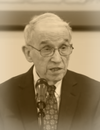
Matthew: A Unique Invitation
A.J. Higgins teaches that the gospel of Matthew uniquely presents Jesus as the sovereign King who invites weary souls to find rest in His meekness and submission to the Father's will.
In this sermon, A.J. Higgins explores the unique invitation found in the gospel of Matthew, focusing on Jesus as the sovereign King who calls weary souls to rest. He unpacks the significance of Jesus' meekness and submission to the Father's will amidst apparent ministry challenges. Higgins encourages believers to live for God's approval alone and trust in His sovereign plan, drawing insights from Matthew 11 and related scriptures.
Full Transcript
Now, before opening the Word of God together, we'll speak to God in prayer. Our Father, in the fragrant name of Thy Son, we bow together. We have sung of Thy grace to us, and we bless and thank Thee again for all that grace has wrought.
We thank Thee that the grace of God has appeared and has taught us, and we bless Thee again for that appearing and all that it has brought into light. We thank Thee that while no man had seen God at any time, the only begotten Son in the bosom of the Father, the one who was full of grace and truth has declared Him and revealed Him in all of the glory of His person. And today we stand in the good of Calvary and all of the grace of God that has been revealed.
And as we now come to the Word of God and to the feeding of the people of God, we are again conscious that we come upon the ground of grace. We look to Thee, do look upon us in Thy kindness and in Thy mercy and grant that help will be given, help to speak the Word of God clearly and distinctly and to give Thee the meaning of it and for the people of God to take it in and to understand it and as a result to be able to grow and to rejoice in divine truth. We commit ourselves, our need to Thee, and as the day unfolds, we look to Thee that there will be an increasing sense of the presence of God all the way to the gospel tonight when souls we trust will come to know the Lord Jesus as Savior.
We commend ourselves. Remember any still traveling. We commit them to Thee and ask now for Thy help as we convene together in the name of our Lord Jesus Christ.
Amen. Now, privileged to be with you, I'm going to ask you to turn to Matthew's gospel in chapter 11, the gospel of Matthew and chapter number 11, and we will break in at verse number 25, Matthew 11 and verse number 25. At that time, Jesus answered and said, I thank Thee, O Father, Lord of heaven and earth, because Thou hast hid these things from the wise and prudent, has revealed them unto babes.
Even so, Father, for so it seemed good in Thy sight. All things are delivered unto me of my Father, and no man knoweth the Son, but the Father. Neither knoweth any man the Father, save the Son, and he to whomsoever the Son will reveal him.
Come unto me, all ye that labor and are heavy laden, and I will give you rest. Take my yoke upon you and learn of me, for I am meek, lowly in heart, and ye shall find rest unto your souls, for my yoke is easy and my burden is light. And we know that God will add His blessing to the public reading of His precious Word.
What I would like to do, what has been upon my heart to do in the slots of ministry allotted to me, is to look at unique things in each of the four gospels. We have read together of a unique invitation that is in Matthew's gospel. In the will of God, we will look later today at unique insertions found alone in Mark's gospel.
Luke will remind us, or when we come to Luke, we'll be looking at unique incidents, things only mentioned by Luke in his gospel, and in John, some unique insights that we will have that are given to us in John 18 and in John 19. So here we have a unique invitation, in Mark, unique insertions, in Luke, unique incidents, and when we come to John, unique insights we will gain from it. Now what I'm going to say for the next five minutes, if you're older than 20, you've heard it a dozen times, so you've got a five-minute reprieve, take a very quick power nap while I speak to some very young ones, and remind you of what the four gospels all will reveal to us.
First, in Matthew's gospel, we're reminded about the sovereign, the king who has come, and in the gospel of Matthew, he is presented to us as the sovereign. Now while I say that, it's not exclusively the sovereign. We would see as well he's the son of God, he's the perfect man, but the emphasis in Matthew's gospel is upon the sovereign.
When we come to the gospel of Mark, it is, of course, the servant who is presented to us in all the perfection of his service for God as he moves amongst men. The gospel of Luke is the gospel of the Savior. You may find it surprising as you go through your gospels to recognize you do not find the word Savior in Matthew.
You do not find the word Savior in Mark. It is not until you come to Luke's gospel that the word Savior and salvation is presented to us. And, of course, in the gospel of John, it is the son of God that is presented.
So in Matthew, it is the sovereign and his majesty. In the gospel of Mark, it is the servant and his ministry. In the gospel of Luke, it is the Savior and his mercy.
And in the gospel of John, it is the son and the message he has come to present and to bring. And far more could be said, we'll touch on some of those other things as we come to it, but before us today is just this unique invitation, the sovereign, and we'll see something of his meekness. Now, while we look at Matthew 11 and we heralded in the gospel, there is here truth that is vital for each of us as believers as well to to grasp and understand.
I want you to think, first of all, of the significance of the time, the significance of the time at that time. The spirit of God draws our attention to a very critical time, to a very specific time in the ministry of the Lord Jesus, that these words are uttered at that time. So just think with me, if you will, as going back over chapter 11 and looking at the time when these words were uttered.
How does the chapter begin? The chapter begins actually with the the faltering of a faithful man. John the Baptist sends men to the Lord Jesus. Art thou he that should come or or look we for another? There's the faltering of a of a faithful man at the beginning of the chapter.
There's the false accusations that were given by by the Pharisees. As you come down to verse 18 and verse 19, he has a demon. And so the false accusations that followed him, there was the fickleness of the people in verse number 16.
We've piped, we've danced and we've mourned. And no matter what John did, no matter what Christ did, the people found some way of getting around the message, some way of neutralizing what they had to say. When you come down the chapter still further, there is the apparent fruitlessness of his ministry.
He had ministered to Capernaum. He had ministered to Chorazin and all seemed so fruitless, so little from the years of his ministry. And then there's a failure of Capernaum where he had lived to appreciate him.
That was the time. The failure of a good man, the fickleness of the crowd, the false accusations that followed him, the fruitlessness of his ministry, the failure of Capernaum at that time, he said, I thank the father. Do you ever get discouraged because good men fail? Do you ever get discouraged because of being misunderstood and maybe even falsely accused? Do you ever think that somehow God has given up and God has forgotten you because your ministry seems so, so fruitless, you teach that Sunday school class, you preach the gospel, you give out tracts and all seem so fruitless.
Do you ever feel like that those you spend your time with, those you give special attention to, those with whom you move seem to show no response to the gospel? At that time, Jesus said, I thank thee, oh, father, Lord of heaven and earth, go through the word of God. Think of Moses, falsely accused, misunderstood, mocked and scorned by his own people. Think of Paul and the response of his own nation and even the response of a assemblies eventually to him, the one who was spending and being spent.
And the more he loved, the less he was loved. Think of an Elijah upon a Mount Carmel and what appeared to be a moment of success that was suddenly turned to a moment of frustration. How he responded, how did the Lord Jesus Christ respond when faithful men failed, when people were so fickle to his message, when those he spent special attention over, he gave special attention to, failed to respond to his message.
He just bowed to the will of God. I thank thee, oh, father, Lord of heaven and earth, the significance of the time. Notice something about the significance of the titles.
I thank thee, oh, father, Lord of heaven and earth. This is the idea of father, doesn't it? It would suggest to us the confidence in unchanging love, a relationship that nothing has altered, the success of his ministry or the lack of success of his ministry, the response of men to his presentation, nothing hindered the relationship he had with his father. There was a consciousness, the confidence of unchanging love.
It is interesting that both Peter and James, when they deal with times of trial, 1 Peter 1, James chapter 1, they speak of it as the trial of your faith. But in both instances, they bring in the necessity of love, whom having not seen ye love. And James says about a crown of life to them that love him, the confidence of being in his love, despite the circumstances of life, despite the circumstances that surround your ministry or your attempt to serve God, that absolute confidence.
But as well, there was a consciousness of one who was sovereign. Now, if you were privileged to be here last evening and listen to our brother as he gave us such helpful, insightful ministry on the titles of Jehovah, the titles of God relative to the life of Abraham. When Abraham was dealing with Melchizedek, he recognized there was the the God who was the possessor of heaven and earth here, the Lord Jesus Christ recognizes there is one who is Lord of heaven and earth, not now the wealth, the one who possessed heaven and earth, but now the one who was whose ways controlled everything on heaven and earth.
And so he recognizes that every circumstance, every event or all the vicissitudes of life are under the absolute control of one who is Lord of heaven and earth. Everything is under his control. Nothing's out of his control.
And he absolutely content, conscious of the divine sovereign, content with his will. Even so, father, so it seemed good in thy sight, the meekness of Christ as he bows to the circumstances of life, as he bows to the results of his service. This chapter is the only time the Lord Jesus Christ reversed refers to himself and to his meekness.
I am meek and lowly in heart. And it gives us an insight, it gives us a scriptural definition of what meekness is. It is being absolutely at home in the will of God.
Meekness is not the idea of fatalism, not the not the idea of somehow just grudgingly bowing to whatever comes into my life. Meekness is personified by the Lord Jesus Christ here as being absolutely at home in the will of God. Whatever God desires, whatever God brings into my life, I'm at home in it.
There's no fighting against it. There's no resistance to it, no rebellion against it. We see something of the contentment with the will of God, even so, father, for so it seemed good in thy sight.
I never read that, but that my mind does not go back to the book of Genesis. When the what we might call the quintessential example of Christ likeness in the Old Testament, Joseph, when he brings his sons before Jacob and Jacob crosses his arms to bless his sons, even the godly Joseph says, not so, father. No, no, that's not that way, father.
What a contrast here with with the Lord Jesus, even so, father, even so, father, so it seemed good in the significance of the time, the significance of the titles, the significance of the thanksgiving. I thank the father, not not a mere stoical grudging. Bowing to the will of God like we do at times, if we can go that far, sometimes when the will of God is so contrary to what we want, we we grit our teeth and we we submit to it.
That was not the Lord Jesus Christ. I thank the father. Now, while I said that the invitation here is unique, there is a parallel portion in the gospel of Luke doesn't give us all that Matthew gives us.
But in Luke, it goes even further at that time, in that hour, Jesus rejoiced in spirit and said. I thank you, father. So in Luke, he's actually worshiping, he's actually worshiping because of the will of God that seems so contrary, that seems so difficult to bow to.
But here we see his adoration. He worships the hand that so willingly. Presents the will of God to him in the way it does.
The name of Jonathan Edwards is probably not as familiar here in the Midwest as it would be on the East Coast, Jonathan Edwards was considered by many to be the greatest theologian and one of the greatest preachers of the 1700s. Along the East Coast of the U.S., Massachusetts and so on, he evangelized, saw many saved. If you've ever read his sermon, Sinners in the Hands of an Angry God, you are familiar with his name.
Amazingly, in 1758, he was appointed president, believe it or not, of Princeton University. Princeton University began as a theological university. And of course, you know what it is today.
But on his way to Princeton, he was inoculated for smallpox and March 22nd, 1758, he died before he was ever instituted as the president of Princeton University. His wife, Sarah, I'll have to read you because I can't memorize all she said. His wife, Sarah, wrote these words.
It seems to me the will of God that I must shortly leave you, therefore, give my kindest love to my dear wife and tell her that the uncommon union which so long substituted between us has been of such a nature as I trust is spiritual and therefore will continue forever. I hope she'll be supported under so great a trial and cheerfully submit to the will of God. His wife wrote to her daughter, let us kiss the rod.
Let us kiss the rod that has smitten, not just bowing to the will of God grudgingly, not just accepting it with great reluctance, let us kiss the rod. The Lord Jesus Christ here is seen worshiping because of the circumstances of his life, because of the circumstances of his service, he bows in worship, his meekness is seen. Something of the significance, not just of the time, not just of the titles, not just of the thanksgiving, something of the teaching of the Lord Jesus, what is he teaching us here? First of all, God's purposes will be fulfilled.
We read there, he says, all things have been delivered unto me of my father. Everything of God's purposes will be fulfilled. What may seem like failure, what may seem like service that is so fruitless, what may seem like a lack of appreciation and a lack of progress in the work of God.
He says, everything has been delivered unto me by my father, it will be accomplished. We are just a small part of the great work of God and into the hands of the Lord Jesus, everything has been committed. But there's something even greater here.
No man knoweth the son but the father. Now, I don't want to take away from the fact or the truth that there is in this expression the fact that there is that of the Lord Jesus Christ we can never know, that he is infinite in his person, that there are oceans to swim in, if you will. But I think there's something deeper here, something additional to that.
The idea of knowing can also be used in the sense of approval, of appreciation. You recall that when Paul is writing to the Corinthians, if any man love God, the same is known by him. I think what the Lord Jesus Christ is saying is, while men don't appreciate me, while men do not approve of my service, I am content that my father does.
No man knoweth, no man approves of the son, no man appreciates the son, but the father. And no one really appreciates the father, but the son and those to whom I will reveal what the father really appreciates and what the father really values. The Lord Jesus Christ moved here, and while men did not appreciate him, while he was not accepted and owned as he ought to have been, he was moving for the approval, he was moving for the glory and for the pleasure of his father.
And could I just encourage all of us, whatever trial you may be passing through, whatever ministry you may be seeking to accomplish for God, I think those who are shepherds know what it is to shepherd with very, very little appreciation. When all is going well, we all give thanks to God. When things aren't going well, it's all because the overseers are out of step, out of sync, out of touch, and criticism is leveled.
Those who seek to be a help in the work of God in the gospel know what it is not to be appreciated. Could I just remind you of what the Lord Jesus Christ says here? No man knows the son, but the father. I am living, moving, serving for his approval, for his acceptance, for his pleasure, and not for that of of men, the recognition of divine purposes and of divine plan.
My time is moving quickly. Let me just mention this. You turn to the book of Habakkuk, one of those white portions of your Bible that you rarely read, not not many thumb marks on it.
Habakkuk was faced with a tremendous dilemma as he saw the events unfolding of a Babylon, a wicked nation coming to subdue Israel, Judah, a nation that had professed God. And it was so inexplicable. It was so contrary to reason.
It was so difficult to to reconcile with his concepts of God. And he has to learn there this great truth that is revealed to him in Habakkuk chapter two, the just shall live by faith. It is absolute confidence in the character of God, ultimately a God who values what is done for him, a God who can be pleased by the faithful service of his servants.
He learns this great truth. The just lives by his faith, what we know of God, what we know that God approves of what we know, that what pleases God, that is what is going to sustain in times of trial, in times of difficulty, in the darkness of life, in the dark days of life. It is our knowledge of the Lord.
Jesus Christ here teaches us that he moved for the pleasure of God alone. I thank thee, O Father, the Lord of heaven and earth, thou hast hid these things from the wise and prudent and has revealed them unto babes. He lived for the father's approval and pleasure.
John and Betty Stamm names may be not familiar to younger people here, but older Christians would know the story of John and Betty Stamm. Nineteen thirty four, serving in the China Inland Mission, the communists and their long march were coming through and captured the city. John and Betty Stamm were taken captive.
They were taken out and beheaded. Before they were taken out and beheaded, they were allowed to write one final message back home to the U.S. Among the things they wrote, may God be glorified, whether by life or by death. And then they added, for this cause came I unto this hour.
I think to be able to worship God. In the darkest hours of life. Must bring him infinite pleasure and glory.
The Lord Jesus Christ worshipped at that time, the teaching that comes from his words. Then, of course, there's the significance of the terms. Come take my yoke.
Learn of me. What is the Lord Jesus Christ saying here? If you are undergoing a trial, if you feel as though your ministry is fruitless, if you are being misunderstood, misjudged, if you are being discouraged because of those who are the failure of good, faithful men, he says, take my yoke, learn of me. Learn of my meekness, learn of my lowliness of heart.
Learn what I have displayed in my life. Absolute contentment with the will of my father. Absolute pleasure in serving him, whatever the circumstances of life may be.
Absolutely willing to accept with joy. The circumstances he frames for me in my life. Here is an invitation.
A voluntary acceptance of a yoke. Of meekness, of lowliness of heart, just bowing to the will of God, accepting it, living in the good of it, coming into the rest that he provides and that he makes available to us here. Of course.
We can fail to accept that yoke. We can be marked by frustration. That's what happened to Elijah.
Rather than bowing to the circumstances God allowed in his service, he became frustrated that his service was so fruitless. What's the use? I might as well just give up, hang up my Bible bag, forget preaching again. I don't know if there's anyone that has ever preached publicly that hasn't had that feeling.
Maybe some of my other brethren here have gloriously triumphed at every occasion. But there's many a time you feel like just going home, putting the Bible on the shelf and just saying, take me home. But we can fail because of our frustration.
We can fail because of our fatalism. And we can fail because of our finger pointing. The problems are all others.
And if only others were doing what they ought to do, things would be so much better. Just accepting what God has allowed into our lives, the trials He has framed, the service He is controlling, all that is part of our lives He has permitted for His glory and for His honor. The significance of the treasure.
There is a treasure to be found. It is rest. It is absolute contentment and acceptance with joy of all that He brings into our lives, a rest that can be enjoyed.
Asaph, Psalm 73, he knew anything but rest. He saw the prosperity of the wicked. He saw the circumstances that surrounded his own life.
He had washed his hands in innocency. He had put everything he had into serving God and living for God. And everyone else seemed to be prospering.
Everything seemed to be against him until I went into the sanctuary of God. Then saw I their end. His feet were about to slip until he went into the sanctuary.
And suddenly rest, contentment, worship filled his heart. Whom have I in heaven but thee? None upon earth that I desire beside thee. He speaks there of God as being the rock of his heart.
The absolute stability for life is found in the character of God, the one who is Lord of heaven and are in total control of everything. We live in a world that seems to be spinning out of control, and at times you may think the trial you're going through, the circumstances you're facing, that they all seem so out of control. He is Lord of heaven and earth.
Nothing is beyond his control. And as we learn to accept his will, we come into this tremendous treasure. But he says as well, there is a revelation to be gained.
Learn of me as we accept that yoke, as we bow in submission, adoring submission to the will of God, we learn of him. Our brother Walls was reminding us last evening, God continued through all of Abraham's life to give fresh revelations of his character, fresh revelations of his person, whether his heart, whether his sufficiency, whether his control, whether his wealth, every trial led to a new revelation of God. We learn more of God on, I shouldn't say it tragically, we learn more of God in the days when all is going smooth and all is going well.
At that time, the significance of the time, the significance of the titles, the significance of the thanksgiving, the significance of the teaching, the significance of the terms, the significance of the treasure that you and I can find as we learn to rest, as did the Lord Jesus Christ in the will of God, a unique invitation found only in Matthew's gospel. Take my yoke upon you. Learn of me, for I am meek, lowly in heart.
Ye shall find rest for your souls.
Sermon Outline
-
I. The Significance of the Time
- John the Baptist's faltering faith
- Fickleness and false accusations of the people
- Apparent fruitlessness of Jesus' ministry
-
II. The Titles and Thanksgiving of Christ
- Jesus as Lord of heaven and earth
- Confidence in unchanging love of the Father
- Thanksgiving despite opposition and failure
-
III. The Meekness of Christ
- Meekness defined as being at home in God's will
- Contrast with grudging submission
- Christ's worshipful acceptance of the Father's plan
-
IV. The Divine Approval and Purpose
- Jesus lives for the Father's approval, not men's
- All things delivered to Jesus by the Father
- The just shall live by faith in God's character
Key Quotes
“I am meek and lowly in heart, and it gives us a scriptural definition of what meekness is: being absolutely at home in the will of God.” — A.J. Higgins
“No man knoweth the Son but the Father, and he to whomsoever the Son will reveal him.” — A.J. Higgins
“I thank thee, O Father, Lord of heaven and earth, because Thou hast hid these things from the wise and prudent, and hast revealed them unto babes.” — A.J. Higgins
Application Points
- Trust in God's sovereign control even when ministry seems fruitless or unappreciated.
- Embrace meekness by being at home in God's will rather than resisting difficult circumstances.
- Live for the approval of God alone, not seeking human recognition or praise.