
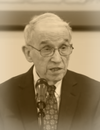
Our Minds and our Hearts
A.J. Higgins teaches that true Christian living begins with a renewed mind enlightened by God's truth, transforming our hearts and thoughts away from sin towards God's precious intentions.
In this teaching sermon, A.J. Higgins explores the vital connection between our minds and hearts in Christian living. He emphasizes that God's original design for humanity includes an enlightened mind governing will and emotions, but sin has corrupted this design. Higgins calls believers to repentance as a rethinking process and highlights the necessity of renewing the mind through God's truth for transformation. This message challenges listeners to understand the weight and power of their thoughts in their walk with God.
Full Transcript
After muddling around O'Hare's airport for hours wondering if I would ever get out and get here, I was reminded of what the Nufis said a few years ago. When there was a strong separatist movement in Quebec for independence and to secede from Canada, some of the Nufis were interviewed about what they thought of it. And they thought it was a great idea because then Newfoundland would be closer to Toronto.
And I thought if Chicago seceded, then the East Coast would be a lot closer to Iowa. But nevertheless, we made it, and so we are thankful to God for that. I'm going to ask you to turn, just as a matter of introduction, to Psalm 139.
Now, it's probably poor policy to burst bubbles the very first thing, but if your bubble is that you've come for a weekend of Christian psychology or the latest trends in thinking, then I have to burst that bubble. Look with me, please, if you will, at verse 23 of Psalm 139. Search me, O God, and know my heart.
Try me, know my thoughts. And see if there be any wicked way in me, and lead me in the way everlasting. If God gives help this weekend, what we will be looking at is the most basic, the most fundamental issues of Christian living.
This will not be some discourse on positive Christian living or positive thinking and how to overcome difficulties by positivity. It will be looking at the scriptures and understanding what God says about the very vital subject of our thought life. So, if we are in the presence of God, then what we have read in verse 23 will be our responsibility.
Search me, know my heart. Try me, know my thoughts. And see if there be any wicked way in me.
Look at verse number 1. Lord, thou hast searched me and known me. Thou knowest mine down-sitting, my uprising. Thou understandest my thought afar off.
So, what we are going to be examining, God is already well aware of. So, there's no need to hide. There's no need to try in some way to shield ourselves from the word of God.
God is well aware, totally acquainted with all of the skewed thinking of the human family, with all of the bents that go into our thinking. They are all known to God. Now, one other verse here, because I think this is vital.
Verse 17, what about God's thoughts? How precious also are thy thoughts unto me, O God. So, no one should leave with a guilt trip. No one should leave thinking that if you discover something about your own thought life that may be shocking and overwhelming to you, that somehow it has lowered the esteem in which God holds you.
It is impossible for God to think any other way than in a positive, in a precious way about his people. And so, the sooner we begin to adjust our thoughts to God's thoughts. God does not want us living with guilt, living with a sense of despair, a sense of failure, a sense of inability to rise to his standard.
To appreciate that every moment there are issues from the heart of God to his people, thoughts that the psalmist says are precious. So, while we may discover the awful evil of our own thoughts, while we may discover just sometimes how far our thoughts are from God, we must always be brought back to realize this, that God's thoughts towards us are always precious, are always for blessing and for good. Now, with that before us, I'm going to ask you to turn to a few portions.
We'll just read a few but mention quite a number. Turn to Ephesians and chapter 4. Ephesians chapter 4 and verse number 17. This I say, therefore, and testify in the Lord, that ye henceforth walk not as other Gentiles walk in the vanity of their mind, having the understanding darkened, being alienated from the life of God through the ignorance that is in them because of the blindness or the hardness of their heart, who being past feeling have given themselves over unto lasciviousness, to work all uncleanness with greediness.
But ye have not so learned Christ, if so be ye have heard him and have been taught by him, as the truth is in Jesus, that ye have put off concerning the former conversation the old man, which is corrupt according to the deceitful lusts, and be renewed in the spirit of your mind, and that ye have put on the new man, which after God is created in righteousness and true holiness. Now, one other portion for now, the book of Philippians and chapter 4. Philippians chapter 4 and verse number 6, these are all familiar portions. Be careful for nothing but in everything by prayer and supplication with thanksgiving.
Let your request be made known unto God, and the peace of God which passeth all understanding shall keep your hearts and minds through Christ Jesus. Finally, brethren, whatsoever things are true, whatsoever things are honest, whatsoever things are just, whatsoever things are pure, whatsoever things are lovely, whatsoever things are of good report, if there be any virtue and if there be any praise, think on these things. Those things which ye have both learned and received and heard and seen in me do, and the God of peace shall be with you.
Now, we trust God will add his rich blessing to the reading of his word along with some other verses that we will read shortly. The first meeting has been entitled, Our Minds and Our Hearts, and subtitled, The Weight of the Weightless. How important our minds are to Christian living and to testimony for God in our world.
You will understand, of course, that the word of God uses almost interchangeably the idea of mind and heart, and we'll show that in just a moment. But I want to first talk about the divine blueprint, how you and I are made. Now, there might be some differences, but I think we would all agree at least to this point that we are both material and immaterial.
We are both a physical component called our bodies, and we are a non-physical, immaterial component called our minds. Now, some may prefer to divide it as body, soul, spirit, with body being the physical and soul and spirit being the non-physical, non-material. But for the simplicity, I just want to divide it tonight as the idea of body and the idea of mind.
Now, what does mind really consist of? I think it vital that we show that what we're giving you is from the word of God. So I want you to turn back to Genesis for just a moment. Genesis and chapter 5, rather chapter 6. Now, just so you can follow with me, I want to read with you in Genesis chapter 6 and then again in Genesis chapter 8, the first three mentions in our Bible of the word heart.
Heart, the first three mentions. Because in these first three mentions, we will have all that we need to speak about when we speak of the mind or the heart and what it is comprised of. Look at chapter 6 for just a moment and look at verse number 5. God saw the wickedness of man was great in the earth, and that every imagination of the thoughts of his heart was only evil continually.
Number 1, the heart as the source of intelligence, understanding. Come to the very next verse. And it repented the Lord that he had made man on the earth, and it grieved him at his heart.
Emotion. So we have understanding and we have emotion. Now, the third mention, come with me to chapter 8 and look at verse number 21.
The flood is over, Noah has exited the ark, has offered his sacrifices, and verse 21 tells us, and the Lord smelled a sweet savor, and the Lord said in his heart, I will not again curse the ground anymore for man's sake. The third mention, not now understanding, not now emotion, but volition or will. So those three elements make up all of the scriptural references to the mind or the heart.
It is understanding or intelligence, the seed of our understanding or our intelligence. It is the place where volition or will takes place, and it is the place as well where emotion is found. Now we read that, whether you recognized it or not, we read that actually in Ephesians and chapter 4. We read there about the Gentiles who walk in the vanity of their mind, having the understanding darkened, being past feeling, having given themselves over.
There are the three things again. Understanding, intelligence, the will, and the emotion. All of that is involved when we speak about the divine makeup of our minds.
So with that in view then, what was God's original intention in this tremendous design that he put into play? What was God's original intention? Was it that the emotion should control the will and the understanding? Or was it that the will should control the understanding and the emotion? Or wasn't it rather, as we will see in Ephesians chapter 4, that God intended a mind that was enlightened by truth to control the will, to control the emotion, and together to control what the body does. And you see that order, that principle again. A mind enlightened by truth yields its will to God, finds delight in the will of God, and presents its body as a sacrifice to be used by God.
Now the moment you take things out of that order, the moment you begin to reverse or shuffle things around, you get into problems, don't you? What happens when the emotion rules? What happens when the emotion controls the will, and the emotion controls the intelligence, and the emotion controls the body? Worse still, what happens when the body controls everything? When the demands of the body begin controlling the will, and begin controlling the desires, and begin controlling the intelligence? God's order, the divine blueprint, the way you and I are made, it is vital to recognize that in dealing with this whole subject of the Christian mind or the mind. But, as you can see in your outline, there is a fatal flaw in God's blueprint. Not in God's blueprint, but a fatal flaw has come into God's great design.
The blueprint is perfect. The difficulty, of course, is that there has arisen a fatal flaw. And you hardly need me to stand here and tell you what that fatal flaw is.
It is sin. Come back with me now to Ephesians and chapter 4, and look at what has happened as a result of the fatal flaw. First of all, in verse number 18, verse 17 and verse 18, something has happened to the intelligence, to the understanding.
In the words of Ephesians 4, it has become darkened. Now, next notice what has happened to the human will. It has become debased, giving themselves over unto lasciviousness.
And what has happened to human emotion? It has become degraded. And then what has happened to the human body? It has become defiled. So that is the progression of sin.
A mind becomes darkened. A will becomes debased. Emotions become degraded.
And a body becomes defiled. All because sin has come into our world. The fatal flaw.
Sin has wrecked havoc with God's original design. The moment the intelligence was affected, the moment men's understanding was affected, it had a trickle-down effect, if you want to call it that. It began to affect every other aspect of life.
And if you want to take it even further, you can see how what God intended to be God-consciousness became self-consciousness. And self-consciousness became even debased even further. And men fell because the intelligence became darkened.
You know where conversion begins? I know we speak about reaching people's hearts and not their minds, but you'll understand the mind and the heart are one. It begins with a mind that becomes enlightened. Ye have not so learned Christ.
God shines upon the intelligence. That's what 2 Corinthians 4 says, 3 says, isn't it? That God who shined out of darkness hath shined into our hearts to give what? The light of the knowledge of the glory of God in the face of Jesus Christ. And the great reversal begins.
But just get this clearly before you now. What has happened because of sin? The fatal flaw. And the result of that then is a selfishness that has occurred.
We have become self-centered. Ego-centric is the word that men use. Everything now revolves around us.
And unfortunately that doesn't end with conversion. It's a lifelong battle. A lifelong reality that self is at the center of our little universe.
And of course we have become, the word the scripture uses is sensual. We have become more tuned in to our bodies and our environment than to God. We are more self and world conscious than we are God conscious.
That's the great teaching of 1 Corinthians 15. It says there that it is sown a natural body. That word really is a sensual body.
A body that's tuned in to life. That's why when you go to pray you fall asleep. And why you're struggling to stay awake at night to read.
And it's so hard to engage in spiritual things because our bodies are tuned in to everything else around us. It's sown a soulish body, but it's going to be raised a spiritual body. A body with none of those hindrances.
None of those limitations. None of those obstacles to overcome. Tuned in to God entirely in that day.
What a tremendous thing. But here we have this great problem, the fatal flaw. As with every fatal flaw there, a recall notice has gone out.
Not from General Motors or Ford, but from the throne of God. And that recall notice is called what? Repentance. Now, all of you Spanish experts here, you all know what that means, don't you? To repent.
What does it mean? Oh, to feel sorry and to really feel bad about your sins. Is that what repentance means? What does the word repent, repensa? Any romance language, you know what pensa, whether it's Italian, French, or Spanish. It's got to do with thinking.
It's a rethinking of things. A new way of thinking. So repentance is not a matter of emotion alone.
Indeed, God does get hold of a man's emotions. But it primarily is a rethinking. A different way of thinking.
Thinking about sin. A different way of thinking about myself. A different way of thinking about the word of God.
A different way of thinking about the work of Christ. A different way of thinking about God. That's what repentance is.
It is a total change of thought. And that is where the gospel found you and found me with a great message of repentance. The need to repent.
To turn from our skewed thinking. To turn from our self-centered thinking. To turn from our soulish thinking, which demanded that our needs be met.
And we realized that really it was God's needs that had to be met at Calvary. Not our needs necessarily. His needs.
What our sin had done to Him. That's what we had to come into the good of. But repentance doesn't end with conversion.
It doesn't use the word, but Romans 12 is nothing less than a call to repentance. Do you recall what it says? Not just to present your bodies a living sacrifice, holy, acceptable unto God, which is your reasonable service. But to be what? Not conformed to this world, but be transformed by what? The renewing of your minds.
What that simply means is that you and I need to constantly have our minds get back and think the way God thinks. To see things the way God sees them. Every day we go out into a world and we are bombarded with messages.
Whether it's people at work in their talk. People at school in their talk. Conversation at the lunch table.
The media. Things we see. And the messages are all the same.
They all say that you deserve something. And you have a right to things. And that really, after all, satisfy things.
Now, instant gratification. Self-satisfaction. Self-determination.
Self-will. And every day we are bombarded endlessly with those messages. And you and I need to constantly refocus.
Get back in the presence of God. That's why it's so vital for young believers to make a habit. Yes, a habit.
Of reading the Word of God and spending time every day with God. Whether you're an owl or a lark. Whether morning or night is better for you.
That's something you'll have to decide. But get yourself refocused. Back in the presence of God.
Reading His Word. It may not be that you get some great revelation and get some great sermon. No, it's just getting God's way of seeing things.
If nothing else, that's a tremendous preservative. To see reality as God sees it. Because the recall notice has gone out to the human family.
Whether having to do with salvation from sin. Or whether having to do with deliverance from the mold the world would like to put you in. The need for repentance.
To rethink. Think differently than the world does. And to see things the way that God sees them.
The ultimate patch. Now those who are older and not as aware of computers will have a... Maybe not quite understanding what that means. But when there's a problem with a program or an application on your computer.
The company usually lets you download a patch. A fix. Something to repair the potential problem.
So God has an ultimate patch for our problem. And it is as we saw in Ephesians chapter 4. Minds that have become regenerated. You'll notice what we read together in verse number 23 of Ephesians 4. Be renewed in the spirit of your mind.
At conversion. Now many, many things happen at conversion. I sometimes think it's like a package deal.
And you spend the rest of your life learning all that's in the package deal that you got at conversion. But at least let me point out three things that happen in contrast to what sin has done. The first thing that we see in Ephesians chapter 4 is the intelligence becomes enlightened.
The intelligence becomes enlightened. Ye have learned Christ. The truth as it is in Jesus.
Minds renewed. So that the first thing we see is that understanding, intelligence is enlightened by divine truth. Now if there is no divine truth that enlightens a person at conversion, there is no conversion.
That may sound strong, but that's the truth of God. If there is no divine light. If there is no truth that enlightens the mind.
If it is just a matter of lots of tears and crying and good feelings. If that's all it is, there is no conversion. Divine truth.
Whether a verse or a hymn that embodies it or a scripture from the word of God. Something enlightens the darkness. Pierces through to bring a soul to an understanding of what Calvary is all about.
So the first thing is that the intelligence is enlightened. But there is more. Because what we find next is that the will is emancipated.
The will is emancipated. Delivered from the bondage of only being able to sin. Now having the great choice of being able to yield itself to God.
So the will is emancipated. Understanding, enlightened. The will, emancipated.
And what about emotions? Elevated. No longer groveling in the gutter and in the dust. But now able to enjoy.
Enjoy. Christianity does have emotion to it. It does have a feeling to it.
It's not just all intellectual business. Able to enjoy divine persons. Able to enjoy divine fellowship.
Able to enjoy Christianity. Not just a matter of facts. Not a data bank of truth.
But living in the good and enjoying divine truth. So the intelligence is enlightened. The will is emancipated.
And the emotions are elevated. To enjoy fellowship with God. That is the ultimate patch.
And of course the result of all that. Because that's the inward, isn't it? Is that now there is a body. Physical, the outward.
There is now a body that is energized to serve God. To yield itself to God. So that is what occurs at conversion.
That is God's patch for man's sin. If you'll just allow me to use a simple analogy. And perhaps something understandable.
What about the energy for this now? Where does it come from? Well, ISP. Your ISP? Not your internet service provider. The indwelling spirit's power.
Your ISP. You online? You online with your server? Or is life just rules and regulations? And just give me the rules and I'll live them. Just tell me what I've got to do.
Whatever the rules are of this church. If I've got to join it, I'll do it. Everybody else does them.
I can do them too. Or is there an indwelling spirit's power that energizes your life for God? God is not looking for rule keepers. He's not looking for rebels.
He's not looking for mavericks. But he's looking for people who are obeying him as a result of understanding. And willingly yielding themselves intelligently to his truth.
Now, we don't have time. You can go through it yourself and consider it. All the different aspects the spirit of God plays in our life.
Titus 3. Where we read about the fact that after the kindness and love of God our Savior toward man appeared, not by works of righteousness which we have done, but according to his mercy he saved us by the washing of regeneration and renewing of the Holy Spirit. That spirit of God renewing us and making us new. And Paul speaks of it time and again.
Ephesians 5. Be filled with the spirit and so on. And other scriptures. The tremendous value of the spirit of God, whether for the sufferer or for the student or for the individual who's seeking to walk through the world in separation.
Whatever it is, the power for that, the enabling for that is through an indwelling spirit. But maybe I just need, in light of this, just to mention one other thing. What is so important? This ultimate patch in our minds being enlightened and everything working the way God wants it to work, why is it so important? I've known people who seem to have gotten through life okay and they never stepped on anybody's toes and never got their knuckles wrapped because of anything they did and they seem to be okay.
Why such a big emphasis? Well, Ephesians 6, 1 Thessalonians 5, 1 Peter 1. Now, 1 Peter doesn't mention it, but the thought is there. It speaks about the helmet. The helmet of salvation.
The helmet. Strange, isn't it? That when in Ephesians 6 he's talking about the tremendous risk of losing the appreciation of your blessings, all those blessings in which you've been brought that he's enumerated in Ephesians 1. And now he tells us, but you've got those blessings, but there's a great warfare going on trying to keep you from enjoying them. But he says, just put on the helmet.
Have your mind girded. Preserve your mind in this battle. So, if I am going to appreciate the blessings that God has for me, my mind has to be girded.
Peter says, gird up the loins of your mind. So, the mind is vital when it comes to an appreciation of what I have as a Christian. You'll notice as well, not only that, but if we went to Proverbs chapter 4, it's around verse number 23.
The wise man says, Now, the margin is, keep thy heart above all keeping. Keep it above all keeping. For out of it are the issues of life.
Now, if I told you that that word issues is the exact same word that is used when Joshua is meeting out the land and giving people the boundaries of their inheritance. And I told you the word issue is the boundaries. How far do you want to go for God? Do you want your life to count for God? Now, I am not demeaning being saved, being in the assembly, having a seat, taking your place, doing your thing.
But we all know tragically, don't we? You can slip through like that for years. Pass muster and everything looks great. Wear the right clothes, say the right things.
Occasionally go to a conference, say amen at the right time, give out the nice hymn. But do you want your life to count for God? Do you want your life, do you want the boundaries of your life to be somewhere out there rather than just in here? Where do you want the boundaries of your life to be? Where do you want the outpost of your growth and usefulness for God to be? Keep your heart above all diligence for out of it will determine the boundaries of your life. How far your life will go for God.
The boundaries. Want your life to count? Want to make a mark for God? I don't mean that you have to be a preacher or a missionary. May just be, and I'm not demeaning this in the least, may just be a Sunday school teacher, may just be seeking to be a help in the Bible reading, help in the gospel work.
But to have a life with weight and value for God. Keep your heart above all keeping. The blessings of life, the boundaries of life, but also it's a tremendous ballast in life.
Isaiah 26. Thou wilt keep him in perfect peace, whose mind is stayed on thee, because he trusteth in thee. I was asked about this and I have to be honest, I can't remember where I read it.
A version that I came across a long time ago that I have always cherished, but unfortunately I can't go back and find the source. Thou wilt keep him in perfect peace, whose mind stops at God. A mind that doesn't ask for any other explanations.
It doesn't go searching for the why's and what if's and if only's of life. It's happened. God has allowed it.
I take it from God. Tremendous ballast. Steadiness in life.
Not tossed to and fro. Not wondering if and... No, no. Just steadied by the great reality of a mind that stops at God.
A mind that is stayed upon Jehovah. For in Jehovah is a rock of ages. Now don't think that just means a Gibraltar.
It really means a rock for every age. He could be that for the Israelites long ago. He could be that for an Abraham long ago.
He could be that for disciples going through fire and torture long ago. He can be that for our age as well. Same thing.
He hasn't changed. He's a rock for every age. He's ours as well.
So you will notice then the ultimate patch. I have to hurry. The universal virus.
Into this system, the master designer. The master designer, God has designed us in this way. But something has come along.
Even to Christians. Even to you and to me. The worst virus that has ever infected the human computer.
So Satan has managed to target the hard drives of your mind and mine with a virus. How does he do it? Well Satan knows if he can attack our thinking. If he can skew our thinking.
And create either doubt, distrust of God, discouragement, defilement. You can just start listing them. If he can somehow introduce that into our minds.
And somehow bring them down. Begin to darken them in some way. Then he knows there's a trickle down effect.
To the measure our minds are darkened. To that measure my will is affected. To that measure my emotions are affected.
To that measure my body is affected. And so he has infected us. How does he do it? What technique does he use? Everything that's around us.
The media. Music. Yeah, music.
The entertainment world. Sports worlds. A society marked by self-gratification.
Instant gratification. Self-centeredness. Hedonism.
Everything that we see and hear. Everything we come in contact with. Everything that enters into our minds.
Affects our values in some way. Affects our vision in some way. Now, we live in the world.
Listen, I passed through two airports today. And if you've been in airports, you know what it's like. You pass some of those book stalls and, you know, you talk about defilement.
I mean, it's out there for us all. You can hardly miss it. And you can hardly pick up the award-winning.
I've never seen an airline yet that didn't have an award-winning magazine that they tell you about. You pick up the magazine and it's all there. We live in a world that is bombarding us.
Every instant with messages and with things that will affect us in some way and skew our thinking. He's targeted our minds. One of the Hollywood moguls a few years ago was being interviewed.
And the interviewer wanted to know, you know, what's your goal? And, you know, why is it you're producing this type of thing? He said, look, make no mistake. We are after the human mind. We are after people's minds and how they think.
Make no mistake. Advertisements, they're after your mind. Education, it's after your mind.
The world around, the media, it's after your mind. The target, the technique, the treachery. Satan will use anything, anyone, any circumstance.
He will use fatigue. He will use illness. He'll use times of discouragement.
He'll use times of loneliness. He'll use difficulty in personal relationships. He'll use anything he can to somehow introduce into your mind thoughts and ways of thinking.
Nothing is too sensitive. No one is too special. Nothing is too sinister.
He will use anything he can to skew your thinking and mine, to change us, to darken our intelligence, to somehow affect our will, to change our emotion, to hinder our bodies being used for God as they ought to be. The treachery, this universal virus. Let me then come, though, on a more positive note to what I have called tech support that is out of this world.
I want to talk about four things very hurriedly in the time we have left, and I will probably not do justice to them, but I will mention them briefly. I want to talk about facing reality, about fellowship with God, about faith in the character of God, and the focus of my mind. Four things that are vital to preserve us and preserve our minds in all that we do.
Facing reality. Now, what do I mean by that? I mean seizing the reins of responsibility. Now, what do I mean? I mean it's time to stop blaming everyone else and everything else.
Don't blame your lineage. Well, you know, I'm Italian, and we Italians, we're emotional. And so when I get emotional, I say things I shouldn't say.
And I have to just accept me, I'm Italian. No, listen, that's the problem. Whether you're Italian, Irish, German, or otherwise, that's the problem.
We are what we are. And God said long ago, it's just the flesh. You can call it Italian flesh, you can call it Irish flesh, whatever you want to call it, it's just the flesh.
So stop blaming your lineage. Can't do it. Stop blaming your parents.
Can't do that either. You can't claim it's all them. Stop blaming life.
You know, life has thrown me some pretty nasty curves. And life hasn't been fair to me. And that's the way I am.
I'm very sensitive, I'm very bitter, I'm very angry. And you can begin listing the excuses. It's all because of what life has done to me.
Really? Somehow God wasn't in control? Somehow life dealt you a few things that passed by God's great design for your life? And so you're justified? Take responsibility. You are responsible for your mind. You cannot blame your spouse, your parents, your children.
You may think your children are driving you crazy sometimes, but you're responsible for your mind. You're responsible for your thoughts, for the way those thoughts affect your will and your emotions and your actions. If we sit here and somehow idly think that we are just victims and we can't help the way we think it's the way we are, then we might as well close our Bibles, not just for this meeting, but all our meetings.
God is in the business of changing our thinking at every meeting of the assembly. Every time the word of God is open, God wants to address our minds and our intelligence and to bring us back and make us realize how we need to think and as a result how we need to act. So the first thing is take responsibility.
Seize the reins of responsibility for your life. Stop feeling like a victim. Stop being mired in self-pity.
And recognize, I am responsible. Now, along with that, surveying the citadel. The Proverbs frequently speak of the mind as a city, so you'll allow me then to use it as surveying the citadel.
Strengths and susceptibilities. Strengths and weaknesses, if you will. This is a huge subject.
Let me just briefly mention it and probably some of you will disagree with me and get after me later. Personality and character are not the same. Not the same.
To put it as starkly as I can, I think that when we get to heaven we will all have the same character, but we will all have different personalities. Personalities are those human traits that God has given to create variety in the human family. And there's nothing wrong with them.
There's nothing wrong with being shy. There's nothing wrong with being a little bit forward, I mean, within reason. Nothing wrong with having a sense of humor.
Nothing wrong with being a little more sober. Those are all personality qualities. There's nothing wrong with them.
The problem with each of them is they can degenerate into a vice. So a sensitive person can become touchy. A humorous person can become almost insulting.
You know what I'm saying. All of those personality qualities have the potential to degenerate into vices. But character has to do with moral qualities.
Moral assets. And so every one of us will be conformed to the likeness of Christ morally. Our characters will be the same.
But I think our personalities will vary. So I am responsible then to recognize in my personality what are there of weaknesses, what are there of strengths, what are my susceptibilities, what are my strengths. Now having said that, let me just mention, be careful about your strengths.
You may say, I've got to be careful about my weaknesses. But be careful about your strengths. Because the majority of men in Scripture who fell, fell at their strongest points, not their weakest.
So that's a reminder. Never rest on your strengths. We all know that Solomon was the wisest man that ever lived.
That's what Scripture tells us. And we all know that when he went to Gibeon, soon after his father's death and his ascension to the throne, he had that vision, that revelation during the night, and he asked for an understanding heart to lead this thy so great a people. And that's where he got his wisdom.
Except, if you put it in reverse, just a couple of chapters. You have David upon his deathbed. And Solomon standing by his deathbed.
And David is giving Solomon last minute instructions about the future kingdom. And he says, you know about Joab, and you know about Shimei, and so on. And he says, listen to what he says to Solomon.
Thou art a wise man. I know you'll know what to do. You're a wise man.
But that was before Gibeon. That was before the special endowment of wisdom. So a wise man, Solomon, when asked by God what he would like, he asked for wisdom.
He wasn't resting in his strengths. So never rest in what you assess to be your strong point. Seek for more of it.
But at the same time, recognize weaknesses and the need to balance them. The need to be preserved from some of those things. You may have to say no to things that other people can do.
Because you recognize, for you, that's a tremendous danger. For you, that's a tremendous potential pit, and you've got to stay away from it. Serving the citadel, and then the strategy of the enemy, of course.
Let me leave that, because we've touched upon some of that already. Fellowship with God. Not just facing reality, but fellowship with God.
There is nothing that will replace fellowship with God in all that we are talking about. In every subject we will touch on, in everything we will say, omit this. And you have taken the heart out of Christianity.
And you have taken everything out of the ability for the mind to be enlightened. Fellowship with God. Now, I am not speaking of mystical, out of body, out of this world.
I am speaking about what should be the norm. The norm for every believer, day by day. It doesn't involve warm, fuzzy feelings, necessarily.
It doesn't necessarily involve lengthy time that is not at your disposal. But it does involve time. And it does involve commitment.
And it does involve exercise. Fellowship with God. In the presence of God, our minds are regulated.
Now, you can go through Scripture. We don't have time. In the brief time we have, you can look at men.
You just think of an Aesop as he went back into the presence of God. As he looked at the prosperity of the wicked. His feet were almost going to slip.
If he should speak thus, he would offend the generation of his brethren. He couldn't even speak to anybody about how he felt. Until I went into the sanctuary.
In the presence of God, everything was regulated. Everything became readjusted. Everything came into focus.
Suddenly, as he realized, what have I been looking at? I've been looking at men and their prosperity. One look at God regulated everything of this life for him. You think of a man as well.
Like a Joshua as he's going out to battle. And he sees the formidable city with its wall of Jericho. Staring before him there as an obstacle.
A barrier to the land. And he goes out. And he sees a man with a drawn sword.
And, are you for us or against us? Nay. That's not an answer, is it? Are you for us or are you against us? Nay. I'm neither.
It's not a matter of I'm for you or against you. I'm the captain. I'm the captain.
You're for me. I'm not for you. You're for me.
I'm leading this battle. And suddenly everything became clear. Everything fell into place.
How the battle would be ordered. How a victory would be gained. How? He was at his feet.
Fellowship with God for the soldier. Fellowship with God as well for the sufferer. Take a Job as he is beset by friends.
Yeah, friends anyway. He's beset by friends. And he's beset by disaster.
And his mind is reeling as he's trying to understand it all. I have heard of thee with the hearing of the ear, but now mine eye seeth thee. Fellowship with God.
It adjusted everything for the sufferer. So whatever aspect of life you're looking at, whether it's service or as a soldier or as a sufferer, as a student, whatever it might be, there is nothing that will adjust your thinking as being in the presence of God. It doesn't take five chapters a morning to do that.
Now, if you have the time to do it, you do it. But if it's just a chapter in the morning and a knee bent in the presence of God and a heart lifted for deliverance and for help and a mind regulated by divine truth, fellowship with God. Facing reality, fellowship with God, faith in the character of God.
Peter says concerning the trials that the believers were going through in 1 Peter 1, the trial of your faith being much more precious than of gold that perisheth. Every trial is a trial of faith. You know why? Because the trial is going to reveal what you think of God.
Can he be trusted? He's allowed this. Is there good in it for me? Is God really good? Is God really seeking my blessing? Let's be honest. You know what happens when it happens.
The first thing you begin thinking of, why me? What did I do? Where did I go wrong? Some Christians walk around waiting for the cosmic policeman to raise his billy club and put them in order. Is that the kind of God you have? Is that the kind of God you serve? That's all he does? Every trial is a trial of your faith. It's going to put to the test what you and I think of God.
Is he good? Is he gracious? Is he gentle? Reality, every trial, faith in the character of God. So amidst all of life's problems and amidst all of life's perplexities, what is going to steady us is faith in the character of God. The kind of God we have.
Now, that itself is a whole subject. The greatness of his power, the glory of his purpose, the grandeur of his wisdom, the gentleness of his ways, the goodness of his heart. You can look at all of those in Scripture and marvel at them as you think of them.
Let me just take one of them for just a moment if I can. If I do something for you as altruistic as I might be, as idealistic as I might be, you would have every reason to sit back and wonder. I wonder if it's 99% altruism or idealism and there's 1% of him that would like something back in return.
Recognition, thanks, that someday I'll turn around and do this for him. Reality is that at our highest moments, at our greatest sacrifices, at our most kind service towards others, there's something in us that wants recognition, wants something back someday as a result of it. I can be absolutely sure of this, that because God is complete and needs nothing, needs nothing, doesn't even need my worship, doesn't even need my service, doesn't need anything.
God is complete. That's what God is. He's complete in himself.
That because God is complete, whatever he does to me, he never does because he needs something in return. He's not manipulating me. It's not like someone pulling the strings of little puppets to make me worship better or make me serve him better or make me... No, no, no.
God doesn't need that. Whatever he brings into my life, he does it for me and for my good. I want to tell you, that's tremendous.
I never have to worry that God is manipulating me or that somehow God wants something back and I'm not giving it and so God is going to... No, no. God needs nothing. He is absolutely complete in himself.
So when his finger touches me, when his hand comes down upon me, I can be absolutely sure of this. It's for my blessing. It's for my good.
It's because he wants to enrich me, not that he wants me to enrich him. I can have absolute confidence, faith in the character of God. Let me just close, one minute, the focus of my mind.
Not so much for the problems and perplexities of life, but for the pollution of life. Philippians chapter 4, if there were no other verse that told me I am responsible for my thinking, Philippians 4 would be absolutely clear. Crystal clear, isn't it? Where Paul says, finally brethren, and then he enumerates eight virtues and he says, as a command, think on these things.
Think on these things. In other words, you're responsible for what you're thinking about. And you can go down the list.
Whatsoever things are true. Do you live in a daydream world? In a soap opera world? Is that where you live? You know, your mind constantly in fantasy world? He says, whatsoever things are true. He ends it with something that I find searching.
He ends it by saying, if there be any praise. What he means really, what literally that means is if there is anything praiseworthy about it. Would God praise that thought? Well, you have to just allow me to have a little bit of revenge on someone and kind of nurse it for a while in my mind after what they did to me.
You know, you got to allow that, don't you? I'm human. Would God find that praiseworthy? If there be any praise. Paul says, these are the things to think on.
This is where to focus your mind. Your mind and mine should learn to be a filter. And here are the issues.
Here are the qualities that filter everything out. Is it true? Is it good? Is it pure? Is it just? Is it lovely? Is it of good report? Is it virtuous? Is it praiseworthy? If it doesn't pass those eight tests, then discard it. Discard it.
It doesn't belong in your mind. It doesn't belong in your thinking. Put it aside.
Because you and I are responsible to focus our minds. The psalmist said, search me, O God. Know my heart.
Try me. Know my thoughts. May the Lord help us then in this brief weekend to be willing just to expose our minds to the word of God and to allow God to search us and to reveal to us those thought patterns that are not only grieving to Him, but thought patterns which are hindering and limiting the boundaries of your life and the boundaries of mine.
Shall we pray?
Sermon Outline
-
I. Introduction and Biblical Foundation
- Examination of Psalm 139 on God's knowledge of our hearts and minds
- Clarification of the sermon’s focus on Christian thought life, not psychology
- God’s thoughts toward us are precious and positive
-
II. The Divine Blueprint of Mind and Heart
- Human makeup includes body and immaterial mind
- Mind consists of understanding, emotion, and will as shown in Genesis
- God’s original design intended mind enlightened by truth to govern will and emotion
-
III. The Fatal Flaw: Sin’s Impact
- Sin darkens the mind, debases the will, degrades emotions, and defiles the body
- Self-centeredness and sensuality dominate due to sin
- Conversion begins with an enlightened mind through Christ
-
IV. The Call to Repentance and Mind Renewal
- Repentance means a rethinking, a new way of thinking about sin and God
- Romans 12 calls for transformation by renewing the mind
- The ultimate patch is the renewing of the mind by divine truth at conversion
Key Quotes
“Search me, O God, and know my heart. Try me, know my thoughts. And see if there be any wicked way in me, and lead me in the way everlasting.” — A.J. Higgins
“Repentance is not a matter of emotion alone. Indeed, God does get hold of a man's emotions. But it primarily is a rethinking. A different way of thinking.” — A.J. Higgins
“The ultimate patch is the renewing of your mind by divine truth at conversion.” — A.J. Higgins
Application Points
- Make a daily habit of reading Scripture to align your thoughts with God's truth.
- Recognize that repentance involves changing your thinking, not just feeling remorse.
- Be aware of the influence of sin on your mind and actively seek renewal through Christ.