
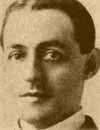
Exposition of the Gospel of John CHAPTER 42 CHRIST’S ENTRY INTO JERUSALEM
A.W. Pink reveals how Christ’s public entry into Jerusalem was a divinely ordained fulfillment of Old Testament prophecy, demonstrating His obedience to the Father’s will and the certainty of God’s redemptive plan.
In this expository sermon, A.W. Pink meticulously examines Christ’s triumphant entry into Jerusalem as recorded in John 12:12-20. He highlights the fulfillment of multiple Old Testament prophecies and underscores Christ’s perfect obedience to the Father’s will. Pink reveals the profound theological significance of this event as the official presentation of Jesus as the Messiah and King, affirming the divine inspiration of Scripture and the certainty of God’s redemptive plan.
Text
Exposition of the Gospel of John
CHAPTER 42
CHRIST’S ENTRY INTO JERUSALEM
John 12:12-20
The following is an Analysis of the passage which is to be before us:—
1. The crowd going forth to meet Jesus, verse 12.
2. The joyous acclamations of the people, verse 13.
3. The Savior mounted on an ass, verse 14.
4. The king’s presentation of Himself to Israel, verse 15.
5. The dullness of the disciples, verse 16.
6. The cause why the people sought Jesus, verses 17, 18.
7. The chagrin of the Pharisees, verse 19.
The passage which is to be before us brings to our notice one of the most remarkable events in our Lord’s earthly career. The very fact that it is recorded by all the four Evangelists at once indicates something of uncommon moment. The incident here treated of is remarkable because of its unusual character. It; is quite unlike anything else recorded of the Lord Jesus in the Gospels. Hitherto we have seen Him withdrawing Himself as much as possible from public notice, retiring into the wilderness, avoiding anything that savoured of display. He did not court attraction: He did not "cry nor strive, nor cause his voice to be heard in the streets" (Matthew 12:19). He charged His disciples they should "tell no man that he was Jesus the Christ" (Matthew 16:20). When He raised the daughter of Jairus, He "straitly charged them that no man should know of it" (Mark 5:43). When He came down from the Mount of Transfiguration He gave orders to His disciples that "they should tell no man what things they had seen, till the Son of man was risen from the dead" (Mark 9:9).
We wish to press upon the reader the uniqueness of this action of Christ entering Jerusalem in the way that He did, for the more this arrests us the more shall we appreciate the motive which prompted Him. "When Jesus therefore perceived that they (the multitude which He had fed) would come and take him by force, to make him a king, he departed again into a mount himself alone" (John 6:15). When His brethren urged, "show thyself to the world" (John 7:4), He answered, "My time is not yet come." Here, on the contrary, we see Him making a public entry into Jerusalem, attended by an immense crowd of people, causing even the Pharisees to say, "Behold, the world has gone after him." And let it be carefully noted that Christ Himself took the initiative here at every point. It was not the multitude who brought to Him an animal richly caparisoned, nor did the disciples furnish the colt and ask Him to mount it. It was the Lord who sent two of the disciples to the entrance of Bethphage to get it, and the Lord moved the owner of the ass to give it up (Luke 19:33). And when some of the Pharisees asked Him to rebuke His disciples, He replied, "I tell you, that, if these should hold their peace, the stones would immediately cry out" (Luke 19:40).
How, then, are we to account for this startling change of policy on the part of Christ? What is the true explanation of His conduct? In seeking an answer to this question, men have indulged in the wildest conjectures, most of which have been grossly dishonoring to our Lord. The best of the commentators see in the joyous acclamations of the crowds an evidence of the power of Christ. He moved them to own Him as their "king," though as to why He should here do so they are not at all clear, nor do they explain why His moving their hearts produced such a transient effect, for four days later the same crowds shouted "Crucify him." We are therefore obliged to look elsewhere for the key to this incident.
We need hardly say that here, as everywhere, the perfections of the Lord Jesus are blessedly displayed. Two things are incontrovertible: the Lord Jesus ever acted with the Father’s glory before Him, and ever walked in full accord with His Father’s Word. "In the volume of the book" it was written of Him, and when He became incarnate He declared "I come to do thy will, O God." These important considerations must be kept in mind as we seek a solution to the difficulty before us. Furthermore, we need to remember that the counsel of the Father always had in view the glory of the Son. It is by the application of these fundamental principles to the remarkable entry into Jerusalem that light will be shed upon its interpretation.
Why, then, did the Lord Jesus send for the ass, mount it, and ride into the royal city? Why did He suffer the crowds, unrebuked, to hail Him with their "Hosannas"? Why did He permit them to proclaim Him their king, when in less than a week He was to lay down His life as a sacrifice for sin? The answer, in a word, is, because the Scriptures so required! Here, as ever, it was submission to His Father’s Word that prompted Him. Loving obedience to the One who sent Him was always the spring of His actions. His cleansing of the temple was the fulfillment of Psalm 69:9. The testimony which He bore to Himself was the same as the Old Testament Scriptures announced (John 5:39). When on the cruel Cross He cried, "I thirst," it was not in order for His sufferings to be alleviated, but "that the scripture might be fulfilled" (John 19:28). So here, He entered Jerusalem in the way that He did in order that the Scriptures might be fulfilled.
What scriptures? The answer to this question takes us back, first of all, to the prophecy which dying Jacob made, a prophecy which related what was to befall his descendants in "the last days"—an Old Testament expression referring to the times of the Messiah: begun at His first advent, completed at His second. In the course of His Divine pronouncement, the aged patriarch declared, "the scepter shall not depart from Judah, nor a lawgiver from between his feet until Shiloh come; and unto him shall the gathering of the people he. Binding his foal unto the vine, and his ass’s colt unto the choice vine" (Gen. 49:9-11). The word "scepter" here signifies tribal rod. Judah was to preserve the separate independency of his tribe until the Messiah came. The fulfillment of this is seen in the Gospels. Though the ten tribes had long before been carried into captivity, from which they never returned, Judah (the "Jews"), were still in Palestine when the Son of God became incarnate and tabernacled among men. Continuing his prophecy, Jacob announced, "And unto him [Shiloh—the Peacemaker—cf. ‘thy peace’ in Luke 19:42], shall the gathering of the people be." This received its first fulfillment at Christ’s official entry into Jerusalem. But mark the next words, "Binding his foal unto the vine, and his ass’s colt unto the choice vine." The "vine" was Israel (Isa. 5, etc); the "choice vine" was Christ Himself (John 15:1). Here, then, was the fact itself prophetically announced. But this by no means exhausts the scriptural answer to our question.
We turn next to that remarkable prophecy given through Daniel respecting the "seventy weeks." This prophecy is found in Daniel 9:24-27. We cannot now attempt an exposition of it,[1] though it is needful to make reference to it. This prophecy was given while Israel were captives in Babylon. In it God made known the length of time which was to elapse from then till the day when Israel’s transgressions should be finished, and everlasting righteousness be brought in. "Seventy weeks" were to span this interval. The Hebrew word for "weeks" is "hebdomads," and simply means septenaries; "Seventy sevens" gives the true meaning. Each of the "hebdomads" equals seven years. The "seventy sevens," therefore, stood for four hundred and ninety years.
The "seventy sevens" are divided into three unequal parts. Seven "sevens" were to be spent in the rebuilding of Jerusalem: the books of Ezra and Nehemiah record the fulfillment of this. After Jerusalem had been restored, sixty-two more "sevens" were to run their course "unto the Messiah the Prince." And then we are told, "After-threescore and two sevens (added to the previous seven ‘sevens’, making sixty-nine in all), shall Messiah be cut off." Here, then, is a definite computation, and a remarkable and most important Messianic prophecy. "Messiah the Prince" (cf. Revelation 1:5), was to present Himself to Jerusalem (note "thy holy city" in Daniel 9:24), after the expiration of the sixty-ninth "seven," or more specifically, precisely four hundred and eighty-three years after God gave this prophecy to His beloved servant.
Now, it is this prophecy which received its fulfillment and supplies the needed key to what is before us in John 12. The entry of the Lord Jesus into Jerusalem in such an auspicious manner, was the Messiah formally and officially presenting Himself to Israel as their "Prince." In his most excellent book "The Coming Prince," the late Sir Robert Anderson marshalled conclusive proofs to show that our Savior entered Jerusalem on the very day which marked the completion of the sixty-ninth "hebdomad" of Daniel 9. We make here a brief quotation from his masterly work.
"No student of the Gospel-narrative can fail to see that the Lord’s last visit to Jerusalem was not only in fact, but in the purpose of it, the crisis of His ministry, the goal towards which it had been directed. After the first tokens had been given that the Nation would reject His Messianic claims, He had shunned all public recognition of them. But now the twofold testimony of His words and works had been fully tendered. His entrance into the Holy City was to proclaim His Messiah-ship, and to receive His doom. Again and again His apostles even had been charged that they should not make Him known. But now He accepted the acclamations of ‘the whole multitude of the disciples,’ and silenced the remonstrance of the Pharisees with indignation.
"The full significance of the words which follow in the Gospel of Luke is concealed by a slight interpolation in the text. As the shouts broke forth from His disciples, ‘Hosanna to the Son of David, blessed is the King of Israel that cometh in the name of the Lord,’ He looketh off toward the Holy City and exclaimed, ‘If thou also hadst known, even on this day, the things which belong to thy peace! but now they are hid from thine eyes’ (Luke 19:42). The time of Jerusalem’s visit had come, and she knew it not. Long ere this, the Nation had rejected Him, but this was the predestined day when their choice must be irrevocable."
One other prophecy remains to be considered, in some respects the most wonderful of the three. If God announced through Jacob the simple fact of the gathering of the people unto the Peacemaker, if by Daniel He made known the very year and day when Israel’s Messiah should officially present himself as their Prince, through Zechariah He also made known the very manner of His entry into Jerusalem. In Zechariah 9:9 we read: "Rejoice greatly, O daughter of Zion, shout, O daughter of Jerusalem; behold, thy king cometh unto thee: He is just, and having salvation; lowly and riding upon an ass, and upon a colt, the foal of an ass." As we shall see, several words in this prophecy are not quoted in the Gospels, therefore this prediction (like all prophecy) will receive another fulfillment; it will be completely realized when the Lord Jesus returns to this earth.
Before we come to the detailed exposition, let us offer a brief comment upon what has just been before us. At least three prophecies were fulfilled by Christ on His official entry into Jerusalem, prophecies which had been given hundreds of years before, prophecies which entered into such minute details that only one explanation of them is possible, and that is God Himself must have given them. This is the most incontrovertible and conclusive of all the proofs for the Divine inspiration of the Scriptures. Only He who knows the end from the beginning is capable of making accurate forecasts of what shall happen many generations afterwards. How the recorded accomplishment of these (and many other) prophecies guarantees the fulfillment of those which are still future!
"On the next day much people that were to come to the feast, when they heard that Jesus was coming to Jerusalem, took branches of palm trees, and went forth to meet him, and cried: \
Sermon Outline
-
I. The Historical Context and Uniqueness of Christ’s Entry
- Christ’s usual avoidance of public display
- The unprecedented public entry into Jerusalem
- The Lord’s initiative in the event
-
II. The Scriptural Basis for the Entry
- Fulfillment of Old Testament prophecies
- Obedience to the Father’s will
- The significance of riding on an ass
-
III. The Messianic Prophecies Fulfilled
- Jacob’s prophecy about Shiloh and the gathering of the people
- Daniel’s seventy weeks prophecy and its timing
- Zechariah’s prophecy of the king’s humble entry
-
IV. The Theological Implications
- Divine inspiration and foreknowledge
- The certainty of future prophetic fulfillment
- Christ’s submission to God’s redemptive plan
Key Quotes
“Here, on the contrary, we see Him making a public entry into Jerusalem, attended by an immense crowd of people, causing even the Pharisees to say, 'Behold, the world has gone after him.'” — A.W. Pink
“The entry of the Lord Jesus into Jerusalem in such an auspicious manner, was the Messiah formally and officially presenting Himself to Israel as their 'Prince.'” — A.W. Pink
“At least three prophecies were fulfilled by Christ on His official entry into Jerusalem, prophecies which had been given hundreds of years before, prophecies which entered into such minute details that only one explanation of them is possible, and that is God Himself must have given them.” — A.W. Pink
Application Points
- Trust in God’s perfect timing and sovereign plan even when circumstances seem unclear.
- Recognize and honor Christ as the promised Messiah who fulfills Scripture.
- Submit daily to God’s will as Christ exemplified through His obedience.
Frequently Asked Questions
Why did Jesus enter Jerusalem riding on an ass?
Jesus rode on an ass to fulfill the prophecy of Zechariah 9:9, symbolizing humility and peace as He presented Himself as the Messiah.
What is the significance of the crowd’s acclamations?
The crowd’s shouts of 'Hosanna' acknowledged Jesus as king, fulfilling prophecy and marking His official presentation to Israel.
How does Daniel’s prophecy relate to Jesus’ entry?
Daniel’s seventy weeks prophecy foretold the exact timing of the Messiah’s presentation to Jerusalem, which Jesus fulfilled at His entry.
Why did Jesus usually avoid public recognition before this event?
Jesus avoided public acclaim to fulfill God’s timing and plan, revealing Himself fully only when the appointed time had come.
What does this event teach about Christ’s obedience?
It shows that Christ’s actions were always in submission to the Father’s will and the fulfillment of Scripture.