
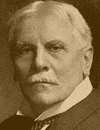
The Raising of Lazarus
C.I. Scofield's sermon on the raising of Lazarus emphasizes the miracle's role in strengthening faith and revealing Christ's divine nature.
C.I. Scofield delves into the profound analysis of the meeting of Jesus with Martha and Mary, leading to the resurrection of Lazarus and the blessed result that followed. The heart of the lesson lies in the deeper meanings revealed by Jesus himself, emphasizing the purpose of the miracle to strengthen believers' faith in Him as the resurrection and the life, showcasing His divine power and glory. The resurrection of Lazarus not only demonstrated Christ's deity but also served as a testimony for bystanders to believe in Him, ultimately pointing to the divine motive behind miracles and the new birth.
Text
(John xi:32-45.)
I. The Analysis.
(1) The meeting of Jesus with Martha, verses 20-27.
(2) The meeting of Jesus and Mary, verses 28-34.
(3) The resurrection of Lazarus, verses 35-45.
(4) The blessed result, verse 45.
II. The Heart of the Lesson.
The deeper meanings of this lesson are indicated by our Lord himself.
First. "To the intent ye may believe" (verse 15). The miracle of Lazarus' resurrection, then, was, first of all a testimony to believers to his own. A testimony intended to produce faith, not in the doctrine of a resurrection "at the last day"; that, in common with all spiritual Jews, they already believed. With Job they believed that, "After I shall awake, though this body be destroyed, yet out of my flesh shall I see God" (Job xix:25). Martha expressed that common faith when she said, "I know that he shall rise again at the last day." It was the old promise to Daniel, "Thou shalt rest, and stand in thy lot at the end of the days."
But the addition to the faith of his disciples which the resurrection of Lazarus was to effect was faith in Jesus as having in himself resurrection power. Martha, indeed, went beyond mere belief in a resurrection: "I know that even now, whatsoever thou wilt ask of God, God will give it thee." She believed in a resurrection, and in Christ as an Intercessor of such prevalency that through his prayers God would even raise the dead. But Jesus is, himself, the resurrection. The ancient Syrian church called him "the Vivifier"; the ancient Abyssinian church, "the Resurrectioner."
The resurrection of Lazarus, then, is not only a new demonstration of the Deity of Christ, but also the presentation of Christ to our faith in a new character, "the resurrection and the life." Obviously, since death is the result of sin (Rom. v:12), a perfect Redeemer must be able to annul death.
Second. "That the Son of God might be glorified thereby" (verse 4). This is not something different from the first meaning, but the same meaning applied to Christ instead of to the faith of the disciples. For Christ is glorified when something of his divinity is revealed. On the mount of transfiguration, for example, he "appeared in glory"-- that is, His essential Deity shone forth through the veil of flesh which usually hid it. In the first miracle at Cana he "manifested forth His glory" in the act of creative power-- a power belonging to Deity alone. So here again the resurrection of Lazarus was a work of divine power, and so a manifestation of His glory.
Then, third, the resurrection of Lazarus was to the end that the bystanders (not his disciples) might believe (verse 42). And this actually occurred, as we learn from verse 45: "Then many of the Jews which came to Mary, and had seen the things which he did, believed on him."
If, now, we sum up the matter, we shall find the heart of the lesson in the disclosure which it makes of the divine motive in miracle. Every miracle, especially the perpetual miracle of the new birth, which is life to a dead soul, as the resurrection of Lazarus was life to a dead body, is for the strengthening of our faith in him as the Lord of life; not in a general sense, but in a particular sense as the one who is able to give the new life to the one whom we love, and for whom we pray; is a showing forth of his divine glory, and a testimony upon which faith in those who see the great work may rest.
For, after all, there is no more convincing testimony to the divine power of Christ than that of a life redeemed to purity, piety and usefulness. "Beholding the man that was healed standing with them, they could say nothing against it" (Acts iv:14).
Sermon Outline
-
I
- The Analysis
- {'A': 'The meeting of Jesus with Martha, verses 20-27.', 'B': 'The meeting of Jesus and Mary, verses 28-34.', 'C': 'The resurrection of Lazarus, verses 35-45.', 'D': 'The blessed result, verse 45.'}
-
II
- The Heart of the Lesson
- {'A': 'The miracle as a testimony to believers and its intent to produce faith.', 'B': 'The glorification of the Son of God through the miracle.', 'C': 'The impact of the miracle on bystanders leading to belief.'}
Key Quotes
“I know that even now, whatsoever thou wilt ask of God, God will give it thee.” — C.I. Scofield
“This is not something different from the first meaning, but the same meaning applied to Christ instead of to the faith of the disciples.” — C.I. Scofield
“There is no more convincing testimony to the divine power of Christ than that of a life redeemed to purity, piety and usefulness.” — C.I. Scofield
Application Points
- Reflect on the power of Christ in your life and the lives of those you pray for.
- Recognize that miracles serve to strengthen our faith and reveal God's glory.
- Share your testimony of faith to encourage others in their belief in Christ.