
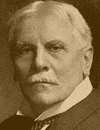
The Witness of John the Baptist
The sermon emphasizes the importance of witnessing and testifying about Jesus Christ, particularly His sacrificial death, as the central message of the new dispensation.
C.I. Scofield preaches on John 1:19-34, focusing on John the Baptist's humility, his testimonies about Jesus as the Son of God, and the importance of bearing witness to Christ as the central message of the new dispensation. The sermon highlights the unique method of witnessing in the new dispensation compared to Mosaism, emphasizing the need for Spirit-filled witnesses to spread the message of Christ. It also stresses the significance of Jesus Himself as the core of the testimony, rather than ethical systems or doctrines, with a particular emphasis on His sacrificial death as the pivotal act.
Text
(John i:19-34.)
I. The Analysis.
1. John's Self-abnegation (verses 19-23).--No finer example can be found in all Scripture of the right relation toward the public of a servant of God. John would neither take the place belonging of right to Christ in the public mind, nor would he claim for himself any other exalted position. To be a "voice" was enough for him.
2. John's First Testimony (verses 24-29).--Questioned as to his authority for introducing a new ordinance, viz: the baptism of repentance, John connects his actions with his work as the forerunner of One mightier than himself.
3. John's Second Testimony (verse 29).--See "Heart."
4. John's Third Testimony (verses 32, 33).--John had seen the convincing fact of the descent upon Jesus of the Holy Spirit.
5. John's Fourth Testimony (verse 34).--''This is the Son of God." The student should add to these John's testimony, as reported by Matthew, against the formal religion of the time, and to Jesus as the baptizer with the Holy Ghost.
II. The Heart of the Lesson.
The great word of this lesson is, the word "witness." John was not that light, but was sent to bear witness of the Light. We have, therefore, as the open heart of the lesson the word witness; and this in three ways:--witness bearing as the method of the new dispensation of "grace and truth," which Christ brought in; Christ Himself as the object of the witnessing; and one particular fact about Christ as the message of the witnessing.
First. The idea of building up the kingdom of God by means of testimony was one of the most striking of the new ideas of the new dispensation. Mosaism was built up by the natural increase of a family, the family of Abraham. Every Hebrew child was in the Theocracy just by virtue of having Hebrew parents. The Law never had a missionary. From Sinai came no command: "Go ye into all the earth and preach the law to every creature." But witnessing is the peculiar method of this dispensation. From the ascension to this day, Christ has no other way of winning men but by the testimony of Spirit-filled witnesses (Acts i:8).
Secondly. That testimony concerns a Person, not primarily, an ethical system, nor even a body of doctrine, still less a church, but Himself, Jesus the Christ. At no point has the church more conspicuously failed in her responsibility than just there. Rome presents an ecclesiastical system, Protestantism a thousand theological systems, in the place of Jesus Christ. The Lord made Himself the one issue. "Whom say ye that I the Son of man am?" ''Verily, verily, I say unto you, he that believeth on Me hath everlasting life." "He that hath the Son hath life, and he that believeth not the Son hath not life, but the wrath of God abideth on him."
Thirdly. The message about Christ centers with tremendous emphasis on one definite act--His sacrificial death. Read the twenty-one Christian Epistles, seeking carefully for the references to His earth-life as the emphatic fact concerning Him. You will find five brief, unemphatic passages. Read them again for references to His atoning death. You will find them by scores. Then enter the churches and hear the sermons; or read the so-called Christian literature of the day. How often will you find the chief emphasis put upon the atoning death of Christ? Is it not time to come back to the Apostolic testimony? "Behold the Lamb of God that taketh away the sin of the world."
Sermon Outline
-
The Analysis
- John's Self-abnegation (verses 19-23)
- John's First Testimony (verses 24-29)
- John's Second Testimony (verse 29)
- John's Third Testimony (verses 32, 33)
- John's Fourth Testimony (verse 34)
-
The Heart of the Lesson
- The idea of building up the kingdom of God by means of testimony
- Christ Himself as the object of the witnessing
- One particular fact about Christ as the message of the witnessing
Key Quotes
“John was not that light, but was sent to bear witness of the Light.” — C.I. Scofield
“Behold the Lamb of God that taketh away the sin of the world.” — C.I. Scofield
Application Points
- We must prioritize witnessing and testifying about Jesus Christ in our lives.
- The central message about Christ is His sacrificial death, which is the atoning act that takes away the sin of the world.
- We must come back to the Apostolic testimony and emphasize the importance of Christ's atoning death in our preaching and teaching.