
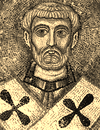
Moses of Old
Moses' faithfulness and obedience to God are demonstrated through his method of choosing the priests, highlighting God's sovereignty and power.
Clement of Rome reflects on the appointment of ministers by those in Christ, drawing parallels to the faithful servant Moses who recorded God's injunctions in the sacred books. He recounts the story of Moses settling a rivalry over the priesthood by having the twelve princes of the tribes present their rods, with Aaron's rod miraculously blossoming to signify God's chosen priesthood. Clement emphasizes Moses' foresight in preventing sedition and glorifying the name of the true God through this miraculous event.
Text
And what wonder is it if those in Christ who were entrusted with such a duty by God, appointed those [ministers] before mentioned, when the blessed Moses also, "a faithful servant in all his house," noted down in the sacred books all the injunctions which were given him, and when the other prophets also followed him, bearing witness with one consent to the ordinances which he had appointed? For, when rivalry arose concerning the priesthood, and the tribes were contending among themselves as to which of them should be adorned with that glorious title, he commanded the twelve princes of the tribes to bring him their rods, each one being inscribed with the name of the tribe.
And he took them and bound them [together], and sealed them with the rings of the princes of the tribes, and laid them up in the tabernacle of witness on the table of God. And having shut the doors of the tabernacle, he sealed the keys, as he had done the rods, and said to them, Men and brethren, the tribe whose rod shall blossom has God chosen to fulfil the office of the priesthood, and to minister to Him. And when the morning was come, he assembled all Israel, six hundred thousand men, and showed the seals to the princes of the tribes, and opened the tabernacle of witness, and brought forth the rods. And the rod of Aaron was found not only to have blossomed, but to bear fruit upon it. What think you, beloved? Did not Moses know beforehand that this would happen?
Undoubtedly he knew; but he acted thus, that there might be no sedition in Israel, and that the name of the true and only God might be glorified; to whom be glory for ever and ever. Amen.
Sermon Outline
- The Faithfulness of Moses
- The Appointment of the Priests
- The Significance of the Rods
- The sealing of the rods
- The blossoming of Aaron's rod
Key Quotes
“What think you, beloved? Did not Moses know beforehand that this would happen?” — Clement of Rome
“Undoubtedly he knew; but he acted thus, that there might be no sedition in Israel, and that the name of the true and only God might be glorified;” — Clement of Rome
Application Points
- We should trust in God's sovereignty and plan, even when we don't understand the details.
- Our faithfulness and obedience to God can demonstrate His power and glory to others.
- We should seek to glorify God in all aspects of our lives, even in the midst of challenges and uncertainties.