
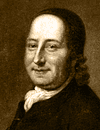
Biography of Count Zinzendorf, 1700-1760
The sermon is a biography of Count Zinzendorf, highlighting his life, education, and contributions to the Moravian movement.
Dr. Julian's Hymnology delves into the life of Count Zinzendorf, a nobleman who, despite his family's wishes for him to pursue state service, was deeply passionate about personal faith and true Christianity. Zinzendorf's journey led him to emphasize 'pure religion' based on personal relationship with God, which he expressed through hymns and religious gatherings. Despite facing doctrinal disputes and exile, Zinzendorf remained committed to sharing his religious ideas for the benefit of others, leaving a lasting impact on the Moravian history and hymnody.
Text
Notes from Dr. Julian's Hymnology:
The Count of Zinzendorf was born on the 26th. May, 1700 in Dresden and was descended from one of the most ancient noble families of the Archduchy of Austria. His father, Saxon Minister of State, died six weeks after the birth of his son. The latter, after the second marriage of his mother in 1704 to the Prussian Field Marshall von Nazmer, was brought up by his grandmother, Henrietta Catherine von Gersdorf on her estate of Hennersdorf. His education was exclusively Pietistic. (We designate by the name of Pietism a religious movement which took place in Germany about the end of the 17th century. As Puritism appeared in strong contrast to the High Church in England, so Pietism opposed a cessation or retrogression of the Reformation in Germany by the awakening of "true piety". Spener, a main representative of that tendency was Zinzendorf's grandfather). He would have liked to study theology, but his family wished him to prepare himself for state service.
After having finished his study of law in 1719, he travelled in Holland and France, everywhere giving his attention to the condition of the Church and religious life. He sought the company of Catholic and Reformed, of Pietists, Mystics and Socinians, and everywhere made the observation that to all these different denominations, one thing was common, namely that true Christianity consisted in personal religion, or, as he expressed it in "Christianity of the heart". He felt himself at home wherever he found personal faith, even of the most extreme sects. In contrast to the confessional views, he named this "pure religion". Returned from his travels, Zinzendorf undertook the sole management of his paternal property. Once again he attempted to enter the ministry, but in consideration of his family was again obliged to relinquish his wish, and took a situation as Councillor in the Saxon Government in Dresden. At any rate he had the firm resolution to employ his religious ideas and opinions for the benefit of his fellow men even in this situation, heedless of the offence he might give thereby. This, he proved, not only by the meetings he held in his own house in Dresden, but also by editing his first four collections of hymns, 1725-1731. They have no connection with Herrnhut and the Moravians, for he writes in the preface to the first Moravian hymn-book of 1735, "Until now four editions of hymns have been published. The first ones were intended for use in the Church at Berthelsdorf (his own estate), the other for that of children...
In 1722 Zinzendorf permitted a carpenter, Christian David, to bring some immigrants from Moravia to his estate in Berthelsdorf. From this year the emigration went on uninterruptedly until 1733. But besides these Moravian emigrants, came other people from other parts of Germany, attracted by the report of religious freedom on the Zinzendorf estates. This led to sharp doctrinal and confessional disputes among the inhabitants of Herrnhut, so that Zinzendorf found himself in 1727 compelled to give up his post in Dresden and to reside in Berthelsdorf. Zinzendorf wished that the Moravian brethren would attach themselves to the Lutheran Church, but they wished to re-establish their own constitution as it was described by Comenius in his "Ratio Disciplinae" And they gave him plainly to understand that they would rather take up their staff and wander further, and doubted not that they would find places where this freedom would be granted them, on which they laid so much stress.
In the year 1738, the Count of Zinzendorf had been exiled from Saxony... The Count, accompanied by his family and some of his most able fellow labourers, left Saxony and this "pilgrim congregation" sought refuge with a friend of Zinzendorf, the Count of Budingen in Wetteravia. In 1747, Zinzendorf was allowed to return to Saxony and spent the last years of his life (1756-1760) in Herrnhut where he died May 9th. 1760. With his death the original friend of the Moravian history regarding their hymn books ends.
Notes from the Little Flock Hymn book by Adrian Roach:
While quite young, Zinzendorf wrote hymns. He is reputed to have written about two thousand.
While visiting the Art Galleries in Dusseldorf, he saw a painting of the crucifixion by the artist Stenberg. He was arrested by the words on the frame of the picture, "All this I did for thee, What hast thou done far Me?" He resolved to live more wholly for his Master.
Just before he died he said to his son-in-law, "I am going to the Saviour. I am ready. I am quite resigned to the will of my Lord. If He is no longer willing to make use of me here, I am quite ready to go to Him, for there is nothing more in my way".
His coffin was borne by thirty two preachers, who happened to be in Herrnhut at the time. They had been trained by him for the work of the Lord which took them to distant parts of the world. Over two thousand attended the funeral to the burying place. One asked "What monarch was ever honoured by a funeral like this?"
Zinzendorf's hymns in 'Spiritual Songs' (which are translated by John Wesley) are:
45 Jesus the Lord, our righteousness!
294 O come, Thou stricken Lamb of God
Sermon Outline
- Early Life and Education
- Born in Dresden, 1700
- Raised by grandmother, Henrietta Catherine von Gersdorf
- Pietistic education
Key Quotes
“All this I did for thee, What hast thou done for Me?” — Count Zinzendorf
“I am going to the Saviour. I am ready. I am quite resigned to the will of my Lord.” — Count Zinzendorf
“Until now four editions of hymns have been published.” — Count Zinzendorf
Application Points
- We can learn from Zinzendorf's example of living a life of personal faith and devotion to God.
- The importance of seeking a deeper relationship with God and living a life of obedience to Him.
- The value of perseverance and resilience in the face of adversity, as seen in Zinzendorf's exile and eventual return to Saxony.