
Walking With Christ
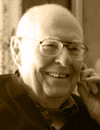
Dennis Kinlaw emphasizes the importance of walking with Christ daily through community, prayer, and prioritizing God in our lives.
In this sermon, the preacher focuses on the passage from the Gospel of Mark chapter 1, specifically verses 14-20. Jesus begins his ministry by preaching the gospel of God, proclaiming that the time is fulfilled and the kingdom of God is at hand. He calls Simon, Andrew, James, and John to follow him, and they immediately leave their work as fishermen to become his disciples. The preacher emphasizes that our work, even our academic pursuits, should be seen as God's work and an opportunity for us to be instruments in his kingdom. The sermon also highlights the importance of giving Jesus our full attention and not ignoring him or leaving him to the side in our daily lives.
Full Transcript
Here is a familiar portion from the Gospel of Mark, chapter 1, reading from verse 14. Now after John was arrested, Jesus came into Galilee preaching the gospel of God, and saying, The time is fulfilled, and the kingdom of God is at hand. Repent, and believe in the gospel.
And passing along by the Sea of Galilee, he saw Simon and Andrew, the brother of Simon, casting a net in the sea, for they were fishermen. And Jesus said to them, Follow me. And immediately they left their net, and followed him.
And going on a little farther, he saw James the son of Zebedee, and John his brother, who were in their boat mending the net. And immediately he called them, and they left their father, Zebedee, in the boat with the hired servants, and followed him. The last week has been a very remarkable week.
For me it has been one that has been exciting and very satisfying deep down within, because we've had an opportunity as a community to spend eight days together in which we concentrated upon Christ. We did it by putting him into the official schedule in a very direct and a very obvious way. We had the chance to concentrate our relationship to him.
For that week we put some other things to the side, put them second. We obviously are an academic institution, and that's why we're here, for academic purposes. But for that week we put the emphasis second.
Some of you are going to get some exams today and tomorrow and the next day, and you're aware that we're moving into a new pattern. But last week was an expression, a calendrical expression of our biblical faith. It reflects our view of time, the Christian view of time.
You will notice that for Christians they do have a particular view of time. It is expressed in the week, and the fact that the week begins with the day of worship, it does not end with the day of worship. The first day of the week belongs to the Lord, and so we recognize every day belongs to him, and every day that we get comes from him, so we acknowledge the fact that all of our time comes from him and that he is the Lord of it all by giving special emphasis to the first, the sanctification of the first day of the week.
And on that day we begin with him, and when we begin with him we find that that has a hallowing effect on all the rest of the days of the week. We find that the rest of the week is more creative, and we are able to accomplish more because we have given him his rightful place. There are some people that do not understand that, and they feel that they could do more by giving seven days to themselves and their own purposes than giving one day to God clearly, and then pursuing their legitimate vocation and the other six.
Luther was tempted on that score more than once, but he said, I finally found out that if I was to get accomplished in any given day what I needed to get accomplished, I needed to give God the beginning of the day. And so it was Luther's pattern to spend two hours a day at the beginning of the day in prayer. There is a passage in his writings where he said, I had so many things to do today that I knew that if I didn't spend three hours in prayer instead of two, I would never get them all done.
Now, prayer can be used as an escape mechanism from the work we don't want to do, and so we can use religion as an escape from the work that we don't want to do. But if it is rightly used, that devotion to Christ that puts him first will then give us the strength and energy and inspiration and the motivation that we need when we turn our attention more directly to our regular vocational pursuits, we will be able to pursue these with much more creativity and with much more effectiveness. So today we turn our attention, this week now, to normal college life at Asbury, where we will give our emphasis to the academic thing.
We turn our attention to our work, and yet I found when I wrote those words, our work, there was something inside me that said, whose work? Because if we are servants of his, it isn't our work. Even our work does not belong to us, it is his work. And so if you're preparing for an English exam, it isn't your work, it is his work, as he is giving you an opportunity to become the instrument that he wants you to be, and the instrument that he can use in his world and in his kingdom.
So now we turn our attention to the work, the secular work, if you dare to use that term, that he has for us to do. But what do we do with him when we do not give him the full, direct, dramatic attention that we have over the last eight days? What do we do with him? Do we now ignore him, or do we leave him to one side? Of course, you know and I know that we dare not do that. He is supposed to be first on every day, and first on every occasion.
So we . . . but we find that the pace is different and the relationship is different. Now it is our business to learn to walk in the daily routines with him. There are problems in learning to walk with him that are not inherent in the matter of finding him.
It is one thing to find Christ, and it is another thing to learn how to walk with him. It is as crucial that we learn how to walk with him as it is that we find him, and it could be that somebody might even want to make a case that it is more crucial that we learn to walk with him than that we find him, because it is possible to find him and lose him. Now, it takes some time, and it probably takes some stumbling for most of us to learn to walk with him.
To meet Christ is an incredibly glorious thing. If you have ever met him, you will never get over that. I notice, and I've always noticed a bit of delight in some sense of humor, the Book of Acts and Paul's treatment of his experience of meeting Christ.
You will remember that every time he ever got in an extremely hot spot where he knew that his life was on the line and he stood before a supreme judge, whether it was king or governor, you will remember what he did. He instantly said, Your Honor, let me tell you about a trip I took once. I was going from Jerusalem to Damascus, and then he tells about that dramatic experience when Christ confronted him and his total life was transformed.
One of the things that I always get a joy out of doing with significant Christians is to raise the question of, How did you come to know him? Now, there are some whose conversions are more dramatic than others, but I have never known a person who counted for God, who did not have somewhere in his life something of the drama of an hour spent in the presence of Christ that was life transforming. But it's one thing to meet him, and it's another thing to live with him. It's a little bit like marriage.
I remember when Elsie and I were courting, I found that I knew which window was hers in Glide Crawford. I could spot it when the building came into view and knew exactly where it was. I could almost tell you every move she made on this campus in a 24-hour period.
It was as if I had some kind of system in me that magnetized me to what she was doing, and there was an ecstasy in it and a joy in it, and I thought, Man alive! If I could have her and own her and possess her and have her forever, that would be what heaven would have little to offer after that. I remember what a shock it was after I'd been married about six months and I took her hand and I could have been holding a dead fish for all it did to me. Now, if that disillusions you, I'm sorry.
At the moment my attention was on something else. And let me say, if the chemistry of courtship were to last all the days of your marriage, you wouldn't be worth the powdering shot to kill you. Now, three cheers for all that chemistry.
And I want to say, it doesn't stop. Once in a while, don't tell Elsie this, I hope she's not here. Once in a while, she'll look at me and say, We're too old for this stuff.
You have not learned to think biblically yet. So I'm still trying to convert her at a certain point. And it's another thing to live married.
Most divorces don't come in the first six months. They come when the chemistry has changed. And when the chemistry changes, then you see reality the way it is.
And I want to say that the right wife is as valuable when you see reality the way it is, as she is in those moments when everything is in a holy glow. And I want to say that Christ can be as real and is as essential and can be as great a source of comfort and joy in the day-to-day routine if you learn to walk with him. You will find he sanctifies, makes holy, he hallows every moment if you've learned to walk with him.
And you will find that it's the older Christians, usually, that are the most joyous. Everybody knows that joy in the beginning, then it fades. You find a lot of people in that second stage, but the richest people in the world are the ones who reach that third stage, and they're usually older Christians whose joy is unbroken and whose peace is like a river.
So now you've come to the place where, after these eight days, when you and I, we need to learn some things about walking with him. In that expression, phrase, walking with him, I want you to be sure that you know where I think the important words are. The important words in that sentence are not walking, or walking with, but the important words in that phrase are with him.
Because my interest is not the Christian life. My interest is in the Christ in the Christian life. And it is very easy for us, when we begin to talk about walking with him, to get so enamored with the details of how to walk that we forget about, yea, even lose him.
And there's not much point in learning to walk with him unless it's walking with him. It is a personal relationship, and you will be tempted a thousand times to forget that. You will get enamored with Christian truth.
I hope you will. I hope you will get enamored with Christian truth. I know nothing that our culture needs more than some solid, systematic, and biblical theologian.
I wish we could produce a hundred. The world desperately needs them. I'd love for some light to get turned on in your head to where you would become enamored with Christian truth.
But if that's all, and it gets out of relationship to him, and gets ahead of your relationship to him, then it will be perverted, and it will be sterile. Not even Christian truth is fruitful if it is separated from him and from his presence. I hope you come to love the Bible.
If there's anything that God has done in my heart for which I am grateful, one thing is a passionate love affair with the text of Scripture. I cannot tell you what a priceless gift that is, just a curiosity about the word of God. But you can get enamored with the Bible and forget about him.
I was talking with an old saint, a layman who had a profound influence on my life. His name was Unc. Reed Byrd.
He told me about inviting a man to speak for him for a week in a mission that he ran, and it's connected in New York. It was the day when there was a heavy emphasis upon the imminence of the second coming in evangelical circles in the United States. This man was an expert supposedly on biblical prophecy, and everybody was interested in when Christ was going to come back and he'd studied the text that had to do with what they felt was assigned more astutely than most anybody else on the American scene.
And he said, you know, I invited him to come, and so he wrote me back and said, I'll be glad to come, but I will need two hotel rooms, one in which to sleep, one in which I can read and study and write because I have a book that I'm writing and I need to complete it. And he spelled out all of the details and gave the projection of his future for some time to come and how crucial his time was while he filled out his career, while he preached on Jesus May Come Tonight. Now, Unc.
Reed Byrd was a layman, but he was no fool. And he said to me, son, I felt I detected a bit of a discrepancy somewhere. One of the most awesome things in the world to me that I missed for years was the fact that in the annual meetings of the Society of Biblical Literature and Exegesis, where the best biblical scholars of the Roman Catholic, the Protestant, and the Jewish world come together to talk about biblical studies, the one thing that could never happen would be a moment of adoration and prayer.
Dr. Hamilton was talking with me about working on Genesis. He said, You know, I've lived with that text so long, the shock of my life is that even living with the biblical text, you can dry up in your soul. One thing we must do is realize the central thing is not the walk, it's the one with whom we walk.
You can do the same thing with morality and with ethics, and Judaism is a classical example of that. You can be an atheist and be an Orthodox Jew, because Orthodox Jewry is a way to live rather than a personal relationship for most Jews. And you can do that at Asbury.
You can do that with Christian ethics. You can do that with spiritual discipline. What we need to do is to learn to walk with him, and know when he's there, and know when we've left him.
Now notice the way I said that, because he's not going to leave you, and he's not going to leave me, but you and I can leave him and never even know we're so preoccupied that we now have lost his fellowship. I love the line from Helmut Thielicke in writing about Genesis 3. He says, It is interesting that sin entered the world with the first conversation about God. In the second chapter you get conversations with God, and everything is paradise.
In the third chapter, Adam and Eve began to talk with the serpent about God, and everybody got into trouble. We need to keep the second personal relationship while we deal with the third personal relationship. I want to say, if we learn to walk with him, we won't do it alone.
Now I wish I knew how to say that as dramatically as I'd like to be able to say it, because I've come to believe that the great delusion in the modern world is, or maybe just in our world is, that we can do it alone, that I can do it alone. That I need to get by myself to really know God, and that you are not necessary in my knowing God. Now, that was the heresy in the early Church.
You will remember that they came to believe that the farther you got away from other human beings, the holier you could be. And so you get Simeon Silates who climbed upon a pillar. I always loved the fact that he did it in the midst of people.
He got as far away from people so they could still see him and see how pious he was. But the others, the eremitic monks, went up the Nile away from humanity, and the farther they were away from another human being, the holier they felt they were. I noticed that Jesus called Andrew and Peter, and then went and got James and John, and then for those years of his earthly ministry, he kept them tightly together.
And you will never know how to walk with Christ in isolation from other believers. Our learning to walk with him will not come simply from within here. That's the reason we need the Scripture, that standard over against us, and we need to expose ourselves to it daily.
That's the reason we need the Church. And do you know what one of the greatest tragedies of the college and university era in American student life is? That there are masses of young people in America who have had a good church relationship until they go to college, and the next four years the Church fades out as a reality in their life. I noticed that it happens at Asbury.
I have never known a person greatly used of God who was not solicitous about his relationship to the Church. Now, you'll notice I didn't say which church, but you belong to be a part of a body of believers, and you need to be it on a weekly basis. If you're going to learn to walk with him, the Church has to be a part of your life.
You say, if you knew the Church that's available to me, you wouldn't say that. Let me tell you something that I decided a long time ago. There was a time when I first came to Asbury when I got concerned that students who would talk about boring chapel speakers, and I thought, you know, it would be wonderful if we could have Billy Graham every chapel.
Then I thought, no, they'd get tired of him. Well, I thought if we could have a different and a scintillating speaker at every chapel. You know, the longer I've lived with that, as I think about chapels for the year, if I planned them all, do you know I would program in a number of borders? Because there's something about you that you need to learn that you will never learn until you have to sit through some boring speakers.
You get a good bore up here and you'll find out who you are. You get the scintillating speaker up here and you'll find out who he is. And you need to know who you are.
And one of the reasons I get some boring speakers is because that's what some of you are going to be when you graduate. Like some of the rest of us. And the marvelous thing is that maybe the most crucial influence on my life, at the most crucial period in my life, was the world's poorest excuse for a preacher.
But he knew God and he loved a 13-year-old ignorant kid who was not one of his flock. And I wouldn't be standing here today if it weren't for that guy. I'm sure he heard what I said about him, and I'm sure he laughed when he heard it, because the glory of that man was incredibly poor preacher.
But he loved me, and in those church services I began to walk with Christ. You need the church. You not only need the church, you need a fellowship of people around you, friends.
I question whether there's ever been a saint who wasn't a great friend. And the thing I have known is that when I've gotten acquainted with people that I knew to be great, they had great friendships. If I had any prayer for you in four years at Asbury, it is that you will have some great friendships that will be lifelong, that will enrich your life for the rest of your day.
I don't know what there is about it, but my spirit needs the stimulus of other human spirits. And your spirit does, too. And you ought to look for those who can stimulate you.
And when the conversation and the fellowship is over, you want to be a better person than you were when it started. Now, the longer I've lived and the more I've lived with the Bible, the less that's become a mystery to me. Because do you know Christ's way of getting personally to most of us? Jesus said, if they accept you, they get me.
And when they get me, they get my Father. And if they reject you, they miss me. And if they miss me, they miss my Father.
Christ's prime way of coming to you, other than in his word, is through other persons. And if you can't learn to open to someone else in genuine friendship, your walk with Christ will be limited, and your relationship to him will be partial. It isn't easy to be a friend.
It costs you, but it's worth it. Now, I notice that in human history the great explosions of the work of the Spirit have come out of close and intimate personal associations that, for the moment, I'd like to call friendships. Now, I know that many of these develop organizational character, but they began not organizationally, they began as friendships.
As I read the Gospels, it seems to me that Andrew and Peter and James and John and Philip knew each other before they knew Jesus, and they were friends. And out of the fellowship of 11 of those fellows, the world has been transformed. Now, let me give you some other examples.
There were two stuffy, arrogant, Anglican kids that came to Oxford. One of them's name was John, and the other's name was Charles. And they were arrogant, but there was a hunger in them for God.
And so they said, We need help. And so they pulled together a group that was called the Holy Club. Now, they didn't call it the Holy Club.
Their fellow students in Oxford University called them the Holy Club, because you know what they did? They came together to read together, to pray together, to check up on each other's spiritual disciplines. They came together to see that they fulfilled the biblical injunctions to visit the ones that were in prison. The first time John and Charles went to pray with a prisoner, they came back to campus, and the campus was in an uproar of laughter at them, and they were horrified.
They wrote home to their father Samuel and said, We've made fools out of ourselves. He wrote back and said, Fools for obeying the command of Christ? I marvel that two of my sons should be so troubled by the crackling of briars burning under a pot. They didn't have the courage in themselves, so they looked for some people to help encourage them.
Saw a man named Ingram. There was one fellow who was cross-eyed. Nobody thought he'd amount to much of anything, and he became the greatest preacher in the 18th century.
His name was George Whitfield. They came together so they could stimulate each other to be faithful to keep the biblical injunction to care about the poor. So they scoured the Oxford community together for the to see what they could do, and they found some neglected children that weren't getting any education, and they started a poor school for neglected children in Oxford community.
That's what they did during their college days. But you know how they did it? It came out of their friendship with each other. Do you know how different the world is because of those fellows' relationships to each other? I wouldn't begin this morning to try to tell you.
It would take a library shelf of long bobs to tell the impact of the world that came from those fellows that came together to pray and look at each other and say, Are we walking with him? If their kid's not getting educated, he's concerned. And if we're going to walk with him, we've got to take care of him. That whole wedding of gospel, that's false language because you can't split the gospel, the good news of salvation eternally and redemption here.
You can't split these. And they saw that, and they saw it when they were your age. It was when they were your age that the beginning of the impact on the world started.
Most important years that you will ever live, you'll live in Wilmore, Kentucky. I'm going to tell you about another one. A group of boys in the dorm, could have them with girls just as well, began talking about there weren't many Christians on the campus.
And they'd like to see the campus saved, but they said, You know, there's a big world out there, too. And so they said, You know, we ought to pray about that world. One day they took a long walk, and before they got back to campus, it began to rain.
And it rained so hard that they looked for protection, and they found a haystack, and four students crawled under a haystack. And that was the beginning of 19th century mission, the haystack prayer meeting off the campus of Williams College in New England. Wouldn't it be interesting if we knew what's going on right now here? But it's not going to go on in isolation.
It's when one of you shares his burden, and another one picks it up, and the other one reciprocates with his or her burden, and the first picks it up. And then you say, What does this mean to us? And you begin to probe about your place in human life. But it won't count if it's just your dreaming.
It won't count unless he's at the center. Elsie and I, I guess it was three years ago, were in Japan for four Keswick conventions. Those Keswick conventions are held down the whole chain of Japanese islands, and so I found myself visiting every section of Japan.
One of those was in the northern island, northernmost Hokkaido. So I landed at the Sapporo airport. Some of you saw that country when the Olympics were held in Japan, because that's where they held the Winter Olympics.
Cold, icy country. When we got off the plane in Sapporo and walked out of the, walked up through the terminal, beautiful terminal built for those Olympic days, I noticed some magnificent scenery. The walls were covered with Hokkaido scenery, and then standing in the middle of this was a statue of a person who obviously was not an Oriental.
And I looked at the statue and I noticed the name was W. S. Clark, which is not exactly Japanese. And underneath was a statement, "'Boys, be ambitious.'" So I turned to my host and I said, who was that? Oh, he said, he's the most significant person, perhaps, in Hokkaido's history. His name was W. S. Clark.
He was the president of Massachusetts Agricultural College in New England, and a Japanese delegation interested in American agricultural productivity centered on him and said, would you come help us in that cold northern country? And so he went to Hokkaido. He spent eight months. In those eight months he built a college.
He built an experimental farm. He built a preparatory school to prepare students for the college. He introduced all sorts of new crops.
He introduced all sorts of new trees. He introduced all sorts of new agricultural methods that Japan to this day is benefiting from. And he had a class of Japanese young men selected for him to train.
There were sixteen. When he got on the boat to come back to the United States, every one of them was a Christian. When he went, not a one of them.
They organized what he called a covenant of believers in Jesus. When the second class came in, the first class wanted every Japanese kid in the second class to cry. And I said, that's interesting.
Do you think that's what he meant by the thing that is on his monument which the Japanese government built, or had sculpted? The friend looked at me, a Japanese Christian, and said, no, that's not quite faithful. You see, what the government put on his statue was only part of what W.S. Clark said to his boys. They put, boy, be ambitious.
But what Clark said to them was, boy, be ambitious for Christ. The world likes the byproducts and would like to think it can get them without him. But the reality is that when you lose him, you're going to lose the byproducts, too.
And you lose, and the world loses. Let's learn to walk with him. Get going.
Sermon Outline
-
I
- Introduction to the importance of walking with Christ
- The significance of prioritizing God in our lives
- The relationship between finding Christ and walking with Him
-
II
- The transformative power of meeting Christ
- The difference between initial joy and sustained relationship
- The need for ongoing devotion and prayer
-
III
- The role of the Church in our spiritual journey
- The importance of fellowship and community
- Learning from both inspiring and mundane experiences
-
IV
- The necessity of personal relationships in knowing God
- Friendship as a means to deepen our faith
- The impact of close associations on spiritual growth
-
V
- The challenge of maintaining focus on Christ
- Avoiding the trap of becoming enamored with Christian truth over Christ
- The call to continual engagement with Scripture and prayer
Key Quotes
“It is one thing to find Christ, and it is another thing to learn how to walk with him.” — Dennis Kinlaw
“You will never know how to walk with Christ in isolation from other believers.” — Dennis Kinlaw
“The central thing is not the walk, it's the one with whom we walk.” — Dennis Kinlaw
Application Points
- Make a habit of starting each day with prayer to prioritize your relationship with God.
- Engage actively in your church community to foster spiritual growth and support.
- Cultivate deep friendships that encourage and challenge you in your faith journey.