
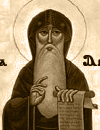
The Philokalia Volume 4b
The sermon explores the journey towards spiritual knowledge and the importance of living in accordance with God's wisdom amidst challenges.
Theoliptos, Metropolitan of Philadelphia, emphasizes the importance of detachment from worldly desires and the pursuit of virtue in the monastic profession. He highlights the transformation that occurs through repentance and the commitment to a life of spiritual warfare. Theoliptos encourages a focus on inner prayer, mindfulness of God, and the eradication of distractions to experience the joy and peace that come from a life dedicated to Christ.
Text
On Spiritual Knowledge,
Love and the Perfection of Living:
One Hundred Texts
126:5) If you search out the Lord and patiently wait for Him until the firstlings of His righteousness grow in you,
you will reap a rich crop of divine knowledge. The light of wisdom will illuminate you and you will become a lamp
of eternal light illuminating all men. You will not be grudging towards yourself or your fellow beings, hiding under
the cloak of envy the light of wisdom given to you (cf Matt. 5:15): but in the assembly of the faithful you will utter
good words for the edification of many, explaining things hidden since the beginning of the world - all that you have
heard from above, prompted by the divine Spirit, all that you have come to understand through the contemplation of
the inner nature of created beings, and all that your fathers have told you (cf. Ps. 78:2-3. LXX).
55. The practice of God's commandments will lead the spiritual contestant to such heights that on the day when
he becomes perfect in virtue he will be filled with quiet delight and will reign with a pure mind in Zion. The
mountains - the spiritual principles of the virtues - will flow with milk, nourishing him as he reposes in the sanctuary
of dispassion, and all the stream-beds of Judah - his faith and spiritual knowledge - will flow with water, with
doctrines, parables and the arcane symbols of things divine. As from the house of God a fountain of ineffable
wisdom will flow from his heart and will water the valley of dry reeds - all those, that is to say, who have been
withered by the aridity and heat of the passions (cf. Joel 3:18. LXX). Then he will experience in himself the true
fulfillment of the Lord's words, 'Rivers of living water will flow from the heart of him who believes in Me' (John
7:38).
56. For those who fear Me, says God, the Sun of righteousness will rise with healing in its wings. They will go
forth from the prison-house of the passions and, loosed from the bonds of sin, they will leap like calves. On the day
when God restores them they will tread the wicked and the demons under their feet like ashes; for they will be
exalted by all the virtues and because of their wisdom and spiritual knowledge they will be made perfect through
communion in the Spirit (cf Mai. 4:2-3).
57. If on the mountain above the plain of this world and within the Church of Christ you raise the standard of new
spiritual knowledge and cry aloud, as the prophet says (cf. Isa. 13:2), with the wisdom given to you by God,
exhorting and teaching your brethren - opening their mind to the divine Scriptures so that they understand the
[V4] 157
Nikitas Stithatos
On Spiritual Knowledge,
Love and the Perfection of Living:
One Hundred Texts
wonderful gifts of God, and encouraging them to practice His commandments - do not fear those who envy you the
power of your words and distort every text of divine Scripture; for they are people swept empty and ready to be
occupied by the demons (cf Matt. 12:44). God will write what you say in the book of the living (cf. Rev. 3:5) and
no harm will befall you from such men, just as no harm befell Peter from Simon Magus (cf. Acts 8:9-24). On the
contrary, when you see such people trying to put obstacles in your way, you should say with the prophet: 'Behold,
my God is my salvation and 1 will trust in Him; 1 will be saved by Him and will not be afraid; for the Lord is my
glory and my praise, and He has become my salvation; and I shall not cease proclaiming His glorious deeds
throughout the world' (cf Isa. 12:2,4. LXX).
58. When you perceive that the passions are no longer active within you, and when because of your humility tears
of compunction flow from your eyes, then you must know that the kingdom of God has come upon you and that you
have become pregnant with the Holy Spirit. And when you perceive the Spirit moving and speaking in your heart,
inciting you to proclaim in the great congregation the saving power and truth of God (cf. Ps. 40:10), do not keep
your lips sealed for fear of provoking the envy of bigoted men; but as Isaiah counsels (cf. Isa. 30:8), sit and write on
a tablet, what the Spirit says to you, so that it may endure in times to come and for ever. For the envious are a
rebellious people, lying sons who cannot be trusted (cf. Isa. 30:9). They do not want to be told that the Gospel is still
effective and makes us friends of God and prophets. On the contrary, they say to the prophets and teachers of the
Church: 'Do not proclaim God's wisdom to us'; and to the visionaries who perceive the spiritual essences of things,
they say, 'Do not tell us about that, but speak and proclaim to us another deceit such as the world loves, and free us
from the prophecy of Israel' (cf. Isa. 30: 10). Pay no attention to their malice and their words; for even the deaf will
eventually hear your message, divinely inspired as it is for the profit of many, and those blinded by life's opacity and
the fog of sin will see the light of your words. The poor in spirit will exult in them, and those in despair will be filled
with gladness; through your words those spiritually astray will attain understanding, those who revile you will learn
obedience to the utterances of the Spirit, and inarticulate tongues will be taught to speak of peace (cf. Isa. 29:18-19,
24. LXX).
[V4] 158
Nikitas Stithatos
On Spiritual Knowledge,
Love and the Perfection of Living:
One Hundred Texts
59. Blessed is he, says Isaiah, who sows the seeds of his teaching in Zion - that is, in the Church of God - and
who begets spiritual children in the heavenly Jerusalem of the firstborn (cf Isa. 31:9. LXX). For according to
Scripture such a man may conceal his words for a while, and may himself be hidden as if by flowing water; but in
the end he will be revealed in Zion - in the Church of the faithful - as a glorious river flowing in a land thirsty for the
waters of his wisdom. Then those beguiled by the envious will listen to his words, the heart of those spiritually weak
will give heed, and no longer will the servants of envy enjoin silence when in his devotion he gives good counsel,
instead of declaiming the inanities of the wise fools of this world. For his heart has not been occupied with empty
thoughts, with ways of doing evil and telling lies in God's sight, thus misleading hungry souls and leaving the souls
of the thirsty unsatisfied (cf. Isa. 32:2-6. LXX). For this reason his words will endure and many will profit from
them, even though the spiteful and malicious do not believe this to be so.
60. He who dwells in a cave high up on a great rock will be sated with the bread of spiritual knowledge and made
drunk with the cup of wisdom, and hence his counsel wiU be trustworthy. He wiU see a king arrayed in glory and he
will gaze on a distant land. His soul will meditate on wisdom and he will proclaim to all men the eternal abode that
embraces all and everything.
6 1 . The Lord's teaching is heard by all who fear Him; He gives them an ear with which to hear, and an instructed
tongue so that they know when they too must speak (cf. Isa. 50:4-5. LXX). Who but He sets at naught the prudent
and the wise of this world and shows their wisdom to be folly, yet confirms the words of His servants (cf Isa. 44:25-
26. LXX)? He it is that in His glory does new and astonishing things: He makes a highway of humility and
gentleness in the barren and arid heart, and opens rivers of ineffable wisdom in the parched and desiccated mind,
giving water to the chosen people that He made His own, so that they may declare His virtues (cf. Isa. 43: 20-21.
LXX). He marches at the head of those who love and fear Him, razes the mountains of the passions, shatters the
brazen gates of ignorance, and opens the doors of the knowledge of God, revealing to them its obscure, secret and
invisible treasures, so that they may know that He is the Lord their God, who calls them by their name, 'Israel' (cf.
Isa. 45:1-3. LXX).
62. Who is this that strikes terror into the sea of the passions and
[V4] 159
Nikitas Stithatos
On Spiritual Knowledge,
Love and the Perfection of Living:
One Hundred Texts
quells its waves? It is the Lord of hosts, who delivers those that love Him from the danger of sin and pacifies the
turbulence of their thoughts, who puts His words into their mouth (cf. Jer. 1:9) and protects them under the shadow
of His hands - the shadow within which He established the heaven and made firm the earth. He it is who gives to
those who fear Him an instructed tongue (cf. Isa. 50:4) and an understanding ear, so that they may hear His voice
and proclaim His commandments to the house of Jacob, to the Church of the faithful. Those who lack eyes to see the
rays of the Sun of righteousness, and ears to hear of God's glory, are sunk in the darkness of total ignorance, of
empty hope and vain words. Not one of them speaks justly or judges truly; for they have put their trust in vanities
and their words are vacuous. They conceive envy and beget spite and malice (cf. Isa. 59:4. LXX), for their ears are
obdurate and deaf. On account of this they revile the word of God's knowledge and refuse to listen to it.
63. What wisdom is there in those filled with pangs of envy against their fellow beings? By what right do the
malicious claim, in the words of Jeremiah, that 'we are wise and the law of the Lord is with us' (Jer. 8:8), when they
are consumed with jealousy against those who have received the grace of the Spirit in the form of wisdom and
divine knowledge? But the false knowledge of the scribes and the wise men of this world - of those who have lost
the path of trae knowledge - is altogether valueless. For this reason the worldly-wise, void of the wisdom of the
Paraclete, founder in confusion: they see the sons of fishermen rich in the wisdom of God and they quail at the
power of their words; but at the same time they are entangled in the nets of their own concepts and reasoning, for
they have rejected true wisdom and truly divine knowledge.
64. Why are these creatures of malice consumed with jealousy against those rich in the grace of the Spirit, against
those blessed with a tongue of fire hke the pen of a ready scribe (of. Ps. 45: 1)? Have they not spumed the source of
divine wisdom? Had they walked in the way of God, they would have dwelt in the peace of dispassion for ever.
They would have learnt where they could find sound understanding, strength, clear judgment, spiritual knowledge of
created beings, length of days, life, light for the eyes and wisdom yoked with peace. They would have learnt who
finds the dwelling-place of Wisdom and who enters into her storehouses (cf Bar. 3:13-15), and how God issues a
command through the prophet to those initiated into His
[V4] 160
Nikitas Stithatos
On Spiritual Knowledge,
Love and the Perfection of Living:
One Hundred Texts
teaching, and says, 'Let the prophet to whom things have been revealed in sleep declare his vision, and having heard
My teaching let him proclaim it faithfully' (cf. Jer. 23:28); as He also says, 'Write in a book all the words I have
spoken to you' (Jer. 37:2. LXX). Had they themselves chosen this path, they would not be consumed with jealousy
against those who do choose it.
65. Yet if the Ethiopian can change his skin or the leopard his spots (cf. Jer. 13:23), these same bantlings of
malice can also speak and devise what seems good, well versed as they are in evil. With the heel they trip up their
fellow men, their ways being ways of treachery and deception, even with regard to their friends. They lie because
lying and quackery are what they are trained in (cf. Jer. 9:4-5. LXX). So if on account of your intelligence and
spiritual knowledge you become a butt for their jealousy and deceit, you must be wary: appeal to God in the words
of Jeremiah, saying, '0 Lord, remember me and visit me and free me from those who persecute me with their malice.
Although it is Thy will to test me for a long time, in Thy forbearance do not reject me. See how those who repudiate
Thy sacred knowledge have derided me. Consume them in their jealousy, and Thy teaching will be a joy to me and
the delight of my heart. I have not sat in the company of those who spurn Thy knowledge, but have feared the
presence of Thy hand, and sat alone because I was filled with bitterness by their envy.' When you say this you will
hear the response:' "This I know well. But if you set him who has gone astray on his right path, 1 will re-establish
you among My friends; you will stand before Me; and if you extract what is precious from what is vile, you will be
as My mouth. I will deliver you from these malicious people who plague you", says the Lord God of Israel' (cf. Jer.
15:15-21. LXX).
66. Let these malicious sages hear the conclusion of the whole matter (cf. Eccles. 12:13). By their labors were
God's Nazintes cleansed cleaner than snow; their lives were whiter than milk, their wisdom was more lambent than
the sapphire (cf. Lam. 4:7. LXX), their words purer than a pearl. Those who delight in worldly knowledge have been
utterly destroyed by the departure of the Spirit. Those nourished on profane wisdom are swathed in the dung of
ignorance (cf. Lam. 4:5. LXX): they are shackled in fetters, their tongue is pinioned to their larynx and they are
mute. For they have rejected the true wisdom and knowledge of the Holy Spirit, not wanting to attain it through
ascetic labor.
[V4] 161
Nikitas Stithatos
On Spiritual Knowledge,
Love and the Perfection of Living:
One Hundred Texts
67. God who fells the lofty tree and raises the lowly tree, who desiccates green wood and make dry wood burgeon
(cf. Ezek. 17:24), is also the God who opens the mouth of His servants in the midst of a great assembly (cf. Ezek.
29:21. LXX), and enables them to proclaim the Gospel with full power (cf. Ps. 68:12. LXX). For wisdom,
understanding and strength are His; and just as He changes times and seasons, so He gives to souls that seek Him
and desire Him sovereignty over the passions; He converts them from one life to another, bestowing wisdom on the
wise in spirit and sound understanding on those endowed with intelligence. He reveals deep hidden things to those
who explore His depths and initiates them into the meaning concealed in obscure symbolism. For the light of
wisdom and spiritual knowledge dwells in Him and He gives it to whom He wishes (cf. Dan. 2:21-22).
68. If you patiently cany out the commandments in accordance with your outer and your inner self, and look only
to the glory of God, you will be given the honor of heavenly knowledge, peace of soul and incorruptibility; for you
carry out, and do not simply hear, the law of grace (cf. Jas. 1 :25). God will not condemn your knowledge, since your
actions will bear witness to it. On the contrary. He will glorify it through the words of knowledge spoken by those
who by virtue of His wisdom shine as beacons in the Church of the faithful; for God is 'impartial' (Rom. 2:11). If on
the other hand your endeavors are prompted by selfish ambition and you reject the teachings of those inspired by the
Holy Spirit, trusting in your own understanding and in the deceptive words of those clad merely in the outward
forms of piety and incited by a vainglorious and hedonistic spirit, then you will be filled with affliction and anguish,
with envy, anger and animosity (cf. Rom. 2:8-9). Such will be the immediate reward for your delusion, and such at
your death - when God judges the secrets of men and renders to each according to his actions (cf Rom. 2:6) - will be
the sentence for your mutually self-accusing, self-defending thoughts.
69. 'He is not a real Jew who is one outwardly,' says St Paul, 'nor is true circumcision something external and
physical; he is a Jew who is one inwardly, and real circumcision is a matter of the heart, spiritual and not literal'
(Rom. 2:28-29). Similarly, you are not perfect in wisdom and spiritual knowledge because you give an outward and
voluble appearance of being so; and you are proficient in virtue, not
[V4] 162
Nikitas Stithatos
On Spiritual Knowledge,
Love and the Perfection of Living:
One Hundred Texts
because you adopt extreme forms of bodily and outward ascetic practice, but because you dedicate yourself to
hidden spiritual work. You are wise and perfect in knowledge when you speak from a pure unsullied heart through
the Spirit of God, not when you repeat things according to the letter. Then 'you will receive praise not from men but
from God' (Rom. 2:29), since you will be unknown to men or else envied by them, and beloved and known only by
God and those inspired by God's Spirit.
70. If carrying out the law does not make you pure in the sight of God (cf. Gal. 2:16), then neither will ascetic
struggle and labor alone perfect you in God's sight. We do indeed receive our grounding in virtue and check the
activity of the passions through ascetic practice; but we are not initiated into the fullness of Christ through that
alone. What, then, brings us to perfection? An ingrained faith in God, the 'faith that makes real the things for which
we hope' (Heb. 11:1), the faith whereby Abel offered to God a better sacrifice than Cain and was commended as
righteous (cf. Heb. 1 1 :4), and whereby Abraham obeyed when he was called to go out and sojourn in the promised
land (cf. Heb. 1 1:8). It is such faith that fills those assiduous in the search for truth with great aspiration for the
exalted gifts of God, and leads them to the spiritual knowledge of created beings; and it pours into their hearts the
inexhaustible treasures of the Spirit, enabling them to bring thence new and old mysteries of God (cf. Matt. 13:52)
and to reveal them to the needy. He who is blessed with such faith is initiated by love into the knowledge of God,
and has entered into God's rest, having ceased from all his labors as God did from His (cf. Heb. 4:10).
71. If God once swore to non-believers that they would never enter into His rest - and it was on account of their
lack of faith that they could not do so (cf. Heb. 3:18-19) - how can mere bodily discipline, in the absence of faith,
enable us to enter the rest of dispassion and the perfection of spiritual knowledge? We do in fact see many who
because of this are unable to enter and to rest from their labors. We must therefore be wary lest we possess an evil,
unbelieving heart (cf. Heb. 3:12), and because of this are thwarted of rest and perfection, in spite of our great: labors.
Otherwise we will be ceaselessly involved in the toils of the ascetic life and will always eat the bread of sorrow (cf .
Ps. 127 : 2). If a sabbath rest awaits us - the rest of dispassion and of perfect gnosis - let us through faith strive to
enter into it, and not fall
[V4] 163
Nikitas Stithatos
On Spiritual Knowledge,
Love and the Perfection of Living:
One Hundred Texts
short of it because of our unbelief in the same way as those mentioned in the Bible (cf Heb. 4:9-1 1).
72. Since we are endowed with senses, intelligence and intellection, we too ought to offer a tithe from ourselves
to God (cf. Heb. 7:2). As beings endowed with senses we ought to perceive sensory things in the right way, through
their beauty elevating ourselves to the Creator and referring back to Him our true knowledge of them. As intelligent
beings we ought to speak correctly about divine and human matters. As noetic beings we ought unerringly to
apprehend what pertains to God and eternal life, to the kingdom of heaven and the mysteries of the Spirit hidden
within it. In this way how we perceive, speak and apprehend will conform to God, and will be genuinely trae and
divine, constituting a sacred offering to God.
75. The tithe that we offer to God is in the tme sense the soul's Passover - its passing beyond, that is to say, every
passion-embroiled state and all mindless sense-perception. In this Passover the Logos is offered up in the
contemplation of the spiritual essences of created beings; He is eaten in the bread of spiritual knowledge; and His
precious blood is drunk in the chalice of ineffable wisdom. Thus he who has fed upon and celebrated this Passover
makes a sacred offering within himself of the Lamb who effaces the world's sin (cf John 1:29); and he will no
longer die but, in the Lord's words, 'will live eternally' (John 6:58).
74. If you have been raised above dead actions you are resurrected with Christ. And if you are resurrected with
Christ through spiritual knowledge, and Christ no longer dies, then you will not be overcome by the death of
ignorance. For the death which you have now died to sin, prompted by an impulse in accordance with nature, you
have died once for all; but the life you now live you live in God through the freedom of the Holy Spirit, who has
raised you above the dead actions of sin (cf Rom. 6:9-11). Thus you will no longer live according to the flesh, in a
fallen worldly state, for you will have died to the mortal members of your body and to worldly matters. On the
contrary, Christ will live in you (cf. Gal. 2:20), for you will be guided by the grace of the Holy Spirit, not enslaved
to the law of your outer unregenerate self; and your members will be weapons of righteousness consecrated to God
theFather(cf Rom. 6:13).
75. He who has freed his members from servitude to the passions, and has consecrated them to the service of
righteousness
[V4] 164
Nikitas Stithatos
On Spiritual Knowledge,
Love and the Perfection of Living:
One Hundred Texts
(cf. Rom. 6:19), has risen above the law of his fallen self and has begun to share in the sanctification of the Holy
Spirit. Sin will no longer dominate him, since he is free in the freedom and the law of the Spirit. Serving
righteousness has an effect altogether different from that of servitude to sin. The latter inevitably leads to the
destruction of the soul's noetic power, while the former leads to the eternal life hidden in Christ Jesus our Lord (cf.
Col. 3:3).
76. So long as you live according to your fallen impulses you are dominated by your fallen mortal self. But once
you die to the world, you are set free from this domination (cf. Rom. 7:2). We cannot die to the world unless we die
to the mortal aspects of ourselves. We die to these when we become participants in the Holy Spirit. We know
ourselves to be participants in the Holy Spirit when we offer to God fruits worthy of the Spirit: love for God with all
our soul and genuine love for our fellow beings; joy of heart issuing from a clear conscience; peace of soul as a
result of dispassion and humility; generosity in our thoughts, long-suffering in affliction and times of trial, kindness
and restraint in our behavior, deep-rooted unwavering faith in God, gentleness springing from humble-mmdedness
and compunction, and complete control of the senses. When we bear such truits for God, we escape from the
domination of our mortal self; and there is no law condemning and punishing us for the death-purveying fruits we
produced while still living in an unregenerate state. Once we have risen with Christ above dead actions the freedom
of the Spirit releases us from the law of our fallen self (cf. Rom. 7:4-6).
77. Those who, having passed through the 'washing of regeneration' (Tit. 3:4), possess the firstfruits of the Spirit,
and who preserve them unimpaired, are deeply afflicted by the burden of their fallen self; and they long for their
adoption as sons through the full gift of the Paraclete, so that their body may be freed from servitude to corruption
(cf. Rom. 8:23). Indeed, the Spirit helps them in their natural weaknesses and intercedes for them 'with sighs too
deep for words' (Rom. 8:26); for they have conformed their will to God and are filled with the hope of experiencing
in their mortal flesh the 'revelation of the sons of God' (Rom. 8:19), the life-quickening death of Jesus (cf. 2 Cor.
4:10). In this way they too will be called sons of God, for they will be guided by the Holy Spirit, will be freed from
servitude to the fallen self, and will attain 'the glorious liberty of the children of God' (Rom. 8:21), for
[V4] 165
Nikitas Stithatos
On Spiritual Knowledge,
Love and the Perfection of Living:
One Hundred Texts
whom, since they love God, 'all things work together for their good' (Rom. 8:28).
78. Divine Scripture is to be interpreted spiritually and the treasures it contains are revealed only through the
Holy Spirit to the spiritual. Hence the unspiritual man cannot receive the revelation of these treasures (cf 1 Cor.
2:14). The ceaseless flow of his own thoughts makes it impossible for him to understand or listen to anything said by
someone else. For he lacks the Spirit of God, that searches the depths of God (cf. 1 Cor. 2:10) and knows the things
of God. He possesses only the material spirit of the world, full of jealousy and envy, of strife and discord; and for
this reason he thinks it foolish to enquire into the sense and meaning of the written word. Unable to understand that
everything in divine Scripture concerning things divine and human is to be interpreted spiritually, he mocks those
who do interpret it in this way. Calling such people not 'spiritual', or 'guided by the Spirit', but 'anagogical', he twists
and distorts their words and their divine intellections as much as he can, like the notorious Demas (cf. 2 Tim. 4:10).
The spiritual man does not behave in this manner; on the contrary, inspired by the Holy Spirit, he discerns all things,
but he himself cannot be called to account by anyone. For he has the intellect of Christ, and that no one can teach
(cf 1 Cor. 2:15-16).
79. Since the day of judgment will be one of fire, what each of us has done, as St Paul says, will be tested by fire
(cf . 1 Cor. 3:13). Thus, if what we have built up is of an incorruptible nature, it will not be destroyed by fire; and not
only will it not be consumed, but it will be made radiant, totally purified of whatever small amount of filth may
adhere to it. But if the work with which we have burdened ourselves consists of corruptible matter, it will be
consumed and burnt up and we will be left destitute in the midst of the fire (cf 1 Cor. 3:13-15). Incorruptible and
imperishable actions are the following: tears of repentance, acts of charity, compassion, prayer, humility, faith, hope,
love and whatever else is done in a spirit of devotion. Even while we are still alive such actions help to build us up
into a holy temple of God (cf. Eph. 2:21-22), while when we die they accompany us and remain incorruptibly with
us for ever. The actions which are consumed by the fire are well known to all: self-indulgence, vainglory, avarice,
hatred, envy, theft, drunkenness, abusiveness, censoriousness, and anything else of a base nature to which our
appetites or mcensive
[V4] 166
Nikitas Stithatos
On Spiritual Knowledge,
Love and the Perfection of Living:
One Hundred Texts
power prompts us to give bodily expression. Such actions pollute us even while we are still living and consumed by
the fire of desire; and when we are wrenched away from the body, they accompany us but do not survive. On the
contrary, they are destroyed and leave their perpetrator in the midst of the fire, to be punished immortally for all
eternity.
80. If through humility and prayer you have been initiated into the spiritual knowledge of God, this means that
you are known by God and enriched by Him with an authentic knowledge of His supernatural mysteries. If you are
tainted with conceit, you have not been so initiated, but are governed by the spirit of this material world. Thus, even
if you imagine that you know something, in fact you know nothing about things divine in the way you ought to (cf 1
Cor. 8:2). If, however, you love God and regard nothing as more precious than love for God and for your fellow
being, you will also know the depths of God and the mysteries of His kingdom in the way that someone inspired by
the Holy Spirit must know them. And you are known by God (cf. 1 Cor. 8:3), for you are a true worker in the
paradise of His Church, out of love doing God's will - that is to say, converting others, making the unworthy worthy
through the understanding given you by the Holy Spirit, and keeping your actions inviolate through humility and
compunction.
81. All of us were baptized into Christ through water and the Holy Spirit, and we all eat the same spiritual food
and drink the same spiritual drink; yet, though this food and drink are Christ Himself, God finds no delight in most
of us (cf. 1 Cor. 10:4-5). For many of those faithful and diligent in ascetic practice and bodily discipline have
mortified and emaciated their bodies; but because they lacked the compunction that comes from a contrite and
virtuous state of mind, and the compassion that springs from love for their fellow beings as well as for themselves,
they have remained bereft of the fullness of the Holy Spirit, remote from the spiritual knowledge of God. Their
mind's womb is sterile and their intelligence without salt or illumination.
82. What the Logos seeks from the Nazintes is not simply to ascend Mount Sinai through ascetic practice or to be
purified before ascending and to wash their clothes and to abstain from intercourse with a woman (cf. Exod. 19:14-
1 5). It is also to see, not the rearward parts of God (cf. Exod. 33 :23), but God Himself in His glory rejoicing in them,
bestowing on them the tables of spiritual
[V4] 167
Nikitas Stithatos
On Spiritual Knowledge,
Love and the Perfection of Living:
One Hundred Texts
knowledge, and sending them out to instiTict His people (cf. Exod. 32:1 5).
83. The Logos does not take all His servants and disciples with Him when He reveals His hidden and greater
mysteries; He takes only those to whom an ear has been given and whose eye has been opened and in whom a new
tongue has been trained to speak clearly. Taking such people with Him and separating them from the others - even
though the latter are likewise His disciples - He ascends Mount Tabor, the mountain of contemplation, and is
transfigured before them (cf. Matt. 17:2). He does not yet initiate them into the mysteries of the kingdom of heaven,
but shows them the glory and resplendence of the Divinity. And through the light that He gives He makes their life
and intelligence shine like the sun in the midst of the Church of the faithful. He transforms their intellections into the
whiteness and purity of the brightest light, and puts in them His own intellect, and sends them out to proclaim things
new and old (cf. Matt. 13:52) for the edification of His Church.
84. Many have cultivated their own fields with great diligence and have sown pure seed in them, cutting away the
thorn-bushes and burning the thistles on the fire of repentance; but because God did not water these fields with the
compunction-bom rain of the Holy Spirit, they did not yield anything. Parched as they were they did not bring forth
the rich grain of the knowledge of God. Thus even if they did not perish through a total dearth of the divine Logos,
they certainly died poor in the knowledge of God and with hands empty, having provided themselves with but scant
nourishment for the divine banquet.
85. When someone says something that edifies his fellow beings, he speaks out of the goodness stored up in his
heart, since he himself is good, as the Lord confirms (cf. Luke 6:45). No one can devote himself to theology and
speak about what pertains to God unless so empowered by the Holy Spirit; and no one when inspired by the Spirit of
God says anything contrary to faith in Christ (cf. ICor. 12:3). But he says only what is edifying, only what leads
others to God and His kingdom and restores them to their original nobility, bringing them to salvation and uniting
them to God. And if 'the manifestation of the Spirit is given to each to the degree that is profitable' (1 Cor. 12:7), this
means that anyone enriched with the wisdom of God and blessed with spiritual knowledge is inspired by the divine
Spirit and is a storehouse of the inexhaustible treasures of God.
[V4] 168
Nikitas Stithatos
On Spiritual Knowledge,
Love and the Perfection of Living:
One Hundred Texts
86. No one baptized into Christ and believing in Him is left without a share in the grace of the Spirit, so long as
he has not succumbed to any diabolic influence and defiled his faith with evil actions, or does not live slothfuUy and
dissolutely. Provided he has preserved unextmguished the firstfruits of the Holy Spirit, which he received from holy
baptism, or, if he has extinguished them, has rekindled them through acts of righteousness, he cannot but receive
from God the fullness of this grace. He may after worthily engaging in spiritual combat be blessed through the
plenitude of the Spirit with the consciousness of God's wisdom and so become a teacher in the Church; or he may
through the same Spirit be given knowledge of God's mysteries and so come to understand the mysteries of the
kingdom of heaven; or from the same Spirit he may acquire deep-rooted faith in God's promises, as Abraham did
(cf Gen. 15:6; Rom. 4:3). He may receive the gift of healing, so that he can cure diseases; or of spiritual power, so
that he can expel demons and perform miracles; or of prophecy, so that he can foresee and predict things of the
future; or of the ability to distinguish between spirits, so that he can discern who is speaking in the Spirit of God and
who is not; or of the interpretation of various tongues, or of helping the weary, or of governing God's flocks and His
people, or of love for all men and the gifts of grace that go with it, long-suffering, kindness and the rest (cf. 1 Cor.
12:8-10, 28). If you are bereft of all these qualities, there is no way in which I can call you a believer or number you
among those who have 'clothed themselves in Christ' through divine baptism (cf. Gal. 3:27).
87. If you possess love, you feel no jealousy or envy. You are not boastful, carried away by reckless pride. Nor do
you put on airs with anyone. Nor do you act shamefully towards your fellow beings. You seek, not simply what is to
your own advantage, but what also benefits your fellow beings. You are not quickly provoked by those who are
angry with you. You are not resentful if wrong is done to you, nor do you rejoice if your friends act unjustly, though
you do rejoice with them over the truth of their righteousness. You put up with disagreeable eventualities. You
believe all things in simplicity and innocence, and hope to receive everything promised to us by God. You patiently
endure all trials, never rendering evil for evil. And, laborer of love that you are, you never waver in your love for
your fellow beings (cf. 1 Cor. 13:4-8).
88. Of those granted the grace of the Holy Spirit in the form of various gifts, some are still immature and
imperfect with regard to
[V4] 169
Nikitas Stithatos
On Spiritual Knowledge,
Love and the Perfection of Living:
One Hundred Texts
these gifts, while others are mature and perfect, enjoying them in their fullness. The first, by increasing their efforts
to practice the divine commandments, augment the spiritual gifts they have received so that they are filled with yet
greater gifts, leaving those of immaturity behind. The mature and the perfect, having attained the summit of God's
love and knowledge, cease from exercising partial gifts, whether of prophecy, or of distinguishing between spirits,
or of helping, or of governing, and so on (cf 1 Cor. 12:28). Once you have entered the palace of love you no longer
know in part the God who is love (cf. 1 Cor. 13:9) but, conversing with Him face to face, you understand Him fully
even as you yourself are fully understood by Him (cf . 1 Cor. 13:12).
89. If in your aspiration for spiritual gifts you have pursued and laid hold of love, you cannot content yourself
with praying and reading solely for your own edification. If when you pray and psalmodize you speak to God in
private you edify yourself, as St Paul says. But once you have laid hold of love you feel impelled to prophesy for the
edification of God's Church (cf. 1 Cor. 14:2-4), that is, to teach your fellow men how to practice the commandments
of God and how they must endeavor to conform to God's will. For of what benefit can it be to others if, while
charged with their guidance, you always converse with yourself and God alone through prayer and psalmody, and do
not also speak to those in your charge, whether through the revelation of the Holy Spirit, or out of knowledge of the
mysteries of God, or by exercising the prophetic gift of foresight, or by teaching the wisdom of God (cf 1 Cor.
14:6)? For which of your disciples will prepare for battle against the passions and the demons (cf. 1 Cor. 14:8) if he
does not receive clear instructions from you either in writing or by word of mouth? Truly, if it is not in order to edify
his flock that the shepherd seeks to be richly endowed with the grace of teaching and the knowledge of the Spirit, he
lacks fervor in his quest for God's gifts. By merely praying and psalmodizing inwardly with your tongue - that is, by
praying in the soul - you edify yourself, but your intellect is unproductive (cf. 1 Cor. 14:14), for you do not prophesy
with the language of sacred teaching or edify God's Church. If Paul, who of all men was the most closely united
with God through prayer, would have rather spoken from his fertile intellect five words in church for the instruction
of others than ten thousand words of psalmody in private (cf . 1 Cor. 14:19), surely those who have responsibility for
others
[V4] 170
Nikitas Stithatos
On Spiritual Knowledge,
Love and the Perfection of Living:
One Hundred Texts
have strayed from the path of love if they limit the shepherd's ministry solely to psalmody and reading.
90. He who has given us being by miraculously uniting and sustaining the two contrary aspects of our nature,
material substratum and spiritual essence, has also given us the capacity for well-being, which we can realize by
means of His wisdom and spiritual knowledge. Thus through spiritual knowledge we may perceive the hidden
treasures of the kingdom of heaven that He discloses to us, and through wisdom we may make known to our fellow-
men the riches of His supernal goodness and the blessings of eternal life which He has prepared for the joy of those
who love Him (cf. 1 Cor. 2:9).
91. He who has risen above the threats and promises of the three laws and has entered into the life which is not
subject to law has himself become the law of the Church and is not ruled by law. The life that is free is not subject to
law, and therefore transcends all physical necessity and change. He who has attained such a life is as if liberated
from his fallen unregenerate self, and through his participation in the Spirit he becomes incandescent. Purged of all
within him that is imperfect (cf. 1 Cor. 13:9-10), he is united wholly with Christ, who transcends all nature.
92. If you embrace the knowledge of the primordial Intellect, who is the origin and consummation of all things,
infinite in Himself, and existing both within all things and outside them, then you will know how to live as a solitary
either by yourself or with other solitaries. For you will suffer no loss of perfection through being on your own, and
no loss of solitude through being with others. On the contrary, you will be the same everywhere and alone among
all. You will initiate in others their movement towards a life of solitude and will embody the highest perfection of
virtue that they set before themselves.
93. The unconfused union and conjunction of soul and body constitutes, when maintained in harmony, a single
reality, whether on the visible level or in their inner being. When not harmonious, there is civil war in which each
side desires victory. But when the intelligence takes control, it at once puts an end to the jealousy and establishes
concord, conforming the entire soul-body reality to its inner being and the Spirit.
94. Of the three main aspects of our being, the first rules the others and is not ruled by them, the second both rules
and is ruled, the third does not rule but is ruled. Thus when the ruling aspect falls under the
[V4] 171
Nikitas Stithatos
On Spiritual Knowledge,
Love and the Perfection of Living:
One Hundred Texts
domination of either of those aspects which are ruled, that which is by nature free becomes the servant of what are
by nature servants; it loses its rightful pre-eminence and nature, and this provokes great discord among the three
leading powers of the soul. So long as there is this discord among them, all things are not yet made subject to the
divine Logos (cf. Heb. 2:8). But when the ruling aspect governs the others and brings them under its own direction
and control, then the discordant elements, united into one and becoming concordant, are led peacefully to God. And
when all is subjected to the Logos, He delivers the kingdom to God the Father (cf 1 Cor. 15: 24).
95. When the five senses are subject to the four principal virtues and maintain their obedience, they enable the
body, composed of the four elements, tranquilly to fulfill the round of life. When the body is thus disposed, the
soul's powers are not in a state of discord; the passible aspect of the appetitive and mcensive powers is united with
the power of the intelligence, and the intellect assumes its natural sovereignty. It makes the four principal virtues its
chariot and the five subservient senses its seat. And once it has subdued the imperious and unregenerate self, the
intellect is seized and borne heavenward in its four-horsed chariot and, led before the King of the ages, is crowned
with the crow n of victory and rests from its long endeavor.
96. For those who with the support of the Spirit have entered the fullness of contemplation, a chalice of wine is
made ready, and bread from a royal banquet is set before them. A throne is prepared for their repose and silver for
their wealth. Close at hand is a treasure-house of pearls and precious stones, and untold riches are bestowed upon
them. Because of the promptness with which they act, their ascetic life renders them visionary and prepares them to
be brought into the presence, not of sluggards, but of the King.
97. Is the kingdom of heaven already given in this life to all those advanced on the spiritual way, or is it given to
them after the dissolution of the body? If in this life, our victory is unassailable, our joy inexpressible, and our path
to paradise unimpeded: we are directly present in the divine East (cf. Gen. 2:8). But if it is given only after death and
dissolution, we should ask that our departure from this life may take place without fear; we should learn what the
kingdom of heaven is, what the kingdom of God is, and what paradise is, and how the one differs from the other;
also what the nature of time is in each of them, and whether we enter all three, and how and when and after
[V4] 172
Nikitas Stithatos
On Spiritual Knowledge,
Love and the Perfection of Living:
One Hundred Texts
how much time. If you enter the first while you are still alive and in the flesh you will not fail to enter the other two.
98. The world above is as yet incomplete, and awaits its fulfillment from the first-bom of Israel - from those who
see God; for it receives its completion from those who attain the knowledge of God. Once it is complete, and has
brought to an end the lower world of believers and unbelievers, it constitutes a single congregation, allocating to
each member his appointed place, and separating out what cannot be reconciled. It draws to itself the origins and
ends of all other worlds and, itself unlimited, it sets bounds to them. It is not affected or limited by any other
principle, as something that is under constraint. For it is ever-active, in such a way that it is never self -confined or
extended beyond its own limits. It is the sabbath rest of other worlds and of every other principle and activity.
99. The nine heavenly powers sing hymns of praise that have a threefold structure, as they stand in threefold rank
before the Trinity, in awe celebrating their liturgy and glorifying God. Those who come first - immediately below
Him who is the Source and Cause of all things and from whom they take their origin - are the initiators of the hymns
and are named thrones. Cherubim and Seraphim. They are characterized by a fiery wisdom and a knowledge of
heavenly things, and their supreme accomplishment is the godly hymn of El, as the Divinity is called in Hebrew.
Those in the middle rank, encircling God between the first triad and the last, are the authorities, dominions and
powers. They are characterized by their ordering of great events, their performance of wondrous deeds and working
of miracles, and their supreme accomplishment is the Trisagion: Holy, Holy, Holy (cf Isa. 6:3; Rev. 4:8). Those
nearest to us, superior to us but below the more exalted ranks, are the principalities, archangels and angels. They are
characterized by their ministrative function, and their supreme accomplishment is the sacred hymn Alleluia (cf. Rev.
19:1). When our intelligence is perfected through the practice of the virtues and is elevated through the knowledge
and wisdom of the Spirit and by the divine fire, it is assimilated to these heavenly powers through the gifts of God,
as by virtue of its purity it draws towards itself the particular characteristic of each of them. We are assimilated to
the third rank through the ministration and performance of God's commandments.
[V4] 173
Nikitas Stithatos
On Spiritual Knowledge,
Love and the Perfection of Living:
One Hundred Texts
We are assimilated to the second rank through our compassion and solidarity with our fellow-men, as well as
through our ordering of matters great and divine, and through the activities of the Spirit. We are assimilated to the
first rank through the fiery wisdom of the Logos and through knowledge of divine and human affairs. Perfected in
this way, and rewarded with the gifts that belong by nature to the heavenly powers, our intelligence is united
through them with the God of the Decad, for it offers to Him from its own being the finest of all the offerings that
can be made by the tenth rank.
100. God is both Monad and Triad; He begins with the Monad and, as Decad, He completes Himself through a
cyclic movement. Thus
[V4] 174
Nikitas Stithatos
On Spiritual Knowledge,
Love and the Perfection of Living:
One Hundred Texts
He contains within Himself the origins and ends of all things. He is outside everything, since He transcends all
things. To be within Him you must embrace the inner essences and possess a spiritual knowledge of created beings.
Then while standing outside all things you will dwell within all things and know their origins and ends; for you will
have attained a spiritual union with the Father through the Logos and will have been perfected in the Spirit. May the
sovereignty of this all-perfect, indivisible and coessential Trinity, worshipped in Father, Son and Holy Spirit, and
glorified in one nature, kingdom and power of Divinity, prevail throughout the ages. Amen.
[V4] 175
Theoliptos, Metropolitan of Philadelphia
(c. 1250-1322)
(Volume 4, pp. 175-191)
Introductory Note
In the past the full significance of Theoliptos in the development of fourfeenth-century Orthodox theology has
been underestimated, largely because most of his writings remain still unpublished.^ The texts included in The
Philokalia represent no more than a small part of his total output. Bom at Nicaea around 1250, Theoliptos was at
first married, but at an early age he separated from his wife and became a monk. He suffered imprisonment
because of his firm opposition to the union between the Orfhodox Church and the Church Of Rome, promulgated
at the Council of Lyons (1274) and upheld by the Emperor Michael Vlll Palaiologos. Following Michael's death,
Theoliptos was elevated to the see of Philadelphia in 1284, and held the position of metropolitan there for nearly
forfy years. He led the heroic defence of the city against Turkish attack in 1310, and died in 1322. He was widely
respected as a spiritual father, and his work in this sphere is known to us above all through his letters of direction
to the nun Irene -Evlogia Choumnaina, abbess of the double monastery of Christ Philanthropos Sotir in
Constantinople. St Gregory Palamas, who in his early years was a disciple of Theoliptos, in the Triads singles him
out for mention as one of the leading teachers of hesy chasm who lived 'in our
' For a good survey ofTheoliptos' life and writings, with full references to the earlier studies by S. Salaville and V. Laurent, see Marie-Helene
Congourdeau, in Dictionnaire de Spiritualite xv (1990), cols 446-59. On his spirituality, see Antonio Rigo. 'Nota sulla dottrina ascetico-
spirituale di Teolepto Metropolita di Filadelfia (1250/51-1322)', Rmsto di Stiidi Bizantini e Neoellemci, n.s. xxiv (1987), pp. 165-200. In
English, consult Demetrios J. Constantelos, 'Mysticism and Social Involvement in the Later Byzantine Church: Theoleptos of Philadelphia - a
Case Study', Byzantine StudieslEtudes Byzantines vi (1979), pp. 83-94; Robert E. Sinkewicz, 'Church and Society in Asia Minor in the late
Thirteenth Centuiy: the Case of Theoleptos of Philadelphia', in M. Gervers and R.J. Bikhazi (eds). Conversion and Continuity: Indigenous
Christian Communities in Islamic Lands, Eighth to Eighteenth Centuries (Toronto, 1989). Critical editions of Theoliptos' works are being
prepared by R.E. Sinkewicz and Angela Hero.
[V4] 176
Theoliptos, Metropolitan of Philadelphia
Introductory Note
own day', and describes him as 'an authentic theologian and a trustworthy visionary of the truth of God's
mysteries'.'
The main text included here. On Inner Work in Christ and the Monastic Profession, was addressed by Theoliptos
to Irene -Evlogia, but in the manuscript used by St Makarios and St Nikodimos all the expressions originally in the
feminine have been changed to the masculine. In our translation we have taken account of alternative readings
supplied by Fr Severien Salaville." On Inner Work in Christ is a brief but comprehensive survey of the monastic
vocation, offering practical advice on the outward ordering of daily life - on behaviour in church and the refectory,
on conversations within the community and with outside persons, on psalmody, spiritual reading, work and sleep -
but dealing above all with inner prayer. Theoliptos draws a close parallel between monastic life and the sacrament
of baptism.^ He is apophatic in his approach, emphasizing the need to lay aside 'all representational images',
thereby attaining 'an ignorance surpassing all knowledge'.'' He refers several times to the invocation of the name of
Jesus, and briefly mentions illumination by the divine light. ^^ Here, drawing on earlier tradition, he anticipates the
themes taken up by Palamas later in the fourteenth century.
' Triads 1, ii, 12: see below, p. 341.
^ Formes ou methodes de priere d'apres un byzantin du 14° siecle, Theolepte de Philadelphie', Echos d'Orient xxxix (1940), pp. 1-25.
'Seep. 178.
*Seep. 181.
'See pp. 182, 184, 189.
Contents
On Inner Work in Christ
and the Monastic Profession VOLUME 4: Page 177
Texts 188
[V4] 177
Theoliptos, Metropolitan of Philadelphia
On Inner Work in Christ
And the Monastic Profession
The monastic profession is a lofty and fruitful tree whose root is detachment from all corporeal things, whose
branches are freedom from passionate craving and total alienation from what you have renounced, and whose fruit is
the acquisition of virtue, a deifying love, and the uninterrupted joy mat results from these two things; for, as St Paul
says, the fruit of the Spirit is love, joy, peace and the other things he mentions (cf Gal. 5:22).
Flight from the world is rewarded by refuge in Christ. By 'world I mean here attachment to sensory things and to
worldly proclivities. If you detach yourself from such things through knowledge of the truth you are assimilated to
Christ, acquiring a love for Him that allows you to put aside all worldly matters and to purchase the precious pearl,
that is to say, Christ Himself (cf Matt 13:46).
You put on Christ through the baptism of salvation (cf. Gal. 3:27), being thus washed clean, illumined with
spiritual grace and restored to your original nobility. But what happened then as a result of your weakness of will?
Through over-attachment to the world you subverted your likeness to God, through coddling the flesh you rendered
the divine image within you powerless, and with passion-embroiled thoughts you beclouded your soul's mirror so
that Christ, the spiritual Sun, can no longer manifest Himself in it.
Now, however, you have transfixed your soul with the fear of God. You have recognized the world's benighted
abnormity and the mental dissipation and vain distraction which it generates, and you have been wounded by a
longing for stillness. Obedient to the precepts 'Seek peace and pursue it' (Ps. 34:14) and "Return to your rest, O my
soul' (Ps. 1 16:7), you have sought to bring peace to your thoughts. You have therefore resolved to regain the nobility
that you received
[V4] 178
Theoliptos, Metropolitan of Philadelphia
On Inner Work in Christ
And the Monastic Profession
through grace at baptism, but jettisoned by your own free choice through your self-indulgence in the world; and
accordingly you have entered this sacred school and set to work, donning the venerable habit of repentance and
vowing courageously to remain in the monastery until death.
This is now the second covenant you have made with God. The first you made when you originally entered into
this life; the second, as you swiftly approach its dose. Then through the profession of the trae faith you were
numbered among Christ's flock; now you are united to Him through repentance. Then you found grace; now you
have contracted an obligation. Then, still a little child, you were not aware of the honor conferred on you, although
later, as you grew up, you began to appreciate the greatness of the gift and restrained your tongue accordingly. Now,
having reached complete understanding, you fully recognize the significance of the vow you are taking. Beware lest
you fail to fulfill this promise as well, and are cast, like some shattered pot, into the outer darkness where there is
weeping and gnashing of teeth (cf . Matt. 8:12). No path other than that of repentance leads to salvation.
Listen to what David promises you: 'You have made the Most High your refuge' (Ps. 91:9) and, if on the model of
Christ you choose a life of tribulation, 'no plague will come near you' (Ps. 91:10) - no evil, that is to say, will be
inflicted on you because of your worldly life. Now that you have chosen to repent, you will not be shadowed by
avidity, self-indulgence, self-glorification, self-display or sensual dissipation. Distraction of the mind, captivity of
the intellect, the levity of successive thoughts, and every other kind of deliberate prevarication and confusion - from
all such aberrations you will be set free. Nor will you be constrained by the love of parents, brothers and sisters,
relatives, friends and acquaintances, and you will not waste time in pointless meetings and talks with them
If you thus give yourself soul and body to the religious life, no scourge of anguish will afflict you (cf. Ps. 91:10),
nor will distress pierce your heart or darken your countenance. Distress is muted in those who have renounced the
life of pleasure and are free from attachment to the things that 1 have mentioned, for Christ reveals Himself to the
striving soul and bestows ineffable joy on the heart. No worldly delight or suffering can take away this spiritual joy,
for holy meditation, the mindfulness of God that brings salvation, divine
[V4] 179
Theoliptos, Metropolitan of Philadelphia
On Inner Work in Christ
And the Monastic Profession
thoughts and words of wisdom nourish and protect everyone engaged m spiritual warfare. That is why such a
person treads upon aU mindless desire and headstrong anger as upon an asp or basilisk, quelling pleasure as though
it were a snake and wrath as though it were a lion (cf Ps. 91:13. LXX). This is because he has transferred all his
hope from men and from worldly things to God, has been enriched with divine knowledge and always calls
spiritually upon God to come to his aid. As the Psalmist writes, 'Because he has set his hope on Me, I will deliver
him; I will protect him, because he has known My name. He shall call upon Me, and I will answer him: not only will
I deliver him from those who afflict him, but I will also glorify him' (cf. Ps. 91:15-16).
Do you see the struggles of those who lead a godly ascetic life, and the rewards granted them? Then put your
calling into action without more ado. Just as you have secluded yourself bodily, rejecting worldly things, so likewise
seclude yourself in soul by subjecting also the thoughts of all such things. You have changed your outward clothing;
make your monastic profession into a reality. You have separated yourself from crowds of strangers; distance
yourself also from the few who are related to you by birth. If you do not put an end to delusions prompted by
external things, you will not overcome those that ambush you from within. If you do not triumph over those who
fight against you with visible means, you will not repulse your invisible enemies. But when you have quelled both
external and inner distraction, your intellect will rise to spiritual labor and spiritual discourse. In the place of
conventional dealings with relatives and friends you will follow the ways of virtue; and instead of filling your soul
with vain words bom of worldly contacts, you will illumine and fill it with understanding through meditating upon
the meaning of Holy Scripture.
To give free rein to the senses is to shackle the soul, to shackle the senses is to liberate it. When the sun sets, night
comes; when Christ leaves the soul, the darkness of the passions envelops it and incorporeal predators tear it
asunder. When the visible sun rises, animals retreat into their lairs; when Christ rises in the heaven of the praying
mind, worldly preoccupations and proclivities abscond, and the intellect goes forth to its labor - that is, to meditate
on the divine - until the evening (cf. Ps. 104:19-23). Not that the intellect limits its fulfillment of the spiritual law to
any period of time or performs it according to some measure; on the contrary, it continues to fulfill it
[V4] 180
Theoliptos, Metropolitan of Philadelphia
On Inner Work in Christ
And the Monastic Profession
until it reaches the term of this present life and the soul departs from the body. That is what is meant in the
Psalms when it is said, 'How 1 have loved Thy law, Lord; it is my meditation all the day long' (Ps. 1 19:97) - where
'day' means the whole course of one's present life.
Suspend, then, your gossip with the outer world and fight against the thoughts within until you find the abode of
pure prayer and Christ's dwelling-place. Thus you will be illumined and mellowed by His knowledge and His
presence, enabled to experience tribulation for His sake as joy and to shun worldly pleasure as you would bitter
poison.
Winds rouse the Sea's waves, and until they drop the waves will not subside and the sea will not grow calm.
Similarly, if you are not careful evil spirits will rouse in your soul memories of parents, brothers and sisters,
relatives, acquaintances, banquets, celebrations, theatres and various other images of pleasure; and they will incite
you to seek for happiness in visual, vocal and corporeal things, so that you waste not only the present moment but
also the time that you sit alone in your cell, in bringing to mind what you have seen and spoken about. Preoccupied
in this way with memories of his worldly activities, the monk's life passes profitlessly: he is like a man who retreads
his own footsteps in the snow.
If we continue to nourish the demons, when will we slay them? If we let our mind dwell on actions and thoughts
related to meaningless friendships and habits, when will we mortify the will of the flesh? When will we live the
Christ-like life to which we have committed ourselves? The foot's imprint in the snow dissolves when the sun shines
or when it begins to rain. Mind-embedded memories of self-indulgence whether in thought or act are effaced when
as the result of prayer and tears of compunction Christ rises in the heart. But when will the monk who does not
practice what he has professed expunge passion-imbued memories from his mind?
Moral virtues pertaining to the body are effectuated when you give up commerce with the world. Holy images and
thoughts are imprinted on the soul when you efface memories of previous actions by frequent prayer and fervent
compunction. Heartfelt contrition and the illumination that comes from constant mmdfulness of God excise evil
memories like a razor.
Copy the wisdom of the bees; when they become aware of an encircling swarm of wasps, they remain inside their
hive and so escape
[V4] 181
Theoliptos, Metropolitan of Philadelphia
On Inner Work in Christ
And the Monastic Profession
the attacks with which they are threatened. Wasps signify commerce with the world: avoid such commerce at all
costs, stay in your cell, and there try to re-enter the innermost citadel of the soul, the dwelling-place of Christ, where
you will truly find the peace, joy and serenity of Christ the spiritual Sun - gifts that He irradiates and with which He
rewards the soul that receives Him with faith and devotion.
Sitting in your cell, then, be mindful of God, raising your intellect above all things and prostrating it wordlessly
before Him, exposing your heart's state to Him, and cleaving to Him in love. For mindfulness of God is the
contemplation of God, who draws to Himself the mtellect's vision and aspiration, and illumines the intellect with His
own light. When the intellect turns toward God and stills all representational images of created things, it perceives in
an imageless way, and through an ignorance surpassing all kno
Sermon Outline
-
I
- The pursuit of spiritual knowledge
- The role of patience in receiving divine wisdom
- The transformation of the believer into a source of light
-
II
- The importance of practicing God's commandments
- The resulting joy and peace in the believer's life
- The nourishment of faith and spiritual knowledge
-
III
- The call to proclaim God's wisdom
- Facing opposition and envy from others
- The assurance of God's protection and support
-
IV
- The significance of humility and compunction
- The movement of the Holy Spirit in the believer's heart
- The necessity of sharing the truth of God
-
V
- The contrast between worldly wisdom and divine knowledge
- The dangers of envy and malice
- The ultimate reward for those who seek true wisdom
Key Quotes
“If you search out the Lord and patiently wait for Him until the firstlings of His righteousness grow in you, you will reap a rich crop of divine knowledge.” — Desert Fathers
“The practice of God's commandments will lead the spiritual contestant to such heights that on the day when he becomes perfect in virtue he will be filled with quiet delight.” — Desert Fathers
“He who dwells in a cave high up on a great rock will be sated with the bread of spiritual knowledge and made drunk with the cup of wisdom.” — Desert Fathers
Application Points
- Seek spiritual knowledge through prayer and contemplation of God's Word.
- Practice humility and be open to the guidance of the Holy Spirit in your life.
- Proclaim the truth of God boldly, even in the face of opposition or envy.