
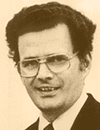
Follow Up
Don Wilkerson emphasizes that the core of Christian faith is heeding Jesus' call to 'Follow Me,' which entails trusting, submitting to, and ultimately reigning with Christ as the Good Shepherd who guides and cares for His followers.
In this teaching sermon, Don Wilkerson explores the profound significance of Jesus' call to 'Follow Me,' highlighting it as the foundational step for true Christian discipleship. He challenges the common, diluted understanding of what it means to be a Christian and invites listeners to embrace a deeper commitment of trust, submission, and fellowship with Christ. Using the powerful imagery of Jesus as the Good Shepherd, Wilkerson reassures believers of Christ’s constant care and guidance through life's challenges. This message encourages believers to move beyond superficial faith and experience the abundant life Jesus promises.
Full Transcript
I just was handed this Wall-E You know, Wall-E, who is one of our fine doorkeepers here in the House of the Lord and stays here and takes care of the house and ministers in so many, many other ways, has gone to Canada. His mother was sick. And it says here, Wall-E requests prayer for his mother in Toronto.
They confirmed today that she has cancer of the liver. He's given her a couple months to live. And he'd probably be back Friday, but he's called in today.
Let's just lift him up again, especially. He's special to this church. And so I think we need to take special time to lift him up before the Lord.
Our Father, we thank you for Wall-E. We thank you how you sent him here to us, Lord. You divinely led him.
You put it upon his heart. When we came in and occupied this building and he came along just at the right time, the right person, Lord, with the right burden. And Lord, he's been a blessing here.
And now he needs, he has a need. And I pray for his mother. Lord, you're able to heal her body.
But Lord, most of all, Wall-E's concern is for her soul. And I pray that before he leaves there, he will have had an opportunity and her heart will be open to receive the witness from Wall-E, the testimony of his life. Lord, we believe that you're going to use this for your honor and glory.
And Lord, save her and heal her body, we pray. And bring him back safely to us, in Jesus' name. Amen.
Amen. Turn with me in your Bibles tonight to the gospel of Luke. As I share with you tonight on what I consider Christ's two most important words.
His two most important words. Luke, the ninth chapter, reading from the New American Standard, beginning at verse 47. And it says, Now consider tonight what terms we use to describe someone who is a convert.
We, for example, the most popular term that we use is Christian. But it's probably the most diluted term. You ask people, are you a Christian? And they say, well, of course I'm a Christian.
I remember when my mother first moved from New York down to Texas. She lives in Texas now. And she was only there a short while.
And mother does a lot of street work and witnessing wherever she can. And I talked to her after a few weeks. And she said, oh my goodness.
She said, let me back to New York. She said, everybody's a Christian down here. I can't find any sinners down here.
Everybody you meet, they're a Christian. Well, you know, Bob, you know what that's like in the Bible Belt area. Well, of course, I'm a Baptist.
I'm a Christian. And here in the north, you know, we've got Catholics. And if they've been raised and they feel they have a family tradition of religion, well, of course, I'm a Christian.
Well, as you know, being, me or you being in the church does not make us a Christian any more than me being in a garage makes me a car. And I was thinking today, you know, in some circles, it's the hardest thing ever. Once you get on a church roll, it's the hardest thing ever to get off.
You know, once you're there, you're there in perpetuity. You're there forever. And as long as, you know, your name is on a church roll, well, of course, I'm a Christian.
So, that's a very diluted term. And then we, of course, use the word saved. A person's gotten saved.
And that's a good term because basically it's talking about them getting saved out of their sin and saved from the wrath to come. And we talk about X number of people were reached in an outreach or they were at the altar and we say, Oh, we had so many people saved last night. Well, I'm not so sure that that's even the best term.
I remember my father was a pastor and he never got too excited about people who came forward at the altar, especially on Sunday in evangelistic service where there was a particular effort to call people to the Lord. My father always used to say, Let's reserve our excitement and let's see if they come on Wednesday night. If they come out Wednesday night, we'll know that something happened to them on Sunday night, whether they were quote-unquote saved.
And then, of course, we use other terms. A person made a decision for Christ and so forth. And then we use the term that Jesus used with Nicodemus.
And again, it's a good term. Ye must be born again. And so we often use the term born again Christian so as to distinguish somebody who's had a real life change as opposed to somebody who just calls themselves a Christian by name only.
But Jesus used some other term. Jesus used two other words that I believe more adequately describes what it means when we are converted to Jesus Christ. Now, these may not be the most important words to you tonight at this point in your life, but they are the first words anybody must heed in order to accept Christ and understand what it means to be a Christian or to be saved or to be born again or make a decision for Christ or whatever terms that we would use.
Jesus simply used the two words, follow me. Follow me. He saw two men fishing, two brothers, Peter and Andrew.
And he said to them, follow me and I will make you fishers of men. And immediately they left the nets and followed him. He found Philip and Jesus said to Philip, these two words, follow me.
A certain ruler came to Jesus and said, good teacher, what shall I do to inherit eternal life? And when Jesus talked about the keeping of the commandments, he said, all these I have kept from my youth. And when Jesus heard this, he said to him, one thing you still lack, sell all that you possess and distribute it to the poor and you shall have treasure in heaven and come. And there's these two words again, follow me.
On another occasion, Jesus summoned the multitudes with his disciples and he said, if anyone wishes to come after me, let him deny himself and take up his cross and follow me. Now, if you belong to Jesus or if you do not, and if you are to be quote unquote saved or become a true born again Christian, the two most important words for you are these two words of Jesus and for you to understand what it means to follow him or follow me. This was Jesus' favorite method of calling men to himself.
Now, there are other things that he said to other men and women when he dealt with their spiritual needs, but all the other methods were incidental and often were not repeated. When Jesus said to Nicodemus, he must be born again and I like that and that's scriptural, but he said it only to Nicodemus. He said it only one time to one man.
And over and over again, when first endeavoring to attract men to himself and when he specifically called those who were his own disciples into fellowship with him, Jesus made use of the simple words, follow me. One day Jesus passed by, if you please, an IRS office and there is Matthew, the tax collector, collecting the taxes. I don't know if it was near April 15th or not.
It would have lended great more meaning to what happened and Jesus said to him, follow me, follow me, and he arose and he followed him. Now, what is, what was and is the meaning of these words both then and now? What compelled Matthew to make such a sudden decision? Now, I believe he had already heard of Jesus previously, but nevertheless when he heard that word, what caused him to make that decision to leave his office, to leave his vocation and literally and spiritually to follow Jesus? And what does Jesus mean when he says to us here tonight and he calls us all in the same manner? What does he mean when he says, follow me? This is the subject of my message tonight. And I believe that literally these two words initially are the most important words.
Now, there are other words that we could think of, two important words that are precious to us. When Jesus might say to us, you're forgiven, and those are two precious words regarding a precious truth. Or I like the words free indeed, whom the Son has set free is free indeed.
I like those words. Or he speaks to us and he lets us know you're loved, you're loved. And yet in spite of the fact that forgiveness is important, in spite of the fact that we can be free, in spite of the fact that we know that we're loved, none of those things can happen unless you heed the call to follow him.
And so initially these are the two most important words of Christ and I believe for three reasons. And I believe Jesus is saying three things when he says, follow me. First of all, he is saying, trust me.
When you follow me, he's saying, you can trust me when you follow me. And then secondly, he is saying, if you follow me, it means you must submit to me. And then also when he says, follow me, come follow me, because if you do, you're going to rule and reign with me.
Hallelujah. And of course, some people like to start right there. They want to start right there.
They want to rule and reign immediately. You know, when I was a kid, we used to play, we didn't have enough people to play baseball or softball, and so we had big kids and little kids. And the big kids, when they hit the ball, we had to run to all bases, first, second, third, and home.
The little kids, all they had to do was hit the ball and they had to run to third and back home. We had worked that all out because they were little kids and we balanced it out. And every time I think of that when I was a kid, it reminds me of what's going on in the body of Christ today.
Everybody wants to hit and run to third and home and not have to touch all of the biblical bases of what God requires of us in order to come home with him or to rule and reign with him. But I'm getting ahead of myself. First, Jesus said, trust me.
When Jesus confronted Matthew and Peter and Andrew and Philip or Don Wilkerson or you, and he says, follow me, he is saying by that, you can trust your life to me. Follow me is both a command and a promise. And Jesus never commands or requires without a promise of guidance and victory.
And you see, Jesus knows where he's going. And when we follow him, there is contained in this the promise that he will be our guide, that he will be our leader, that he will be our comforter, that he will be our companion through life and he'll take us where he's going. When Jesus looked into the eyes of men whom he called his disciples, he looked into their eyes and he said, follow me.
And there was something compelling about it and we at once see what it meant. He was saying, trust me. Trust yourself to me.
Put confidence in me and obey me. Now it's true that this was Christ's claim of supremacy and his call for us to submit to his supremacy. But there is infinitely more in this than just his claim of rule and authority over us and a call to submission.
There is with the call the wonderful promise that he will guide you, that he will carry you along in his wings. Hallelujah. Jesus knows where he's going and he wants to take us there because he said I'm the way, the truth and the life.
Hallelujah. Hallelujah. And when he came to earth, he came with a round trip ticket.
Hallelujah. And enough room in his heart to take us back with him and to carry us all the way through. Praise his name.
The most blessed picture we have of this, of Christ as saying, come, follow me, trust me. I'll guide you. The most precious picture we have of this is of Jesus as the good shepherd.
And I was blessed Sunday morning as Bob finished his message describing that, talking about Jesus as our shepherd. And I was wondering if he had snuck into my apartment and saw my notes that I knew I was going to be sharing tonight. And I was blessed by that because that's the most beautiful picture we have of Jesus when he says, follow me.
And I've been reading over and over again, in the last 10 days or so, from John the 10th chapter, the picture we have there. Let me read it to you. John 10, 10 and 11, he says, the thief comes only to steal and to kill and to destroy.
But I come that they might have life and may have it abundantly. I am the good shepherd. The good shepherd lays down his life for his sheep.
And you see, there's no better picture of Jesus than of the good shepherd. In fact, the picture of the shepherd is woven into the language and imagery of the Bible from the Old to the New Testament. And there's a reason for this.
The main part of Judea was a central plateau stretching from Bethel to Hebron for a distance of about 35 miles long. And it was between 14 to 17 miles across on this plateau. And the ground for the most part was rough and stony.
And that being so, the country was more pastoral than agricultural. And therefore it was natural that the most popular or familiar figure of the Judean uplands was of that of a shepherd caring for his sheep. Everybody could identify with that in the land.
And Jesus had this in mind when he refers to himself as the shepherd and those whom he has called to follow him naturally are called sheep. Now, in Judea, the shepherd's life was very, very hard. No flock ever grazed without a shepherd.
And he was never off duty. There being very little grass, the sheep were bound to wander. And since there were no protecting walls, the sheep had to be constantly watched and guarded and grazed and guided into green pastures.
And oh, what a picture that is of our Lord. When you follow Jesus, you follow the good shepherd. John 10, verse 4 says, When he goes forth, when he puts forth all his own, he goes before them.
He goes, you see, when he calls you to follow him, remember that he goes before you. And when he puts forth his own, he goes before them. And the sheep follow him because they know his voice.
Probably the number one excuse that I hear of those who resist the gospel and the call to follow Jesus is this. They say, I'm afraid. I'm afraid.
I'm afraid that I just won't make it. And some have tried and they've failed. But let me tell you tonight, if you've failed, you've failed probably because you never understood the call.
Because if you understand the call, if you understand the shepherd, you'll understand that he will carry you through. Hallelujah. It's not just a call to come to the altar and pray the sinner's prayer.
It's not just a call to say, I think I'm saved. It's not having some emotional feeling that comes over you during a meeting. It's not coming and praying and asking Jesus merely to help you out of your troubles or your sorrows or your habits or your addictions.
No, it's much deeper than that. It's a call to follow him. And anybody who understands that call and anybody who comes and accepts Jesus as their personal Savior, realizes that it is that kind of a call.
And anyone who follows him makes it. Oh, I didn't say that you won't have struggles, but Jesus never fails to keep those who understand what it means to follow him. And you know, one of the reasons you don't need to be afraid, and some people say, well, what am I going to do when I feel trapped by the enemy? What am I going to do when the enemy has me in the corner and I have all kinds of oppositions around me? Well, I want to tell you, friend, no matter what corner you find yourself in, no matter what trap you find, it was mentioned in the prayer tonight, a trap, no matter where it is, there's always a door.
There's always a door. Hallelujah. That's why Jesus said, I am the door.
If anyone enters in, he shall be saved and shall go in and out and find pasture. Hallelujah. Hallelujah.
In and out speaks of safety, security, protection. Now, tonight, you know, I was thinking, I don't know how this popped into my mind today as I was meditating and so forth, but I began to think about people who have a drowning disease. There's some people have what I call a drowning disease.
Now, let's suppose that you were drowning and a man came along and saved you, but then he found out that you had this habit that every time you saw water, you just threw yourself into it and you didn't know how to swim. And you see, a man came along and saved you from drowning. If you've got a drowning disease, I mean, that's wonderful that he saved you, but you see, Jesus, when he finds out, he says, come on home with me.
He said, come on, follow me, and I'll teach you how to live and I'll teach you how to swim and I'll teach you how to overcome that drowning disease. Thinking again of the shepherd, the shepherd's task was not only constant, constant care, but it was dangerous. He had to guard the flock against wild animals, especially wolves.
And there was always thieves and robbers ready to steal the sheep. And one writer states this about the shepherd and listen to it as I quote it. It says, I quote, On some high moor, across which at night the hyenas howl, when you meet the shepherd, sleepless, farsighted, weather beaten, leaning on his staff and looking out over his scattered sheep, every one of them on his heart, and by the way, knowing every one of them by name.
He used to call them the brown ear sheep or whatever you might say. He knew them all by name, every one of them on his heart. You understand why the shepherd sprang to the front in his people's history and why they gave his name to their king and made him the symbol of providence and why Christ took him as the type of sacrifice.
Unquote. And you see, when you follow Jesus, you are in the care of a good shepherd and he watches over his own with constant vigilance and with fearless courage and with patient love he carries his flock. Oh, what a precious truth it is.
In the Old Testament, God is often pictured as a shepherd and the people of his flock. Listen, Psalm 77 and 20. Thou dost lead my people like a flock.
We thy people, the flock of thy pastor, will give thanks to thee forever. Psalms 80 and 1. Isaiah 40 and 11. He will feed his flock like a shepherd.
He will gather the lambs in his arms and will carry them in his bosom and gently lead those that are with young. And my friend, this is the promise to you if you follow Jesus, that he will carry you. He is the great shepherd of Israel.
You are following the shepherd of Israel. He promises to carry you in his bosom. He is our El Shaddai.
Hallelujah. You know, one of the things that the shepherd carried was a sling. You know, every once in a while, someone will come up to me after their service and say, boy pastor, you really hit me tonight.
You really hit me tonight. And you know, that's very interesting because the shepherd always carried a sling. And he used it with such skill that they could sling a stone at a hare and not miss it.
That's what it tells us in Judges, the 20th chapter and the 11th verse. And you see the shepherd used a sling as a weapon of offense and defense. And one interesting use of it was to warn the sheep that were going astray.
The shepherd was able to fling a stone out as the sheep would begin to wander off. He would be able to fling a stone out, never hit them, never hit them, but he would just drop it in front of them as a gentle warning that they were getting off the track. And isn't that a beautiful picture of the faithfulness of the Lord? How many times you've come to the house of... That's what the... And now I know what people mean when they say, preacher, you really hit me last night or tonight.
It wasn't me that hit them. That was a shepherd using the sling of the Spirit with the stone of His Word to gently warn them. And of course, I would imagine if after hitting, you know, in front of the sheep a few times, the shepherd might have flung it at them to hit them on the head and maybe the Lord... I remember one time a man came into my father's church and got saved, filled with the Holy Spirit and moving in the gifts and the Lord was blessing him and he got proud.
He got so proud that he opened himself up to the devil and literally the devil took possession of his life again and he became evil possessed. And one morning he would begin to act up in the service and had to be taken care of. But one Sunday, I'll never forget it, I was just a young fellow, and he started to demonstrate or make noises and so forth and my father finally saw it and he came back and laid hands upon him and said to him, In the name of the Lord, open your eyes.
And he squinted his eyes shut tight. And he said, In the name of the Lord, open your mouth. And he shut them tight.
And then my father called for some deacons to usher him out and nobody moved except the husband of a wife who... unsaved husband of a wife who came to the church regularly. He finally came along and helped my father out, helped the man out with my father. And as he was going out the door, dear old sister in the church came along with her great big black Bible.
And she said, and she went like this. And she hit him over the head. And she said, Believe the word, brother.
Believe the word, brother. Well, we haven't got to that yet here at Times Square Church. But I want to tell you that the gentle shepherd, you see, he has a sling and he's always faithful because he wants to keep us from straying and he'll do whatever he can.
He leads us along. He says, Follow me. And then when we get to follow him, sometimes we stray, but he's always there to watch over us.
That's the point. And secondly, follow me means that Christ assumes authority over us. Submission is required to follow Jesus.
The call to his first disciples and to us is that he insists that those who come after him must believe in him and demonstrate their belief by obedience. Now when Jesus says, Follow me, the words are so simple and brief even a child can understand them. But the fact that they are so brief does not indicate that when they are uttered there is nothing more to be said.
These are the first basic words that you've got to understand. The first step in the Christian life is that of obedience to that word, Follow me. Matthew understood this.
When Jesus passed by his tax office and said, Follow me, it says that he left his seat, he left his office, he left his business and followed Jesus. Luke 5.22 says he left everything behind. Everything behind.
Peter, when he heard the call, left the nets and followed him. Now you see the reason that men will not follow Jesus, they'll initially hear the call, Oh, he's the shepherd. Oh yes, he will be my help in time of trouble.
Oh yes, he'll lift me out of this pit that I'm in. But then when many begin to hear the whole gospel truth, the reason that men will not follow Jesus is because they reject his claim as king. Once you decide to follow Jesus, you have to give up all personal rights and ownership.
And I believe that there is a certain group, there's even maybe a certain group of you here tonight, you're attracted to Christ. You're well aware of your need, your need to overcome sin. And there's something about this Jesus and his call to you that says yes.
When you hear it, you say, Oh yes, I want him to be my shepherd. Oh, I need him to help me. I need him to love me.
I need him to protect me. I need him to take me into his fold. But then there's one big problem that you are not prepared to give up total submission to his lordship and to his authority and rulership over your life.
And this is what it was about. And I hope you still have your Bibles open there to Luke the ninth chapter, because you may be just like several of these that Jesus dealt with. You say, I will follow thee, but.
And tonight you may be here with a but problem and I'm not talking about cigarette butts either. You may have made a profession of faith. You may have, again, been to the altar and you may even have a strong desire to want to live for the Lord but, except for a but problem.
And you're like these in this story. This is the end of side one. You see, she was so overwhelmed with her grief.
How many of you know what it is to cry so long that you can't cry anymore? How many of you know what it is to pray for something and you just can't seem to pray anymore? And Hannah had come to this place of feeling so rejected. Those who said, I will follow thee, but. In other words, there is good intentions, but.
But the actual following and obeying and discipleship never did begin, never commenced. And Jesus spoke of three individuals that had three buts, three things that hindered them in following Jesus. First of all, the first man, he didn't say but, but Jesus knew he had a but in his heart.
He spoke up with great enthusiasm. He said, I will follow thee wherever you go. I remember asking one of the staff one day about a young convert.
I said, how's he doing? He said, oh, he's doing too good. I said, what do you mean? He said, oh, he's doing too good. He said, brother Don, this fellow's got no problems.
He's so enthusiastic and so forth. And he, in other words, he was describing somebody just like this fellow. I will follow thee wherever you go.
And Jesus discerned something in his heart that there was a but. And Jesus knew that the man had not dealt with some things in his heart and he was not prepared truly and fully to follow Jesus. And what was his problem? His problem was that he wasn't ready to fully trust Jesus with his life.
He had a problem with security. Jesus said, the son of man has nowhere to lay his head. In other words, my kingdom is not of this earth.
Jesus said, I can't guarantee your wealth and riches and success and prosperity. He said, I don't have some nice pad to take you to. He said, the foxes have holes and the birds have a home.
But he said, I can't promise you a kingdom now. You see, Jesus is not a Santa Claus. He's not a banker.
He's not a landlord. He's not a rich uncle. He's not like winning a lottery ticket.
Timothy spoke of those who suppose that godliness is a means of gain. But Jesus said, if you follow me, prepare for pain as well as gain. Be prepared for inconvenience as well as comfort.
Be prepared for battles as well as blessings. And what I like about the gospel, that when Jesus called men to follow him, he was honest with them. He was honest with them.
Do you know that we have a law in this land that I wished it was applied in Christendom? We have a law in this land that's called truth in labeling. It means that if you sell a product on the market, it has got, you've got to be honest with what's in there. And you've got to tell the truth of what's inside.
And I want to tell you, there ought to be a truth in labeling law in Christian today because many times the church or the preacher, the evangelist is not honest with people about the gospel. But Jesus was always honest with them. Another man had a butt problem.
And Jesus said to another, follow me. But he said, permit me first to go and bury my father. Now this has to be understood in light of ancient custom.
The man did not mean that his father had just passed away. He meant permit me to remain at home, to live with my father until he dies so I can bury him. Then I will follow thee.
Then I'll be free to follow thee. And you see, this is the butt of unfinished business that prevents many people from following the Lord. Some of you will not follow Christ because certain things are still alive in you that you're unwilling to forsake, that you're caring for.
Like this man who wanted to care for his father. It may be certain pleasures. It may be certain habits.
And you tell the Lord, I will follow you, but later. Once I fulfill certain dreams and desires, once I feed and care for this thing that I have in my life, like the man wanted to go home to his and take care of his father. And you say, once I'm finished feeding that thing, then I can follow you.
And Jesus said, let the dead bury the dead. You come and you follow me. And I don't know tonight what your father is in this respect.
What is your father that's holding on to you or you're holding on to it, keeping it alive? You're feeding it. You're feeding some part of the flesh. You're feeding some personal ambition.
My friend, let it go and let it die and follow Jesus, hallelujah. Another one said, I'll follow you, Lord, but first permit me to say goodbye to those at home. And here's a man with a divided heart.
Note that he addresses Jesus as Lord. Here's somebody who knows. He knows the language of faith.
He wants to follow Jesus, but his heart is divided between his hello and his goodbye. He says hello or yes to Jesus out of one side of his mouth, but yet he wants to go and say goodbye and be with others at the same time. And some of you know exactly what I'm talking about.
You want Jesus, but also you also want what you want at the same time. And I've seen people, they come into the house of the Lord, they're here at this altar, but they want to have it both ways. They want Jesus, but also you want to hold on to the world at the same time.
You have a divided heart. But Jesus says a double-minded man is unstable in all of his ways. And he said to this man, he said, No man putting his hand to the plow looking back is fit for the kingdom of God.
Tonight, if you have a divided heart, you don't understand what it means to follow the Lord. You see, all three examples, in all three examples, one truth is the same. The claims of Christ are such, and the power of Christ is such that everything and anything that comes after the but needs to be completely put out of our lives.
There ought to be nothing after such a but that prevents total submission to the will and purposes of Christ. You cannot add to that but anything that is justifiable in the sight of God. When I was on vacation, went through Europe for part vacation, also went in to visit our Teen Challenge Center in Budapest, Hungary.
But during our vacation time, we were with another couple and we went into Germany and visited a lovely ancient old town called Rothenburg. And when we were there, we met, coming out of the restaurant, we met a woman from Israel, Jewish woman. And she found out that we were ministers and were Pentecostal and she knew all about evangelicals, Pentecostal, because she was a guide in Israel and she had taken many, many groups as a guide through all of the sites there.
And many, many times she had been witnessed to. And her heart was tender, she was open to the Lord and we spent some time with her and she was very gracious. And at the end, she said this to us.
She smiled. She said, Oh, I love Jesus. I love Jesus.
But of course, as we began to press the claim, as we began to talk about following Jesus, she then hesitated to that point and she said, Well, you know we Jews, we have a long history that we never want anybody to be a king over us. We never want anybody to be a, and I thought, my goodness, it hasn't changed in centuries. Not only for her, but for many people today that do not want Jesus to be king.
I would follow you, but, but, if you do not have a but problem tonight and you follow Jesus and you understand what it means to trust him, you understand what it means to submit totally to his lordship, then you'll understand the third precious truth. And I believe Jesus also says this when he says, Follow me. I believe it's also a call that he said, If you follow me, you're going to reign with me.
Jesus was saying to Matthew and to Philip and to Peter and to Andrew and to his disciples, Follow me and you're going to rule the world with me. Now, they had a problem with that. His disciples thought that he was going to lead a political coup, kick the Romans out of rulership, and you've got to understand that they were under oppression for so many years and they thought that Jesus was immediately going to become the head and not the tail.
And every time Jesus displayed his power over sickness or disease and death or when he fed the multitudes and they saw that great display of power, the disciples wondered, Why not use that power to set up his new kingdom right now? And that was part of the motivation. You see, they had part pure motivation as well as impure motivation in following the Lord because they thought they were going to come into the kingdom now. You see, the kingdom now teaching is as old as the New Testament.
And I'm looking forward to Bob's teaching this Sunday when he begins to talk about some of these false doctrines and they were caught up into this. But let me tell you something, Jesus was moving in the direction they thought he was moving. But it was not Jerusalem that he was going to take over.
It was not Rome that he had in mind. It was and is the world and the earth and the fullness thereof. And you see, when you follow Jesus, you are incorporated, you are brought into this marvelous plan of world rulership.
We are going to rule and reign with him. Revelation 5 and 10 says, And thou hast made them to be a kingdom and priest to our God, and they shall reign on the earth. Hallelujah.
You remember when the disciples argued who would be greatest? And I preached on this two or three times and made reference to it in messages here. They wanted to know, one wanted to know, you know, I'm sitting on the right hand, one on the left. One time, in fact, they sent their mother to ask Jesus, intercede for them, and would you ask him, you know, when you come into the kingdom, you know, who's going to be vice president, secretary of state, you know, and all of that type of thing.
And you know something, as I read that carefully, Jesus never denied their request. He never rebuked them for asking. He simply pointed out that there is a price to be paid for ruling and reigning with him.
And those who follow Christ by taking up their cross of dying to sin and to self, one day the promise and privilege will be ours to rule and reign with him. Jesus simply told his disciples, First let me rule you and rule in you, and then you can rule with me. And what a wonderful plan is outlined in the book.
We wait the day when the kingdoms of the world shall become the kingdoms of our Lord and of our Christ, and he will reign forever and ever. Luke 19, 17, and he said to him, meaning the overcomer, the follower of Christ, he said, Well done, good slave, because you have been faithful in a very little thing, be in authority over ten cities. Hallelujah.
I want New York if it's still here. Revelation 3, 21, To him who overcomes, I will give the right to sit with me on my throne, just as I overcame and sat down with my Father on his throne. And this is why when the disciples asked Jesus, May one of us sit at your right hand, another at your left, he did not rebuke them for asking.
He was simply saying, If you pay the price to follow me, one day you're going to rule. Hallelujah. And let me tell you, my friend, if you're tired of being the tail and not the head, then follow Jesus.
Follow Jesus. I don't know about you, but I get tired sometimes. I don't know if you're fed up with the devil pushing you around.
I don't know if you're tired of seeing the wicked prosper. I don't know if you're fed up with the abortionists getting away with murder, of seeing crime pay, of criminals ruling our streets, or like me when I see the drug lords of the third world countries ruling the countries while our kids on the streets of New York are paying for it when they buy crack. I don't know if you're tired of seeing our moral values deteriorate and our government and society promote its own secular religion.
And I don't know if you've heard the latest that's starting now, nearly the 25th anniversary of Madeleine O'Hare being the one woman instrumental and leading the campaign to kick prayer and get prayer out of our school. Now she's at it again. And I don't know if you know what she's up to now this time she's petitioning the Supreme Court to take off of all of our coins and all of our institutions and all of our courts the words, in God we trust.
She's at it again. And I want to tell you, I think she's probably going to get quite a fight this time for the body of Christ. But at the same time, the way things are, she may very well win, the devil may win.
The way our country has gone. Job said in Job 12, 6, that the tents of the destroyers prosper and those who provoke God are secure. He also said, Why do the wicked still live, continue on, almost become very powerful? Their descendants are established with them in their sight and their offspring before their eyes.
Their houses are safe from fear. Neither is the rod of God on them. And perhaps you've asked the same questions as Job.
But not only do the wicked wax worse and worse, but they treat the ungodly according to Paul's description. Paul talked about those who call the Christians the off-scouring of the earth. The off-scouring.
Now, I don't know if you've ever been called that, but let me tell you what it means. First Corinthians 4, 13, he says, We are made as the filth of the world and are the off-scouring of all things unto this day. And that's the King James and the New American Standard translates the term off-scouring as the scum of the world, the dregs of all things.
I was coming into the church tonight and somebody turned around and looked at the sign, Times Square Church, and they laughed. And I think some of you know what it is to be mocked and to be laughed at and to be treated as the tail and not the head. Ah, but friend, I got good news for you.
Praise God, one of these days, the scum of the world are going to be in charge. Paul said, Don't get discouraged. Therefore, judge nothing before the appointed time.
Wait till the Lord comes. He will bring to light what is hidden in darkness and will expose the motives of men's hearts. At that time, each will receive his praise or his reward from God.
And it's also at that time that the saints are going to judge the world. It says, Do you know that the saints will judge the world? Hallelujah. And my friend, when you follow Jesus, you have a part of being in this glorious end time plan of the Lord to rule and reign on this earth.
You're going to be the head, not the tail. You're going to witness a time when it says, All things shall be put under his feet, and Satan shall be cast into the lake of fire, and we will live in a society in which he shall wipe away every tear. He says there's going to be no more funerals.
There shall no longer be any mourning because there'll be no more funerals, no crying or pain. The first things have passed away, and he who overcomes shall inherit these things, and I will be his God and he will be my son. And he says at that time, outside are the dogs and the sorcerers and the murderers and persons, the immoral persons and the murderers, including the abortionists and the idolaters and everyone who loves and practices lying.
And my friend, when you follow Jesus, you are a part of this takeover plan. Hallelujah. Of the world.
I heard a fellow, and I close with this. I think of one fellow who was, he was questioned about all the things that were happening, the rise of the New Age movement, the secular humanists, the Madeline O'Harris, the church's seemingly defeat in certain areas and battles that they wage against society. He just smiled and he laughed.
He said, ah, he said, I read the last chapter. We win. We win.
Hallelujah. Hallelujah. The question is tonight, are you a part of the winner's circle? Are you a part? That's what happens when you follow Jesus.
He says, you follow me? It means you can trust your life with me. He means submit to me. And if you submit to me, one day you're going to rule and reign with him.
Hallelujah. You're going to be the head and not the tail. Shall we pray?
Sermon Outline
-
I. The Dilution of the Term 'Christian'
- Common usage of 'Christian' often lacks true spiritual meaning
- Being on a church roll does not equate to genuine faith
- Other terms like 'saved' and 'born again' are helpful but incomplete
-
II. Jesus’ Two Most Important Words: 'Follow Me'
- Jesus used 'Follow Me' repeatedly to call disciples
- These words are both a command and a promise
- Following Jesus means trusting, submitting, and ultimately reigning with Him
-
III. The Good Shepherd’s Care
- Jesus as the Good Shepherd who knows and cares for His sheep
- The shepherd’s vigilance and protection over the flock
- Biblical imagery from Old and New Testament emphasizing God’s shepherd role
-
IV. The Call to Trust and Overcome Fear
- Fear is a common barrier to following Jesus
- Jesus promises guidance, protection, and abundant life
- Following Jesus is a lifelong journey with challenges but ultimate victory
Key Quotes
“Jesus simply used the two words, follow me.” — Don Wilkerson
“Follow me is both a command and a promise. And Jesus never commands or requires without a promise of guidance and victory.” — Don Wilkerson
“When you follow Jesus, you follow the good shepherd.” — Don Wilkerson
Application Points
- Respond to Jesus' call by committing to follow Him daily with trust and obedience.
- Recognize that true Christian identity involves more than church membership or labels.
- Find comfort and courage in Jesus' promise to guide and protect His followers through all trials.