
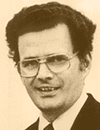
Go Up to the Mountain
Don Wilkerson challenges believers to examine their hearts and priorities, urging them to be part of the faithful remnant who put God first by rebuilding His temple and living a life devoted to Him.
In 'Go Up to the Mountain,' Don Wilkerson explores the message of the prophet Haggai to the post-captivity remnant of Israel, drawing parallels to modern believers. He challenges the church to prioritize God above personal comfort and material pursuits by rebuilding the spiritual temple within their hearts. Through biblical exposition, Wilkerson calls for self-examination, repentance, and a renewed commitment to God's purposes. This sermon encourages listeners to be part of the faithful remnant who do not give up in the face of spiritual decline.
Full Transcript
One of the minor prophets, give you a little time to find between the two prophets that begin with the name Z, Zephaniah and Zechariah, you'll find a little book, a little prophet, a little message, a big prophet by the name of Haggai, and turn with me to that first chapter, and we're going to read some verses out of the first chapter of the book of Haggai. The first chapter, and we begin to read, In the second year of Darius the king, in the first day of the month, first day of the sixth month, the word of the Lord came by the prophet Haggai to Zerubbabel, the son of Shittil, governor of Judah, and to Joshua, the son of Jehoshadak, the high priest, saying, Thus says the Lord of hosts, this people says, the time has not come, even the time for the house of the Lord to be rebuilt. Then the word of the Lord came by Haggai, the prophet, saying, Is it time for you yourselves to dwell in your paneled houses, while this house lies desolate? Now therefore, thus says the Lord of hosts, consider your ways.
You have so much, but you harvest little. You eat, but there is not enough to be satisfied. You drink, but there is not enough to become drunk.
You put on clothing, but no one is warm enough, and he who earns, earns wages to put into a purse with holes. Thus says the Lord of hosts, consider your ways. Go up to the mountains, bring wood, and rebuild the temple that I may be pleased with it and be glorified, says the Lord.
In that eighth verse is the title for my message tonight. Go up to the mountain. Go up to the mountain.
Now Haggai, I believe some of you here tonight, especially those of you that have been coming to our church on a regular basis, you know what we've been preaching here. You're going to appreciate Haggai. You're going to appreciate the message and the challenge that he lays down here.
He was a post-captivity prophet. His message and his ministry was to the remnant, the remnant of Israel who returned from captivity in Babylon to resettle back in the Jewish homeland and in Jerusalem. And his message, we will find, is strikingly relevant for today.
Because Haggai teaches us who and what is the remnant and what it means to have the heart of a remnant people. And you've been hearing that word. David talked about it Sunday night.
Now as we read historically, and actually it was in the year 538 BC before Christ, there was an issue, there was a decree that went out allowing the Jews to finally after their captivity to return back to their beloved homeland. However, only a very small portion went back. Out of the many thousands that were taken into captivity, only a portion, in fact Ezra the second chapter uses the figure of 42,000.
In addition there were some slaves and others. And so perhaps there was 50,000 that went back. But the majority of them stayed in Babylon.
And in fact they stayed because they became accustomed to Babylon and the world. And they assimilated into the Babylonian culture, adopting its lifestyle. And in the process they neglected the altar, they neglected their faith, they neglected their religious practices.
And so when they had opportunity to go back they didn't want to go back. In fact in Psalms 137 it talks about the same period of time when they went into captivity. In fact if you want to turn to it I'll turn to it very quickly.
Psalms 137. It says, By the rivers of Babylon there we sat down and wept. Meaning when they were taken into captivity.
And we wept when we remembered Zion. Upon the willows in the midst of it we hung our harps. This is Psalms 137.
For there our captors demanded of us songs. And our tormentors mirth saying sing us one of the songs of Zion. You see the Jews were noted for their festive music.
They were noted by the known world. All the nations around them knew that the Jews loved to sing. They loved to do what we do here and worship their God with great joy and excitement.
And so their captors said sing to us. Sing to us. And they said no, how can we sing? Goes on, how can we sing the Lord's song in a foreign land? But you see they should have kept singing.
They should have kept singing. They should have kept a heart for God but they didn't. And as a result spiritual erosion and decline and declension crept in, backsliding took place.
But when the decree was given that they could go back, a group small in number though they were, they went back and that number is called the remnant. Now the remnant therefore as you've been hearing again from this pulpit, the remnant represents those who do not give in and they do not give up in the face of widespread apostasy that's around them. Look at verse 12 when the prophet Haggai gave them the message.
In verse 12 it says, Then Zerubbabel the son of Shittil and Joshua the son of Jehoshaphat the high priest with all the remnant, there's the word, the remnant of the people, they obeyed the voice of the Lord their God and the words of Haggai the prophet as the Lord their God had sent him and the people showed reverence to the Lord. Really their reverence began when they left Babylon and there was no reason in the natural for this small band of believers to go back to Jerusalem and to that land and that city that had lost its former glory and majesty. There was no reason to go back except that it was God's place and it contained the city where which he had promised that he would put his name and his presence and so this faithful group, this faithful remnant of seekers made the long trek across dry desert sun scorched desert sands a trip of approximately four months.
The trip alone would have tested anybody's commitment and they returned to a ruined and desolate city. Now in making the decision to go back to Zion, this band of righteous saints portrays what and who are the remnant. They went back to Jerusalem because they had a heart for God and when I read to you in Ezra the second chapter that long list of names and numbers, that's the people, that's the remnant and my friend I want you to know that God that that record is here but that record also is in heaven and my name is also on that same scroll.
Hallelujah. These are a type of serious minded saints. Those who have their priorities straight and have made Christ the spiritual and moral center of their lives.
Now the remnant are those also who demonstrate both separation and supplication. Separation on one hand, they separated themselves from Babylon but then they also had separated themselves unto the Lord in supplication, in submission, and in devotion to him. And when they came out from among the Babylonians, they had to not only make that decision to sever themselves from the world but they had to make another decision that is also almost as difficult.
They had to separate themselves from their brothers. They had to separate themselves from the others who were Jews, who were Israelites in name but who were not willing to pay the price of remnant living. Go with me back to Ezra again if you quickly can go back to the book of Ezra because this is a parallel account to what Haggai is telling us and in the first chapter of Ezra it talks about this decree that was given as a fulfillment of what Jeremiah had prophesied that after the 70 years was complete that God would use an instrument.
The king would use an instrument. In verse 2, thus says Cyrus, king of Persia, the Lord the God of heaven has given me all the kingdoms of the earth and he has appointed me to build him a house in Jerusalem which is in Judah. Whoever there is among you of all his people may his God be with him.
Let him go up to Jerusalem which is in Judah and rebuild the house of the Lord the God of Israel. He is the God who is in Jerusalem. But note verse 4, and every survivor, survivor, or really it said, what does it say in the Kings James? Whosoever remaineth at whatever place he may live let the man of that place support him, meaning him who is going, let him support him with silver and gold, with goods and cattle together with a free will offering for the house of the Lord which is in Jerusalem.
Verse 5, then the heads of the father's household of Judah and Benjamin and the priests and the Levites arose. Every, even every one whose spirit God had stirred up to go, to go up and rebuild the house of the Lord which is in Jerusalem. In verse 6, and all those about them, encourage them, all those about them who were not going to go, those who were not going to go, encourage them with articles of silver, with gold, with goods and with cattle and valuables aside from all that was given as a free will offering.
Now get the picture. Here's a small band, this minority that are going out and here's the whole majority of them all surrounding them and said, go ahead, go ahead. It's all right.
You go on with God. And in fact, we'll even support you. We'll give you some of our goods.
You go on with God, but they were not willing to pay the price. Do you know, I think many pastors realize this and some abuse this. Do you know that it's impossible in any congregation to raise a lot of money? It's easy to raise a lot of money.
I'll tell you why. Because pastors, if they know it and they abuse this, there is an awful lot of guilt money in any congregation. People who say, I am not willing to pay the real price to go on with God.
I'm not willing to pray the heart, the heart price. I'm not willing to pay the devotional price. I'm not willing to pay the price of the true remnant and go on with God.
But if you want to do it here, let me give you an offering and I'll support you. Reminds me of a man who there was a man like that at one church. He asked a pastor, he said, if you said, he said, pastor, if I give a lot of money to your church, do you think I'll get to heaven? And the pastor says, I don't know, but it's worth trying.
But it's really not funny, is it? Because there's a lot of people that, that will give out of their pocketbook. And a lot of it is guilt money because they know they're not willing to pay the spiritual price. And so they try to compensate with it by a material price.
And this is exactly what happened. And so the remnant of Israel, first they disassociated themselves from the iniquities of Babylon. And then they had to make a decision that maybe some of you have gone through recently or some of you, let me tell you, if you're in a, some of you, if you keep coming here, you're going to probably have to make a similar decision as well.
And whether you're going to pay the price to go on with God and walk in light of the truth of message that God has birthed in our heart and burdened for our heart out of this pulpit. And sometimes that's a difficult price. Some are not willing to pay that.
But in spite of the remnant having returned to the land of promise, Hagia had to write a letter of rebuke to them. And this rebuke is contained in the message that bears his name, the book that bears his name. And his is a strong word, a heavy word to a good, a people of good intention, a people who had started in the right direction, but hadn't completed it.
Verse two, look with me again in the first chapter. It says, thus says the Lord of hosts, this people says the time has not come, even the time for the house of the Lord to be built. And note, the Lord refers to them as this people.
Usually everywhere in the scripture, he refers to them as my people, but instead they're simply called this people. And it shows the Lord's displeasure. They were doing something and we'll see exactly what it was.
That was a cause of the Lord's displeasure and the basis of Hagia's message. And the reason for the Lord's displeasure and disappointment in the remnant is that they were neglecting the spiritual center of their lives by not rebuilding the house of the Lord. In verse three and four, it says, and the word of the Lord came by the prophet saying, is it time for you yourselves to dwell in your paneled houses while this house lies desolate? You see, the temple was always the focal point of their lives.
It was their meeting place with God. And they neglected to make this the first priority of business when returning home. And they were acting as those who had no definite object or the wrong object before their eyes.
Now they were engaged in legitimate things. And the Lord understands we need a shelter. We need a roof over our head.
The Lord understands the financial pressures that people are under and you've got to make a living. But first we need a temple over our hearts. The remnant was not serving the devil at this point.
They had come out of Babylon. They were a long way from Babylon, but they said this some other time for the most important part of their life. And that was their prayer life, their worship life, and their devotion to God.
And so the prophet had two important things to say to such a people, but I'm going to cover here tonight. First of all, he said, take a look within yourselves at yourselves. Examine yourselves as to your primary interest and activities.
And then secondly, he says, look outside of yourselves at that, which is the very source of your strength, your joy, and your blessing. And those are the two things I want to examine very quickly. First of all, the word of the Lord to the remnant is that they must take a spiritual inventory.
Look at verse five. Now, therefore, thus says the Lord of hosts, consider your ways. Now this has to do with self-examination at looking within and at ourselves and considering our moral and spiritual conduct.
And consider your ways literally means set your heart upon your way. He said, take a good look at yourself. Self-judgment is a characteristic or practice of the true remnant.
A characteristic that is virtually rejected by the popular preaching and teaching of today's self-esteemers and self-success promoters. The Lord of hosts says, consider your ways. And you see most Christian counseling, I shouldn't say most, much of Christian counseling today is centered more on who treated me.
Who did this to me and who did that to me? And listen, there is a place for that kind of a revelation or that kind of a looking at your hurts. But my friend, it has to begin, the emphasis has to begin on personal responsibility, personal repentance, and self-examination before the Lord. I like the old hymn, not my brother, not my sister, but it's me, O Lord, standing in the need of prayer.
Lamentations says, let us examine and probe our ways and let us return to the Lord. Another scripture that we read very often before the communion, that a man ought to examine himself before he eats of the bread and drinks of the cup. Second Corinthians 13, five says, test yourselves and see if you are in the faith, examine yourselves.
Or do you not recognize this about yourself, that Jesus Christ is in you, unless you indeed fail the test. Now, please follow me. Let's go to the next verse, verse six.
There are five things that happened to the remnant because their ways displeased the Lord. Listen, if you don't put, if Christ is not the center of your life, if you are not pursuing the things of God, he says, this is what's going to happen to you. This is the effect of backsliding or the effect of just spiritual coldness.
Verse six breaks it down into five different things. First of all, he said, you have so much, but you harvest little. In other words, there's activity without acquiring anything.
You see, these Jews were not a lazy bunch. They never are. They were doers.
They were movers. They were shakers. They worked, they sweated, they labored to settle into the land that God had provided for them, but their emphasis was in the wrong direction.
And they had little to show for what really counted in the eyes of the Lord. And the Lord says, boy, you're running around. You're doing a lot of things.
You're very busy, but I don't see any fruit. I don't see any results. Nothing much comes of your activity.
You don't acquire anything of real value. He said, you harvest little because you are neglecting my house. I've watched Christians and I've probably, I've watched more.
I give so many illustrations out of the teen challenge ministry because I've spent so much of my life there and working with young men. And I remember, I think of a young man tonight. I, I, if he was here, I'd put my arm around him and I'd just hug him.
And I think I remember that brother. I remember him coming into the center, went through teen challenge, graduated. Well, after he graduated, he went into business and one day got a report about him.
They said, brother Don, in the natural, he's doing terrific. He has his own business. He has his own home.
He's very successful. He said he drives a 30,000, $35,000 automobile, but I knew that he wasn't serving the Lord. But I remember that young man.
I remember when he came in off the street, he didn't have two dimes to rub together. He was dirty. He was good.
He had nothing. And Jesus picked him up. Jesus gave him a new mind.
He gave him a whole new life. And he spent a year in our rehabilitation center, graduated. And then he got so involved in earthly pursuits that he had no time for the Lord.
And if I saw him today, he'd probably still tell me that he's successful and he's selling, but there's no harvest. There's no harvest. But my friend, I know myself.
I know what it's like. Even, even in the church, there's often as a frenzy of activity going on in the church. There's often even perceived results, but what the Lord say in my judgment, there is not a true harvest, a spiritual harvest.
And I know what I'm talking about. I know what, I know what it's like to sow and sow and work and work. And nothing comes of it because it's all sown in the flesh, because God was not the center of it.
And he goes on, he said, you eat, but there's not enough to satisfy. Look at it. First he said you, you, you sow much, but then you harvest little.
And then he goes on next little phrase, you eat, but there is not enough to satisfy. And this is talking about people who grow lean at the table. Listen, my friend, never has there been more spiritual food made available to the body of Christ than today.
There's more book, you go to the bookstore, my goodness, I don't go anymore. I can't afford it. There's just so much.
There's so much. It's overwhelming. The, the, the tapes, the conferences, my goodness, that come across my desk.
And yet with it all spiritual malnutrition exists at the very same time. Why? Because much of what is being eaten, it's simply it's junk food. It's high on sugar, but it's low on proper nutrition and junk food last about an hour.
And then you're hungry again. And when you eat it, there's not enough truth in it to really satisfy you eat, but they're not enough to satisfy. And I'm speaking to some of you tonight.
You're eating, but you're not satisfied. We used to hold some conferences for, for ministers and for Christian. In fact, we're going to do it.
I think in the spring, a special three-day come all day conference, morning sessions, afternoon, evening sessions, a special concentration of a prophetic word conference. As you see, I'm not, we're not opposed to conferences. And in one of them, one of the men came to me and one of the sessions, Bob Phillips had spoken in the afternoon, first of the afternoon, and I followed him and there was a break between it.
And during the break, this pastor, he went out and he said, and he was struggling with a message. He wasn't receiving anything from it. And he went out on the break and he talked to his wife and about it.
And then you talk to the Lord and he said, he said, Lord, what's wrong? I'm, I, I just can't grasp it. Is there something wrong with a preacher or what's the problem? And when he came back in for the next session. And before I began to speak, I just felt extemporaneously to say this.
I said, I noticed that some of you are struggling with the message, with the word. And I said, I want you to know why you are, because you've been eating it. When you beat been eating Big Macs, most of your life, and all of a sudden something pure comes along, you think the problem is with the one who was serving it.
But if you just get off the junk food and the Big Macs and this, this brother came to me, he said, when you said that, he said, that was me. He said, I not only eat Big Macs, but I serve them. In my church, Timothy says, we ought to be nourished upon the words of faith and good doctrine.
And then next notice, it says you drink. I like this. It says you drink, but you, there's not enough even to become drunk.
This describes the church crowd who always use the term balance to justify their lukewarmness. You see, moderation is proper in the physical realm of eating and balance is all right in relationship between time spent in devotion to the Lord and time spent in outreach service to the Lord. You know, we often talk about having a balance between prayer and devotion and reaching out to other people.
And that word balance is all right there, but you see moderation or balance should not describe our thirst for God. The remnant were so busy in their personal pursuits that they had become, uh, they had become religiously what some people are in their drinking habits. That is, they become their social drinkers, their moderates.
They make sure that they never get drunk, but when it comes to our spiritual thirst, a few religious drinks will not do it. Be not drunk with wine where is an excess, but be filled with the spirit and note the scripture does not say drunkenness is wrong. It says that it's the kind of thing that we drink that's wrong.
And if you're going to drink, drink until you're full. If you're going to serve God and serve him with your foolish, I've seen so many times, some of our converts come in and get saved. Their parents refer them to us and they get saved and they get filled with God and they go back to their parents and they, they begin to rebuke their parents because they're, they just, they're moderate drinkers and their parents say, oh, that, you know, we want you to get saved, but don't get fanatical about this.
I was at a meeting and there was a fellow who came to the altar and God began to deal with him. He repented, laid down his sin and he started to get blessed. He started to get excited.
He started to get drunk, as it were in the spirit, all excited. And it so happened that this church was one of those churches that took the scripture from Corinthians, that when there is to be manifestations, Paul said, let everything be done decently and in order. And they would take, they there's, there's a lot of groups that take that scripture to mean, you know, nothing should be done.
And, you know, let everything be controlled, let everything be quiet. Don't let there be freedom of worship and freedom of the gifts and so forth. And they forget that Paul did say he, Paul said, let everything be done.
And when it's done, let it be proper, let it be in order. And I noticed that this was this kind of congregation and they were getting embarrassed that this gentleman here was so full of God and that he was drunk in the spirit. And they started getting nervous.
And so I came to the microphone and I said, now I noticed that some of you are watching this fella and you're, you're wanting me to settle him down. But I said, I'm not going to do it because it won't be long that he'll be sitting out there with the rest of you and you'll have them so dead and so dry. I want him to get all that he can right now.
He says you drink, but there's not enough to become drunk. Then fourthly, he said, you put on clothing, but no one is warm enough. There are people who have been sold a bill of goods.
They've been deceived by the message and the messenger that they're following. And they thought the thought here relates to the kind of covering that we're putting over ourselves and truth you see as a covering. Paul speaks of truth as a girdle.
And the people that Haggai was speaking to says that you're not following truth because you're not following me. You put on clothing, but no one is warm enough. You're left out in the cold.
And the truth that they were clothing themselves and left them cold and indifferent and lukewarm because they had clothed and many people are clothing themselves in a cheap imitation clothing so that when the cold winter of tests and trials and tribulation comes along, they don't have what it takes to carry them through and get frostbitten. And I ask you tonight, have some of you been buying into the wrong message? Are you following a teaching that looks good, it feels good, it has a popular label in it, but in fact your heart and your soul is not being warmed by the presence of the Lord. It's not gonna hold up.
It doesn't have a divine label in it. Isaiah 61 10 says, I will rejoice greatly in the Lord my soul will exalt in my God for he has clothed me with the garments of salvation. He has wrapped me with a robe of righteousness as a bridegroom decks himself with a garland and as a bride decks herself with her jewels.
We want to give you something here. We want you to go out warm. We want to give you something that's gonna stand when the cold night of judgment comes along.
Then I want you, I want to skip along. I'll skip to the fifth thing here. It says, they earneth wages and he that earneth wages earneth wages to put into a bags with holes.
But then let me go on. Note God's remedy for the spiritual decline and spiritual decay. In verse 7, Haggai returns to the main theme and the second time he says, consider your ways.
And Haggai's repetition of this theme shows us the importance the Lord places upon this matter. Now listen to me, the word ways here is an interesting word. It's a very important word.
He says consider your ways because it refers to one's walk. It refers to our path. It refers to our behavior, our manner, our lot in life, our worship.
And thus it means that we're to consider the path of our conduct and measure it against He who is the way. In fact in the New Testament they were called the people of the way. And so Haggai is talking about the very essence of our walk with the Lord.
Consider your conduct. Is it righteous before God? Is it, an example, is it patterned after Jesus Christ the way? And it says if we're falling short, if we've got holes in our bag and the truth is not producing fruit in us, Haggai tells us how to correct this. And this is where we come to verse 8. And this is the part that I'm challenged by again and again.
And the Lord speaks to my heart and says, go up to the mountain. This is the first step in rebuilding a spiritual temple is to go to that mountain. Turn with me to Psalms 87 and 1. Psalms 87 and 1. It says his foundation is in the holy mountains.
Now foundation means beginning or starting point. And when the remnant is told to go up to the mountain, it represents going to meet the Lord. In other words, we should do nothing.
We should build nothing. We should go nowhere until we've been to the mountain, the place of prayer and intercession before the Lord. That's what he's saying to them.
He said, you're spending your time in these pursuits. And if you continue on those things, even if you're not in the world, even if you're not in Babylon, but you're worried about yourself and your earthly pursuits, he said, you're going to, he said, I have to rebuke you for that. He said, consider your ways and go to the mountain, the meeting place.
He said, this, my foundation is that this is basic. And my friend, it sounds so simple to say it, but let me say it. Most of our problems can be reduced to the fact that we have not sought the Lord.
Now I know that sometimes somebody can come to a Christian or can come to the pastor and say, I've got this problem. And we can flippantly say to them, we'll pray about it and go on our way. But let me tell you, friend, I don't know any better advice that gives to somebody.
And I find that many people who come to us seeking advice, they have not been to the mountain. They have not been before God. I preached one night upon, about reaching our unsaved loved ones.
And a dear sister came to me after the meeting and sought counsel. And she said, you know, I've done this and I've done this. And, and, and I asked her, I said, have you been interceding? And she said, yes.
And then she looked at me as if to say, well, I've done all that. Now give me something else to do. I said, I said, sister, I don't know anything else I can give you to do.
And I think this is where the church has gotten itself into problems, into trouble is that we have not been to the mountain. We have not sought the face of God. And as a result, we go to look for counselors.
We go to this and we go to that for an answer when the answer is right there to go to the mountain and that meeting place with the Lord. See, mountains are a type of spiritual experience. We talk about mountaintop experiences as being a spiritual high, a place of blessing.
But let me tell you, my friend, anytime, any place that we are seeking the face of the Lord, we are going up to the mountain. Listen to what Isaiah, listen to a few prophecies. Isaiah 30 and 29 says, you will have songs in the night when you keep the festival and gladness of heart as when one marches to the sound of the flute to go to the mount of the Lord, to the rock of Israel.
Here's another one. Even those I will bring to my holy mountain and make them joyful in my house of prayer, their burnt offerings and their sacrifices will be acceptable at my altar for my house shall be called a house of prayer for all the peoples. Hallelujah.
Go to Isaiah chapter 25 because here's a beautiful prophecy from Isaiah. And the reason that we have to go to the mountain is because the cross is, Jesus is on the mountain and the cross is on the mountain. Turn to Isaiah chapter 25.
Oh, what a blessing this is. Isaiah chapter 25, beginning at verse six, here's a beautiful picture of the cross. And we're coming to the communion table tonight, depicting what Christ has done for us.
Isaiah 25 and six, and the Lord of hosts will prepare a lavish, lavish banquet for all peoples on this mountain. And that banquet that he's talking about is the cross and the power of the cross that can break that homosexual habit, the power of the cross that can break that lesbian habit, the power of the cross, brother that was here before that can break that addiction problem in your life. Hallelujah.
And by the way, by the way, we've been talking, we've been praying about this. You know, we, we have the teen challenge center. It's a resident center where some of the young men who come off the streets, they go and they live there, but we're meeting so many people at this altar who have a life controlling habit.
You've heard it. If any of you people, you've heard it tonight, you hear it night after night, say I got a habit. And yet these, some of these people are working people.
They got jobs. They can't go into a center, but my friend, we're going to start an outpatient program. We're going to start a program for those in that kind of condition.
And we're going to believe God that you can make it while you're yet working and make it by coming to the house of the Lord. And we're going to bring you to the cross. Hallelujah.
Because there is a lavish banquet table on the Mount of the Lord and it can deliver you and heal you. Hallelujah. And the Lord of hosts will prepare.
We'll prepare. He's he's done it here. It was future, but it's already happened.
Hallelujah. The Lord of hosts will prepare a lavish banquet for all the peoples on this mountain, a banquet of age wine, choice pieces with marrow and refined age wine. Oh, age wine.
So, so that you'll be full of the spirit. Hallelujah. And on this mountain, he will swallow up the covering, which is over all people, even the veil, which is stretched over all nations.
He will swallow up death for all time. And the Lord shall wipe away tears away from all faces. And he will remove the reproach of his people from all the earth for the Lord has spoken.
And he, and it will be said in that day, behold, this is our God for whom we have waited. Listen, some of you that came forward and you're going to come again. I want to tell you, here's for you tonight.
Behold, this is our God for whom you have waited that he might save you for the Lord for whom we have waited. Let us rejoice and be glad in his salvation. Hallelujah.
That's why I said, go up to the mountain because Jesus is on the mountain. Hallelujah. Go with me to Genesis chapter 19, Genesis chapter 19.
I've got to close very quickly, two more thoughts, and I'm going to go a little bit longer because well, I got started later. That's why I got trying to give you an explanation. I thought before I was going to have to pull one of the pastor's coat to get me up here sooner, but the Lord has just been here tonight in a marvelous way.
I just feel him. Praise the Lord. Genesis chapter 19.
This is when Sodom is burning and it came about verse 17, Genesis 19. It came about when they had brought them outside that one said, escape for your life. Do not look behind you and do not stay anywhere in the valley.
Escape to the mountains, escape to the mountains lest you be swept away. But Lot said to them, oh no, my lords. Now behold, your servant has found favor in your sight.
If you're a loving God, you have magnified your loving kindness, which you have shown me by saving my life. Cannot I escape, but I cannot escape to the mountain lest the disaster overtake me and I die. Now behold, this town is near enough to flee to, and it is small.
Please let me escape there. Is it not small that my life may be saved? I think in the King James, Lot says, let me escape to the plain. In other words, it's too hard to go.
There's too much hardship to go all the way up on the mountain to escape. Let me just stay right down here in this safer place. Give me this, give me this little small place, verse 20.
And let me tell you, friend, you got to make up your mind. You got to, if you're where Lot is, if you're in that little place, now behold, this town is near enough to flee to, and it's small. Please let me escape there.
Is it not small that my life may be saved? My friend, God wants you to go all the way up on the mountain. He wants you to go all the way with him, all the way to the mountain. Hallelujah.
And then finally, and I close with this. He said, go to the mountain and bring wood. Bring wood and build the house of God.
In other words, if you meet with God, God will give you the necessary materials to build the house, the life that he wants to build. Ephesians 2 20 and 20, don't turn to it. It says you're built upon the foundation of the apostles and prophets.
Jesus Christ, you notice, I like that apostles and prophets. We speak from the old and new Testament here. Jesus Christ himself being the chief cornerstone in whom all the building being fitly together groweth into a holy temple in the Lord, in whom ye also are built together for habitation of God through the spirit.
Hallelujah. And we've said it here over and over again. We're not trying to fill pews.
We're trying to fill hearts. Hallelujah. And you go to the, and you know what, you know what I want to see.
And you know what I'm, I'm hearing from some of you, you come and it blesses me so much when you go out and you talk to your friends and they say, why are you going down there? Because I got wood because I've been to the mountain and now I got wood. God's building my life. Hallelujah.
And I don't have time to go into the wood. That's up there. The cedars of Lebanon, all there's a hole up on the mountain.
There's all kinds of wood up there. And I wish I had time to go into all the trees that are up there because literally when you go up in the mountain and you see what God has for you, you see that the cedars of Lebanon, and he says to you, I'm going to make you just like the cedars of Lebanon, but you're tall and strong and able to stand. Or I'm going to make you like the palm tree, the palm tree that when the winds come, it goes this way and it goes that way, but it doesn't go all the way down.
It still stands. Hallelujah. And if you'll go to the mountain, God will, you'll bring wood.
You'll bring what's necessary to build your life. Hallelujah. Praise the Lord.
Go to the mountain and bring wood. That's bowing a word of prayer. Lord, we thank you tonight.
We thank you that you're giving us a people like, like numbers, like Ezra too. Lord, we thank you that you're registering them. You're counting them.
Lord, we thank you for the people who've come and have been coming and you've been changing their lives. Oh God, I thank you. I see it, Lord.
We, we see it visibly. We, we perceive it in the spirit. We've been hearing it from their testimony that Lord, they're going forth and they're bringing wood because they're going to the mountain, but God tonight, there's some here that need to go to the mountain.
They need to go to the cross and they need deliverance. And before we give an opportunity for those who've already been to this altar, I just want to ask one question for those of you that are not going to come to this altar. I want to know how many of you that have been coming here on a regular basis.
You'd say, brother Don, I want you to know that God is changing my life, line upon line, precept upon precept, and I'm a different man. I'm a different woman since I've been moving and coming. I've been going to the mountain and I've been bringing wood and I want to testify of it tonight.
I want to acknowledge it before God that he is changing me. I want you to raise your hand and say, that's me. God's, God's doing a work.
God's changing me. Praise God. Wave your hand a little bit.
I just want to see you. Amen. Oh, that blesses me.
Hallelujah. God's changing you. Hallelujah.
Hallelujah. This is the end of side two. He will share to me as a friend.
He will share his secrets with me. Hallelujah.
Sermon Outline
-
I. Introduction to Haggai and the Remnant
- Context of post-captivity Israel and the return from Babylon
- Definition and significance of the remnant
- The spiritual condition of the people who stayed behind
-
II. The Lord’s Rebuke to the Remnant
- Neglect of rebuilding the temple despite legitimate personal pursuits
- The Lord’s displeasure shown by calling them 'this people' instead of 'my people'
- The call to consider their ways and self-examination
-
III. The Effects of Neglecting God’s House
- Busy activity with little spiritual harvest
- Lack of satisfaction despite material blessings
- The emptiness of pursuing worldly success without God
-
IV. The Call to Action and Commitment
- Separating from worldly influences and false brethren
- Paying the true spiritual price to follow God
- Rebuilding the temple as a symbol of restoring God’s priority
Key Quotes
“Go up to the mountain. Go up to the mountain.” — Don Wilkerson
“Consider your ways. Self-judgment is a characteristic or practice of the true remnant.” — Don Wilkerson
“You have so much, but you harvest little.” — Don Wilkerson
Application Points
- Regularly examine your spiritual life and priorities to ensure God is at the center.
- Be willing to separate from worldly influences and make sacrifices to follow God faithfully.
- Commit to rebuilding and nurturing your spiritual 'temple' through prayer, worship, and obedience.