
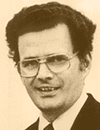
Take This and Share It
Don Wilkerson emphasizes that the Lord's Supper is a profound yet simple daily reminder of Christ's sacrifice, calling believers to live out the gospel's power in everyday life with strength to overcome sin.
In this teaching sermon, Don Wilkerson explores the profound simplicity of the Lord's Supper as instituted by Jesus in Luke 22. He challenges believers to see communion not as a ritual or event, but as a powerful daily reminder of Christ’s sacrifice that equips them to overcome sin. Wilkerson emphasizes the importance of integrating the gospel’s truths into everyday life, drawing strength from the cross to live victoriously. This message encourages a reverent, practical faith that impacts all areas of life.
Full Transcript
Take this and share it, and we'll find where these words are found in Luke chapter 22. I'm reading from the New American Standard, beginning at verse 13. We'll read through the 20th verse.
It says, And they departed and found everything just as he had told them, and they prepared the Passover. And when the hour had come, he reclined at the table and the apostles with him. And he said to them, I have earnestly desired to eat this Passover with you before I suffer.
For I say to you, I shall never again eat it until it is fulfilled in the kingdom of God. And when he had taken a cup and given thanks, he said, Take this and share it among yourselves. For I say to you, I will not drink the fruit of the vine from now on until the kingdom of God comes.
And when he had taken some bread and given thanks, he broke it and gave it to them, saying, This is my body which is given for you. This do in remembrance of me. And in the same way he took the cup after they had eaten, saying, This cup which is poured out for you is the new covenant in my blood.
Again, note, if you will, in that 17th verse, Jesus said, Take this and share it. Take it and share it. Shall we pray? Our Father, we thank you tonight that you have been meeting us and blessing us and revealing yourself to us in service by service and line upon line and precept upon precept.
Lord, you have been so faithful. And again tonight, we commit this service as we have already have, but we commit this portion of it and the words that thy servant will minister, that you would break every yoke here tonight, move by your spirit, we pray. We thank you that you have given us the privilege of bearing one another's burdens.
These requests that we have lifted up to you, but now Lord, we ask you to anoint the Word of God to our hearts. We thank you in Jesus' name. Amen.
The celebration of the Lord's Supper communion is one of the most simple but beautiful of all Christian worship experiences. When Jesus gave these instructions and he said, Take this and share it among yourselves, he was establishing the method or the mode of communion. And it's important to observe how profound, how profound it is in its simplicity.
Now have the particular method by which we remember the Lord's death had been left up to every church or every Christian down through the ages for them to decide themselves or choose their own form or a method of how they would celebrate communion. Imagine how the outcome might be. For example, Jesus did not say, nor do we do it nowadays, that all of the Christians in the body of Christ would gather together, let's say once a month and meet in Central Park to observe communion based upon how the church might do it today.
And what we might do, and I I'm not being facetious, but I want to make a point because today what might happen is that someone would erect a giant size wooden cross. And maybe put some neon signs about it. And then probably would bring some contemporary music group.
And of course because the cross is offensive, it would probably, the kind of music that would, they would say, would appeal to the person out there and so it would have that rock beat to it. And maybe there would be some strobe lights. And maybe there would be some music, I'm, excuse me, there would be some smoke building out from the foot of the cross.
Followed again, of course, maybe by choreographer, dancers, performing at the communion. But Jesus did not say remember the cross with charismatic hype. He didn't say remember it with rock concerts or religious pageantry or with celebrated performers or performances.
You see there was nothing showy. There was nothing fleshly. There was nothing carnal or overly dramatic about that first communion scene.
The setting was doing an ordinary daily activity. It was supper. Yes, it was a Passover, but as far as the disciples were concerned, it was an ordinary supper.
And it became an occasion to lift the supper out of the natural realm into sharing a lesson on the very essence of the gospel. Therefore it is important, it's an important truth, that we can learn from the very method and the setting in which Jesus instituted what we now observe in all of Christendom as the Lord's Supper. Now, neither communion and what it symbolizes of the very central facts of Christianity is meant to be a mere religious ritual or a form or a tradition.
Neither is it meant to be quote-unquote a Christian experience which lifts our emotions for the moment, but then has no practical impact upon our lives. One of the sad things about the state of the church today is that Christianity in some circles has been reduced and introduced as an event performed on center stage live and in living color. Something that you might want to come to enjoy like a ball game or a Broadway show.
Brother Dave often refers to it as a fun event. Come and let's have fun at church. And how many times I've heard it said in the church by the leader, by the song leader, by the pastor, and he's often said if football fans can scream and yell and holler and make noise and have fun, so Christians at church ought to be able to have fun.
Now, you know if you've been coming here to this church that we believe in joy. We believe in praise unto the Lord. We believe in high spirited worship.
Especially after one has made things right with the Lord. We always end our service worshiping the Lord with freedom. However, it's possible to reduce church to a pep rally or a holy holler if you please.
A joy pop religious event and forget that it's also a time of soul searching and of repentance and of brokenness and of self-examination before the Lord. You see when church turns into events or experiences and box office performances that we indulge in periodically, it ceases to be pure religion and undefiled before God. And I know, we know, we've discussed it as pastors that we'll get many people that are going to come by here because it's a religious event that's going on in Times Square.
And many of them will not be back because it doesn't live up to their expectations of a quote-unquote Christian event. You know, the only difference I was thinking, the only difference between ritualistic religion that is conducted in historical cathedrals in this city and other places, the kind of worship that is led by black robed or red robed priest, the only difference between that and religion that is led by blue jean guitar playing musical priest, the only difference is one is dead, one's a quiet, one's a loud. One's like a funeral, the other's like a Las Vegas show, but the Spirit of God is in neither of them.
Now when Jesus wanted to demonstrate to his disciples and leave an example that we should follow of the great mysteries of the gospel in the atonement for our sins, he chose a most common setting, the supper table. And at this table, we are reminded that the Word was made flesh. It is here that we behold the Lamb of God which takes away the sins of the world.
And yet these unique and unusual events that we celebrate are portrayed in signs and symbols related to their common usefulness in our daily lives. In Luke 22 and 14, it says, and when the hour was come, what hour was it? It was simply the supper hour. It was mealtime.
It says they reclined at the table and there was at the time nothing remarkable about the setting. And it says, but then Jesus took some bread. There was nothing extraordinary about the bread.
There was table bread. He took it and in the same manner he took a cup. In other words, Jesus chose two materials of daily use to depict the central truths of salvation, two materials or two elements that universally mankind uses every day, two, three times a day, some of us more, some of us less.
Now in doing this, Jesus has an important lesson to show us and it's this. He intends that the sacrament be not only a memorial of his death that we ought to embrace in faith and repentance, but also we ought to apply the meaning of it, the meaning of a cross in ordinary everyday activities. His saving grace should be a constant continual source of our strength day to day.
Christ's death and life should impact our daily lives. In the same manner, our daily bread and juice strengthens our physical lives. As I said, communion is not a ritual.
It's not just some mystical experience that we observe in church once in a while and that's it. But what relationship does it have and the meaning of the cross? What relationship does the cross have to our daily lives at home or on the job or at school or in your marriage or in your interpersonal relationships? Jesus used table bread and supper juice, wine if you please, and he takes these elements from off an ordinary supper table at an ordinary supper meal and it gives new profound eternal meaning to those elements and we should not lose sight of a neglected truth regarding this. We are to incorporate the meaning of his death in our daily ordinary activities.
The greatest hindrance to the gospel is when it is divorced from our daily lives. Now we should take communion with reverence and with soberness of mind. It is a lovely worship experience when we go through the ceremony and yet how often when after the emblems are distributed and we hear the scriptures read, we pray the prayer and we partake and then we go out and we fail to carry from the celebration any influence of it in our lives outside the church.
Now when people heard that when we were coming to open this church that we were going to have communion every week, somebody said to me and somebody said to us, don't you think it's going to lose its meaning? My friend, the very reason that we're having it every week is so that we could see the relationship to the cross and the relationship to these things in our daily lives. You see, we're all tempted to treat this event as a special or an occasional means of spiritual devotion and while at the time we partake our hearts are lifted up in reverent worship and adoration to the Lord and yet the meaning of what Christ did has no practical or purifying effect upon us between the time we come back again. And so Jesus took ordinary bread and he gave it extraordinary meaning.
He took the cup containing ordinary juice and he gave it extraordinary, unique, supernatural meaning. And he shows us, he used the ordinary so that we could see the relationship between the truth portrayed and the application of it to our lives. You see, because Christ above all would be practical.
He would want to bring these great mysteries and the meaning of his death into the most intimate and useful connection with our daily life. Salvation is a daily life experience. Christ is our daily bread.
He said, I am the bread of life. Jesus took bread and gave thanks and said, this is my body which is given for you and my friend is not just to give, been given to wash away your sins. It's been given for your daily strength and nourishment and to go out into the battle.
Serving Christ is not a hundred-yard dash. It's a marathon and the bread of life is the bread that we live by today and tomorrow and the next day. I remember one of the, we had a visitor one time that came to Teen Challenge and he was a, not a believer and he was in fact, was a psychologist and he had read about the success that Teen Challenge had in curing drug addicts.
And so he wanted to find out what made the program tick, what made it successful. And so he asked me a lot of questions. But then he wanted to talk to one of our residents.
And I knew what he was up to and so I picked out the right young man and I said, now you go in the room with this gentleman and you answer any question that he has. He said, okay. And so the man asked him various questions and so forth and one of them was this.
He said, young man, what are you getting at this program that you didn't get in the jail or hospital or private therapeutic community? I picked out that young man because he had tried many other programs. And I love his answer. It's a classic.
He said, well, sir, they give us God in the morning, Jesus in the afternoon and the Holy Ghost at night. Now that young man understood what it's all about. He understood that Jesus is our bread of life.
Are we seeing the great truths portrayed in communion as our strength for the battle and for the race? Now as we come to the communion table and Jesus says, take it and share it. There are three things that I think we ought to take away from the communion table. First of all, we should take away from communion the strength to overcome temptation and the sins that so easily beset us.
You see the bread and the cup are reminders of the cost that our Lord paid in winning our victory over sin's claim upon us. Now listen to a few scriptures. Don't turn to them.
But Isaiah 50 and 6 is a prophetic word regarding the sufferings of Christ. This is what it says. He said, I gave my back for those who strike me and my cheeks to those who pluck out the beard.
I did not cover my face from humiliation and spitting. Isaiah 53 and 5, he said, he was pierced through for my transgressions. He was crushed for my iniquities.
The chastising for our well-being fell upon him and by his scourging we are healed. And again in Hebrews 13, 12 it says, therefore Jesus also that he might sanctify the people through his own blood suffered outside the gate. Now please follow me.
In light of Christ's cruel humiliation for our sins, should we not have a hatred for those sins that so easily beset us? And should we not enter into the battle against Satan to enjoy the fruit of what Christ has accomplished for us? 1 Corinthians 6.20 says, you have been bought with a price. Therefore, therefore because you've been bought with a price, therefore glorify God in your body. The scripture is very clear that our desire and our motivation and our strength to live an overcoming life is found in considering the price that Christ paid to redeem us from our sin.
Turn in your Bibles with me to Hebrews chapter 12. Hebrews chapter 12. I'm going to read four verses, but I want to start with the second verse rather than the first verse.
Hebrews 12 and 2 says, fixing our eyes on Jesus, the author and perfecter of faith, who for the joy set before him endured the cross, despising the shame, and has sat down at the right hand of the throne of God. Now this verse is preceded with Paul's admonition in verse 1. And this is what he says, let us lay aside every encumbrance, every weight, and the sin which so easily entangles us, besets us. And let us run with patience the race that is set before us.
And see verse 2, Paul tells us how to do that by fixing our eyes on Jesus and remembering what he endured and why he endured the cross. It's so that we would be set free from that which besets us. You see at the supper table Jesus took bread and he broke it.
And he took the cup representing the crushed fruit of the vine. And both of these are symbolic of the total giving of himself in our behalf. In other words, Jesus held nothing back to give himself for us.
And we ought to compare this to our own efforts to overcome the sin that so easily besets us. That's why Paul said, let us run with endurance the race that is set before us, fixing our eyes on Jesus as our inspiration. And the communion celebration is a reminder and it's a rebuke against half measures.
Against half-hearted attempts to overcome the daily and common temptations that we often do not resist. Look at verse 3, it says, consider him that endured the contradiction of sinners against himself, lest you be wearied in your minds. In other words, he says, compare your experience in life.
Compare it with him who was willing to stand up against the opposition of sinners. And then in verse 4, he continues on and he said, he says, you have not yet resisted unto blood striving against sin. Let me ask you tonight, are you on a job? Are you in a home? Are you in a marriage? Are you in a situation where you're being persecuted? Where you're being mocked? Where there is evil and temptations all around you? And if you're feeling a little bit downed, a little bit sorry for yourself tonight, remember what Paul says here.
You have not yet had to shed blood in the struggle against sin. And when Jesus said to his disciples, take this and share it among yourselves, which we're going to do tonight. He is saying that the power of the cross can be lived out in your daily temptations.
He has already paid for you. He's already won the victory. You've not had to shed blood.
You've not had to strive and shed blood. And do not do what many do. They repent at communion.
But the repentance does not last any longer than the benediction. The purpose of communion is to be reminded that Jesus is the author. I like that.
He's the author and he's the finisher of our salvation. He that hath begun a good work. Philippians 1.6 says, I'm confident.
Paul says, I'm confident in you that he hath begun a good work in you. He will complete it. Hallelujah.
And you draw strength here. You draw strength at the cross. You draw strength at the communion table.
You see the salvation that Jesus paid for us. And the salvation that Jesus paid for me as a gift of eternal life. The thing that I appreciate about it is I'm not only ready for heaven.
I'm ready for earth. I'm not only ready to die. I'm ready to live now.
Let me tell you a story. There's a lot of testimonies that have come out of our ministry of Teen Challenge. This is probably one of my favorites.
This is a young man who's four months in the Lord. He's down, he came from our farm, our rehabilitation farm in Pennsylvania. To come back and visit his family on some family business.
And I let him go alone. And that doesn't mean anything to you fellows sitting here. Because Mr. Miller won't let you go alone now.
But I let him go alone. But before he left, he came to me and he confessed. He said, Brother Don, I'm scared.
He said, I'm really scared. This is the first time I will have been out of the protection of the program. And he said, I don't know.
I know this thing is going to be tested. And I'm going to find out if this thing really works or not. And he said, what do I do? And I said, you're saved, right? He said, yes.
I said, you've let the Lord come into your life? Yes. You're seeking the Lord? Yes. You're into the word? Yes.
I said, okay. Well, you know what? You don't have to do anything. Greater is he that's within you than he that's within the world.
I said, go in the chapel, pray, and go on your way. And so he did that. And he came back, and he told me this story.
He said, Brother Don, when I got to my— I got off the train, and I got to my neighborhood, Spanish Harlem. And I walked down the street. Though the street was crowded, he said, to my great surprise and delight, none of my old crowd was there.
None of the pushers, none of the prostitutes, none of the pimps. And he said, I just walked right through it all. And I got in the house and sat down, and I said, Oh, Lord, thank you for clearing the streets for me.
Now, he thought that was God's way of dealing with temptation. But it wasn't. He completed his business, had a nice meal.
It was time now to come back. I think I gave him a few hours to visit. Because I told him I trusted him, but I don't trust the devil.
And it was time to come back. He comes outside and looks down one side of the street, down the other. And again, to his delight, there's no— nobody there representing his old lifestyle or temptation.
So he walks very carefully, very gingerly down the street. And he's about to go down the steps into the subway, when all of a sudden, out of— seemingly out of nowhere, an old buddy from the streets, a pusher, comes along. Recognizes him.
They chat a bit. And in the process, the pusher says, Would you like to buy a bag of stuff? Now, I want to tell you what he did. And I'm also going to tell you what he didn't do.
But first of all, I want to pause for a moment. And I want to—I've painted you a picture. And I want to freeze the frame.
And I want you to realize and see yourself right where that young man was. And you fellows that are from Teen Challenge, you can identify with this more than anybody else. But let me tell you something.
The devil has stuff for everybody. And you've all been in that position. And I dare say that some of you probably were in it today, if not once, maybe several times, if not during this past week.
You've been in it. The devil has been trying to push something onto you. And that young man was in a situation where we say the rubber meets the road.
And he did something. But first of all, let me tell you what he didn't do. He didn't panic.
He didn't say, Uh-oh, this is it. This is the big one. This is bad.
This is temptation. We covered it in class. And I know we have notes.
And I wish I had my notes right now. Where's the telephone number? Let me call the center. Where's Brother Don? No, this young man had not only gotten saved, but he was feeding on the bread of life.
And when the pusher said, Would you like to buy a bag of stuff? He said, No, thank you. I've got my own stuff. And of course, the pusher wanted to know where he got his.
And he said, I get mine in Brooklyn now. And they got to talking. He said, You got an address? He said, Yeah, I'll give you the address.
It's 444 Clinton Avenue. He said, That's where I connect now. And he said, Who's your connection? He said, I'm glad you asked.
He said, It's Jesus Christ. Now that young man had one of the greatest lessons in what it's all about. And he came back and he told me this story.
He said, Brother Don, He said, Oh, the Lord just set it all up. He said, I said no for the first time in my life. And this is what he said to me.
Now I know whom the Son has set free is free indeed. Hallelujah. But that young man had found that that didn't just happen on the street corner.
That happened in the chapel. That happened in the house of God. That happened as he was feeding off of Christ.
And some of you have said and said to us, you've said to me, and some have come for counsel and said I have besetting sins. I've had life controlling problems in my life. And I've been to this altar.
And I've been struggling. And I still don't have a victory. But I want to tell you something.
You keep coming. You keep coming. And you keep coming to the Lord.
And you keep coming before Him. And He's going to break that chain for you. Hallelujah.
Something is going to happen. You're going to cross that line and you're going to walk in victory. Hallelujah.
Now secondly we ought to take away from the Lord's table the love that was shed abroad for our hearts. God commended His love toward us and that while we were yet sinners Christ died for us. Greater love hath no man than this that a man lay down his life for his friends.
Now can we comprehend that love? Can we measure it? Poets and songwriters and preachers and writers have through the ages tried to put into words and into songs the depth of Christ's love for us demonstrated at the cross. That's why I miss the hymns. Oh love of God how rich and pure.
How measureless and strong. The end of side one. You may turn the tape over to side two.
See the bread and the cup represent the supreme act of love. That's a man laying down his life for his friends. But it is this love that we ought to take away from the communion table.
Jesus says take it and share it. Now please follow me. This love is not beyond our ability to imitate and incorporate in our daily lives.
Let us not think that such unselfish love such as our Lord demonstrated, such sacrificial love is only for a very few special saints. It is not. It's not only for the Mother Teresas or the William Booths or the George Muellers or the Lillian Trasher who opened the orphanage in Egypt or for others.
It's not just for them to be the examples of extraordinary love of Christ lived out in our society. I believe what God needs is not only heroic love such as the cross demanded of His only begotten Son or the Father demanded of His Son. What is also needed is the power of the cross in little common, ordinary, everyday things.
The most beautiful thing that could happen in the world the thing that will change and impact the world perhaps more than anything else will be the lighting up in love of millions of average Christians with the spirit of the cross. The world does not need super Christians. It does not need Christian politicians although there's nothing wrong with that.
But it does not, God's not going to look to the politicians. He's not going to look to the leaders in our society although there's nothing wrong with that and that's important. But what He needs is Christians who will be light and salt and fruit.
There is a drive among Christians. Listen to me carefully. There's a drive among Christians to change the laws of our land.
Abortion for example. And we ought to, I believe with all diligence. I hope that if it be the result of the new Supreme Court nominee or whatever other means I hope they change the abortion laws in our land.
It's an abomination to our nation. It's one of the reasons that we're under judgment. But let us not think that a new anti-abortion law will stop abortions.
Did a new civil rights law make one race love another race? Listen, you can't legislate righteousness and you can't legislate love. It is when we bow at the foot of the cross and partake of the nature of Jesus Christ that we take away from the cross that love of God. And that's what Jesus was saying.
Take this and share it. And I love what He did. Oh how practical the Lord is before He leaves them at the supper table.
He does one of the most practical, one of the most simple but beautiful things that He does. John 13 tells us about it, that He rose from supper and He laid aside His garments and He took a towel and He girded Himself about and then He poured water in the basin and began to wash the disciples' feet and to wipe them with a towel with which He was girded. And Peter immediately protested.
Let me tell you why. You have to understand Mideast culture at the time to know why Peter protested. You see, foot washing at that time was one of the most demeaning things that anybody could do.
If you went to a home, an upper middle class home at that time, and if they had servants, slaves, the slave would meet you and would wash your feet. And the feet, of course, they didn't wear shoes like we do now. They wore open sandals and their feet was dirty.
It was ugly. It was grimy. It was caked with mud.
And the feet were the most despised member of the body then. You know, today we spend, you know, how much money to show off our feet, and so they had slaves who would wash the feet. Now, if you couldn't afford to have a slave and you had a special supper and you invited friends over, you know what the tradition was? Is that the first one who showed up customarily would wash the feet of everybody else who would arrive.
That's probably the reason why in some cultures, every time you have an event, everybody shows up a half hour late. I think that's probably where it all started. And imagine if you invited me to your house for supper and before we ate or after we ate, I started to rumble around in your kitchen and I start looking for your garbage and you say, what are you doing? I said, I'm taking out your garbage and you probably would be embarrassed.
And Jesus did something that was embarrassing, that was demeaning. But when Jesus took the towel and began to wash the disciples' feet, believe me, the lesson was not lost upon them. He said, for I give you an example that you also should do as I do to you.
And what he was saying to the disciples is take this and share it among yourselves. Be servants, take away from the table of the Lord this love that I have shed abroad for you. You take it and you live it out.
I got to show you my illustration. You know, most people come to church like this. This is the way most people come to church.
Like this. Feed me, feed me. Jesus said, we're to come to church like this.
May I help you please? May I serve you? May I minister to your needs? Jesus said, and one of the reasons Jesus did this is at the table they had an argument as to who was going to be greatest among them. And Jesus said, he that would be greatest among you, let him be servant of all. Take this with you.
Take it and share it. This is the love of Jesus Christ in practical ways. Brother, loving brother, I look down and I see you fellows.
I remember one time when I was in charge what Norman Miller is doing now, you folks pardon me for addressing myself to these Teen Challenge fellows, but we had two fellows that just couldn't get along with each other at all. They were at odds all the time. And you know what I did? I put them in the, we have bunks, you know, upper and lower.
I put them in the same bunk. One on the top, one on the bottom. And I said, learn to work it out.
Learn to love one another. Learn to wash one another's feet. Thirdly and finally, we ought to take away from the communion table the spirit of obedience and surrender to the total will of God.
Turn with me to Romans chapter 8. Romans chapter 8. I want you to see a beautiful word, a beautiful prayer. Romans chapter 8 beginning at verse 11. It says, But if the spirit of him who raised Jesus from the dead dwells in you, he who raised Christ Jesus from the dead will also give life to your mortal bodies through his spirit who dwells in you or indwells you.
So then brethren, we are under obligation not to the flesh to live according to the flesh but if you are living according to the flesh, you must die. But if by the spirit you are putting to death the deeds of the body, you will live. For we are all being led by the spirit of God.
For all who are being led by the spirit of God, these are the sons of God. For you have not received a spirit of slavery leading to fear again, but you have received a spirit of adoption as sons by which we cry out, Abba, Father. Now listen to me.
When we partake of the life of Christ, we ought to act like Christ in his obedience as a son. And when Jesus said that when Christ comes into you, you receive the spirit of adoption you also become a son. And as a son, you are able to pray the prayer that Jesus prayed, Abba, Father.
Now where does the cry Abba, Father come from? It came from a little later after the supper when in Luke 22, Jesus in the garden of Gethsemane is faced with the agony of his pending death. And he prays and he cries out in affectionate, intimate language to his father and he says, Father, Abba, Father, if thou art willing, remove this cup from me. Yet not my will, Father, thine be done.
Now Jesus was at that time in such agony that his sweat became like drops of blood. But you see, he loves the Father so much. He is willing to lay aside his own will to conform to the Father's will because there is no other way to redeem man.
And Romans 8.15 says that when we receive Christ, we receive the same spirit of sonship that is willing and able to say, Abba, Father, not my will be done, but thy will be done. This is the cry and the prayer of every committed, true son of God. And in the communion, Christ is saying, take this and share it.
As the Father has sent me, so send I you. Act like a son who is willing to say, when you go out into the battle of life, Father, it's tough. Father, I'm going through a difficult place.
Father, I'm going through temptation. Father, this is upon me. But nevertheless, not my will, but thine be done.
That's the cry of a true son of God. The spirit of adoption, the spirit of Christ, enables us to crucify our own will. And Jesus says, the communion means that you deal with your I problems.
Paul said in Galatians 2 and 20, and I'm going to close with this, but Paul said this. He talks about this I problem and how to overcome it. He said, I have been crucified with Christ.
I, my I, has been crucified with Christ. It is no longer I who live, but Christ lives in me. And the life that I now live in the flesh, I live by faith in the Son of God who loved me and delivered Himself for me.
My friend, the greatest trouble in dealing with besetting sins, the greatest difficulty in overcoming some of your temptations, the greatest difficulty in learning to shed abroad the love of Christ, what's the greatest difficulty? It's the I problem that we have. Get rid of self, get rid of I. And you'll be able to take this Jesus and share Him. I want to give you, in closing, a new Christian symbol.
Out of the Jesus revival of the past decade or two came the one-way sign. And then sometimes we even, you know, I know a little sign language, you know, it goes like this, one way through the power of the cross, His banner over me is love. And so we, you know, we go like this, one way, but I would have you know tonight that I think that there's another sign that we need to wave once in a while to each other, and it's like this.
And it means, be careful, your I, you've got I problems, your self-will is showing itself. And when it does, you see, you need to take and you need to put the cross over that I. And you need that I, that stubborn will to die. Because you may overcome many habits.
I've seen individuals who've overcome life controlling, had drugs and other kinds of things, and yet they never get anywhere with God, in God, because of their own stubborn I. I gets in the way all the time, and they have not brought their I to the cross to be crucified there. I am crucified with Christ. My wife and my daughter are here tonight, and I'm gonna say something that I'm not saying spontaneously.
I prayed about this. I prayed about it. But I wanted to do it publicly.
And I give my wife and I give my daughter permission, if they ever see their father, or whenever, not if ever, whenever, they see their father rising up in self-will, and his I problem manifesting itself in the home. I give my wife and I give my daughter, I may be sorry for this, but I said I prayed about this, and I give them permission whenever that happens to go like this to me. Go like that and put a cross up and say bring your I to the cross.
Be crucified with Christ. Die to that thing, so that no relationships will be hindered. Let's bow in a word of prayer.
Let's bow in a word of prayer. And as I was praying about this service tonight, you know what I felt burdened for? You know what, in the spirit, I felt that there were some people in this meeting who cannot go on with God. You've had a great hindrance.
There may be somebody in particular, I just felt in the spirit, who's had a long history, many years history of not being able to make the proper progress in the Lord because of a stubborn, dirty old stubborn will, an I problem that you have not surrendered to the Lord. And tonight, my friend, the Lord wants you to lay yourself and lay that stubborn will, that selfish will. He wants you to lay it on the cross.
Listen to what Galatians 5, 24, and 26 says. Those who belong to Christ Jesus have crucified the sinful nature with his passions and desires. Since we live by the spirit, let us keep in step with the spirit.
Let us not become conceited, provoking, and envying each other. And my friend, if you have a problem of envy, if you have a problem of provoking, if you have a problem of stubborn will, then lay it at the cross tonight and let the spirit of Christ, let the cross come across your self will and break that so that God can make what he wants to make in your life. And if you're in that place right now, you know that this particular part of the message has been speaking to your situation and you want to bring it to the cross, you want to bring it to the Lord tonight, I want you to stand to your feet and say, Brother Don, I have an I problem.
It has hindered my relationships maybe for a long time, a long history of it. Or maybe it's just something that's been happening. Maybe you're in a situation on a job or at home or somewhere else right now that you're caught in a conflict and you say, I gotta surrender my I. I gotta surrender my will.
It's holding me back, it's holding me down. Is there anyone, I want you to stand to your feet right now because the Lord wants to free you. He wants to free you tonight.
Brother Bob, I want you to come, I want you to pray for these and then I want you, as the Spirit directs you, I want you to bring them forward for prayer, just whatever. Or there may be other needs here tonight, but right now, right now, we're talking about self-will. We're talking about I problems.
Anyone else, you need to stand. You need to stand. This is the conclusion of this message.
Of God's people. Psalm 78. And while I'm doing this, I want somebody to turn and hold just for me 1 Corinthians 5.
Sermon Outline
-
I. The Institution of Communion
- Jesus chose an ordinary supper setting to establish communion
- The elements of bread and wine symbolize Christ's body and blood
- Communion is a profound yet simple act of remembrance
-
II. The Meaning and Method of Communion
- Communion is not a ritual or entertainment event
- It should not be reduced to emotional or showy experiences
- It calls for reverence and practical application in daily life
-
III. Living Out the Gospel Daily
- Christ’s sacrifice is to empower believers to overcome sin
- The cross’s meaning must impact everyday activities
- Salvation is a daily experience, not just a one-time event
-
IV. Strength to Overcome Temptation
- Remember the cost Christ paid for victory over sin
- Fix eyes on Jesus as the author and finisher of faith
- Draw strength continually from the cross and communion
Key Quotes
“Take this and share it among yourselves. For I say to you, I will not drink the fruit of the vine from now on until the kingdom of God comes.” — Don Wilkerson
“Jesus took ordinary bread and gave it extraordinary meaning.” — Don Wilkerson
“The salvation that Jesus paid for me is not only for heaven; I’m ready for earth. I’m ready to live now.” — Don Wilkerson
Application Points
- Approach communion with reverence and allow it to strengthen your daily spiritual walk.
- Remember Christ’s sacrifice regularly to find motivation to overcome daily temptations.
- Integrate the gospel’s power into ordinary activities, living out your faith every day.