
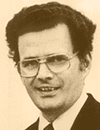
The Geeatest Among You
Don Wilkerson teaches that true greatness in the kingdom of God is marked by humility, servanthood, and faithfulness, contrasting worldly ambition with Christlike leadership.
In this powerful teaching, Don Wilkerson explores the true meaning of greatness according to Scripture, contrasting it with the worldly pursuit of fame and power. Drawing from Luke 22 and other passages, he reveals how Jesus redefines greatness as humble servanthood and faithfulness through trials. Wilkerson challenges believers to reject fleshly ambition and embrace a Christlike attitude of service. This sermon encourages the church to cultivate humility and to follow Jesus' example in leadership and life.
Full Transcript
This message is one of the Times Square Pulpit Series. It was recorded in the sanctuary of Times Square Church in Manhattan, New York City. Other tapes are available by writing to World Challenge P.O. Box 260, Lindale, Texas 75771 or calling 214-963-8626.
None of these messages are copyrighted and you are welcome to make copies for free distribution to your friends. Well, we had quite a Sunday, didn't we? You were here Sunday morning, and then what a blessing it was after our morning service for those of us here to participate in the ordination of the ministers. This was my first opportunity to be involved in this on such a scale.
A dozen or more that we ordained, or really what we did, we just confirmed the call of God on their lives, and these are ministers associated with World Challenge Ministers Fellowship. And God has given us some precious young men, precious ministers, pastors, evangelists, missionary going to the Philippines. And those of you that were here, we prayed for them.
It was a very, very special time. And they are really an extension of this ministry here as well. They're a part of this fellowship, and we thank the Lord for them.
And then Sunday night, how the Lord ministered. What a powerful, powerful word went forth. And then last night, there was a good number came out to hear Pendley again, and she laid out some practical steps for us to get involved in this coming against this murderous industry in our society called abortion.
And we're going to be taking some steps. We met with her today. Our ministers, our staff met with her.
She's going to be coming back and training those that want to go out. And we're going to start right at 68th Street and Broadway, right where our offices are. And we're going to start right there because on top of us, as you know, we've been praying against one of the largest abortion clinics in New York.
And David already called the owner and told them we're going to be doing it. He said, good, good. We want them out anyhow.
And so we're going to be doing that and providing an alternative. And can you just imagine, instead of them going to the third floor, they're coming in the second floor for us to counsel them. And Penny will be helping us to train some counselors.
And she's a part of our fellowship as well. We received her ordination from another group that she had already felt led not to remain there. And so we laid hands upon her today as staff and ministers and received her ordination as well.
And so she's a part of this. This is her home church now. And she's going to be coming back in and helping us.
And so pray for her and pray for this as this is a long term commitment. We're not going into this emotionally. We're looking at this in a very practical way and in a way that will become an ongoing part of what God has raised up this church to be in this city.
And so you pray for that and we'll be letting you know about that in days to come. Praise the Lord. Turn with me if you will tonight in your Bibles to Luke chapter 22.
Luke 22. I'm going to read to you, begin reading at verse 14. We'll read a number of verses here to get this setting.
It says, ...until the kingdom of God comes. And when he had taken some bread and given thanks, he broke it and gave it to them saying, this is my body which is given for you. Do this in remembrance of me.
And in the same way he took the cup after they had eaten saying, this cup which is poured out for you is a new covenant in my blood. But behold the hand of the one betraying me is with me on the table. For indeed the Son of Man is going as it has been determined.
But woe to that man by whom he is betrayed. And they began to discuss among themselves which one of them it might be who was going to do this thing. And there also arose a dispute among them as to which one of them was regarded to be greatest.
Now they thought if Jesus is about to come into his kingdom, we're about to come in with him. They wanted to determine who was going to be the greatest among them to be the one to receive the greatest benefit. And he said to them, the kings of the Gentiles lorded over them and those who have authority over them are called benefactors.
But not so with you. But let him who is the greatest among you become as the youngest and the leader as the servant. For who is greater the one who reclines at the table or the one who serves? Is it not the one who reclines at the table? But I am among you as the one who serves.
And you are those who have stood by me in my trials. And just as my father has granted me a kingdom, I grant you that you may eat and drink at my table in my kingdom and you will sit on thrones judging the twelve tribes of Israel. Now in the 26th verse I lift out of it these words as the title of my message tonight.
Verse 26, the greatest among you. The greatest among you. Let's bow in a word of prayer.
And as we pray there is another request that was handed to me regarding a young man who has been suicidal. He's on drugs and needs the Lord to touch him. His name is Christopher.
We want to remember him in prayer. And then one of our ushers, his wife Dorothy White is going to have an eye operation on Friday and ask that we remember him in prayer. So let's lift these up as we again also ask the Lord to bless his word tonight.
Father, we thank you for the spirit of worship and praise that we've sensed here tonight. We thank you, Lord, that your people have borne one another's burdens and we bear the burdens of others, Lord, that have looked to us with these prayer requests. And we pray tonight for the sister in our church.
We pray for her son. We pray for Christopher. We lift him up to you tonight.
Lord, you are able to deliver him and free him from the spirits that bind him. You're able to save him, Lord, to the uttermost. And we just agree to gather right now and we praise you, Lord.
We thank you, Lord. Lord, we've seen you do many things at this altar. And Lord, may one day he be at this altar.
May he find true salvation and healing and deliverance in you. Lord, we pray for Dorothy that you would overshadow her and bless her and guide her and protect her this operation on Friday. Lord, we just pray that you would touch her and minister to her, we pray.
And Lord, for any others that are here tonight that have come in burdened in this meeting and are in need of a physical touch even right now, Lord, heal them even as I'm praying right now so that they can receive the Word of God. And now, Lord, give us hearts that are open to receive your Word. Teach us from your Word tonight, we pray.
In Jesus' name, amen. Amen. It was the late Andy Warhol who was an avant-garde artist who made a statement.
I am not exactly sure what he said, but it was a statement to this effect that everybody sometime in his lifetime would have an opportunity to be famous for at least 5 minutes or 15 minutes. I don't remember the time frame. He said there would come a day that everybody will have his moment of fame, 5 minutes or 15 minutes or whatever.
Well, I don't know if you've had yours yet. I don't know if you've had your moment of fame yet, but there is in all of us an inherent desire for superiority and greatness or that which Jesus referred to here as Gentile lordship. Men and women have attempted impossible, even bizarre feats hoping to become famous if even for a few fleeting moments or to be famous in some particular field or endeavor.
I saw this week in the New York Times a picture of a young lady who had her moment of fame. 19-year-old girl in Indianapolis, Indiana, spent, now can you believe this, she spent 517 days on top of a pole, a platform on top of a pole, sitting in that for 517 days. That's a year and three quarters.
She did it to raise some money for cancer, but also she did it to win the record, the previous record was 488 days, so that she could be entered into the Guinness Book of Records as the longest pole sitter. Now, can you imagine that? Now she can turn to everybody else and say, can you top that? What silly, foolish, even dangerous things people do to be noticed and gain notoriety. The young man, David Hinkley, who shot President Reagan, did so to get some movie actress's attention.
Now maybe she'll notice me was his motive. I've read stories, you have too, of killers, murderers, who when asked why they did it, they admitted they said to make the headlines. You have seen it yourself.
You've seen the pictures of the arrest of some murderer and you'll see them walking and being arrested with a smile on their face. Why? Because now I am famous, I have my moment of fame, even if I must kill to do it. And to one degree or another, this principle of wanting to be great is universal, it's inherent.
Lucifer said this, I will ascend to heaven, I will raise my throne above the stars and I will sit on the mount of the assembly. And there is a spirit of Lucifer within the sinful nature, it's within the world, and it's a part of the sinful nature that seeks exaltation and greatness and superiority and fleshly recognition. The desire to sit on the mount of the assembly, to sit in a place of greatness is not the spirit of Jesus Christ.
It is the spirit of Lucifer. It is satanic. And in the church, in the church, this spirit is the cause for a lot of fleshly motivated service.
It's the cause of a lot of division and strife and many other problems. There are pastors, there are leaders who have bled sheep, they have bruised sheep, they have browbeaten sheep in order to fulfill personal ambitions for greatness. And oh, many times it's covered with a veneer of soul winning or church growth or wanting to build a big church in order to minister to people, but really behind it is a personal ambition for greatness.
I know because I've been to some of those ministers' meetings and yet is this not, this is not unsimilar to the motivation behind the building of the Tower of Babel. What did they say? Let us make a name for ourselves. In Genesis 6, 4 it says that there were giants on the earth in those days and also after them when the sons of man came unto the daughters of men and bare children to them and the same became mighty men which were of old men of renown.
And there's different interpretations as to who these giants were, but it says that they were renowned and that word renounced means that they are those who have a motivation to be a celebrity. And today in the body of Christ we have too many such giants, men and leaders who have departed from the presence of the Lord and in so doing they have wanted to exalt themselves and exert themselves for fleshly recognition. And sadly to say because of the carnality in the hearts of many of the people in the pew they've been guilty of creating such so-called celebrities.
And therefore I believe it's time to understand what true biblical greatness is all about. Now this misunderstanding of greatness is not new. The disciples had this on their minds a lot.
In fact too much. Here in Luke 22 it says there arose a dispute among them. Look at verse 24.
There arose a dispute among them as to which one of them was regarded to be greatest. Now let me tell you how I think that argument took place at that particular time. I believe it probably started when they went in to observe the Passover.
Because you see the seating arrangement at a Jewish feast was very definite. The table was arranged like a square with one side left open. And at the top of the square and in the center sat the host.
And on his right hand sat the guest of first honor. And on his left the second guest of honor. And the second on the right sat the third guest.
And the second on the left was the fourth guest. And so on around the table. But it started with the highest honor and went down.
And apparently when the disciples it may have been when the disciples came in to sit down there was a dispute among them as to which one was going to sit where. For they had this idea deeply embedded in them that Jesus was going to set up an earthly kingdom kick the Romans out and Jesus was going to be sitting on the throne of government as it were. And they were going to be right there beside them.
And so they kept having this thing on their mind as to which one was going to be closest to the throne of power. And it's one of the tragedies of the gospel story that the disciples could quarrel about status and procedure and seat arrangement and in the very shadow of the cross. And I believe that this argument as to who would be the greatest in the kingdom may have arisen when they went in and was merely a carry over from what took place when they first went to sit down.
Now go with me to Luke the 9th chapter because again there is an occasion when the same question was asked. Luke the 9th chapter in verse 42. A demon possessed lad was brought to Jesus.
And it says, And while he was still approaching the demon dashed him to the ground and threw him into a convulsion. But Jesus rebuked the unclean spirit and healed the boy and gave him back to his father. And they were all amazed at the greatness of God.
But while everyone was marveling at all that he was doing he said to his disciples, Let these words sink into your ears for the Son of Man is going to be delivered into the hands of men. You see he saw that they were getting all excited about the power that was going on there. But they did not understand this statement.
And it was concealed from them so that they might not perceive it. And they were afraid to ask him about this statement. And an argument arose among them as to which one of them might be greatest.
Now do you see the same spirit there again? The disciples saw the power, the authority of Jesus and the recognition from the crowds that comes with that power and that authority. And when they saw that they wanted to share in some of that glory, in some of that fame, in some of that applaud. And folks let me remind you again that we have set a policy in this church and we're going to keep it, we're going to hold to it, we're going to hold to it in order to make a point that we're not going to be clapping, we're not going to be applauding for man here.
Because the disciples saw the crowds gathered at Jesus, saw the marvel at that and they got swept up in that. And so they got in line, they began to argue to see which one would be sitting higher on the totem pole of greatness. Or going back to the illustration of when they came in to observe the Passover, which one was going to sit at the highest seat of honor.
Can't you just see them as it were? I don't know that they did this, but as it were when they came in they're making a mad dash to see who's going to sit closest up to the head. And pushing aside. One more example, go to Matthew chapter 20.
Matthew chapter 20. This is very interesting because it says, Then the mother of the sons of Zebedee came to him. Verse 20.
Did I say chapter? It's chapter 20, verse 20. Matthew chapter 20, verse 20. It says, Then the mother of the sons of Zebedee came to him with her sons bowing down and making a request of him.
And he said to her, What do you wish? And she said to him, Command that in your kingdom these two sons of mine may sit. One as your vice president and one as your secretary of state. One on your right hand.
Again, that seat of honor. One on your right, one on your left. But Jesus answered and said, You do not know what you are asking for.
Are you able to drink the cup that I am about to drink? Now you see, these two sons set their mother up for this. Do you know how I know that? Because when Jesus, first of all she said, Command. Now can you imagine this? She said, Command.
I command you that in your kingdom these two sons of mine may sit at your right hand and on your left hand. And listen, a lot of the commanding that I hear today in charismatic circles is no different than this. Can you imagine? She says, Command.
I want you to decree it right now. I want you to make a command that all the others so that I can go and we can tell all these other disciples that my two sons have the highest position when you are elected president. But the two boys put their mother up to that.
How do we know that? Because Jesus then said in verse 22, You do not know what you are asking for. Are you able to drink the cup that I am about to drink? And notice who answered. Here's the two boys as you were.
They're hiding behind mother's apron strings and said, Mom, ask him, ask him. And so she does. And when Jesus said, Are you able to drink this cup? Here pops two heads out from underneath mama's apron strings and said, Oh, yes, we are.
You see, they were looking to drink the golden cup of greatness, not the wine cup of suffering. And there is a teaching today in the body of Christ that tells you you can get saved and you can drink the golden cup of greatness and you can avoid the cross and you can avoid drinking the cup of the wine and going through the winepress of suffering. Now, go back to Luke 22.
Using Luke 22 as well as other parallel scriptures, I want to share some lessons on true biblical greatness that everyone who walks in holiness needs to understand. And this is what I want to share with you in this message tonight. The greatest, listen to me, the greatest in the kingdom of God are first of all those, among other things, who are more willing to be taught than to be the teacher.
They have a teachable spirit. Secondly, they are more willing to serve than to be served. And thirdly, they are those whom Jesus said, you stood by me in my trials.
We're going to take a look at that. Now, first of all, Jesus said, you'll note in verse 25 and 26, he refers to the thinking of the Gentiles, the thinking of the world. He said the kings of the Gentiles lorded over them and those who have authority over them are called benefactors.
But not so with you. And notice what he says, but let him who is the greatest among you become as the youngest. Now in Luke 9, where we read to you, when the disciples argued as to which one of them might be greatest, at that occasion, Jesus did something interesting.
He gave them a very simple but profound object lesson to make the same point as in Luke 22. In Luke 9, verses 47 and 48, but Jesus knowing what they were thinking in their hearts regarding this whole concept of greatness, he took a child and stood him by his side or put him on his lap as it were and said to him, whosoever receives this child in my name receives me. And whosoever receives me receives him who sent me for he who is least among you, this is the one who is great.
Now here is one principle of greatness and listen to it. How we treat the youngest, the weakest, the most vulnerable, how we treat the child, whether it be the born or the unborn child, how we treat that individual tells us something about our greatness and whether we have the true spirit of Christ. Penny Lee made us aware Sunday night and it's been said by others that the barometer of a society is how it treats its oldest on one hand and its youngest on the other hand.
And Jesus makes a case for the youngest here and he says, if you mistreat children, you are mistreating me. But Jesus is not just talking, there's a principle here. He's not just talking about little children.
I think he's talking about the spiritually young. He's talking about the weak. He's talking about the innocent.
He's talking about the ignorant. And these children, my friend, need our love. They need our acceptance.
They need our forgiveness without compromise and yet with compassion. And the children that Jesus refers to are both literal and spiritual children. And Jesus said, whosoever receives this child in my name receives me.
I remember one day when I was working at the Teen Challenge Ministry, I'm no longer associated with it, no longer there, but I remember some years ago there was a woman who had been a social worker, got addicted to pills and came into the center and she was one of those that needed a lot of attention. And every day she was at my office, every day she needed a little bit of comfort and counsel and one day she caught me in the hallway and she said, can I see you? And I had some files and papers in my hands at that very moment and I said, I'm busy. I'll get back to you.
And I went on my way, completely forgot about her. That night as I was going to, laying down to sleep and I laid down and I remembered her request when she said to me, may I see you? And I remember the look in her face when I said to her, I'm too busy right now. She had a look in her eyes that said this to me and it all came back to me as I laid down to sleep that night.
In her eyes she said to me, but I thought that I was your business. I thought I was your business. And I said, oh God, forgive me for being so busy.
Help me Lord not to forget the youngest among us. Now I realized that we need discernment in ministering to people. Some people are rebels and reprobates that if you pay too much attention to them, you're casting pearls before swine.
Some Christians don't need sympathy. They need to heed some advice, the advice already given them and grow up. There are some adults that act like babies and they should know better.
But still my friend, there are spiritual babies because they have not been taught how to grow. And God help us and give us discernment, give us compassion, help us Lord to come and to be able to receive them and love such a child, an innocent child. Jesus said, become as the youngest.
Get down by them, identify with them. Now I know it means more than this, but it also I believe means this as well. I remember I heard one day at Teen Challenge about a young man who was giving us all kinds of problems.
And I heard the story of what happened and I said to myself, well, that's out of order. That's not right. I'm going to dismiss him.
And you know, my emotions all got worked up and I said, okay, you know, I'm going to, I'm going to send him packing. So he came in and just before I told him that he to go pack his clothes, I said, do you have anything to say for yourself? And he began to open his heart to me and he began to pour out his woe. He began to pour out a heart of a young man who, yes, he had done wrong, but at the same time, there was, there was a desire for God.
I detected something there. I detected a repentant heart. And so I got down on my knees and put my arms around him and prayed with him and forgave him and encouraged him.
And he went out the door instead of with a kick in the pants, he went out with me, putting my arm around him, becoming as the youngest. You see, when Jesus placed a child in the midst of his disciples, he knew what was in their hearts. He took a child and he placed it beside himself because that was a seat of highest honor.
And he went on to say that whosoever received the little child received him and whosoever received him received God. And he was trying to say to the disciples this, he said, the 12 were chosen as his lieutenants, but a child you see occupied no place of honor, held no official position whatsoever. And Jesus was saying to his disciples this, he said, if you're prepared to spend your life serving and helping and loving people who in the eyes of the world do not matter at all, you are going to be serving me and serving God if you'll do that.
He said, if you're prepared to spend your life doing those apparent unimportant things and never try to be what the world calls great, he said, you will be great in the eyes of the Lord. Start there with a child. But then he goes on deeper.
He says, also develop in your heart the characteristic of a child. Becoming as the youngest also means having the humility of a child as one who was willing to be taught rather than always being the teacher. Go with me to Matthew, the 18th chapter.
Matthew 18. Here's Matthew's account also. He said, at that time, the disciples came to Jesus saying, who then is the greatest in the kingdom of heaven? And he called a child to himself and set him before them again at the closest seat of honor.
And he said, truly I say to you, unless you are converted and become like children, you shall not enter the kingdom of heaven. Whosoever then humbles himself as this child, he is the greatest in the kingdom of God. And whosoever receives one such child in my name receives me.
You see, conversion means we become and we have the heart of a little child. And instead of being ruled by pride, we have humility. Instead of being withdrawn, we reach out to others in the body of Christ.
Do you ever see a healthy child emotionally? They love everybody. They'll go to everybody. A child has all kinds of questions.
They want to learn. They have a teachable spirit. I remember when I was teaching a Sunday school class one time at my father's church.
And this one man kept wanting to control the class. He wanted to let everybody know how much he knew and how little I knew. And I got very disturbed.
And I said, dad, I can't go on with this class anymore. And he said, son, that spirit is wrong, but hang in there. But then he took me aside and he said, son, remember this.
Every time you meet somebody, no matter how young you are or how much older you get in the Lord, every time you meet somebody, always ask yourself the question, what can I learn from that person? What can I learn from that situation? In other words, my father would say, have the spirit of humility. And my friend, the moment that you stop being teachable, that's the moment you stop growing. There will never come a time when you don't need to grow and you don't need your other brothers and sisters in the body of Christ who have something to teach you if you have a heart to learn.
Luke 5, 19, if you want to turn to, if not, you can just listen. Jesus again talks about greatness. He said, whosoever then annuls or breaks one of the least of these commandments and so teaches others, shall be called least in the kingdom of heaven.
But whosoever keeps and teaches them, he shall be called great in the kingdom of heaven. Now the motive to keep, now notice it says whosoever keeps and teaches them. You got to keep them before you can teach them.
And the motive to keep the commandments of God comes out of a broken, a repentant, a childlike heart that says, oh Lord, I need this for myself. Now the reason I say that is you're getting a lot of teaching in this church. And when you come to the services and especially when you come to the classes, please don't do this.
As you listen to the teaching and go on and say, oh boy, I know just who that could apply to. And in fact, I can't wait to go back to my old church or I can't wait to get to my church and I can't wait to tell them. You know what that's called? That's called pitchforking.
You know, that's receiving it and then that's pitching it over your shoulder and say, I just know exactly who that's for and I want to pitch it right on their lap. Now it's true, God may want you to teach others in time, but it says first keep, then teach. Have a spirit of humility, have the spirit of a child to admit your personal need for change.
Then the Lord will use you to serve and to teach others. I like what F.B. Meyer, who is a writer, some of you may know the name, he said this. He said, I used to think, listen to it.
I used to think that God's gifts were on shelves one above the other and that the taller we grew in Christian character, the more easily we could reach them. I now find that God's gifts are on shelves one beneath the other and that it is not a question of growing taller, but a stooping lower. Unless you become converted and have the spirit of a child and say, it's not my brother, it's not my sister, but it's me, oh Lord, in need of that teaching.
And Jesus said, whosoever keeps and teaches them, he shall be called great in the kingdom of heaven. And we want to produce some great people in this church. Now, let me go on.
Jesus, back in Luke 22, says also that true greatness is manifested by a spirit of serving rather than wanting to be served. Let me read it again. Verse 25, the lords of the Gentiles, the kings of the Gentiles lord it over them.
Those who have authority over them, they're called benefactors, but not so with you. But let him that is the greatest among you become as the youngest and the leader as a servant. And now he asked the question, he said, in the world among the Gentiles, who is greater, the one who reclines at the table or the one who serves? He said, isn't it not the one who reclines at the table who is the greatest outside the kingdom of God? But he said, not so with you.
And so when Jesus asked the question, who is greater, he is saying, who is greater, the consumer or the waiter? The one who sits down only always wanting to be blessed or the one who serves the tables? I've got to give you my illustration. Some of you have seen. Some people come to church like this.
Feed me. Then when they get fed, they immediately want to go to this. That's not the Pope.
That's a crown. Feed me and then crown me. But Jesus said, he that would be greatest among you, who is the one who waits on the table? He says, here's the greatest in the kingdom of God.
May I serve you? May I serve you? That's the greatest in the kingdom of God. You see, today there is, you pardon my saying it this way, there is an American express card gospel today making people gospel gluttons who will not leave home without the card. They want a church.
They want a preacher. They want a table where somebody strokes their ego, where they are given the promise that they will be fat cats in the kingdom of God. And Jesus said that there can be in the church today a spirit of the kings of the Gentiles who see themselves as the benefactors of spiritual authority.
And like the mother of James and John, they bow before Jesus, not in humility, but to command Jesus to give them the highest honors and the highest blessings. And Jesus said, it ought not to be so among you. He said, I am among you as one who serves.
Now thank God for his faithful servants. And we've got many right here in Times Square Church. And I learned long time ago that that's what makes the wills of the church go around.
People who don't look for recognition, but people who want to serve more than be served. I remember a woman came after, I preached when I was in traveling ministry and preaching. A dear sister came to me after the service and she approached me.
She said, years ago, I read the cross and switchblade. And from that day on, the Lord put it on my heart to pray for your ministry. She said, I pray for you.
I pray for David every day. And I said, thank you. And I went on my way and I was appreciative.
But as I went down, the Holy Spirit just stopped me in my tracks as it were and said, now, wait a minute, wait a minute. I want you to know what's going on here. And then the verse came to me.
The first shall be last and the last shall be first. And the Lord spoke to me and said, when we get to heaven, you are going to have to stand in line behind that woman because she is the greatest in the kingdom of God. Nobody knows her.
Nobody knows about her service. It was just quiet service unto the Lord. A woman who had intercessory prayer.
Nobody sees it. It's what we call secret warriors. And I thank God for them.
Let me share with you, if I can tonight, personal testimony. Some of you have heard me share this before, but I feel it's appropriate to share it at this moment. As long as I can remember, I knew God had called me to the ministry and called me to preach.
The reason I knew it is that my father told me. My dad was a preacher and I used to go around to all these preachers' conferences. My dad was an official in the church and he went to all kinds of conferences and I had to go along and went along many times.
And he'd introduce me and he'd say, here's the next preacher in the family. And my dad said it so many times that I just never doubted it. You know, dad said it, dad settled it.
And then when I got older, my heavenly father confirmed that my earthly father was right. And I had a burden to preach. And in fact, I'll never forget when I first preached.
I was about 12 years old. I preached my first sermon. I'll never forget it.
I preached for about 15 minutes from the scripture that says, broad is the road to destruction and narrow is the gate to salvation. And I preached the house of fire. And I want to tell you, there must have been three times as many people in that audience that night than there's right here tonight.
And when I gave the altar call, there must have been, I don't know, a hundred or more that came forward. And I was just about 12 years of age. But I have to also tell you that that sermon I preached was in my room.
And that crowd that I was preaching to was in my imagination. And so were the results. And I've never had greater results in my life.
I went to Bible school. I had problems at Bible school because I thought, but I kid you not, I preached my first sermon when I was 16 years of age at my brother David's church when I was in Phillipsburg, Pennsylvania. I started preaching then and was preaching when I was 16, 17, went off to Bible school and had a very hard time at Bible school because I thought Bible school needed me.
I spent three years there. And it was in my third year that the Lord called David here to New York City. And many people have asked me, and I've been involved in this ministry now over 28 years myself, been in this city.
And many people have asked me, those who have read the Cross and Switchblade and know David's call, they've said to me, well, how did you get your call? And I just simply say, I got mine on the telephone. David called me, shared the vision of the work. He said, Dave, he said, Don, I'm going to need young men to join me in this.
He gave me and sent a letter. Really, it was a prophetic word from the Lord about the future of the ministry and what God was going to do on the streets. And it was a Macedonian call and I received it.
And I came and I joined my brother here. And I tell you, I was so excited. I left Bible school with my Bible and with a lot of sermon notes.
But you know, on this occasion when Jesus was breaking bread with the disciples, you also know that it was that occasion when he was teaching them a lesson about greatness. You recall that at one time he digressed and he went and he took a towel and a basin and he washed the disciples' feet. And when I left Bible school, I left with my Bible.
This is the end of side one. You may now turn the tape over to side two. And all of my sermons, but I didn't have a towel.
And so when I came and joined David here in New York, I was excited. I envisioned what I would be doing and being out on the street ministering and so forth. And I was ready to enter in to a great ministry.
And at the time, there was an office. David had an office over in Staten Island. That's where he really began in this city.
He set up a little office. And my mother came and joined him because my father had passed away. My mother came and she worked in the office as a secretary.
And also David had started to write literature. Some directed to teenagers and directed for street evangelism. And both his ministry as well as that literature started to get very well known across the country.
And people started to write in to this office in Staten Island for all this literature. And so David had set up a little shipping and mailing department there and so when I came to join him, guess who got that job in the shipping and mailing room? And there I was. Every day I was putting orders together and I do not demean this at all.
But it was demeaning for me because, you know, I'd go in there and say, Lord, this is not what I'm called to. And I'd count out 100 tracks and 1,000 tracks and wrap it all together. And my biggest event of the day was going to the post office to mail it to somebody else.
And I prayed. I said, Lord, Lord, I'm ready for my ministry. I've been called to preach.
I was ready to go on the streets. And the more I prayed, the more the orders came in. And I remember one day I really got desperate before the Lord.
I said, Lord, you can't do this to me. I've been preaching. I've already got my minister's license.
I'm saved. I'm filled with the Holy Ghost. I'm a graduate of Bible school.
I'm here in New York City. And besides this, I'm Dave Wilkerson's brother. And I learned you can't even drop names in heaven.
It don't work. But, you know, finally the Lord spoke to me. And this is what he said to me.
He said, Son, I've not called you to be successful. I've called you to be faithful to me. Whatever your hands find to do, do it with all of your might.
God was trying to teach me how to be a servant. He was teaching me how the ministry of servanthood. And I was so dumb to realize it, to learn it.
I remember when we had our first summer workers that came together from Bible school. And David was giving out jobs and told this one young man, I want you to wash your dishes. And he was just like me.
He said, wash dishes? No, I haven't come here to wash dishes. My goodness. He said, I've got to go up to pray.
And David said, you go wash dishes or you pack your bags and you leave. I'd been trained for the ministry, but I hadn't trained how to be a servant. God wants us to have the spirit of a servant.
And when Jesus washed the disciples' feet, washing feet at that time was the most demeaning job. It was done by the slaves because the feet at that time were the most ugly part of anybody's body. They were exposed and they were dirty from all of the walking and the dust and the grime and so forth.
And it was the slaves who did it. It was the servants who did it. And so when Jesus went and started washing their feet, it was such a contrast to the argument that they had.
Can you imagine? They were about ready to come into the kingdom. They were already about to go to the throne. And here Jesus is stooping down, washing their feet.
And he says, for I gave you an example that you should also do as I did to you. God, give us servants in the Times Square church and in the body of Christ. Hallelujah.
And people that will do it unto the Lord and not care who gets the credit or who gets the glory. All right, go to Luke 22. One more, one more thing here.
True greatness comes by standing with Jesus doing his trials. Look at verse 28. And you are those who have stood by me in my trials.
Now all of us want Jesus to stand with us in our hour of testing, in our hour of trial, in our hour of temptation. But are we willing to stand with him in his hour of trial? Now how is Jesus on trial? Of course Jesus is far beyond the kinds of trials and tests that we go through. He's already gone through his hour of trial in Gethsemane and Golgotha.
And now he is beyond death and pain and defeat. He is glorious in his majesty and having glory. But, but he is not beyond concern for his cause on earth.
And Christ's body is still on earth, which is his church. This is the thing that he loves and he cherishes. And his cause here is still the dearest thing in the universe to him.
And how he lives in this body on earth, he lives in us who try to maintain and extend his cause on earth. And listen to me, his cause has trials and tests and difficulties, and these are his trials as well as ours. And when we stand up for righteousness, when we do not give in to compromise, when we care for the lost, when we love one another, when we act like servants, we stand with him.
We stand by him. You see, every time that you are tempted, every time we are tempted to sin and to disobey God, in a sense, the honor of our Lord is on trial at that moment. When you fall, when you sin, you dishonor the name of the Lord at that moment.
Not that Jesus sins when we sin, not at all. But the testimony of the Lord is damaged as well as the heart of our Lord grieved when we live like the devil instead of like a child of God. A dear young woman at the altar some weeks ago said this, and it was said in the microphone so I can repeat it.
She came forward because that day, that very day at supper, she went to sit down with some unsaved people and she was looking forward to witnessing to them. But as it so turned out, instead of her witnessing to them, they witnessed to her, not about the Lord. And she ended up drinking with them.
And she came and confessed that and was grieved by it because you see, she had her moment, but she did not take her stand with Jesus. And it was her temptation, but it was his trial as well. And when Jesus commands his disciples and he says that he is thankful that you are those who stood with me in my trial, what he is saying, my friend, is that when you are out there faced with a decision whether you're going to live for God or to give in to temptation, when you give in, the name and honor of the Lord is at stake.
And Jesus turns to his disciples and he is pleased as he thinks back on them and said, you are those who have stood with me in my trial. I can imagine that he was thinking at that time, you remember in John 6, when Jesus had fed the multitudes and after he fed them, he then said to them, he began to teach them his doctrine. And this is what he said in essence.
He said, unless you feed off of me and me only and me entirely, you cannot be my disciples. You must eat my flesh and eat my body. You must only, only follow and trust me.
And they said to him, you remember what they said? This is a difficult statement. Who can listen to it? And as a result of this, many of his disciples withdrew and were not with him anymore. And Jesus therefore turned to the 12 and he said, do you not want to go away also? He said, do you want to leave? And Simon Peter answered him and said, Lord, to whom shall we go? You have words of eternal life and we have believed and have come to know that you are the Holy One of God.
And you see how the heart of our Lord was warmed at that moment as he was being rejected as it were. That was not his hour of trial as in Gethsemane and Gilgatha. But nevertheless, it was an hour of rejection and at his moment of rejection, they stood with him, hallelujah.
That's why he said, you are those who have stood by me in my trials. But then there was Peter and I close with this. Consider Peter here in this 22nd chapter who partially stood with Jesus, but not all the way.
Look at it, verse 54. There's something I never saw before. I never saw this before.
You recall that of course Jesus said that Peter was going to deny him. But what I see here is that Peter followed Jesus partially, but not all of the way. Look at verse 54.
And having arrested him, they led him away and brought him to the house of the high priest. But Peter was there. Peter was following at a distance.
You see, Peter went further with Jesus than any other of the disciples during this hour of trial. He actually accompanied Jesus to the high priest house, a courageous act given the lynch mob atmosphere at the time. He was in the shadows.
He was at a distance. And it was in that courtroom of the high priest where a servant girl in verse 56 sees him and look intently at him and said, this man was with him too, but he denied it and saying, woman, I do not know him. And verse 58, it says a little later, another saw him and said, you are one of them too.
And Peter said, man, I am not. And about an hour later, about another hour had passed, another man began to insist, saying certainly this man also was with him for he is a Galilean too. But Peter said, man, I do not know what you are talking about.
And immediately while he was still speaking, a cock crowed. And then look at verse 61. Remember again, Peter.
It's so near and yet he's so far. He stood with Jesus. He went as far as the high priest house, but he stood in the distance.
And yes, he denied the Lord. And look at verse 61. And the Lord turned and looked at Peter.
And the Lord turned and looked at Peter. And Peter remembered the word of the Lord, how it had been told him before a cock crows today, you will deny me three times. And he went out and he wept bitterly.
And I propose to you my friend tonight that some of you may be right where Peter is. You have come so far with the Lord and yet you've given in to a temptation. You started to walk in holiness.
You started to move right in the Lord. You started, your heart has been right, but you've fallen, you've failed, you've sinned. And the Lord turned and looked at Peter.
And I'm sure that that was a look that was, it was a look of love mingled with sorrow. The Lord turned and looked at Peter. And let me tell you, my friend, I say this to you tonight.
I never, never want to see that look. I never, never want to see that look. Oh, I've seen it at times, but I never want to see it again.
And that look so pierced Peter's heart that he wept bitterly. And I say to you tonight in closing, if you want to be a true servant of the Lord, if you ever hope to obtain greatness in God's kingdom, it's got to begin by taking your stand and stand with Him because at the moment of temptation, it's not only your temptation, but it's His trial and the honor and the testimony of the Lord is at stake at that moment. And the Lord wants you to take that stand because if you take that stand at that moment, then He can lead you on into the ministry, into the service that He has for you.
Some of you are waiting. You're saying, God, I want you to use me. But God can't use you until all the denial is out of your heart, all the compromise is out of your heart so that you never have to look and see that look of Jesus having grieved because of disobedience.
Peter went partway with Jesus, but he didn't go all the way. And I ask you tonight, how far have you gone? How far have you gone? That's where it starts. Here's your testimony tonight.
And you are those who have stood by me in my trial. Let's bow in a word of prayer. Steve, would you? This is the conclusion of the tape.
Pray tonight that you would speak to the hearts of those and persecution. I believe in part, in some small part, you are entering into the sufferings of Christ. Listen to what it says in Hebrews 12, 3. It says, Consider him who endured such contradiction of sinners against himself.
Yet,
Sermon Outline
-
I
- Introduction and context of the message
- Ordination and ministry updates
- Setting the stage with Luke 22 passage
-
II
- Human desire for greatness and fame
- Examples of worldly ambition and its dangers
- Contrast with biblical perspective
-
III
- Disciples' misunderstanding of greatness
- Scriptural examples of disputes over status
- Jesus’ teaching on true greatness as servanthood
-
IV
- Lessons on biblical greatness
- Characteristics of the greatest in God’s kingdom
- Call to humility, service, and faithfulness
Key Quotes
“Let him who is the greatest among you become as the youngest and the leader as the servant.” — Don Wilkerson
“The desire to sit on the mount of the assembly, to sit in a place of greatness is not the spirit of Jesus Christ. It is the spirit of Lucifer. It is satanic.” — Don Wilkerson
“The greatest in the kingdom of God are those who are more willing to be taught than to be the teacher.” — Don Wilkerson
Application Points
- Cultivate a teachable spirit by being open to learning rather than seeking to always teach.
- Choose to serve others selflessly instead of seeking to be served or honored.
- Stand faithful and supportive in trials, following Jesus' example of perseverance.