
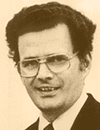
The Signs of Revival
Don Wilkerson emphasizes that true revival begins with a personal and corporate return to biblical preaching, heartfelt repentance, and a hunger for righteousness within the church.
In this sermon, Don Wilkerson challenges common misconceptions about revival and calls for a genuine, personal, and church-wide awakening rooted in biblical preaching and repentance. Drawing from Mark chapter 2 and historical revivals, he emphasizes that revival begins with a hunger for God's Word and a right heart attitude. Wilkerson encourages believers to seek continual personal revival as the foundation for broader spiritual renewal.
Full Transcript
This message is one of the Times Square pulpit series. It was recorded in the sanctuary of Times Square Church in Manhattan, New York City. Other tapes are available by writing to World Challenge P.O. Box 260, Lindale, Texas, 75771, or calling 214-963-8626.
None of these messages are copyrighted, and you are welcome to make copies for free distribution to your friends. And while you're turning there, I want to say that last night around our dinner table, my family asked me what I was preaching about. And I told them, and then I told them the passage, and they sort of turned to me in unison and said, You can't do that.
Pastor Bob just preached from that. And it's marked the second chapter. And I said, Well, I was gone.
I wasn't here. It was several Sunday mornings ago. I believe you preached from Mark, the second chapter.
Am I correct about that? And I didn't go on to tell my family. I wanted to explain to them that Pastor Bob doesn't own chapter two of Mark. But I didn't tell them that.
But they were sort of saying, You can't preach from that. Well, I wasn't here, and I haven't heard the message yet, and I'm going to go in a different direction anyhow. So Mark chapter two tonight.
I just wanted to explain that, Bob, and just in case you thought that I thought maybe you didn't get it right when you preached it, therefore I was going to preach it. I want to speak to you tonight about the signs of revival, the signs of revival. And let's read a few verses here in Mark chapter two.
And when he came to Capernaum several days afterward, it was heard that he was at home. King James says, In the house, I believe. And many were gathered together, so that there was no longer room, even near the door, and he was speaking the word to them.
And they came, bringing to him a paralytic carried by four men. And being unable to get to him because of the crowd, they removed the roof above him. And when they had dug an opening, they let down the pallet on which the paralytic was lying.
And Jesus, seeing their faith, said to the paralytic, My son, your sins are forgiven. And there were some of the scribes sitting there and reasoning in their hearts, Why does this man speak this way? He is blaspheming. Who can forgive sins but God alone? And immediately Jesus, aware in his spirit that they were reasoning that way within themselves, said to them, Why are you reasoning about these things in your heart? Which is easier to say to the paralytic, Your sins are forgiven, or to say, Arise and take up your pallet and walk? But in order that you may know that the Son of Man has authority on earth to forgive sins, He said to the paralytic, I say to you, rise, take up your pallet and go home.
And he arose immediately and took up the pallet and went out in the sight of all, so that they were all amazed and were glorifying God, saying, saying, We have never seen anything like this. We have never seen any... King James, I believe, says, We've never seen it on this fashion. Signs of revival.
You know, a year ago, I would not have preached this message. Frankly, when it comes to the matter of revival, I have to tell you that I was sort of turned off by all of the talk and messages that I heard about revival. And there were some reasons for this, which I'll cite for the way that I felt.
First of all, some were saying that we were or we now are in the midst of a great revival across the land. Now, the evidence that is cited for this is the fact that the Gallup poll, polls have shown an evangelical resurgence in our country and supposedly more people claim to be born again than ever in history. Added to this feeling that we're in the midst of a revival is the fact that there are many great megachurches today.
And in some locations, it appears that there has been a, you might say a revival, at least on a local level. But as I've traveled across the land, I've seen another picture. And we pastors have also seen another picture.
And that is of the so-called charismatic renewal that some people point to as evidence of revival. And we see that in many respects of being in disarray. And now that the dust has settled, you can, and we take a look at the state of the church.
It's not a pretty picture in most cases. For example, the television ministries are in shambles. All types of winds of doctrine have swept through the church like a tornado leaving behind a host of wounded sheep.
And never before has there been more people in the church, more people in the church with less character and less holiness and purity of lifestyle. Because you see the price that the church and some preachers ask people to pay to join the renewal, the price they asked them to pay was so cheap, anybody, almost anybody could join it because there was little commitment involved. There was a little need to adopt a radical life change.
It was almost as if the preaching has been, come along just as you are, you can have all this world and Jesus too. In other words, just add Jesus. All you need to do is just add Jesus to your life.
That's what's missing in your life. You don't have to do anything different. Just add Jesus.
You don't need to subtract anything from your life. Therefore, the revival that I thought at first might be a genuine move of God turned out to be more like a 4th of July fireworks that flashed across the body of Christ. It stirred great excitement for a period of time as a fireworks show will do.
But when it was over, there was little permanence or permanent value that remained. Now, I don't discredit the entire charismatic renewal. There was some good to it.
But nevertheless, for the most part, I was turned off by all the talk that we're in revival. And then a second reason that I've been cautious about referring to revival is that it has become a code word, meaning a cure-all for this nation. Some people think that if the Holy Spirit would just sweep upon us in mighty power that it would get America back to its roots.
We would get rid of the humanists and the liberals in our society and the church would become the head and not the tail. In fact, that's what the kingdom now people are claiming as Bob preached Sunday morning that that's what they're teaching. Now, it's true that in past revivals, past revivals have reformed not only the church but in many cases the society as well.
During the great awakening in the 18th century, which I'm going to refer to frequently a little bit, during that awakening, in fact, there were two great awakenings. It changed attitudes in the society. It changed attitudes towards the poor.
It changed towards the orphans and the Indians and the slaves. However, no revival ever has fully or will fully Christianize this nation or set up a utopia or a millennial reign on this earth. Stephen Oldford, who used to be the pastor of Calvary Baptist Church here in New York City, he said this about revival.
He said, revival is a strange and sovereign work of God in which he visits his own people, restoring, reanimating, and releasing them into the fullness of blessing. But you see, that blessing falls only upon those who have a hunger for righteousness and maintain a right heart attitude. Even in the midst of the greatest revivals in the past, often the majority of the society ignored it and meant to continue to go on and serve their own gods.
You see, there is a danger of making an idol out of a cry for revival and expecting too much from it. Even Jesus' disciples wanted or thought that he was going to launch liberation theology and set up his kingdom now and overthrow their oppressors, and they were deeply disappointed when he didn't do it. They didn't understand that it was a kingdom within the heart, and they thought that it was going to Christianize, as it were, the nation.
A third reason we must properly understand revival and why it needs to be redefined is that the call for revival up to now has been misfocused. It's been misfocused. For example, we hear over and over again, I've heard this quoted so many times.
I've seen posters with this verse on it. You're familiar with it. Let me repeat it to you again.
2 Chronicles 7, 14, it says, If my people who are called by my name humble themselves and pray and seek my face and turn from their wicked ways, then I will hear from heaven and will forgive their sin and heal their land. But, my friend, that is not directed to Washington, D.C. That is directed to the church, first of all. The church has to repent first.
God's people must humble themselves, turn from their wicked ways, and seek his face. We've been asking the wrong people to repent first. We've got to get our own house in order first.
It's not just Washington, D.C. or the government or the nation. Yes, they need to repent, but the scripture says, If my people and if the church would spend more time on its knees praying than on its feet lobbying, I think we would be in revival right now. It's not Washington we need to lobby.
It's heaven that we need to lobby. Somebody said, Revival is God's finger pointing at me. The call to revival is given not to the unbeliever, but to the family of God.
Leonard Ravenhill says, Evangelism affects the other fellow. Revival affects me. Now, in spite of the misconceptions of revival, I am preaching tonight about revival because my heart hungers to see an old-fashioned heaven-sent revival that begins within me, that begins within the church, and spills out over into the streets and into your homes among your unsafe loved ones, into your offices, into our schools, and into our universities.
There is a need to call for and to cry out for revival, but it first must begin personally and individually in each of us before it spreads anywhere else. Now, I have no word from the Lord tonight. I have no word from the Lord that America's gonna see revival.
I have no word that New York City is gonna see a great revival or a spiritual awakening as has happened in earlier history, but my heart still cries out for it, and I believe that we can say it, and we were talking about it today in our pastor's meeting. I believe that we are now seeing a cloud about the size of a man's hand, a cloud of revival that God wants to move and is manifesting in our midst right here. As I said, I don't have a word from the Lord as to revival in New York City, but I do have a word from the Lord to myself, and that is I need to pray for a continual personal revival in my own heart.
I pray that that personal revival grows within you and will move within this church, and then we'll let the Holy Spirit decide where he wants it to go from here, but you see, all past revivals started in one place. It started in one gathering. It started in one town.
Other people heard about it, and it drew hungry souls like a magnet, and they would come, and they'd catch the flame of that fire, and they'd take it back somewhere else, and I'm gonna tell you about some of those revivals in just a moment. Habakkuk 3.2 says, Lord, I have heard the report about thee, and I fear. I have heard the report about thee, and I fear.
Oh, Lord, revive thy work in the midst of the years. In the midst of the years, make it known in wrath, remember mercy, and I believe that in the midst of the years of backsliding and famine and spiritual deterioration that has gone on in the land that like Habakkuk we can cry out and say, Lord, revive thy work again, and that he will do it if that's our heart cry. Hallelujah.
Now, when true revival breaks out, certain things happen, always happen. There's certain characteristics, and I wanna use the account in Mark 2 to show you some things that happened here that as I study revivals in the Bible as well as in history, I find certain similar characteristics, and I wanna cite about four or five of them tonight. Now, there are more than this, but I find about four or five of them in this account, and I wanna talk about them.
The first sign of revival is a return to biblical preaching and a renewed interest in the Word. Note what Jesus was doing in the house meeting in Capernaum. Before he healed the man, before he saved the man, before he did anything else, look what he was doing in verse two.
And many were gathered together so that there was no longer room even at the door. And what was he doing? And he was speaking the Word. He was speaking the Word to them.
Psalms 119 and 93. Don't turn there, listen. It says, I will never forsake thy precepts, for by them thou hast revived me.
Let me read that again. I will never forget thy precepts. I will never forget thy Word for by them thou hast revived me.
You see, the reason that I've not been able to get too excited about the so-called renewal or revival in the church over the past several decades is that it has been centered mostly on spiritual manifestations or people getting spiritual experiences. Getting gifts, which there's nothing wrong with that, or receiving tongues, and there's nothing wrong with that. The emphasis has also been on praise and worship.
It's been on dance. It's been on healing. It's been on deliverance.
It's been on a lot of things. But the preaching of the Word in some cases has been relegated to a secondary place. And there has never been a revival without Christ-centered and Word-centered preaching and preachers and people who are drawn to God's Word.
Now, how we know that there is a family of the Word over the last several decades is because the emphasis on today's teaching is what can God do for me? What can God do for me? Not what I ought to do for God. And the result is that we've produced a group of shallow Christians, of carnal churchgoers, and compromising Christians. But to listen again from Psalms 119, verse 103 and 104, it says, How sweet are thy words to my taste.
A characteristic of the revival, it is suddenly the Word becomes alive. People get hungry for the Word. It becomes sweet to them.
They can't get enough of it. How sweet are thy words to my taste, yea, sweeter than honey to my mouth. From thy precepts I get understanding, therefore I hate, I hate every evil way.
Go with me to 2 Kings very quickly. Just a scripture or two in 2 Kings chapter 23. Turn to it.
The revival under Josiah. 2 Kings chapter 23 was a revival that came as a result of the Word of righteousness being given its rightful place in the temple and in the hearts of God's people. 2 Kings chapter 23 and verse 2. It says, And the king went up to the house of the Lord, and here's who went with him.
And all the men of Judah and all the inhabitants of Jerusalem went with him. The priests and the prophets and all the people. The priests and the prophets and all the people, both great and small.
And he read in their hearing all the words of the book of the covenant which was found in the house of the Lord. Now I want you to note a few things about it. It says that the priests and the prophets went to the house of God along with all the people.
Now today, so far as the church is concerned, it seems that the people, the laity, the congregations are the ones that are hungry for the Word more than some of the pastors. I don't know who was the great leader who made this statement. He said, There go my people.
I must catch them, for I am their leader. There go my people. I must catch them, for I am their leader.
And I find today that in the pew, in the church, people are hungry for the Word of God. We hear it over and over again. The letters that come to us, reports of people saying, I went to the church and I got a little sermonette.
I got just a, as I say, sermonette for Christian ants. There was not a word from the Lord. And the people are saying, we're hungry for the Word.
And the revival in this day, it says that both the priest and the prophets along with the people went to the house of the Lord. It also says both great and small went to Jerusalem and to the house of the Lord. Again, it seems like today the so-called great people, the great people or leaders in the church are more interested in their denominational programs, more interested in holding on to ecclesiastical power and position than being men of the Word.
I just had some friends that just came back from a conference. 200 leaders were gathered together. And the denominational representative who was there stood up.
He gave a message for the evening. And one of the men came all the way from England and sat there and listened to a little pep rally about be faithful to your denomination. There was no word from the Lord.
And after the service, he turned to one of the men and he said, is this it? Is this all there is to it? And you see, in that day, it said both great as well as small, ordinary people are gonna have to get into the house at Capernaum and sit at the feet of Jesus as he speaks the Word to us. If there's gonna be revival, it's gonna have to be a reviving of the pulpit as well as a revival in the pew. I like what somebody has said.
I don't know who said it. They said preaching is not the art of making a sermon and delivering it. Preaching is the art of making a man and delivering that.
Back in Mark, the second chapter, we have to go back to Mark again. Right after this incident at Capernaum, Jesus left the house. He left that house and he went down by the seashore.
And now a larger crowd gathers. Verse 13, and he went out again by the seashore and all the multitudes were coming to him. And what was he doing? I love it again.
There it is. It says he was teaching them. He was speaking the word to them.
Now in all great revivals of the past, it was the preaching and teaching of the unadulterated word of God that was the first sign of the spirits moving. For example, in the first great awakening in the 1700s, it was men like George Whitefield, Jonathan Edwards, and John Wesley who preached with great power and great results. And at the time that these men appeared, the conditions in the land were very similar to what is taking place in our land today.
There were people who went to church, but there was a coldness. There was an indifference to the true gospel. And Jonathan Edwards preached for 16 years in Massachusetts to his congregation with nominal results, little to no results, nominal results.
But then Jonathan Edwards, along with other preachers, began to get burdened. And the first seeds of a glorious revival broke out somewhere in the third decade of the 1700s because God got a hold of pastors and preachers, and they believed in the possibility of what they called preaching through the spirit of slumber. And one minister wrote of that period, and this is what he said.
When ministers get a sight of the valley of vision and the bottomless gulf into which bone after bone is sinking, they, the pastors, will feel that it is important that they warn and alarm sinners. And then that they alone, the preachers, are responsible that they preach against death. They preach for eternity.
They preach about the judgment seat. They preach for heaven, and they preach about hell. And these great awakening preachers also believed.
They said that neither they or even truth itself could induce the fear that leads to life. They said only a consciousness of the presence of God can make the truth preached startlingly real to the preachers and hearers alike. He said then, then the fact of final judgment can be no more doubted than if it had already been present.
And that is exactly what happened. The truth of judgment, the truths of God's word got a hold of these pastors and these preachers, and they began to minister on the anointing of the Holy Spirit and preached it like they'd never preached it before. One youth wrote, regarding the outbreak of revival, this is what he said.
He said, I fully expected as soon as Mr. Edwards closed his message that the judge would descend from heaven and the final separation would take place. Now the result of that faithful preaching together with concerted prayer, and I'm gonna talk about that in a moment as well. The result of that preaching brought about a remarkable spiritual awakening in the American colonies and in the motherland in England.
And somebody wrote and said that the move of God broke upon slumbering churches like a thunderbolt out of heaven. Listen to what was said of George Whitefield when he came to America and his preaching. Let me read it to you.
He said, It is wonderful to see what a spell the word cast upon an audience by proclaiming the simplest truths of the Bible. I have seen upwards of a thousand people hang on his words with breathless effort, broken only by occasional half-suppressed sobs. He said the preaching impresses the ignorant and not less the educated than the refined.
It is reported that when George Whitefield was in England preaching, the miners of England listened to him. The tears made white furrows down their dirty cheeks. And so here also in America our mechanics shut up their shops and day laborers throw down their tools to go hear the preaching and few return unaffected.
He said many persons date the beginning of new thought, new desires, new purposes, and new life from the day in which they heard him preach of Christ and this salvation. George Whitefield preached approximately 18,000 times in his life, often to crowds as large as 20 to 40,000 people in the open air without megaphone, without a sound system. And at one point during the revival, he said the whole world is my parish.
And you see the point is this, is that when revival breaks out, there comes a new hunger for God's word. There comes an outpouring of his word through his pastors, through his preachers, through men of God who God raises up. And if revival is going to come to this nation, there must be a return of power in the pulpit.
First Corinthians 121, it says, it pleased God through the folly of what we preach those who believe. Now, another sign of revival always took place during any revival. Another sign is that there was great conviction of sin.
Great conviction of sin. Look again at Mark 2, verse 5. It says, And Jesus, seeing their faith, said to the paralytic, My son, your sins are forgiven. Now, no work of God can be effective unless we deal with our sins.
You've heard that again and again from this pulpit. This man in Capernaum obviously needed a physical healing. But Jesus dealt, first of all, with the most important issue, and that was a man's sin.
In fact, it is probable that the man's physical condition was a direct result of his sin, and this was the reason why the focus was first on forgiveness rather than healing. Now, you have to also understand that the Jews at that time all believed that all sickness was the direct result of a man's specific sin. And Jesus did not always teach that because, remember, when they brought the blind man to Jesus, they asked the question, said, you know, what sin did he commit, or what sin did his parents commit that this happened to him? And Jesus said neither did he nor his parents sin, but that in order that the works of God might be displayed to him.
However, in other cases, there was a correlation between sickness and sin, and apparently it was so in this case. And so Jesus, first of all, dealt with sin. Now, one thing is for sure in a revival.
In order for the power and the presence of God to be manifested, sin must be confessed and it must be forsaken. Because when revival breaks out, the immediate result in the church and in the person's heart is that the attitude towards sin changes. It no longer is indifference, but there is great conviction of sin.
Now, prior to the great awakening in the 1700s, which swept across Great Britain and then America, every strata of society needed revival. Gambling was then what drugs are today. It was at epidemic proportions.
Brutal and cruel sports amused the ordinary people. The gallows was the center of hanging shows when 10 to 15 people might be hung at once when the crowds watched. In fact, in those days, in the 18th century, you could be hung for any number of 100 different offenses.
It included picking a pocket for shilling or just a very minor thing. They would set up the gallows and everybody would come to see the show. It represented a disregard for human life, even as abortion does today.
Also, during that period, drunkenness turned people, people were cruel and brutal because of drunkenness. Corruption and immorality was rampant among politicians on all levels. There was a wave of materialism that affected the clergy.
They neglected their flock. One person characterized the sermons preached at that time as dull, duller, and dullest. In fact, when I read of the conditions that existed in Great Britain, in America, before the Great Awakening, it is uncannily similar to the conditions in our land today.
You talk about gallows where 10 to 15 people are hung at a time. Did you know that in July in New York City, there were six homicides a day, six a day in July, over 180 people killed in this city? And in all revivals, the result of the entrance of God's Word is that there was a turning away from apostasy and backsliding and adultery and gross immorality. People got deeply convicted Listen to some of the results of revival during the Great Awakening.
It says, There was in the minds of the people a general fear of sin and of the wrath of God denounced against it. There seemed to be a general conviction that all the ways of man were before the eyes of the Lord. It was the opinion of men of discernment and sound judgment who had the best opportunities of knowing the feedings and the general state of the people at that period that when the revival breakout broke out, they said you could lay bags of gold and silver on the street and nobody would touch it.
Lay bags of gold on the street and nobody could touch it. He said theft, wantonness, intemperance, profaneness, Sabbath breaking, and other gross sins appeared to be put away. He said the intermissions on the Lord's day instead of being spent on worldly conversation and vanity as had been too usual before were now spent in religious conversation in reading and in singing the praises of God.
Jonathan Edwards also said after preaching and he was preaching in one church, he said the groans, listen, the groans and outcries of the wounded or convicted were so great that my voice could not be heard above the groaning against the conviction that was in their hearts. Here's another account. One of the prominent features of the great awakening was that the gospel was armed by the Holy Ghost with a tremendous and irresistible individualizing power.
Men had come into the light and taken his appropriate place before God as guilty and accountable. Men and women of all ages and descriptions felt themselves to be in the presence of God. Unbelievers felt it with profound conviction but also did Christians who no less altogether had been indifferent now became different.
Some Christians rejoiced in full assurance. Others had a remarkable new work of God as if they had been the subjects of a second conversion and on and on. And when I read that, it stirs up my heart and you know what it makes me want to say, God, do it again.
God, do it again. And I believe that he can. A third characteristic or evidence of revival or the effects of revival is that there is a new burst of soul winning.
Look what happened here in this story, how it came about. Verse three. It says, and they came bringing to him a paralytic carried by four.
Carried by four. You see, every revival has spread from the church to the world to the society. And I get a picture of these four men.
Now some may say, well, you know, how did they get involved? Did this man get a hold of four friends? No, I believe that they were a part of this revival. They knew Jesus was in the house and so they went out and picked him up and said, come on, we're taking you to the revival. We're taking you to the house where Jesus is.
And during a revival, backsliders, especially unsaved loved ones, begin to feel the convicting power of the Holy Ghost. Listen to a brief description of what took place in New England during the great awakening among backsliders. It said, many had their countenance changed.
Great numbers cried out aloud in the anguish of their souls. Several strout men fell as though a cannon had been discharged and a ball had made its way through their hearts. Now don't you know a few family members and friends and relatives, you'd like that kind of cannonball to hit and slay them with Holy Ghost conviction? That's exactly what happened when revival breaks out.
Look at Mark 1 45 just before this incident when, what was it, the leper who was healed. Verse 45, it says, but he went out, he went out and began to proclaim it freely and to spread the news about. I like the King James better, it says, it doesn't say, he blazed it abroad.
Jesus told him, don't tell anybody, but immediately he went out and began to tell and to proclaim it to such an extent, Jesus could no longer publicly enter a city but stayed out in unpopulated areas, but they were still coming to him from everywhere. My friend, that's revival. That's revival.
One minister during the revival in New England, he said this, he said, in one week I saw more souls come to Christ in my ministry than in 24 years previous of preaching. One week. Friends, do you know what, do you know what's going on and what I'm describing here? I don't know if you've got it yet.
I don't know if you see it yet. I don't know if you're excited about it yet, but do you know something? I'm talking about characteristics of revival. If you just think about what God's doing in our midst, folks, we're on the verge.
Hallelujah. God wants to do it again. We're already seeing the very, that cloud about the size of a man's hand.
Hallelujah. Now, there's another sign of revival. Actually, it's a prerequisite to it, and that is concerted prayer.
Go to Mark chapter 1. Before all this happened, look at verse 35. Do you know why, the reason what happened in the house, in the house church at Capernaum happened? It was because, here it is right here. And early in the morning, while it was still dark, he arose and he went out and departed to a lonely place and was praying there.
You see, what happened in the house at Capernaum was a direct result of what happened in a lonely place. Prayer. You see, revival and prayer are synonymous.
That's why we talk about our Friday night prayer meeting so much. That's why we want folks to come. You know, there was a second great awakening that took place in the 1800s, late 1800s, early 1900s.
One of the greatest revivals that history has ever seen, and that took place in Wales. It was called the Great Welsh Revival under a man by the name of Evan Roberts. He was mightily used of the Lord.
And as I said, it was probably the greatest, one of the greatest revivals in history. But it was a revival that was preceded and bathed in prayer. Young Evan Roberts, as well as other young companions, began to pray.
And there was an account told of how he went. He would go to a prayer meeting on Monday night, and then they would have another prayer meeting on Tuesday night. On Wednesday night, he went back to Monday night's place and had another prayer meeting.
On Thursday night, there was another prayer meeting. On Friday night, there was another prayer meeting. And for 13 years, Evan Roberts and a few faithfully committed themselves to prayer.
And finally one night, as a group of 19 young men were gathered for prayer, Evan Roberts stood up, and he began to sing, and this is what he said. He said, It's coming. It's coming.
The power of the Holy Ghost, it's coming. I receive it. I receive it.
The power of the Holy Ghost is on its way. In another meeting, he prophesied, and he said, I believe. In fact, he asked a question.
He said, Do you believe that God can give us 100,000 souls in Wales? And they began to pray for that, and my friend, that's exactly what happened. The revival was so great that it was news around. It was in newspapers around the world, but in Wales, do you know what they did? They used to publish a revival map.
You know, like we have a weather map that tells you what temperature it's gonna be in one place, another. They had a revival map, and in it they had three shades, dark, medium, and light. And if it was dark, that meant that it was in the thralls of the greatest part of the revival.
If it was medium, it meant that they were having a moderate outpouring of the Holy Spirit. And if it was light, it said they were just the beginning. And you could imagine opening up the paper and seeing a revival map, a revival map that told you where the Holy Spirit, where it was raining, hallelujah, raining the power of the Holy Ghost.
But it was preceded by prayer. All that happened because men of God prayed. There was also a great revival here in America.
1857, right here in New York City, a church at Fulton and William Street called a layman to help them because of the indifference they saw going on in their church. A man by the name of Lampierre, I believe his name was. In September 23rd, 1857, this layman called for a prayer meeting.
Three people showed up. The next week, same prayer meeting, there were six people. Three weeks later, there was 20 people.
The prayer meeting soon became a daily event and was finally moved. It grew larger and they had to move it to the John Street Methodist Church the next year. Then it grew so large that they moved it into a theater.
I forget the name of the theater. It was on Broadway, a theater on Broadway. Within six months, 1,000 people were meeting for prayer at noon in New York City.
Do you know what the result was of that, those prayers, is that a revival broke out. They estimate that there were 10,000 conversions in New York. The revival spread to Texas and to Ohio where nearly 100,000 people were converted by May of 1858, nine months after three men gathered to pray and where they persisted and consistently prayed week after week and then day after day.
God can do it again. If God is going to do it, it has to be done by prayer. It has to be done by prayer.
Now finally, another sign or characteristic of revival is that people want to get to Christ no matter what the obstacles. I believe this was a subject of Brother Bob's message when he preached on this. Read it again, Mark 4 and 5. And being unable to get to him because of the crowd, they removed the roof above him.
And when they had dug an opening, they let down the pallet on which the paralytic was lying and Jesus seeing, it doesn't say his faith, it says their faith. He saw their faith. All four or five of them were involved in this and he saw their faith.
He said, my son, your sins are forgiven you. Now listen to me. When there's revival, all traditions and barriers and obstacles and normal hindrances are ignored and people want to get into the presence of the Lord even when it rains all day long or even if it means going through traffic or whatever it means, people want to get to God and they want to get where God is moving.
That's a sign of revival. Now I don't believe that these four soul winners, these four stretcher bearers were men who normally broke into houses. I don't believe that they normally did that.
However, there is also no indication that they asked permission before they began digging through the roof. You see, there are some people who will never break a roof. Never go out of their way.
They'll never break a tradition even though it might mean revival and the winning of a hundred souls. You see, to some people, church property is sacred or church tradition is sacred. But these four evangelists, the sacred thing to them was a man's soul and a man's life and getting through to Jesus.
This is the end of side one. You may now turn the tape over to side two. ...martyred, and yet he took his stand and he wouldn't... If they had heard that Jesus was in some house and there was no crowds, they would have broke through a dozen roofs to try to find him.
That's what happens when revival breaks out. And I pray that God, and I see that here, that God would give us that spirit in the church. That's the revival spirit.
It's the spirit that's ready to break through indifference or anything that is snug and comfortable in order to get to Jesus. And whenever we want it bad enough, whenever a people want it bad enough, whenever you want it bad enough, you'll go into the presence of the Lord. It doesn't matter how many roofs you have to go through.
And finally, the other thing that happens in a revival is exactly what they said on this occasion after they saw this happen. They turned to each other. They walked out of that meeting and said, my goodness, we've never seen anything like that.
Have you ever seen anything like that in your life? And people were talking about it. They were talking about it. Just like David said, my daughter Sunday night heard two people talking in a restaurant sitting right next to them.
They'd come into the meeting. They saw the sign and came in and said, what is this? And somebody said, it's a church. And the father said, man, you look like you're packed.
You're packed out. And they said, yeah, but we're moving. They said, where are you moving? He said, we're moving to Markallinger.
He said, yeah, but there's a play already there. And whoever it was, Usher or whatever, he said, yeah, but we're praying. We're believing God's going to give it to us.
And this father talking to his girlfriend or whoever it was and said, can you imagine those fanatics? He said, a play just opened and they believe that they're going to move into it. Well, my friends, we are. And when we do, when we do, not only will we be saying, we've never seen anything like this, but they'll be saying it as well.
My goodness, a church on Broadway, the biggest show in town. Hallelujah. Never before or never afterwards was anybody brought to Jesus through a roof or for a theater for that matter.
The normal way to Jesus is through the door or perhaps even a window. Whoever heard of a sinner reaching Jesus through a roof, but that's exactly what happened in Capernaum. And when the Holy Spirit moves, amazing, unheard of, unusual things, people will begin to be saying they're going through the roof.
They're raising the roof down at Times Square. Hallelujah. And if you want to get in on it, go down there because Jesus is in the house and the Word of God is being preached and the conviction of the Holy Spirit is there.
Somebody said recently, I don't know who, my family or something, said, I've never seen a church before like this where people unashamedly go forward at the altar call. Unashamedly, they move out to God because they're hungry for God. My friends, we're on the throes of a revival.
Hallelujah. God wants to move in our hearts and it begins personally and individually within our hearts. Hallelujah.
Hallelujah. Get in it. Get in it.
If you're not in it, get in it. If it's not happening in your heart, let it happen here tonight. Hallelujah.
Let's stand together. Let's stand together. Praise the Lord.
Praise the Lord. Hallelujah. Thank you, Jesus.
Thank you, Jesus. Glory to God. Glory to God.
Hallelujah. Thank you, Jesus. Glory to God.
Glory to God. Hallelujah. Hallelujah.
Lord, send revival. Begin it in me, Lord. Begin it in my heart.
Begin it, Lord, tonight, we pray. Lord, call people to you in this meeting. Hallelujah.
Lord, you've been faithful to every altar call. Every altar call. Lord, do it again tonight from the balcony down from the first row to the last row.
Hallelujah. Let the Holy Spirit draw people to you. Hallelujah.
If you're here tonight and you'd say, Pastor, I never know Jesus. I've never given my life to Jesus. I've never done this before in my life, but I just feel something.
I feel a need in my heart. I feel you may not be able even to explain it all, but something's happening inside you, and you'd say, I want God. I don't know what you people have, but I want it.
I want it, and I'm gonna invite you to step out of this altar to receive what God has for you tonight, but listen, if you've been faithfully attending here or you're a visitor here tonight and you'd say, when I prayed this afternoon, just what the Lord gave me is this, is that there is a coldness. There's a coldness that may have moved into some of your hearts. You may not be backslidden.
There may be a coldness in you, and you know, in some cases, there may be a coldness in you and you don't even recognize it, and tonight, the Holy Spirit wants you to draw you to Him to keep the flame of that revival burning in your heart because, folks, God's gonna do mighty things. He's gonna use people in ways that they never knew before that God could use them, and He wants to use you, and when this revival begins to intensify, don't be left behind. Don't be left behind coming running up from behind.
Be in the front end of it, and if you've got a coldness in your heart tonight and you know it and you admit it, I want you to step out and say, oh, I want the coldness removed. I want the fire of God to burn in my heart. Steve, will you lead us in a course? If God's calling you to move out of this altar tonight from the balcony, you make your way down the stairs, and you're down here.
Move out right now as we begin to sing and get to this altar and say, oh, God, do a work in my heart. Change me. Move upon me.
Convict me. If it's yellow, He'll make it gold. Hallelujah.
Whatever it is, the manifold grace of God is able to change you. Hallelujah. From a Jacob to an Israel, from a Simon to a Peter, oh, God, do it here tonight to some who are sitting in your presence.
Let's stand together. Let's stand together. Father's sitting up there and I used to say when I was...
Sermon Outline
-
I
- Introduction and context of revival
- Common misconceptions about revival
- The need for personal and corporate revival
-
II
- The first sign of revival: Return to biblical preaching
- The hunger for God's Word among the people
- The role of preachers and congregations in revival
-
III
- Misplaced expectations about revival's societal impact
- The importance of the church repenting first
- Revival as a sovereign work of God
-
IV
- Historical examples of revival
- Revival begins in one place and spreads
- The call to pray for continual personal revival
Key Quotes
“Revival is God's finger pointing at me.” — Don Wilkerson
“There has never been a revival without Christ-centered and Word-centered preaching and preachers and people who are drawn to God's Word.” — Don Wilkerson
“If my people who are called by my name humble themselves and pray and seek my face and turn from their wicked ways, then I will hear from heaven and will forgive their sin and heal their land.” — Don Wilkerson
Application Points
- Commit to daily personal revival through prayer and hunger for God's Word.
- Encourage your church community to prioritize biblical preaching and heartfelt repentance.
- Focus on spiritual transformation within yourself before expecting societal change.