
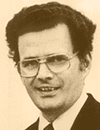
Victory's Limp
Don Wilkerson teaches that true spiritual victory often comes with a 'limp'—a lasting mark of struggle and transformation that signifies God’s refining work in the believer’s life.
In 'Victory's Limp,' Don Wilkerson explores the profound spiritual lesson found in Jacob’s wrestling with God, illustrating how true victory often comes with struggle and transformation. Drawing from Genesis 32 and other Scriptures, Wilkerson reveals that God’s refining process leaves a lasting mark—a limp—that signifies growth in faith and character. This sermon challenges believers to embrace God’s work in their lives, laying aside sin and self-reliance to walk in the fullness of His blessing.
Full Transcript
This message is one of the Times Square Pulpit series. It was recorded in the sanctuary of Times Square Church in Manhattan, New York City. Other tapes are available by writing to World Challenge PO Box 260, Lindale, Texas 75771 or calling 214-963-8626.
None of these messages are copyrighted and you are welcome to make copies for free distribution to your friends. Yes, if there's also in the nursery in the back, if you are in need, you go to the back and the ushers will point you in the direction of the nursery. At Genesis chapter 32, I'm reading in the New American Standard, beginning at verse 22.
It says, and now he arose, this is Jacob, now he arose that same night and took his two wives and his two maids and his 11 children and crossed the ford of the Jabbok. And he took them and sent them across the stream and he sent also whatever he had. Then Jacob was left alone and a man wrestled with him until daybreak.
And when he saw that he had not prevailed against him, he touched the socket of his thigh, so the socket of Jacob's thigh was dislocated while he wrestled with him. Then he said, let me go for the dawn is breaking. But he said, I will not let you go unless you bless me.
And so he said to him, what is your name? And he said, Jacob. And he said, your name shall no longer be Jacob, but Israel, for you have striven with God and with men and have prevailed. Then Jacob asked him and said, please tell me your name.
But he said, why is it that you ask my name? And he blessed him there. So Jacob named the place Panau, for he said, I have seen God face to face, yet my life has been preserved. Now the sun rose upon him just as he crossed over Panau, and he was limping.
And he was limping on his thigh. I want to speak to you tonight about victory's limp. Victory's limp.
Shall we bow in a word of prayer? Lord, we pray tonight as we come into your precious word. Oh Lord, we thank you for it. I thank you how it is ministered to my own heart.
And Lord, I just pray tonight that you would enable me by the Holy Spirit to share and to bear that which you have done and worked with in my own life. I thank you for victory's limp. I thank you, Lord, that you wrestle with us until you get at our lives that which you want to change.
Oh Lord, do it, we pray in this service. Do it in our hearts, we pray. We thank you, oh Lord, for your persistence.
We thank you, Lord, that you will wrestle us, hallelujah, until victory comes. May we understand victory's limp in Jesus' name. Amen.
Picture this touching scene, if you will, as the patriarch, Jacob, is coming to join his family after the most important experience and encounter of his life, the most important night of his life. And now morning, the sun comes up in the morning. Sun rises to a new day, symbolic of a new day dawning for Jacob.
And I believe, I'm not out of order, it's not beyond the realm of possibility, that as Jacob makes his way back to his camp, that a servant, one of his servants, might have seen him walking. Walking towards him, walking towards the camp where Jacob had left the two wives and the maids and the eleven children, as well as the servants. And as the servant looks at Jacob coming, he notices something different about his walk, which is different than from when he last saw him.
Jacob is limping. And perhaps the servant wonders, did he stumble and fall? Did a rock come down off of a mountain somewhere and injure him? Did he stumble and fall? What has happened to him? And I can imagine that the servant rushes to Jacob, who probably has a staff, he has a stick, a cane in his hand, to assist him as he walks along, as he limps along. And the servant, I can see in my mind, rushing to Jacob and saying, My Lord, my Lord, what has happened to you? You are injured, you are injured.
May I carry you? Are you in pain? And I believe that I can hear in Jacob's voice, and I can see a smile on his face, and he says, No, no, my servant, I am well, I am well. I am healed. Yes, I am healed.
Do not trouble yourself. And so Jacob limps along, walks along, and his servant walks along beside him, perhaps perplexed by the strange words that he has heard. And he thinks to himself, My master says that he is fine.
My master is walking with a limp, and yet he tells me he is healed. And yet he walks like a crippled man. This is a strange and remarkable story, one worthy of our consideration for the rich lessons that it has for us.
The Thompson Chain Bible states of Jacob, and I quote, No other Bible character represents more fully the conflict between the lower and the higher nature. Depending on the downward, at times it reaches glorious heights, only to sink again into sordid struggles for gain. But Jacob emerges at the very last upon the plain of triumphant faith.
Unquote. Now, I call that triumphant faith victory's limp. Victory's limp.
The life of Jacob is a warning to every believer that when the Spirit of God does not conquer the flesh nature, we cannot walk in righteousness and holiness, and the blessings of God in reality are unclaimed blessings. There is a limp of victory that belongs to each one of us. And just as the sun rose upon Jacob upon Panal, so there is a victory that can rise upon us, bringing with it a work of the Holy Spirit in our lives, as remarkable as Jacob's.
And I want you to consider some steps in Jacob's life which brought about this limp of victory. And I'll consider it for you in four areas. One was, I want you to look at Jacob's promised blessing.
I want you to look at Jacob's problem. I want you to look at his purging. And then finally, we'll look at Jacob's prayer or Jacob's victory.
Turn with me to the 27th chapter of Genesis, as we see there an account, the first account of the promised blessing to Jacob in spite of the way in which it was obtained. Chapter 27, verse 26, it says, Then his father Isaac said to him, Please come close and kiss me, my son. And so he came close and kissed him.
And when he smelled the smell of his garments, he blessed him and said, See, the smell of my son is like the smell of a field which the Lord has blessed. Now may God give you of the dew of heaven and the fatness of the earth and an abundance of grain and new wine. May people serve you and nations bow down to you.
Be master of your brothers and may your mother's sons bow down to you. Cursed be those who curse you and blessed be those who bless you. This was Jacob receiving from his father the birthright.
And then at a place called Haran, the Lord reaffirmed in chapter 28, Jacob has to flee for his life because of Esau. And yet in the midst of his fleeing, God comes to him and reaffirms a promise to him. Verse 10 of chapter 28, Then Jacob departed from Beersheba and went towards Haran.
And he came to a certain place and spent the night there because the sun had set. And he took one of the stones of the place and he put it under his head and lay down at that place. And he had a dream and behold, a ladder was set on the earth and its top reached to heaven.
And behold, the angels of God were ascending and descending on it. And behold, the Lord stood above it and said, I am the Lord, the God of your father Abraham and the God of Isaac. The land on which you lie, I will give it to you and to your descendants.
Your descendants shall also be like the dust of the earth and you shall spread out to the west and the east and to the north and the south. And through all of your descendants shall all the families of the earth be blessed. And behold, I am with you and I will keep you wherever you go and will bring you back to this land for I will not leave you until I have done what I have promised you.
That's a reconfirmation of the promised blessing. And in fact, it says, Jacob awoke out of sleep and he said, Surely the Lord is in this place and I did not know it. He didn't understand what God was doing.
He didn't understand. And there was a great revelation that God was trying to give to him but he could not receive it at that moment. He could not enter into it.
In fact, it goes on and it says, and he was afraid. Verse 17, And he was afraid and he said, How awesome is this place! This is none other than the house of God and this is the gate of heaven. But Jacob sadly could not enter into the house of God.
He couldn't enter into the gate of heaven because there was something yet in Jacob's heart and in his life that God had to deal with. Had to get it out of his life and it hadn't come out yet. And then also in chapter 32, as we already read to you again, he is pleading, he is asking to enter in finally again to this blessing of the Lord.
Now, what was so important about this blessing that Jacob, however, would resort to such carnal means to obtain it? Now, the birthright included temporal, material and financial blessing. As we've read, it also gave him almost unlimited power over his brethren. But most importantly, it gave Jacob a mighty influence with God and a great access to the courts of heaven which he was yet not able to enter into.
But all this was overshadowed by the fact that from him would descend the Messiah, he who was to be the prince of the kings of the earth before whom all the nations should come and worship and who was to rule them with a rod of iron and break them to shrivers as a potter's vessel. And from Jacob also would come the church of the living God of which you and I tonight are a part of. And yet Jacob seemed to be the least and undeserving of these blessings and the privileges of the birthright.
And it took 20 years. We'll find in the message, as we follow the story as you know it, why did it take 20 years exile in a place called Paran-Aram before Jacob could walk in the fullness of the promised blessing? You see, it was not until the Lord touches and eradicates and destroys something deep within Jacob that he is able to be worthy of the blessing. It's only after the limp of victory is he able to enter into the fullness of the promise of God to him.
And until Jacob experienced that change of character, until the unrighteousness of his heart was dealt with, Jacob was a man walking about with an unclaimed blessing, an unpossessed blessing. Have you ever received, I'm sure you have in the mail, a little notice that says that you are a recipient of a prize that you, if you fly off to Florida somewhere, or go up in the Poconos and you sit through a presentation of high-pressure salesmanship or whatever, or you buy a piece of land or whatever, you are sure to win some fantastic prize. You've all received that, I'm sure.
Well, suppose that you went to collect and you were told, of course, that there's always something to it, and you were told, hypothetically, this prize, this blessing that was going to come to you is yours, but you've got to pass a test. And you say, well, okay, I agree. But then you're told that you have to pass a weight test.
W-E-I-G-H-T. Well, you might or might not be offended by that. But you agree, but you find out that it's not a weight test based upon pounds, but it's based upon character.
It's based upon morals. It's based upon spirituality. And you see, this is the test that Jacob failed and the reason that he could not enter in to the blessing of God.
Listen to Hebrews 12-1. It says, Therefore, since we have so great a cloud of witnesses surrounding us, let us lay aside every encumbrance or weight and the sin which so easily besets us or entangles us, and let us run with patience or endurance the race that is set before us. Jacob was incapable of claiming his prize.
He was incapable of entering in to the blessing until he did something about his weight problem, the sin that so easily beset him. There was something wrong with Jacob's walk. It had no limp in it.
There was too much of Jacob in his walk. Now, I hear preaching today about how God wants to bless His people and that they have unclaimed blessings and rights that are promised to them in the new birth. And it is said that faith is just the key to obtaining all of the blessings of that new birth.
A brother called me today on the phone. He said, Please pray for me. He's from Connecticut.
He's been to our church a few times. He said, I've been going to this church for four months. He said, I love it.
But he said, This Sunday they had a special speaker. And he said it was one of the quote-unquote faith teachers. And he said he gave a message and he gave an appeal and he said everybody in the church went forward but me.
Because he said there was something missing. You see, there was only a part, he realized that there was only a part of the truth. There is more than faith necessary to walk in the blessing of sonship, my friend.
There must be a laying aside of every weight, of every encumbrance, of every sin that does so easily beset us. Now, you talk about sin that entangles and chokes. Jacob spun a web that nearly choked him to death, spiritually and morally and even physically.
Now, his problem was that Jacob's name described his character and unfortunately Jacob lived up to his name. It was through deception and deceit and trickery and underhandedness that Jacob stole the birthright from Esau. Listen, look what Esau says.
Turn to the 27th chapter. The 27th chapter. At verse 34 it says, When Esau heard the words of his father, the words of his father blessing Jacob, he cried out with an exceeding great and bitter cry and he said to his father, Bless me, even me also, O my father.
And his father said, Your brother came deceitfully and has taken away your blessing. And then Esau said, That doesn't surprise me one bit. Is he not rightly named Jacob, for he has supplanted me these two times? He took away my birthright and behold now, he has taken away my blessing.
In other words, Esau says, Jacob is living up to his name. He said, I'm not surprised at what he did. That's the way Jacob is.
That's his character. He's truly a Jacob. He's a trickster.
He's a con man. And there is no question that that description was accurate. Because from the facts of the remarkable history, we see in Jacob the most unadmirable, fleshly, carnal, unrighteous traits of character.
Jacob had a severe weight problem. While Jacob was still in the womb, the Scripture tells us of the twins born to Rebekah that the children struggled. The twins, the children struggled within.
They struggled together within. Do you know what that struggle was? That was Jacob trying to get ahead of Esau, even in the womb. Look at Genesis 25, verses 25 and 26.
It says, And now first came forth red all over like a harried garment, and they named him Esau. And afterwards his brother came forth with his hand holding on to Esau's heel, so his name was called Jacob. Again, a sign of Jacob's strong will and determination.
He didn't even want to let Esau get out of the womb first. He's holding on to him, trying to pull him back in and say, Wait a minute, let me get ahead of you. Now Jacob's name is taken from a Hebrew word which is translated heel.
Now, we don't have the expression too much anymore, but I remember when I was a kid, we used to talk about a low-down character. We'd say, He's nothing but a heel. And that's what Esau was saying.
He said, Jacob's nothing but a heel. The English translation of Jacob's name is supplanter. And that word in Latin is taken from two words, sub, which means under, and planta, which means sole of the foot.
And to putting it together, it has a sense of tripping up to take advantage over somebody. And that's what Jacob was. And you see, can it be any clearer that Jacob was truly a Jacob? He was a mixture of flesh and spirit, of righteousness and unrighteousness, of truth and trickery.
And until and unless Jacob dealt with a Jacob in his heart, he could not enter into the blessing of God. And if he had not dealt with it, if that wrestling match had not happened on that eventful night in Panau, I believe that God would have had to take the promise away from him and give it to somebody else. Now, I said all of that to say this, that God was, listen to me carefully, God was and God is committed to getting at the Jacob in all of us.
Jacob's problem is our problem. Jacob's flesh is also our flesh. His conflict is our conflict.
Now, Jacob's problem was this. He was unwilling to truly and utterly depend on God for all of his needs. He wanted things his own way.
He did things his own way. He was dominated by the flesh. He was always reaching out to grab ahold of somebody's heel to take an advantage of them or to use them to get ahead.
Jacob's history is that of one who plots and schemes to reach some intended purpose, but is unwilling to wait in God's time, in God's way to bring it about. You know, Frank Sinatra has written a song that describes many a worldly person but also many a believer. It's entitled, I Did It My Way.
Jacob was not prepared to wait for God's time and God's way. He much preferred Jacob's way and Jacob's time. He thought it much better to arrive at the blessing and in the inheritance by all sorts of cunning and deception and trickery than by simple dependence upon the will of God whose power and wisdom assuredly would accomplish all of that for him.
You see, this is the trait, this is the sin that does so easily beset us and oh, how I see it in the body of Christ when I look around. I think of a young man in Bible college. He's about to graduate to go into the ministry.
His goal is to be a youth pastor, but not in any church. He has striven by every effort of the flesh to get with a quote-unquote named pastor in a quote-unquote big church. And then he states, after that I can write my own ticket anywhere in the denomination.
Now I feel sorry for the young man because by the flesh he's going into the ministry and by the flesh he's going to try to live and by the flesh he's going to die. But I must be charitable to him because I recognize in him that which has at times characterized my own methods. One of my saddest failures in the ministry had to do with a fleshly ministry project.
One of those projects that I was sure that was going to be the cure-all for our ministry. A fundraising project. A project undertaken because of my failure to trust and to believe God and to seek God instead to lean on the arm of flesh.
And it cost $250,000. And every time I think about it, I feel limp inside me and I have to limp to an altar of repentance because of the Jacob that was in me. Romans 8 and 6 says, To be carnally minded is death, but the mind set on the Spirit is life and peace.
And my friend, we have a choice to make. Do we do things the carnal way, the fleshly way, or do we let Jesus have his way in us and through us? Nothing can be more blessed than to be a position of hanging on in childlike faith and dependence upon God and to be entirely content in trusting in his way and in his time to bring things to pass. You see, the flesh hates to wait.
The flesh is always full of its own ideas, its own schemes, its own wisdom, its own plans. I know. I've been working on a book for little by little over a period of time, and I'm not ready to finish it yet.
It's called Gaining Weight, W-A-I-T. It's all about impatience and patience. And I remember when I started on it, my kids asked me, said, Dad, what are you working on now? And I said, I'm working on a book, new book.
What's it about? I said, it's about patience. And the three of them laughed in unison. A roar came out of the living.
They laughed in unison. You are working on a book on patience? But my friend, the greater the temptation there is to take ourselves out of God's will, the ritual will be the blessing of leaving ourselves right there. Hebrews 12.1 says that we are to lay aside every encumbrance and sin that entangles us and let us run with endurance or patience the race that is set before us.
And then the next verse, if you're familiar with this, you know what the next verse says. Verse two of Hebrews 12 says, fixing our eyes upon Jesus. The only one who ever occupied the position of complete trust in God and rejected every proposal of the flesh, every proposal that the enemy put before him was the Lord Jesus himself.
When tempted of the devil to satisfy his hunger, his reply was, it is written, man shall not live by bread alone, but by every word that proceedeth out of the mouth of God. Jesus said he was going to do it God's way or no other way. When tempted to cast himself down from the pinnacle of the temple, his reply was, it is written, thou shalt not tempt the Lord thy God.
When tempted to take the kingdoms of the world from the hand of another other than God, his reply was, it is written, thou shalt worship the Lord thy God and him only shalt thou worship. You see, nothing could move Jesus from the place of absolute dependence upon God. And you know what's interesting is that it was God's purpose that Christ should come into his temple.
It was his purpose to give him the kingdoms of the world, but Jesus would wait for God to accomplish it. He did not set about to accomplish his own ends. He left himself thoroughly at God's disposal.
He would only eat when God gave him bread. He would only enter the temple when God gave him the permission to go until God sent him. And he would only ascend the throne when God appointed the time.
Psalms 100 says, sit thou at my right hand until I make thy foes thy footstool. And that's exactly what our Lord did. And that's why we can fix our eyes upon him.
And I ask you tonight, are you prepared to fix your eyes upon Jesus, to follow his example and say this, in thee do I put my trust. Hallelujah. Another favorite psalm of mine is this.
Promotion comes neither from the east or from the west. In other words, it doesn't come from the earth. Actually, it comes from the north.
It comes from above. Psalms 62 and 5 says, My soul wait in silence for God alone, for my hope is from him. He only is my rock and my salvation.
Hallelujah. My friend, the scene of some of our greatest battles will be in this conflict between the impetuousness of the flesh and the domination of the Spirit of God. And I've seen the Spirit of Jacob destroy many a man, a woman, and a young person.
I think of a young lady tonight. She's no longer young. She was young, and when she was younger, she was called to the mission field.
But because she wanted marriage, because she wanted a marriage more than she wanted God's will and God's way, tonight she is backslidden. She is bitter. She is about to enter her senior citizen years as a lonely woman.
And the man she married has been a source of bitter pain and humiliation to her. I think of a young man who was unwilling to wait for God's time and God's way of financial blessing. So he went out and he stole his birthright, as it were.
And today he has all the financial security he sought with an empty soul to go along with it. And he justified it in the beginning. He said, oh, if I could just be financially secure, oh, what I could do for God, oh, the time I'd have for God.
And listen, now he has no time for God, and the devil and the government gets most of his money. Now, because Jacob did not do things God's way, God had to have his way in Jacob through painful discipline. And God took Jacob through some purging.
And one of the ways God purged Jacob is to bring him face to face with himself and another person just like himself. Genesis 29, Jacob is told by his father to go to his uncle, to Laban. And Jacob is led some 500 miles to a place called Paddan Aram.
Paddan Aram, a place where some of you dwell right now. That's where you are right now. We'll see it in a minute.
And there he came to meet a man, his uncle, uncle Laban. Look at chapter 29 and verse 13. And so it came about after this long, lonely trip, Jacob finally finds his uncle.
In verse 13, chapter 29, so it came about when Laban heard the news of Jacob, his sister's son, that he ran to meet him and embraced him and kissed him. And brought him to his house. And then he related to Laban all these things.
Now if Jacob had knew what Laban was all about, he'd have wished he'd never arrived there. Because Jacob was a man who had dollar bill signs imprinted on his eyeballs. And when he saw Jacob, he said, oh, he said he kissed him.
Listen to what he said, verse 14. And Laban said to him, surely you are my bone and my flesh. And that's where Jacob should have knew he was in trouble.
He said, look, my bones are just like your bones. My flesh is just like your, if he only knew what was in his flesh, he'd have fled, he would have fled. He said, my bones are just like your bones.
My flesh is just like your flesh. And Laban offers Jacob a job. Verse 15, he said, hey, he said, and Laban said to Jacob, because you're my relative, should you therefore serve me for nothing? Tell me.
You name it. You just name the wages. You see, unbeknown to Jacob, he was about to fall into the hands of a crafty schemer, cheat, and deceiver.
And Laban turned Jacob into a slave laborer. Making him work 14 years for the woman he loved, working six years on Laban's ranch, and changing his wages 10 times. And in the end, Laban out-Jacobed Jacob.
In the end, Laban out-Jacobed Jacob. You see, Laban was God's instrument to teach Jacob some lessons and to purge him of his fleshly nature. For example, Jacob learned something about submission.
You see, the birthright, which was obtained by carnal means, carried with it the rights of the firstborn. Now, instilling the birthright, Jacob desired to be served rather than to serve. This is one of the characteristics of the flesh.
The flesh goes around and says, look at me, you know, help me, you know, minister to me. And so what happened when Jacob worked seven years for Rachel, the woman that he loves, look at chapter 29, verse 22. After, in verse 21, And Jacob said to Laban, Give me my wife, for my time is completed, that I may go to her.
Seven years are complete. And Laban gathered all the men of the place and made a feast, wedding feast. And now it came about in the evening that he took his daughter Leah and brought her to him.
And Jacob went into her. And Jacob gets up the next morning and the wrong woman's in his bed. Laban tricked him into marrying his daughter Leah.
And he gives an excuse and Jacob says, Jacob says, what is this? Verse 25. What have you done to me? Was it not for Rachel that I served you? Why then have you deceived me? And Laban said, well, it's the custom here, you see, that it's a practice in this place to, you see, we marry off the uglier before the, I mean the younger before the firstborn. You see what's happening.
Jacob wanted the privilege of the firstborn, of being the firstborn. And so what he does, he ends up working seven years for a firstborn bride that he did not want. And then worked another seven years for Rachel the younger.
And so chalk up another one for Laban. He out Jacob, Jacob. You see, God has his ways of teaching us submission.
He has ways of revealing our character to us if we're unwilling to be purged by it. Jacob failed to judge the inherent character of the flesh before God, therefore he had to reap what he sowed. And God put him right in a place where he stared the same characteristic that was his own heart.
He was stared at it day after day at his boss that he worked for. Now the lesson here is simple. If we don't deal with the flesh, if we don't deal with the Jacob in us, God will allow a Jacob to come into our lives to mirror ourselves to ourselves.
I've seen it in a marriage. I've seen it in the ministry. I've seen it in a family.
I've seen it on a job. Very often the difficulty we have with somebody else we live with and work with and minister with is because we are seeing a reflection of ourself in the other person. And God says if you don't deal with that, if you can't see it, I'll let you see it.
I'll let you marry it. I'll let you work with it. I'll let you minister with it.
Wait a minute. I got a lot of amens I wasn't expecting there. Shame on you, all you people that said amen.
I married one. Shame on you. I didn't mean it that way.
But listen, if it's not an exact reflection of ourselves, at least in principle, a Laban is someone that God uses to bring to death a Jacob which is in our own heart, to reveal the Jacob. You know, it's amazing. It's amazing how God, I've seen this happen over, it's amazing how God in a live-in situation or in a roommate situation at college or at a ministry or a rehab center or in an apartment situation, it's amazing how God divinely brings certain people together.
A Laban and a Jacob. A Jacobus and a Labanus. And God looks down and said, I can't accomplish it any other way.
And he looks down and he said, They deserve each other. You've heard that expression. Well, God has it as well.
He said, I'm going to let them at each other because it's a reflection of themselves. And I think Jacob began to get the picture. God began to do a work in his heart.
And after God was finished purging him, Jacob is finally, the Lord says, Okay, 20 years. 20 years is enough. Now, folks, I hope you get at it quicker than 20 years.
But it was upon his return to Medesal that he experienced his limp of victory. Go with me now to Genesis 32. At a place called Panal, Jacob has an experience that changed his life and his character.
Jacob is about to meet Esau. The Lord says, Go back. I want you to go back home now.
You're ready to go back. Not entirely because the Lord knew that something else was going to happen. And Jacob is very fearful of the reunion that's going to take place between him and Esau.
And so he goes off alone here in chapter 32. He goes at, what, excuse me, what verse is it where we started at verse 22? He arose and he came that night and he took his two sons and his two maids and 11 children. He crossed the ford of the Jabok.
And that word Jabok, and it says, in the next verse, it says, and he was left alone. But it's interesting, the word Jabok means emptiness. You see, news had reached Jacob that Esau had 400 men with him.
Now, God had told him and said, Go back and I will be with you. But there's still too much Jacob in it and so he schemes a scheme. And he says, okay, he's now rich and he has this whole company of men.
And he says, well, you know, in case Esau does not receive me, I'll send out one company ahead. And that way, if he destroys that company, at least I have another company left. And so he still is not trusting God.
But when he hears that Jacob has, excuse me, that Esau has 400 men, I believe that he's thrown in complete despair. And it says he was left alone. And it seemed like he had tried everything.
There was nothing left for him to do. He had schemed this scheme of how maybe to protect himself and to save his wealth. And there was nothing.
He had no more trump cards left. No more Jacob's ways to follow. And he's left alone before God.
And my friend, it's not until we are alone that we can come face to face with ourselves. And many times we try this and that and we go and look at excuses and we say, this is a problem and that's the problem. And finally, it's still not solved and we're left all alone with ourselves.
And some people move. Some people keep running all the time. They run from church to church.
They run from ministry to ministry when the problem is within themselves. And I've said it before in this pulpit and let me say it again. Remember, if you're one who's always running and you haven't dealt with a thing that's in you, remember that wherever you go, there you are.
You take yourself with you everywhere you go. And you might as well deal with it, finally deal with it. And Jacob is left alone and it says that a man then came to him and wrestled with him until daybreak.
And Hosea 12 verse 4 says that that man was an angel. It was the angel of the covenant. In other words, it was none other than the Lord Jesus himself.
It's called a theophany. A theophany means an appearance of Jesus Christ. And in fact, in verse 30 of chapter 32, it says, Jacob named the place Panal for he said, I have seen God face to face, yet my life has been preserved.
He encountered the king of kings and the Lord of lords. But you'll note that David, excuse me, that Jacob did not wrestle with a man. The man wrestled with Jacob.
Jacob was not the aggressor. He was not the attacker. The man wrestled with him.
The Lord took the initiative. And the reason that Jacob was not wrestling with a man, he was not wrestling with him to attain some blessing. The man was wrestling with Jacob to obtain some object out of him.
And that something, that object was the Jacob in him. He was trying to get at that thing in his life that had been destroying him and making him the Jacob that he was. And so he wrestled with him all night and he left him helpless and lipless and he comes out of that and he has a limp to bring Jacob to a point of utter weakness so that he could learn therein lies his strength.
Now, after he comes out of that wrestling match, and this is what I want to close with, this is perhaps the main point of my message and something I saw this and never realized this when I read this story before. As a result of this all-night divine wrestling match, the Lord asked Jacob the most important question that he ever asked him in his life. And the one that the Holy Spirit wants to ask you here tonight and please hear me out as I'm about to close my message.
The man that wrestled with him, the Lord Jesus said to him, What is your name? And the answer given took Jacob 20 years to give the answer. And he said, Jacob, Now, what is missing in that answer is the tone of Jacob's voice. And when the Lord said, What is your name? Jacob knew exactly what the Lord was driving at.
And his answer and his tone of voice revealed that he had to go to sleep on you. A good counselor, I tell you, the Lord had to show me, the Lord had to shut my mouth many a time when I realized that somebody was going through a rough ride that God was putting them through. And here I'm trying to ease their pain.
I'm trying to stay as awake and alert as possible. I'm trying to give them every scripture. I'm trying to be there.
The true nature of the question. There was a long pause between the question and the answer. And Jacob gave his name, but in the original language, it's as if it was said silently.
It finally dawned on Jacob. And when the Lord said to him, What is your name? He pauses. And it's as if a light dawns on him.
And he said, Oh, oh, yes, it's true. What he's all said. Yes, it's true.
He said, I am a Jacob. And in humble tones, he whispers. And he says, Jacob.
He said, He's always right. I am a Jacob. I've lived up to my reputation.
I've been a supplanter. I've been a healer. I've taken advantage of everyone and every situation.
And at that moment, Jacob's life flashed before him in all of its ugliness. And with full understanding and acknowledgement of his problem and his sin, Jacob says, Oh, Lord, yes, it's true. It's true.
It's true. I am a Jacob. My life has been, my character has been, my nature has been that which my name implies.
And in so doing, Jacob lays Jacob on the altar. And when Jacob said the word Jacob, it was his moment of truth. It was his moment of repentance.
It was his moment of confession. It was his moment of saying, Yes, Lord, you've put the finger on my life. You've put the finger on the thing that you've been after for 20 years.
And yes, I am a Jacob and I don't want to be a Jacob anymore. Oh, and when I saw that, the Lord just pierced my own heart and I have read this and I have wept and I have cried before God as I have seen the Jacob in the flesh in my own life and I've gone before God and said, Oh, God, take out all the Jacob in me, whatever remnant is left or whenever it arises. Lord, take it out of my life.
I don't want it there. And just as the Lord asked, Jacob, what is your name? He's asking that of us. And just as Jacob was brought to a moment of crisis, so will we if we live independently of the Lord who has saved us.
How often we are a mixture of faith and flesh. We believe God, yes, but at the same time, we're prone to try to manipulate our own lives, to try to make our own arrangements of things that we want to be or do. And then God comes and he cripples us.
And we're brought to a sense of our own outer failure and weakness and disappointments. And in that hour, God comes and he says, What's your name? And when we admit that we've acted to Jacob, when we face the truth about ourselves, that's when God can change us. Because following Jacob's repentance, look at verse 28.
Jacob asked him and he said, Please tell me your name. And he said, Why is it that you ask my name? And he blessed him there. Excuse me, verse 28.
Your name shall no longer be Jacob, but Israel, for you have striven with God and with man and have prevailed. Do you know what Israel means? Israel means the God-governed life, a God-mastered life. It says, For you have striven with God and prevailed.
It really means that Jacob had striven with God and God had prevailed. He had won his victory over God through defeat by God. If a man is to prevail with God, he will do so in the hour in which he is mastered by God.
And so I bring my message to a close where it began. Remember the servant coming out to reach him. And he walks back to the camp.
And I can see the wives and children coming out to meet him and saying, Oh, Jacob, oh, Jacob, what has happened to you? And he says, no. He said, I'm healed. I'm healed.
I'm healed. And they grab him and said, Oh, Jacob. He said, please, don't call me Jacob anymore.
Please don't call me Jacob anymore. Call me Israel. Call me Israel.
That, my friend, is called the limp of victory. That's the victory that God wants to give to you tonight. Hallelujah.
Let's bow in a word of prayer. I'm not saying that you won't need other people. But I want you to, first of all, before you go running to somebody or something, may you learn to run to God.
Sermon Outline
-
I. Jacob's Promised Blessing
- The birthright and blessing from Isaac
- God’s reaffirmation of the promise at Bethel
- The significance of the blessing for Jacob’s descendants
-
II. Jacob's Problem
- Character defined by deception and trickery
- Unwillingness to depend fully on God
- The struggle between flesh and spirit
-
III. Jacob's Purging
- The wrestling with God at Peniel
- The dislocated thigh as a symbol of transformation
- The necessity of spiritual refinement before blessing
-
IV. Jacob's Victory and Limp
- Victory comes with lasting marks
- The limp as a testimony of God’s work
- Walking in triumphant faith despite weakness
Key Quotes
“I thank you, Lord, that you wrestle with us until you get at our lives that which you want to change.” — Don Wilkerson
“There is a limp of victory that belongs to each one of us.” — Don Wilkerson
“God was and God is committed to getting at the Jacob in all of us.” — Don Wilkerson
Application Points
- Recognize that spiritual victory often involves ongoing struggle and transformation.
- Lay aside sin and self-reliance to fully receive God’s blessings.
- Embrace God’s refining process as essential to growing in faith and character.