
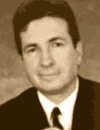
Remembering Bill Macdonald
E.A. Johnston honors Bill Macdonald's life of selfless discipleship and challenges believers to embrace true gospel commitment beyond easy believism.
In this biographical sermon, E.A. Johnston reflects on the life and ministry of Bill Macdonald, a humble and devoted servant of Christ known for his impactful Bible teaching and discipleship. Johnston highlights Macdonald's radical commitment to gospel stewardship and his critique of modern evangelistic methods. The sermon challenges listeners to embrace true discipleship marked by repentance, surrender, and active faith. Through Macdonald's example, believers are encouraged to live selflessly for the spread of the gospel.
Full Transcript
I used to be friends with William McDonald, the Bible commentator who wrote Believer's Bible Commentary. I'm sure you've probably seen it in Christian bookstores, friends. It sold over a million copies.
Bill never took a dime from royalties for personal use. He plowed every cent back into the spread of the gospel. Bill was a Harvard MBA and an investment analyst for a Boston bank.
When he volunteered in the Navy during World War II, and it was during this time, God called him into full-time service. And from that point on, he lived a selfless and frugal life. Living only for the spread of the gospel and to make known the Christ of the gospel.
Bill knew his Bible and he knew his God. For years, Bill served faithfully as the president of Emmaus Bible College in Oak Park, Illinois. Bill was a popular speaker at brethren assemblies all over the globe.
And he was one of the most humble men I've ever known. I used to have a Friday morning discipleship group that met in my home at 6 a.m. And I asked Bill to speak to my man on discipleship one Friday. Bill lived in California at the time, and he had to be ready at 4 a.m. to speak on a conference call to my man.
That man, he had to rise at 3 that morning, even though Bill was 90 at the time. He was always dying to speak a word for his master. Bill denied himself the luxuries of life.
An example of this was his writing desk, which was a door taken off the hinges and laid across two chairs. Bill believed a Christian should live frugally, denying himself and taking what money he did not use for present needs to be given for the spread of the gospel today, and not to build up a personal nest egg by laying up money in investment portfolios for personal use in the future, but to give all we could away now and then trust God for tomorrow. Using our Lord's words in Matthew 6 and 19 and 20, he used for his example, Lay not up for yourselves treasures upon earth, where moth and rust doth corrupt, and where thieves break through and steal, but lay up for yourselves treasures in heaven.
This biblical teaching goes against what all our preconceived ideas of self-preservation by refusing to dip into our savings to spread the gospel now. Bill believed money should be liquid and always in motion, going to meet a legitimate need. And Bill believed the following about being a Christian.
He said, and I quote, The Savior is not looking for men and women who will give their spare evenings to him, or their weekends, or their years in retirement. Rather, he seeks those who will give him first place in their lives, nothing less than unconditional surrender. Could ever be a fitting response to his sacrifice at Calvary? A love so amazing, so divine, could never be satisfied with less than our souls, our lives, our all.
Bill McDonald oversaw a discipleship training program for years, pouring his life into others. And Bill's book, True Discipleship, is one of the most challenging books you'll ever read. It sold over a million copies as well.
It was Bill who encouraged me to write my own book on discipleship, No Turning Back. And he told me to take the gloves off and not state the obvious. Well, I want to take some time now, friends, to read you some William McDonald because we can all learn much from him.
We often think that it must have been a wonderful experience to travel with Jesus when he was here on earth. We can see him and his disciples sauntering along, enjoying a continual Bible conference. But it wasn't like that.
It was more of a scalding experience in which the disciples learned their own sinfulness and failure, and in which they were called to a pathway of persecution, suffering, and death. Bill McDonald was grieved by the watered-down gospel message of most evangelism in our day. And he knew that true salvation was a complete transformation in a person's life and taking up one's cross and denying self in a life of discipleship, following a crucified Savior.
Bill McDonald was grieved by the easy believism of our day, and he spoke wisely on the dangers of a watered-down gospel. Listen to his words. We want to keep the message simple, uncluttered by any suggestions that man can ever earn or deserve eternal life.
Justification is by faith alone, apart from the deeds of the law. Therefore, the message is only belief. From there, the message is reduced to a concise formula.
For instance, the evangelistic process is cut down to a few basic questions, and answers as follows. Do you believe you are a sinner? Yes. Do you believe Christ died for sinners? Yes.
Will you receive Him as your Savior? Yes. Then you are saved. I am? Yes.
The Bible says you are saved. At first blush, the method and the message might seem above criticism, but on closer study, we are forced to have a second thought and to conclude that the gospel has been oversimplified. The first flaw is the missing emphasis on repentance.
There can be no true conversion without conviction of sin. A second serious omission is a missing emphasis on the Lordship of Christ, Jesus' first Lord, then Savior. A third defect in the message is the tendency to keep the terms of discipleship hidden until a decision has been made for Jesus.
Our Lord never did this. The message He preached included the cross as well as the crown. The result of all this is that we have people believing without knowing what they believe.
In many cases, they have no doctrinal basis for their decision. They do not know the implications of commitment to Christ. They have never experienced the mysterious, miraculous work of the Holy Spirit in regeneration.
Well, I think Bill's words sum up the false modern gospel of our day, friends. William MacDonald lived his life on the false stretch for his master, and it was only fitting that he should die and go home to be with his Lord on Christmas Day in 2007. I sure miss him.
Bill's prolific pen ministry produced over 80 published books, and you will be blessed, friends, by reading any one of them. The two I recommend the most are True Discipleship and Believer's Bible Commentary. We need to study men of God in order to live more for God today.
Let us pray.
Sermon Outline
-
I. Introduction to Bill Macdonald
- Bill's background and ministry impact
- His selfless lifestyle and dedication
- His role in discipleship and Bible teaching
-
II. Bill's Philosophy on Stewardship
- Living frugally for gospel advancement
- Money as a tool for immediate gospel needs
- Biblical foundation from Matthew 6 and 19-20
-
III. The Challenge of True Discipleship
- Rejecting watered-down gospel messages
- Emphasizing repentance and Lordship of Christ
- The necessity of understanding gospel commitment
-
IV. Legacy and Encouragement
- Bill's prolific writing and influence
- Call to study men of God to live faithfully
- Encouragement to embrace full surrender to Christ
Key Quotes
“The Savior is not looking for men and women who will give their spare evenings to him, or their weekends, or their years in retirement. Rather, he seeks those who will give him first place in their lives, nothing less than unconditional surrender.” — E.A. Johnston
“Lay not up for yourselves treasures upon earth, where moth and rust doth corrupt, and where thieves break through and steal, but lay up for yourselves treasures in heaven.” — E.A. Johnston
“The gospel has been oversimplified... The first flaw is the missing emphasis on repentance.” — E.A. Johnston
Application Points
- Evaluate your personal stewardship and consider how you can use resources more generously for gospel work.
- Commit to a deeper, more authentic discipleship that includes repentance and full surrender to Christ's lordship.
- Be discerning of simplified gospel presentations and seek a comprehensive understanding of salvation.