
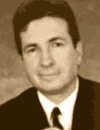
Revivals Under Asahel Nettleton
E.A. Johnston highlights the powerful and God-centered revival ministry of Azahel Nettleton during the Second Great Awakening, urging a return to sovereign, doctrinally sound preaching to ignite true spiritual revival today.
In this sermon, E.A. Johnston explores the life and ministry of Azahel Nettleton, a pivotal yet largely forgotten figure of the Second Great Awakening. Johnston draws from historical accounts and Nettleton’s own journals to reveal the power and depth of his revival preaching, which emphasized God's sovereignty and the necessity of genuine repentance. The sermon challenges modern believers to return to a God-centered gospel and fervent prayer for revival, highlighting the spiritual decline that followed Nettleton’s era. Johnston’s message is a passionate call to reclaim the fervor and doctrinal clarity of past revivals for today’s church.
Full Transcript
But before we go to a time of prayer this evening, friends, and as we're praying for God to send revival to this nation and to our churches, I think it's fitting that we study some historical revivals this evening in the life and ministry of Azahel Nettleton, who was so greatly used during the second great awakening. When I was conducting my research on my definitive biography on Nettleton, I traveled to over 60 locations in New York and Massachusetts and Connecticut where God moved in powerful revivals under Nettleton's powerful preaching. And I want to take some time to read us some historical accounts from his diary and journals in the revivals that he witnessed.
But first, let me read an extract from an introduction to my book, Revival Preacher Azahel Nettleton. In the library of Hartford Seminary in Hartford, Connecticut, hangs a old portrait of a man forgotten by historians, his present obscurity standing in stark contrast to the times in which he lived. In 19th century America, the name Azahel Nettleton was a household word, in fact, a study of historical documents from 1810 to 1844, the years of his public ministry, will reveal that Azahel Nettleton was the leading figure of the revival of religion, known as the second great awakening.
He was friends with the leading religious figures of his day, and he was one of the original founders of what is now Hartford Seminary. Yet today he's practically unknown. Looking at his old portrait, one can see the haggard look in his blue eyes, a result of typhus fever, and a life spent at full stretch for his Lord.
In his day, the name Azahel Nettleton literally made strongmen tremble at the news of his arrival in New England towns, for they knew that soon a revival of religion would occur, and many would be face to face with their eternity and the God of that eternity. It was said of Nettleton that he knew human nature so thoroughly he could read a man's heart. He was the leading human instrument of God in over 60 revivals during the period known as the second great awakening.
His biographer Bennett Tyler stated that he was the means of bringing 30,000 souls into God's kingdom. His grave lies in a remote cemetery in East Windsor, Connecticut. The inscription on the brown mossy tombstone simply reads, Reverend Azahel Nettleton, D.D., died May 16, 1844.
Yet he is among God's choice of servants. A study of the life and ministry of the 19th century evangelist Azahel Nettleton is vastly important if we are to comprehend the reasons and circumstances of why the majority of our churches in not only America but the world hold to the theological views they have and conduct evangelism in the way they do. The preponderance of evangelism that is conducted today can trace its roots directly back to the New Measures movement of the 19th century and the personages of Charles Grandison Fanny and Nathaniel William Taylor.
And friends, I want us to also see what Richard R. Roberts wrote in the preface of this book because it's important from his standpoint, he being a revival scholar and having a full knowledge of Nettleton. In fact, the reason why I wrote this book on Nettleton is because Richard R. Roberts put it in my heart to do it and urged me and helped me and even edited the work for me as we went forward. But anyway, here's part of his preface to the book.
I want to read that to us now. Azahel Nettleton is a largely forgotten revivalist. There is a reason a great controversy surrounded the ministry of Nettleton.
He fought in a powerful battle for the truth and lost. His noble struggle for the ancient paths was lost to the novelties of the western evangelists. He often stood alone and was like the voice crying in the wilderness.
Unlike some of his supposed friends, Nettleton was a far-seeing man. He saw not only the errors of his own day but their destructive influence in our day. He was keenly alert to the pernicious influence of moving from a God-centered to a man-centered gospel.
The error he stood against is the error we face right now. Is God the agent of salvation or is man? Is revival nothing other than the right use of the right means or a sovereign work of Almighty God? Are men saved as a result of a decision they make or as a result of the regenerating work of the Holy Spirit? Nettleton believed both in revival and reformation. Had a thorough reformation occurred during his lifetime, it would have greatly altered the subsequent history of Christianity in the world.
Now we are faced with a situation much worse than Nettleton faced. Through his spirit-empowered life and ministry, a great many backsliders were reclaimed, thousands were brought to the kingdom of God, and many local churches were revived. But because of the short-sightedness of many who knew and applauded him, Christianity in America headed into a decline from which it has still to recover.
We are now positioned to continue in the self-destructive pattern Nettleton fought against until we are destroyed, like Jerusalem of old, or to return to the God-centered, doctrinally accurate, Holy Spirit-inspired ministry types of Jonathan Edwards, George Whitfield, William Tennant, John Blair, Samuel Davies, Timothy Dwight, and Azahel Nettleton. I beg of you, repent and return to the Lord. We must do what we can with the conviction that God can and will do what we cannot.
And now friends, I want to read an extract of a journal extract of Nettleton in the midst of revival in New York. I took this from his handwritten notes when I had his personal papers as I was going through them at Hartford Seminary. Let me read you what he wrote.
This occurred in 1820 and a powerful revival was gripping the eastern part of New York. The revival is now very powerful in the city. Such a scene they never before witnessed.
More than 100 have been brought to rejoice in hope. Besides these, we had more than 200 in meeting of inquiry, anxious for their souls. We met in a large upper room called the Masonic Hall.
The room was so crowded that we were obliged to request all who had recently found relief to retire below and spend their time in prayer for those above. This evening will never be forgotten. The scene is beyond description.
Did you ever witness 200 sinners with one accord in one place weeping for their sins? Until you've seen this, you can have no adequate conception of the solemn scene. I felt as though I was standing on the verge of the external world, while the floor under my feet was shaken by the trampling of anxious souls in view of a judgment to come. The solemnity was still heightened when every knee was bent at the throne of grace and the intervening silence of the voice of prayer was interrupted only by the sighs and sobs of anxious souls.
I have not time to relate interesting particulars. I only add that some of the most stout, hard-hearted, heaven-daring rebels have been in the most awful distress within a circle whose diameter would be 24 miles. Not less than 800 souls have been hopefully born into the King of Christ since last September.
The same glorious work is far spread and into other towns and congregations. This is which was spoken by the prophet Joel. And now friends, I want to read a section from Nettleton's journal.
This is really startling. Listen to this. Nettleton would often meet in schoolhouses or he would just rent a room.
But listen to this meeting in a meeting house in New York. Met in the meeting house, more crowded than ever and solemn as eternity, preached on the nature and reasonableness of gospel repentance and urged the duty of immediate compliance and the danger of delay. Nevermore expecting to meet my anxious hearers in this world, I urged them by all the solemnities of the judgment not to pass the threshold of the meeting house at night with impending hearts.
They seemed to hear as for their lives. One from deep distress found relief in the midst of the discourse and lifted up a joyful countenance. No sooner had I closed and stepped from the stage than she came near and, taking her husband by the hand, urged him to come to Christ.
It was like a two-edged sword. It pierced him to the heart. At this moment, the anxious ones assembled around me and took me, some by the hand, some by the arm, and some by the coat, exclaiming, don't leave us.
What shall I do? What shall I do? Nearly the whole congregation tarried. Those who could not come nearer stood, some on the seats and some on the sides of the pews to hear and see. From the midst of this scene of distress, I addressed the whole congregation for about five minutes.
Among other things, I said, my hearers, I now no longer hesitate to tell you what I have hitherto been afraid to speak, that a revival of religion has begun in Nassau. Yes, from what I've seen, I can no longer doubt the fact. I believe you are about to witness a solemn and trying time in this place, and now you must prepare either to be taken or to be left.
I then told them I would meet them in the morning at sunrise in the schoolhouse and pray with them before I left. If they chose, I advised them to depart as still as possible and to be returned through the night. Well, let me read you here, friends, a story about Nettleton by Reverend Cobb that was a pastor in New York that Nettleton came to his church and a powerful revival broke out in 1825.
Listen to this description. We can learn much from it. Brother Nettleton came to Taunton in the summer of 1825 and the Trinitarian church in this town being destitute by the decease of their beloved pastor, the Reverend Chester Isham.
He labored two months and a half in that congregation. The prospect of a general and Paul for revival of religion was very fair. About 30 converts were the fruit of his labors among that people.
In this state of things, a candidate for settlement was procured who subsequently became their pastor. Brother Nettleton retired and came to live in my family for the 1st of October and continued with me till the middle of January 1826. There had, for weeks previous, been a solemn stillness in my congregation and many had been specially awakened, though they had kept their impressions to themselves.
When Brother Nettleton commenced his labors, the revival immediately became manifest and converts were multiplied almost daily during his stay. His sermons were clear, sound, able, full of thought, direct and simple, with unity of design. He seemed to be destined to be understood.
He enlisted the hearts and hands of all the church and especially the aged members. Our fathers were well informed in who had been borne the burden of the heat of the day. It was surprising to see what overpowering influence his kindness, devotion, and faithfulness had upon all, old and young, saints and sinners.
In this state of things, there seemed to be a very bright prospect of a glorious harvest. It was manifest that Brother Nettleton had ready access to every conscience. As the revival progressed, he preached more and more, closely and doctrinally.
The great truths of the gospel were the weapons of his warfare and were wielded with a spirit and an energy of which the people were unable to gainsay or resist. He was remarkably clear and forcible in his illustrations of the sinner's total depravity and his utter inability to procure salvation by unregenerate works or any desperate efforts. He showed the sinner that his unregenerate prayers for a new heart, his impenitent seeking, striving and knocking, would be of no avail, and that absolute unconditional submission to a sovereign God was the first thing to be done.
To this duty, the sinner was urged immediately and with great power and conclusiveness of argument. His visits among the people were frequent but short and profitable. He entered immediately on the subject of the salvation of the soul and the great importance of attending it without delay.
He did not customarily propound questions and require answers, lest by this means he should turn the attention of sinners from their own wretched state by leading them to think how they should reply to the minister. He was so well acquainted with the human heart that he seemed to have an intuitive perception of what was passing in the minds of those whom he was addressing. Thus he could so direct his conversation as to produce silence and self-condemnation and confine their thoughts to their own lost and ruined state, sometimes remarking, you have no time to spend in conversation before the salvation of the soul is secured.
When any indulged a hope which was not satisfactory, he would say, you had better give it up and seek your salvation in earnest. Well versed in all the doctrinal and experimental parts of the gospel, feeling deeply in his own heart the power of divine truth, he was qualified beyond most to judge the character of others' experience, and through mild and conciliatory in his manner, he was faithful in his warnings against false hopes and spurious conversions. All selfish considerations in the concerns of the soul he discarded, and he never used any art or cunning to entrap or produce commitment on the part of sinners.
In the anxious circle, he was short, directing his remarks, concluding with a short and fervent prayer, directing his petition solely to God and not displaying eloquence or seeking to fascinate the congregation. He seemed to lose sight of man and to be so absorbed in a sense of the divine presence. In his intercourse with people, he invariably produced favorable impressions on their minds in regard to their own pastor.
He was not the leader, but only an assistant in the work. My people never before entertained and cherished so high and so affectionate regard for their pastor as in this revival, and when he left us in the midst of such was the effort of his course in this respect that scarcely a word of inquiry respecting Brother Nettleton, and the work went on as though it was with us. In his daily habits in my family, he was constantly employed in searching the scriptures or in conversation on religious topics, discussing doctrinal points or matters relating to Christian experience.
He was in this way very social and exceedingly agreeable companion. In his sermons, of which I heard 60, he was in manner simple. He spoke with a clear voice, rather slow and hesitating at first, but gradually rising till before the close.
It was like a mighty torrent bearing down on all before it. His eloquence was peculiar to himself and consisted in conveying his own views and feelings to the minds of others. He never failed to impress his own ideas upon his hearers.
As the revival became more interesting and powerful, he preached more doctrinally. He brought from his treasure the doctrines of total depravity, personal election, reprobation, the sovereignty of divine grace, and the universal government of God in working all things after the counsel of his own will. And these great doctrines did not paralyze, but greatly promoted the good work.
Never had Brother Nettleton such power over my congregation as when he poured forth in torrents these awful truths. At no time were converts multiplied so rapidly and convictions in distress so deep as when these doctrines were pressed home to the conscience. One evening, while our house of worship was filled to overflowing, he preached on the doctrine of election, and the people were so held by the power of truth that when, in the midst of the sermon, an intoxicated universalist stopped within the door and cried out with a stentatorian voice, and with a horrid oath, that's a lie, a scarcity in eye was turned from the speaker toward the door.
The above remarks will serve to give a general idea of the character of this revival. The work was still, and after the lapse of 19 years, we were satisfied that the converts were generally truly renewed in the spirit of their minds. They appear still to believe and love the doctrines of grace by which they were begotten to the hope of the gospel, and they have walked in newness in life.
The influence which that precious revival exerted upon the church and society has been good, and men who were not subjects of it have been confirmed in their belief of the truth and their convictions that revivals may be evidently the work of God, have been deep and lasting, and they speak of that season as a day of divine power and grace. Well, friends, I think it's important that we realize the difference of the preaching in our day, which much of it's just utter nonsense, it's just dialoguing with the people and trying to get them to be entertained, as opposed to someone like Nettleton, who preached the great doctrines of the gospel with power and conviction, and gripped people's hearts, brought to the sea their lost and undone state, brought deep distress to them as they realized they were on the way to hell, and that their hope of eternity was in the power of God and God alone in his hands. But today we've taken salvation out of the hands of God and placed it in the hands of men.
We've reduced God down to a human level today. We treat him like a pal, but we must get back to the higher view of God that these men like Nettleton and Jonathan Edwards and George Whitfield held, and preach the truths that these men preached, preaching with conviction, preaching with solemnity, get rid of all the jokes and funny stories that take up so much of our time on so-called Sunday morning church these days. Well, let us take this time now to go to a time of prayer, pray for this sad nation that's fallen in the grip of sin and perversion, and is blinded.
The leaders are blinded from the top down. The church is silent and asleep on pillows of conformity and compromise. It's up to individuals, the remnant, to pray with a holy heart towards a holy God in great desperation to ask the God of revival to do again what he has done in former times and to pour out his effusions of divine grace upon this land.
Will we turn? Will we turn back to God in humility and repentance? Will we turn from our wicked ways and once again seek the Lord of glory to come again with full power to where the teenagers in the church will be able to see the power of God in a meeting? Oh friends, I was talking with a minister recently, an older man like myself, and he said he remembered in the early 1970s how God was moving in the church and he saw the power of God in a meeting, but the teenagers today, young pastors today, don't know anything about that. They've never seen God move like that. We need to pray that he will again.
The church desperately needs revival. The nation desperately needs a spiritual awakening that can come and grip this country from coast to coast and bring about a harvest of the lost end. Let's take this time now, friends, to be solemn and be still and go to the God of revival and seek his face in earnest.
Let's do that at this time. Let us pray.
Sermon Outline
-
I
- Introduction to Azahel Nettleton and his historical significance
- Nettleton's impact during the Second Great Awakening
- The obscurity of Nettleton today despite his influence
-
II
- Nettleton’s theological stance against man-centered gospel
- The controversy and challenges he faced
- The importance of God-centered revival and reformation
-
III
- Personal accounts and journal extracts of Nettleton’s revival meetings
- Descriptions of the powerful spiritual awakenings and conversions
- The doctrinal clarity and conviction in Nettleton’s preaching
-
IV
- Comparison of Nettleton’s ministry to modern preaching
- Call to return to solemn, biblical preaching and prayer for revival
- Encouragement to pray for the nation and church revival
Key Quotes
“In his day, the name Azahel Nettleton literally made strongmen tremble at the news of his arrival in New England towns, for they knew that soon a revival of religion would occur.” — E.A. Johnston
“He was keenly alert to the pernicious influence of moving from a God-centered to a man-centered gospel.” — E.A. Johnston
“We must do what we can with the conviction that God can and will do what we cannot.” — E.A. Johnston
Application Points
- Pray earnestly for God to send a sovereign revival in our churches and nation.
- Preach and uphold a God-centered gospel that emphasizes divine sovereignty in salvation.
- Reject entertainment-driven preaching and return to solemn, convicting proclamation of biblical truth.