
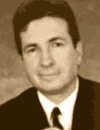
Sam Jones Chicago Revival 1886
E.A. Johnston presents Sam Jones as a powerful evangelist whose revival meetings in Chicago in 1886 shattered spiritual apathy and reached millions with the gospel.
E.A. Johnston's sermon recounts the remarkable 1886 revival led by Sam Jones in Chicago, highlighting his powerful evangelistic impact and the unprecedented media coverage that spread his message nationwide. Johnston portrays Jones as a spiritual sledgehammer breaking through the city's moral apathy, supported by endorsements from notable figures like D.L. Moody. This biographical sermon reveals how one man's fervent preaching ignited a widespread awakening and transformed a major urban center.
Full Transcript
Chapter 17 A Sledgehammer in Chicago Dear Brother Jones, God has given you a sledgehammer with which to shatter the formalism of the church and to batter down the strongholds of Satan. The Good Spirit is helping you mightily to use it. God bless you.
D.L. Moody Sam Jones began his meetings on a snowy Sunday morning on February 18, 1886, in Moody's Tabernacle, the Chicago Avenue Church. He fully grasped the challenge of evangelizing the Windy City and likened the difficulties with the remark, It is like biting a pumpkin, your teeth won't take hold of it. One of the surprises that emerged out of the Chicago meetings was the astounding coverage by the press.
The Georgia Evangelist had an incredible amount of newspaper coverage. A total of 35 reporters copied every sentence that fell from his lips. In addition to the daily papers of Chicago covering the Sam Jones meetings, sister cities had their reporters to handle the immense interest in the Evangelist by the public.
Two Cincinnati papers and the Globe Democrat of St. Louis had not only sent their reporters to cover Sam Jones, these papers had leased Western Union telegraph wires to simultaneously issue verbatim sermons to their subscribers. So just about every kitchen table in America was reading the sermons of Sam Jones and discussing them in shops of commerce. The unprecedented press coverage is described by a prominent newspaper man who said, The press, never in the world's history followed any man so closely, be he king, potentate, or preacher.
We get a sense of the complexity of activity of a Sam Jones meeting and the enormity of its national popularity by the following remarks. The reports of these daily services were given to the entire United States through the press of Chicago and the other great cities, where the daily papers were giving verbatim reports of the sermons. Perhaps the scheme inaugurated by these great daily papers was the most remarkable that ever connected with a revival campaign.
There were three or four stenographers representing each paper with a number of copyists nearby. And while the sermon was being delivered, the work of reporting, transcribing, and telegraphing was going on. One set of workers relieving another, and each word as it fell from the lips of Mr. Jones was flashing over the wires in every direction.
In speaking of this great honor, Mr. Jones said, Take the work in Chicago, for instance, in the Interocean and Tribune, the Cincinnati Commercial Gazette and Enquirer, and the St. Louis Globe Democrat, all of them with an aggregated circulation of 300,000, and with the reasonable calculation of five readers to a copy circulated, I enjoyed the privilege of preaching to a million and a half persons a day, a wonderful congregation for one preacher, and a privilege, I dare say, that no other man in the history of the church has ever enjoyed. Think of it, 9,000 words each night as they flashed out on 18 different telegraph wires to the cities of St. Louis and Cincinnati while they were being set in type by Papers of Chicago. Thus, at the breakfast table the next morning in these three cities, I was greeted by 300,000 readers, and before the sun went down that day, a million and a half more had read the words.
From the statement of Newspaperman, I suppose there is a reasonable estimate that the secular papers are so much more alive and aggressive than the religious papers that when they fall into line with the good work, they are a power we scarcely know how to estimate. Sam Jones was invited to Chicago by D.L. Moody. Moody even had Sam Jones come up to Northfield, Massachusetts later in life to speak at his Christian conference in the auditorium there.
It's insightful to see that Moody recognized the benefit Chicago would gain from a Sam Jones whom Moody described as a sledgehammer. As well, a local minister referred to Sam's preaching as using sledgehammers, so Sam Jones' nickname, the sledgehammer, originated from these Chicago meetings. This is seen more clearly in an article by an eyewitness as we see his observations of the Sam Jones meetings in Chicago.
Dr. P.S. Henson, chairman of the committee who brought him to Chicago, said, These are great public questions, touching public morals and public decency, touching Sabbath-breaking, rum-drinking and rum-selling, gambling, licentiousness, fraudulent dealing. And what in his vigorous vernacular the evangelist should brand as downright meanness that needed to be treated with just sledgehammers, as he knows how to wield nothing but steam hammer blows like these will wake a city plunged in sinful apathy. Oh, for the days of Moody, cries out somebody who was hurt.
For one, I believe in Moody with all my heart, but this man is doing work that Moody never did, and yet that mightily needs to be done. History records not the name of a single great reformer that did not wear a hairy mantle and deal blows with a bludgeon. Such was one was Martin Luther, and such was John Knox, and Elijah, and John the Baptist.
The complaint brought against the early Christians was that they were disturbers of public peace, pestilent fellows, that they were turning the world upside down. My own clear conviction is that Jones is in the line of apostolic succession. The following account of Sam Jones in Chicago is an important observation as it comes from Flaming Ravel, D.L. Moody's brother-in-law.
Mr. Jones coming to Chicago and preaching to the Northwest is a benediction to all the churches. The moral atmosphere will be clearer henceforth, and the Christians living will mean more, and the church will require more of its membership. Mr. Moody, with his usual sagacity, saw the needs of Chicago as perhaps no other man did, and induced Mr. Jones to turn his steps hither and begin this work, and his promise has been more than fulfilled.
Probably there has never been such revival in this city before. It is undoubtedly true that hundreds, if not thousands, have been converted, and hundreds of Christians have been led to a new consecration to God's service. Notice Moody's brother-in-law recognizes the magnitude of the effect Sam Jones had on the Windy City, and also notice the fact that he calls it a revival of which never before has one been like in the city.
Chicago was Moody country, and not easily captured by any other evangelist in Moody's lifetime other than Samuel Porter Jones. We end the Chicago revival with a secular newspaper report from the Chicago Tribune, and it reads like the Apostle Paul and Ephesus in a riot. The audience last night was large enough, attentive enough, and sufficiently responsive to please the most exciting speaker who ever spoke.
There must have been foley 9,000 people packed away in the building. People stood along the aisles on the main floor, stood six and seven deep on the promenade and in the gallery, stood on the stairways, and, in fact, stood everywhere it was possible to stand. There was scarcely breathing, much less standing room.
Several hundred people remained in the building from the afternoon service, and by six o'clock, nearly every seat was occupied. By half past six, people were standing, and 15 minutes later, the entrance doors were closed and no more people were admitted. By seven o'clock, there must have been 5,000 people massed along State and 24th Streets, half of them under the impression that the doors had not yet been opened, and the other half believing that, through some providential circumstances, they would be able to gain admittance.
All the cars going north and south from the rink were thoroughly packed as if the meeting had just been dismissed, and entirely by people who had despaired of getting into the casino. A careful estimate places the number of people turned away at about 10,000. Really, a greater throng among them was able to hear the last sermon of this series of revival meetings.
The converts began the first week, and increasing numbers were added each week. First week were 500, second week 1,000, and so on to the end of the five weeks. It is a fair estimate that 350,000 heard them in Chicago, and 25 million read his sermons during the five weeks.
No such record is found in all the annals of our Christian religion. If Chicago was a pumpkin hard to get your teeth around at the beginning of the campaign, it certainly ended as pumpkin pie. It's hard to fathom the comment of the newspaper reporter that 350,000 heard Jones in 1886 when there were a little over 500,000 inhabitants at the time.
Add to that the incredible statement of the numbers of newspapers sold throughout the Northwest, and ending up all across America, to where it was stated that 25 million people read the sermons of Sam Jones during that amazing five-week period where his pointed, powerful preaching hit the city like one huge sledgehammer. The total population of America in 1880 was estimated to be a little over 50 million. That means Sam Jones reached one out of every two Americans with the gospel of Christ in just a little over one month alone.
Well, that was an excerpt, friends, from my new biography of Sam Jones, entitled Sam Jones, A New Biography. You can get your copy on Amazon.com and read it, friends, and see how God took a man, fully surrendered to Him, to shake entire cities, big cities like Chicago, with the gospel of Christ in His day. Oh, how we need a Sam Jones and a D.L. Moody in our day.
Sermon Outline
-
I
- Introduction to Sam Jones and the Chicago revival
- The challenge of evangelizing Chicago described as 'biting a pumpkin'
- Unprecedented press coverage and national interest
-
II
- Description of the reporting process and wide dissemination of sermons
- Sam Jones' impact measured by readership and attendance
- D.L. Moody's endorsement and role in inviting Jones
-
III
- Sam Jones' preaching style likened to a sledgehammer
- Moral and social issues addressed in the revival
- Comparison with historical reformers and apostolic succession
-
IV
- Eyewitness accounts and testimonies of revival impact
- Massive crowds and conversions recorded
- Legacy and significance of the Chicago revival
Key Quotes
“God has given you a sledgehammer with which to shatter the formalism of the church and to batter down the strongholds of Satan.” — E.A. Johnston
“It is like biting a pumpkin, your teeth won't take hold of it.” — E.A. Johnston
“I enjoyed the privilege of preaching to a million and a half persons a day, a wonderful congregation for one preacher.” — E.A. Johnston
Application Points
- Embrace boldness in sharing the gospel to break through spiritual resistance in your community.
- Leverage modern communication tools to spread the message of Christ widely and effectively.
- Recognize the importance of revival in renewing personal faith and societal morals.