
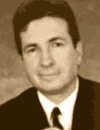
To Live and Die
E.A. Johnston teaches that the essence of the Christian life is to live with purpose, power, possession, and presence in Christ, embracing death as a gain because of eternal life with Him.
In this expository sermon, E.A. Johnston explores the profound meaning of Philippians 1:21, unpacking the apostle Paul's declaration that 'to live is Christ, and to die is gain.' Johnston draws out four key principles—purpose, power, possession, and presence—that define the Christian life and the believer's hope beyond death. Through personal testimony and biblical insight, he encourages believers to live with Christ as their center and to embrace death as a gateway to eternal gain.
Full Transcript
Turn in your Bibles, friends, to the book of Philippians, for here we see the apostle reflecting back on his life in Christ after all Paul's beatings, stonings, shipwrecks, and hardships, along with imprisonment. And although Paul was released from a previous imprisonment, he's writing this letter to the church in Philippi while in chains in a dank prison cell, and from which his release this time will only come by way of the executioner's fallen axe. And it is here, friends, in Philippians, in chapter 1 and in verse 21, we have the summation of Paul's life as a Christian, and it's a clarion call down through the ages to any believer in Christ.
Let me read verse 21 to us at this time. Here now is the word of God, and may the spirit of the Lord attend the reading of his holy word. For to me to live is Christ, and to die is gain.
This verse is not only the apostle's philosophy as a believer, but it's his complete summation of his entire life as a believer, friends. For to me to live is Christ, and to die is gain. I want to draw out four principles from this verse from us today.
Get out your pens and paper, jot these down in the margin of your Bible. You may want to write down the following four words. Write down purpose, power, possession, and then presence.
And then I want you to actually write this verse out, but I want you to leave a blank after the words. For to me to live, and place a comma there, and then right after that, and to die, and then place a period. The comma is a pause, the period is finite.
We are here on earth to do two things, to live, comma, and to die, period. For to me to live, comma, that's my purpose in life. Whether that purpose is to make money, or make a name for myself, or whatever purpose you have in life, you would fill that in where the blank space is.
For to me to live is money, or for me to live is material things, and to die is loss. You can't put the word gain there, because when you die, you leave this world without those things you work so hard for. So, for to me to live is wealth, and to die is loss.
For to me to live is popularity, and to die is loss. Whatever noun you put in there that you've lived for, you must put the word loss when you die, because you lose those things. You can't take your money with you, there is just loss.
You can't take your popularity with you, there's just loss. You can't take your material possessions with you, there is just loss. So, we must ask ourselves this burning question, what am I living for? Am I living for this world, or am I living for things of eternal worth? The apostle Paul said it was for him.
For to me to live is Christ, and to die is gain. So, the first principle comes from our purpose in life, while we live, and before we die. Life is short, friends.
We are only a vapor that appears for a little while, my bible tells us. So, what's the purpose of our life? I think C.T. Studd said it well. The great missionary to Africa, he was the son of a millionaire, who did what the rich young ruler would not, and gave away his entire inheritance for the spread of the gospel, and he was able to write this poem.
Only one life, it will soon be past. Only what's done for Christ will last. He could say with the apostle, for to me to live is Christ, and to die is gain.
So, we see this purpose. Now, let's look at the power. Power.
For to me to live is Christ. Those seven words match another seven words from John's gospel in chapter 15. Abide in me, and I in you.
Jesus told his disciples that, apart from me, ye can do nothing. We see this abiding principle of the vine and the branches, where the power, the life force, comes from the vine. So too, the Christian life.
We need the power to live it, and that comes from Christ. For to me to live is Christ. Lord Jesus, live your life through me, so I can live my life unto thee.
The power to live the Christian life is found in Christ, for it is not by power, nor by might, but by my spirit, saith the Lord of hosts. So here, we see power, found by this principle of abiding in Christ, through the union of the believer, with the living Lord. You can't live the Christian life, friend, apart from Christ and you.
For to me to live is Christ. Recently, I experienced heart failure while I was in the hospital, and since I've been out, my dependence upon Christ is even more urgent. Why, I know I can't even climb a flight of stairs without his help and enablement.
I know more now, in this season of my life, what it means to say, for to me to live is Christ. So we have this purpose of the Christian life, and the power to live it. Now let's look at our next principle, which is our possession.
For to me to live is Christ, and to die is gain. That's our eternal reward. When a believer dies in Christ, his soul goes back to the God who gave it.
The believer, when he dies, is given eternal life, and to die is gain. I get all choked up talking about it, friends. Heaven is my possession.
When an unbeliever dies outside of Christ, why, all he has is loss in hell. He looked up and was in torment, it says about the rich man and Lazarus. But Lazarus, the beggar died in, was carried by the angels to Abraham's bosom, which signifies heaven.
So for me to live is Christ, and to die is gain. I gain heaven, my eternal reward. Oh friends, what a gain that will be.
Our loved ones that we have lost through death, who have died in Christ, already experiencing that gain. So we have our purpose in the Christian life, the power to live it, and the possession to attain. Now let's look at this last principle of the presence.
For to me to live is Christ, and to die is Christ, is what I can say, because I've got Christ either way, friends. I have him here to live for him, and in eternity, when I die, my gain is Christ, because I'm in his presence for all eternity. I'm reminded about a story I heard about a traveling preacher who stopped in a downtown church in St. Louis for Sunday service.
He took a seat in the back of the church, and he soon realized he was the only white man in a all-black church. The pastor's message that morning was on the topic of heaven, and as the elderly pastor walked around the platform, he addressed his congregation in the following manner. Some folks say heaven is paradise.
Other folks call it Abraham's bosom. But do you know how I see heaven? I see heaven this way. Here is Jesus.
Just returned from his earthly ministry, and Gabriel greets him at the pearly gates and says, Hello, Jesus. Sure is good to see you, Jesus. Oh, we sure missed you, Jesus.
But wait, who is that there with you? Is that that thief? That thief on the cross? No, sir. We can't have no thieves up here. Just then, Jesus wrapped his arm around the thief and replied, Never you mind, Gabriel.
Never you mind. He's with me. Listen, friends.
Heaven is being in the presence of Christ forever. Remember, the purpose, the power, the possession, and the presence for me to live is Christ, comma, and to die is gain, period. Jesus is the Alpha and the Omega, the beginning and the end.
He is the bright and morning star, the lily of the valley. He is our blessed hope. Jesus is the pearl of great price, who's worth selling all for and losing all for to be gained.
Let us pray.
Sermon Outline
-
I. Purpose
- Life is short and we must ask what we live for
- Living for worldly things leads to loss at death
- Paul's purpose: to live is Christ
-
II. Power
- The Christian life requires power from Christ
- Abiding in Christ is essential to live spiritually
- Dependence on Christ grows in trials
-
III. Possession
- Eternal life is the believer’s possession
- Death is gain because of heaven
- Unbelievers face loss after death
-
IV. Presence
- Christ’s presence is with believers in life and death
- Heaven is being in Christ’s presence forever
- Christ is the Alpha and Omega, our blessed hope
Key Quotes
“For to me to live is Christ, and to die is gain.” — E.A. Johnston
“The power to live the Christian life is found in Christ, for it is not by power, nor by might, but by my spirit, saith the Lord of hosts.” — E.A. Johnston
“Heaven is being in the presence of Christ forever.” — E.A. Johnston
Application Points
- Evaluate what you are living for and align your purpose with Christ.
- Depend daily on Christ’s power to live a victorious Christian life.
- Live with the assurance that death is gain because of eternal presence with Christ.