
Creation Versus Evolution
The sermon emphasizes the importance of God's direct acts and volitions in creating the world, and highlights the flaws of evolution as a theory.
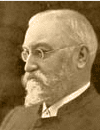
E.W. Bullinger emphasizes in The Companion Bible the direct acts and volitions of God as the Creator in Genesis 1:1-2:3, highlighting the perfection, goodness, and wondrous nature of all God's works. He contrasts the principle of evolution seen in human affairs with the lack of evolution in God's works, showcasing growth and development within God's sphere. Bullinger addresses the challenge of Higher Criticism and the impact of evolutionary concepts on society, attributing present-day wickedness to satanic influences.
Text
This Is Appendix 5 From The Companion Bible. The Introduction to Genesis (and to the whole Bible) Genesis 1:1--2:3, ascribes everything to the living God, creating, making, acting, moving, and speaking. There is no room for evolution without a flat denial of Divine revelation. One must be true, the other false. All God's works were pronounced "good" seven times (see Appendix 10), namely, Genesis 1:4, 10, 12, 18, 21, 25, 31. They are "great," Psalm 111:2. Revelation 15:3. They are "wondrous," Job 37:14.
They are "perfect," Deuteronomy 32:4. Man starts from nothing. He begins in helplessness, ignorance, and inexperience. All his works, therefore, proceed on the principle of evolution. This principle is seen only in human affairs: from the hut to the palace; from the canoe to the ocean liner; from the spade and ploughshare to machines for drilling, reaping, and binding, etc. But the birds build their nests to-day as at the beginning. The moment we pass the boundary line, and enter the Divine sphere, no trace or vestige of evolution is seen.
There is growth and development within, but no passing, change, or evolution out from one into another. On the other hand, all God's works are perfect. In the Introduction to Genesis (chapter 1:1--2:3) forty-six times everything is ascribed to direct acts and volitions on the part of God as the Creator (see Appendix 4. I.):-- It will be noted that the word "God" (Elohim, see Appendix 4. I.) occurs in this Introduction thirty-five times (7 × 5), the product of 7 and 5, the numbers of spiritual perfection, and grace. (See Apppendix 10.)
There are also ten words connected with the word "God"; this is the number of ordinal perfection (Appendix 10). There is only one verb used alone with the pronoun "He", instead of "God", and that is the verb "rested". This makes eleven in all; for the significance of which see Appendix 10. The word "and" is repeated 102 times: thus, by the figure Polysyndeton (Appendix 6), marking and emphasising each separate act as being equally independent and important. Evolution is only one of several theories invented to explain the phenomena of created things.
It is admitted by all scientists that no one of these theories covers all the ground; and the greatest claim made for Evolution, or Darwinism, is that "it covers more ground than any of the others." The Word of God claims to cover all the ground: and the only way in which this claim is met, is by a denial of the inspiration of the Scriptures, in order to weaken it. This is the special work undertaken by the so-called "Higher Criticism", which bases its conclusions on human assumptions and reasoning, instead of on the documentary evidence of manuscripts, as Textual Criticism does. ____________________________ Message from The Rain webpages: To better understand Dr.
Bullinger's attitude towards Higher Criticism we suggest you read, E. W. Bullinger A Biography by Juanita S. Carey.--The Victorian age was an age of religious faith, churches and chapels were crowded with worshippers. But by the late Victorian period there was a restlessness that permeated the society in London, the center of religious and scholarly circles in which Bullinger lived. With the publication, in 1859, of Charles Darwin's, On the Origin of Species and The Desent of Man, in 1871, traditional faith in the church was being challenged.
In 1882, the Society of Psychical Research was founded in London; and in 1891, the Spiritualists National Union was established. Many people viewed spiritualism as a newly developing science, and as such it was granted the credibility accorded to all other sciences. By 1900 all serious scholars and many universities had accepted without hesitation the main conclusions of higher criticism--The concepts of evolution, spiritualism and higher criticism has had a huge impact on society, the wickedness in present day mainstream society is do to their satanic influences.
Ethelbert W. Bullinger never was a man of the mainstream. He was one of those rare individuals who lived his life influenced by neither the praise nor the fear of other people. Ethelbert was a student of God's word, being students ourselves we therefore take our example from him and follow not the traditions of men, instead, we follow our LORD and Saviour Jesus Christ. God (or He) created 6 times (1:1, 21, 27, 27, 27; 2:3). God moved 1 once (1:2). God said 10 times (1:3, 6, 9, 11, 14, 20, 24, 26, 28, 29).
God saw 7 times (1:4, 10, 12, 18, 21, 25, 31). God divided 2 twice (1:4, 7). God (or He) called 5 times (1:5, 5, 8, 10, 10). God (or He) made 7 times (1:7, 16, 25, 31; 2:2, 2, 3). God set 1 once (1:17). God blessed 3 times (1:22, 28; 2:3). God ended 1 once (2:2). He rested 2 twice (2:2, 3). He sanctified 1 once (2:3). 46
Sermon Outline
-
I
- Introduction to Genesis and the Bible
- God's works are perfect and ascribed to direct acts and volitions
- The word 'God' occurs 35 times in the Introduction to Genesis
-
II
- Evolution is a theory that cannot cover all the ground
- The Word of God claims to cover all the ground
- Higher Criticism denies the inspiration of the Scriptures
-
III
- God's works are perfect and do not evolve
- The birds build their nests today as at the beginning
- There is growth and development within, but no passing or change
-
IV
- The Introduction to Genesis uses polysyndeton to emphasize each act
- The word 'and' is repeated 102 times in the Introduction to Genesis
- This emphasizes the importance of each separate act
Key Quotes
“All God's works were pronounced 'good' seven times.” — E.W. Bullinger
“The moment we pass the boundary line, and enter the Divine sphere, no trace or vestige of evolution is seen.” — E.W. Bullinger
“The Word of God claims to cover all the ground: and the only way in which this claim is met, is by a denial of the inspiration of the Scriptures,” — E.W. Bullinger
Application Points
- We should not rely on human theories and assumptions, but on the Word of God for our understanding of the world.
- God's works are perfect and do not evolve, so we should not try to explain them through human reasoning.
- We should trust in the inspiration of the Scriptures and not deny it in order to weaken the Word of God.