
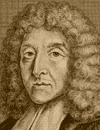
The Obscure Church
The church has often been obscured and destitute of all splendor throughout history, but it has survived through the faithfulness of its members.
Francis Turretin discusses the proof that the Church is often obscured by examining the condition of the Old Testament Church. He highlights various intervals in history where the Church lacked splendor and was destitute, such as before the flood, during the time of Abraham, in Egypt, under the judges, and during the Babylonian captivity. Turretin emphasizes how the Church faced persecution, idolatry, captivity, and a lack of true worship throughout different periods, yet God always preserved a remnant of believers faithful to Him.
Text
Proof That the Church is Often Obscured: From the Condition of the Old Testament Church.
Our opinion is confirmed by various reasons. The first is drawn from the condition of the church under the Old Testament, under which it is evident that she was not rarely obscured and destitute of all splendor (which can easily be demonstrated by her various intervals). Who can deny that she was without splendor before the flood, when all flesh had corrupted its way (Gen. 6:12), and in the flood when reduced to eight souls, she was included in the ark? In the time of Abraham before his call from Ur of the Chaldees, she lay concealed in a paternal family given to idolatry (Jos. 24:1, 2). What was the splendor of the church in Egypt, where she was so long a captive without any form either of a state or of a sacred ministry? What was her splendor under the judges, when after the death of Joshua the Israelites, having left the God of their fathers, went after other gods (Jdg. 2:7; 3:8, 12), concerning which times Azariah says, "Now for a long season Israel hath been without the true God, and without a teaching priest, and without law" (2 Ch. 15:3)? What appearance and splendor did the church have in the time of Elijah, when he thought that he was left alone to worship God (1 K. 19:10); God in the meantime consoling him with this-that he had preserved seven thousand believers known to himself alone who had not bowed the knee to Baal? What splendor had the Jewish church under Ahaz, Manasseh, Ammon and other wicked kings under whom the sacrifice was interrupted by law, the gates of the temple closed, an altar built after the form of those of Damascus by Uriah the high priest and idolatry introduced everywhere (as we read in 2 K. 16:11, 12, 14; 2 Ch. 28:3, 4, 24, 25)? And if we come down to the Babylonian captivity, where was the splendor of the church after the city had been razed, the temple polluted, the sacred vessels taken away, sacrifice abolished, the worship of God interrupted (which could not be performed except at Jerusalem) and the people brought into the most direful servitude? Hence the pious most mournfully lamented that the prophets and all the signs had been taken away (Ps. 74:9). In fine, what appearance and prominence could the church have had under the most dreadful persecutions of Antiochus and his successors, mentioned in the book of Maccabees and by Josephus (JW 1.30-40 [Loeb, 2:16-23]). In that time, Paul says believers "were stoned...were slain with the sword...being destitute...tormented, they wandered about in sheepskins and goatskins; in deserts, and in mountains and in caves of the earth" (Heb. 11:37, 38).
Institutes of Elenctic Theology, vol. 3, p. 49
Sermon Outline
- The Obscure Church in the Old Testament
- The Church without Splendor
- Examples of Obscurity
- ['Before the Flood', 'In Egypt', 'Under the Judges', 'In the Time of Elijah', 'Under Wicked Kings']
Key Quotes
“Who can deny that she was without splendor before the flood, when all flesh had corrupted its way (Gen. 6:12),” — Francis Turretin
“In the time of Elijah, when he thought that he was left alone to worship God (1 K. 19:10);” — Francis Turretin
“In fine, what appearance and prominence could the church have had under the most dreadful persecutions of Antiochus and his successors, mentioned in the book of Maccabees and by Josephus (JW 1.30-40 [Loeb, 2:16-23]).” — Francis Turretin
Application Points
- We can learn from the condition of the Old Testament church and apply its lessons to our own lives.
- The church's survival in times of obscurity is a testament to the power of faithfulness and perseverance.
- We must remain true to God and His Word, even in the face of difficult circumstances and persecution.