
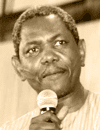
The Prayer Of Paul -In Raising Disciples 1
Gbile Akanni teaches that the prayer of Paul exemplifies the essential role of intercessory, faith-filled, and submissive prayer in effectively raising disciples for Christ.
In this sermon, Gbile Akanni explores the vital role of prayer in the ministry of raising disciples, focusing on the prayer life of the Apostle Paul as a powerful model. He emphasizes the difference between mere converts and true disciples, highlighting the necessity of intercessory and Spirit-led prayer for effective ministry. Through biblical exposition, Akanni encourages believers and ministers to cultivate a prayer life marked by faith, submission, and concern for others. This teaching challenges listeners to deepen their prayer practices to fulfill the Great Commission.
Full Transcript
Living Seed Media brings to you God's Word, which is his comprehensive equipment for changing lives. May the Lord impact your heart as you encounter his Word. For further inquiry or counsel, contact Peace House, PO Box 971, Boko, Benue State, Nigeria.
Telephone numbers 0703 0363659, 0703 7681198. Email address lsmediaatlivingseed.org or visit our website at www.livingseed.org. Let us sit back and listen as the servant of God brings forth the Word of Life. Let us pray together.
Our loving Father, we are grateful to you for your choice of us. For us to have called us unto yourself and into the ministry. Lord, we know that even our gathering together here in these few days is a call that you have extended unto our hearts.
Lord, we know that you have definite purpose in your heart to bring to pass. Indeed, our hearts rejoice because we can very boldly say that you are beginning to make perfect your purpose. For which you have chosen to gather us together at this place.
And from the depths of our hearts, we say thank you. Lord, we still want to commend ourselves to you. Knowing that what you have in plans to do is still ongoing.
May none of us bolt away. Please keep our hearts very well available. Open and receptive unto every walk which by your finger you will desire to walk upon us.
So much that Lord, by the time we are concluding our time together before your presence, by this gathering, each one of us would definitely have had the touch of your finger. A molding and a fitting us into that which is the intent and the counsel of your heart. This is our confidence and trust knowing that you will bring this to pass by the arm and the energy of your spirit.
Want to plead with you Lord that this next segment as we very briefly reflect yet again together on your word. Our prayer, Lord, is that by your own spirit you will speak to our hearts. And at the end of it all, the praise, the honor and the glory shall be yours and yours alone.
Thank you because we know you will do as we have desired of you. For in Jesus name we pray. We are thankful to God for this opportunity yet again.
And the privilege to be standing before us as we look together into the word of God. And what we are going to be looking together is a study, a short study really, on the prayer of Paul in raising disciples. We are going to be looking at the prayer of Paul in raising disciples.
We started already this morning by our Bible studies to begin to look to the importance, the place, the need, the necessity of being disciples of the Lord. And also we know that each one of us as disciples and particularly as men of the clergy, we have a very, very basic fundamental commission that is upon our lives and that is to raise disciples. So the time we are going to be spending together at this exposition is going to be looking at the angle of prayer in this duty, this commission that the Lord has given unto us.
The characteristics of Paul's prayer and the second segment that talks about the content of Paul's prayer. I'll be beginning with the introduction that talks about the raising of disciples is the essence of the great commission. I know that that we have touched briefly as we did our Bible study together.
Disciples and not converts are what the Lord asks His men to go into all the nations to break and to raise. As we studied in Matthew 24, 18 to 20, disciples are ardent adherents of the Lord in His word, in His way, and also in His will. Converts are merely enthusiasts.
They can very, very easily, at any provocation or any pressure, deviate or desist from following the Master. And I'm sure we will remember that there was a time as Jesus ministered. The scripture says that many people were following after Him.
But by the time He raised what we can regard as the standard a little bit high, many people were beginning to say that this is a hard saying. Who will want to take this? And many, the Word of God says, began to draw back. It was as if the reduction went almost only to the apostles.
And when the Lord turned to them, what is asked is that, will you also go away? And the words that came from the mouth of Peter was, to whom shall we go? Because you are the one that has the words of eternal life. That is a disciple. Converts may be so enthusiastic.
Converts may appear to be very, very strong in emotions. But they may not be able to press on at demands that the Lord may be making. And so God has not really demanded of us to raise converts.
It is disciples of all nations that He demanded we should go ahead to make. The primary task can only be successfully discharged by the instrumentality of prayer and the ministry of the Word of God. I'd like to read what is in Jeremiah chapter 10 verse 21.
Because if disciples shall be raised, prayer is one very cogent angle or instrument that the Lord will engage to have that brought to pass. Jeremiah 10 verse 21, here it says, Those shall you say unto them, sorry 21 says, For the pastors have become brutish, and they have not sought the Lord. Therefore they shall not prosper, and all their folks shall be scattered.
The pastors, another version we say, the shepherds, they have become foolish, become brutish. They have not sought the Lord, therefore shall not prosper, and all their folks shall be scattered. Two things the Word of God is quickly pointing at.
When we neglect this very great opportunity of prayer, as we seek to labor over the lives of men, the scripture says that when that is omitted in the life of the shepherd, nothing that he does achieves. He can't prosper. Nothing that he does progresses.
He cannot move. It looks as if what we push the work of God in the life and by the hands of his servant is nothing else but a dependent in prayer upon the Lord. And so it says, when this is neglected, they can't prosper in their works.
But secondly, the scripture says that they also will have all of the flocks scattered. Scattered may not mean that they are not gathering in church. Scattered may not mean that they don't have their names on our rules and registers.
But scattered may mean that their hearts, their lives, entirely scattered. And you will find out that there are very many men in church, they are scattered men. One little issue, you will discover how they cannot hold together.
One little news of maybe a servant of God in town, you will discover how they will flock and get the seed. There was a time that Jesus, the scripture says, when he saw the people, he had compassion on them and he said unto them that these people, they have no shepherd. And so when we neglect this very crucial arm of our instrument of labor, the works of our hands may be scattered works.
And so we need to note that it has this very, very cogent key unto the success of our labors. Acts chapter 6 is a familiar text. It is making an emphasis on the fact that prayer is very, very basic unto success of the work that God has called us to.
The growth and the wellness of the disciples is dependent on the primacy of prayer, which takes place ahead of, along with, and after the ministry of the word of God. So prayer is needful even before the ministration of God's word. Prayer is needful even as the word of God is being ministered.
Prayer is needful even after the word of God has been ministered. It has that very, very prime of place as regards our labor. The church in Nigeria is reputed as a praying church.
And actually, the hours that we pour into prayers as a national church is enormous. I remember that years back, for instance, remembering how we prayed. All night prayers used to be once in a month.
Averagely, generally in this nation. In fact, there was a time that maybe we were getting burdened and we slated almost nationally, first Saturday of every month, praying for the nation. But general prayers, about once in a month, we had all night prayers.
But you know, as we moved on, prayers in the night grew to become almost every weekend. But we progressed. Prayer became not only once in a week.
There are some places it's every night of the week, night prayers. But I don't know if you have also heard that there is even what we call three days and three nights. Yoruba people will call it Osameta Urumeta.
Three nights, three days, and it is to pray. Enormous hours invested in prayers. But the truth is, what is the content of our prayer? Whereas we have quantum, a very large quantity of praying, the quality remains a question.
Because it is not so much that a man is making expressions. It is to whom is he speaking and by whom also is he speaking. Because in earnest prayer is only prayer if and only if it is originated by the spirit of God himself.
The scripture says we don't know how to pray as we ought to. But the spirit helps our infirmity and by him we can make intercession with groanings that are beyond what any man can state. So whereas Nigeria is a praying nation, so to say, but what prayer are we making? What effect is this praying? What quality of prayer is our prayer? Prayer is another thing entirely.
And one thing about the quality of prayer, on how the quality of a man's prayer can be improved, is to model one's prayer after a matured believer. The disciple in the days of Jesus, they saw him pray. And while they saw him pray, they walked up to him and said, Master, teach us to pray.
And I'm praying that it will also open our own hearts. So much that we will be seeking unto him to ask him to teach us how to pray. Because if he teaches how to pray, it will be a different praying.
So they walked up to him to seek and said, teach us how to pray. The Lord responded that by what we very popularly now call the Lord's Prayer. Besides this prayer, and perhaps the high priestly prayer that Jesus made in John chapter 17, no other person may be better for us to turn to as a prayer model than Apostle Paul.
I know that many a times we think of Paul more likely in terms of missions, maybe in terms of expounding God's word. But the truth is, if you take note of this man, he's a praying man. Paul was a prayer giant, if we will have the word like that.
And so he's about the next person we can really look at and to seek to understand how we need also to engage this opportunity of labor in our ministries so as to be able to attain according to what the will and the purpose of God for us might be. Paul in his prayers reflected in every book that he wrote. Well, I said 13 or so because depending on our leaning.
But every book that Paul wrote, you will find in there heart expression. God is that he expressed before the presence of the almighty God. Things that he raised unto him.
And so learning from his prayer can both strengthen and deepen our own prayer life and also enhance the effect of our ministerial labor over souls of men that we are called to oversee. So in this short time of our interaction together, we shall be noting the passion, the purpose, and the pungency of Paul's prayer, which he made incessantly for the churches he planted or that he related with in order that we might gain insight into prayer content of the labor of raising disciples for Christ in our local churches. So now we'll be taking this first segment that talks about the characteristics of Paul's prayer.
So because we want to learn about his prayer, we feel that it's good if we take a short look at the prayer. Some of the things that are the nature, the character of his prayer. Before we take a look at what are the things really which is stated in prayers.
And the first thing that we are going to be observing and noting is that Paul's prayer was motivated by good news. Many, many, many people prayed when and only there's a bad news. I've talked about Nigerian prayer for instance.
I have found out that many times, especially where I stay, the body of Christ is always at ease. But let one move be made that appears as if it's going to be an injury onto our freedom. What do we quickly do? There will be an announcement and say this particular day everybody must gather in this place to pray.
And I'm not saying we should not do that. But I discovered that more often than not, that is what motivates prayer. Even individually, even congregationally.
No special prayer is called until there is a special problem. If I will use that word. Until there is a special need as it were.
But not so with this man that we are taking a look at. He got motivated to pray on the account of good news. In some of these passages reflected, I will say when I heard about your faith.
When I heard about your attitude towards the brethren. When I heard about this that is taking place in your life. It will say that I cannot but cease to give thanks to God on your behalf and to do this prayer.
So he prayed for men, for the church, for the people that God gave him opportunity to relate with. Even as he hears about their well-being. About their going on well and fearing fire in the world of faith.
So one thing that characterizes his prayer is that he is a man that prayed on the account of good news of the people that came unto him. And that suggests that we learned about a soul. And we learned that this soul that the Lord is helping him is a ginger for prayer.
Is an igniter to say let's bend the knees upon this life. Let me read Ephesians 1 verse 15 especially us. Just want to leave that point.
Ephesians 1 verse 15. It says wherefore I also after I heard of your faith in the Lord Jesus and love unto all the saints. Cease not to give thanks for you making mention of you in my prayers.
Learning about the faith in the Lord. Learning about their love for the saints. Saint Paul on his knees to make expression unto God on their behalf.
Number two characteristic of Paul's prayer is that his prayer were intercessory. We know that intercessory prayers are prayers that are made on behalf of others. For and on the account of others.
Many many times in the life of this man. Whereas there are few occasions that we notice that he will solicit for prayer for himself. But very many times as he prayed in his letters unto the churches.
You will find him bearing them to God. Raising issues before the presence of God on their account. I'm not even sure that I saw any place but one that Paul prayed for himself.
And that was a time he needed to wrestle with God when he was saying that there is a torm that is in his flesh. And that he begged God three times to remove it from him. And once God said that's alright my grace is sufficient for you.
Because my strength is made perfect in weakness. There was no any other record I can trace. When we find Paul speaking to God on his own record, on his own case or course.
Not even when he was thrown in jail. Can we remember when he was thrown inside jail? The scripture says that they prayed and they sang praises. Not when he was in trouble.
Not when he was beyond, I mean before trials. Judges and kings. If there will be anything all that he desires is that you just pray for me.
So that even in palaces the word of God will still be made known by my witnesses as it were. In answering or in attending to cases. His prayers were intercessory prayers.
He's a man that was taken over by the body of the welfare, spiritual welfare really. Of the people that God gave him opportunity to labor over. You'll find out that many many times in our days.
If prayer points are outward. Oh and I have seen church pray. In fact if prayer point is serious.
And when I say serious, if it is spiritual. What do you say about the temple of prayer? For instance if I raise a prayer point, shall we plead with God? That will give us help in this call that he has given unto us. That will cause us to have a clearer understanding of the purpose for which he brought us into ministry.
Oh we may pray. But if I raise a prayer point and say. Shall we plead with God? Or shall we ask that every plan of the enemy.
That is standing to contest. Even if I use it against ministry. I've said the first prayer on ministry.
If I now use it on ministry. Do you know that the temple of prayer will change? Much more if I now say that. Can we pray that? The promotion.
That God has shown me. That I will have. Maybe to become.
Somebody say bishop. Maybe to become bishop. Sir.
Do you know that the prayer will be different? All because that is looking towards me. But not so with this man. That is something that characterizes a praying heart.
I've gone close to a little to people who pray. And I discovered that. Prayer men.
Their prayer points, personal prayer points. Are usually very very insignificant. And so that characterizes a heart.
And that is what we should be looking to God to work in our hearts. That he will raise us. A heart.
That seeks to pray. And earnestly make intercession. For men and women.
That he has given us as laborers. Or overseer on their lives. Thought.
About the characteristic of. The prayer of Paul. Is that.
There is this. Show. There is this.
If I will use that word. Of submissiveness. That we can find.
In Paul's prayer. Efficient one that I look at. Verse 16 says.
Look I think chapter 3 now. Let me read verse chapter 3. Verse 16. Or 14.
Chapter 3 verse 14. It says. For this course.
I bow my knees. Unto the father of our Lord. Jesus Christ.
For this course. I bow my knees. Unto the father.
Of our Lord. Jesus Christ. Maybe I should just read.
Briefly what I have there. It says. This characteristic of prayer.
That we are noticing here. Is the submissive posture. Of prayer.
Whereas it's not as if. Every part. Of praying must be on the knees.
But. The bowing of the knee. Has a symbolic expression.
When it comes to prayer. It is. Is a sign of worship.
Is a sign of submissiveness. Is a sign of. As if.
Is a sign of saying. I am. Entirely under.
That is what. The posture. Of kneeling in prayer.
Dears. And caries. So.
Paul said. I bow my knees. That is something that is needed.
Today. There are two words. For worship.
In the new testament. One of it. Is implying that.
The head. Is bowed. The other.
What is being referred to here. That the knee. Is bowed.
You can either go reflect. That is to say. You can either bow the knee.
Or you bow the head. But. It looks as if.
We are stiffened. In our own generation. And I notice that.
There are very many times. That the word of God. Will describe the people of Israel.
As stiff necked. Stiff necked people. Do you know that.
Many a times. When that word is used. Even in the old testament.
It is. A kind of saying that. They are not bowing.
Unto God. They are not. They are not submitting.
Unto God. They are not in worship. Of God.
And so many times. It calls them stiff necked. Stiff necked is obstinate.
Stiff necked is a sieve. Instead of the neck. To do this.
It looks up. To the face. And.
I observe that. Our days. We are becoming.
Very very stiff necked. We want to look up. In the face.
Of. The deity. Our generation.
We need to learn. That we don't treat God. As an equal.
And I think. We can say one or two on this. Additionally.
God. Is God. I don't know which other way.
To say it. God. Is far far beyond us.
God. Is. Is the maker of the heavens.
And the earth. He made us. The scripture says that.
We are. Is. Is.
And the work. He made us. We are not.
Our own. He owns us. And is a God.
That should be. Honored. Reverenced.
Is a God. That should be. Taken.
In all. Is a God. That cannot be approached.
Very very. Carelessly. Flippantly.
Is a God. That is not. Near our level.
In any sense. As much. As he is.
Our father. Even said in his word. That if our.
Our your father. What was he asking for? He said where is my honor? And my fear. If I were your master.
So if we will be. Coming before the presence of God. It must be with this.
Understanding. That is a God. That we must.
Outrightly. Submit unto. Is not a God.
That we are exercising. Authority over. Is not a God.
That we dictate. Our demand for. Is not a God.
That is bound. To do the. Deeds.
That I present. Unto him. Is not a God.
That I have. Ability. And right.
To command. I think we made an allusion. To that statement.
Not too long ago. That concerning the works. Of my hands.
What does the Bible say please? Command ye me. Is that not so? But do we think. That means God.
Listen now. There is this. That you must do.
Do you know that. Many a times. We put God.
Under a bound. And we say. You must answer.
This prayer. By tomorrow. Who said? To whom are we speaking? And we feel that.
He must do that. Steve Nick. Are people that are so bold.
Enough to be able to look up. To the face of God. And command him to do what.
We desire that should be done. No. Even though Paul was making a request.
That is in alliance with the will. The desire of God. He said I bow my knees.
Unto the father by whom. The whole families on earth. Is named.
You know that is even understanding. Of the great. The greatness of the almighty.
And that is to say that. There is no man in existence. That is in existence.
Bought by him. Unto the God. By whom the families.
In heaven. And even on earth. Is named.
The source of all things. We don't have what it takes. To command him.
But to be submissive to him. Even in prayer. You know it looks as if.
We pray in our days. If I pray and say Lord. If it is your will.
Do you know that is like a weak prayer. It will be as if you have no faith. It will be as if you are not believing.
What is correct prayer? What is faithful prayer? God by the authority of your name. I command. I demand.
I establish. I pronounce. I decree.
And you see I have had people. Who made decrees. And I would just not say amen.
Because I would say. Do you really have authority of decree? Oh sure man can make decrees. And I would agree.
But there are some I feel that no. You don't have what it takes to make a decree. So we need to wear this character.
Submissiveness. Before the presence of God. The text reflected in there.
You will notice that. They give prayer. As what is made.
In this post. Is it Ezra? Is it Jesus himself? But it taught. I mean the next one that talks about.
The untiresome. And relentless. Relentless rather.
Character. Of the prayer of Paul. We notice that Paul.
Did not just pray. Once. He did not just pray.
He did not just pray. Maybe ten times. For the people.
He made prayer. Incessantly. He made prayers.
Intercession. Untiresomely. He repeatedly.
Raised his heart. Unto God. On the account of man.
That God. Has brought. Under his label.
He will not. Stop to pray. In the day.
He will neither. Also stop to pray. In the night.
He will say. I'm praying for you. In the day.
I pray for you. In the night. Timeless.
Was his. Continual cry. Unto God.
On the account. Of this people. And I imagine.
That. Even when. The person.
Appears. Not very good. For instance.
When he raised. The issue. Of people.
That have departed. From the prayer. Do you know.
That he said. He was still. He is talking.
About them. Now. How? Weeping.
And that suggests. To me. That he has not.
Even cast them. Out. A record.
He still. Has them. Inside the heart.
As a body. That makes Christ. Unto God.
I don't imagine. That Paul will remember them. And then we just.
Start to say. Who? No. It is rather.
That he will be making. A very. Very passionate expression.
Unto God. On the account. So we notice.
That his prayer. For. The people.
Is characterized. By this. Unending.
Unstopping. Crying. Unto God.
Maybe we should read. Two of those passages. Romans chapter one.
Verses eight. To ten. Romans one.
It says first. I thank my God. Through Jesus Christ.
For you all. That your faith. Is spoken of.
Throughout. The whole world. That your faith.
For God. Is my witness. Whom I serve with my spirit.
In the gospel of his son. That's how it is. How does he pray? It says without ceasing.
I make mention of you. Always. In my prayers.
Without ceasing. And always. Making mention of you.
In my prayers. Can we read from Philippians chapter one verse three? Which says. I thank my God.
Upon every. Remembrance of you. For.
Always in every prayer of mine. For you all. Making requests.
With joy. So we find that. He prays.
For. The people. He prays.
For the people. All the time. Maybe I take the last one.
Colossians 1. 9. 19. 1. 9. Sorry. Colossians 1. 9. Which says.
For this cause. We also. Since the day.
We had it. Do not cease to pray for you. And to desire.
That you might be filled. With the knowledge of his will. In all wisdom.
And spiritual. Understanding. Since they had.
They did not cease. To pray. So whatever the span of time.
In between when he had. And when he was writing this. He has not stopped praying.
It was. Unceasingly. Raising his heart to God.
In prayers. Just for the people. Of Colossians 1. 9. And can you imagine.
This. 7, 8. Even if that is all. Location.
He has mentioned praying for the church in Rome. I mean Rome. Colossi.
Philippa. Ephesus. Corinth.
We have not even looked at that. Corinth. All of these places.
And he was praying. Without ceasing. For them all.
I was trying to imagine what quantum of time Paul will have been engaged in his heart, in his life, praying for men. But that is the character of the praying Paul that we are going to be taking a look at. We will take a few of the content of his prayer before our time is over.
The first matter is because the content of a person's prayer really is a definition of that person's passion. It's a definition of that person's desire. Indeed it informs where that person stands in spiritual work.
If you find a person that prays like used to be said then, I, me and myself. You know that's a kind of a prayer. I'm praying for me, I'm praying for I, and I'm praying for myself.
If a person's prayer is filled with such, you can very easily conclude that that person maybe is a baby. I'm not saying he's not praying, but he is a baby. Have you found out a baby that comes to meet an adult and then what he's talking about is family matter.
Have you seen a baby like that? This child is just two years old and then he came around and I said daddy, I discovered that we don't have bulb in that room. It is not his room. Please, I think it would be good for us to replace the bulb in that place.
I also found out that this tap doesn't close completely even though when we have locked it, water is still draining. Have you seen a two-year-old that would be raising such issue with his father? What will a two-year-old request? Biscuit! What is the next thing place? I'm not hearing. Mango! Because we are in Timberlands now, where mango is flowing.
Mango! He will ask for Bobo. One friend of mine said he wants to know what trick that company made over children. He will ask for very, very small, small things, but much more for himself and to him that is a request.
Maybe we need to look at the content of our own prayers. If it doesn't fall in categories that shows that perhaps we are still just beginning to attempt to walk, but we take a look at the content of this man's prayer and we discover that one thing about the content of Paul's prayer is that it is for godly living. Let's read 2nd Corinthians 13, verse 7 and 9. 2nd Corinthians 13, 7 and 9, it says now I pray to God that you do no evil, not that we should appear approved, but that you should do that which is honest, though we be as repropriate.
For we are glad when we are weak, you are strong and this also we wish, even your perfection. That is the cry that God prayed for the Corinthians and I'm sure if you know the Corinthians church, you will remember the kind of people that that church was made up of. This is where there was division.
I Paul, I Apollos, if I some say I'm for Jesus. This is the church where a man can even marry his father's wife and he feels nothing is wrong with that in church. When we pray concerning this church, can we see what Paul was seeking God to effect in the church at Corinth.
He says I'm praying to God that you do no evil, that evil acts will cease from your midst. That things that does not befit God and his nature will be banished from your midst. So he seek unto God or he sought unto God to say that that you do no evil and that you should appear approved, that you do that which is honest.
If you remember the case of Corinth, you will know that this was a matter of honesty. That they will become a people that God himself will approve, that they can gain before the presence of God a shake of the hand as it were. So if we want to put it in short, it was a prayer that is seeking to see them lead a godly life.
A life that is perfectly in consonance with God, with his will, and with his standard. Maybe we take another of the passages, Philippians 1 9 to 11. And this I pray that your love may abound yet more and more in knowledge and in all judgment.
That you may approve things that are excellent. That you may be sincere and without offense till the day of Christ. Be filled with the fruit of righteousness which are by Jesus Christ unto glory and praise of God.
We can't take a look at these prayers in details one after the other. But if we take a look at this a little it says, what I seek God for on the account of you brethren in Philippi, was that your love may abound more and more in knowledge and in all judgment. Clear love, deep love in all knowledge and judgment.
That you may approve things that are excellent. That they will be able to understand what is it that is fitting, that is excellent. What defeats a man that is called by the name of the Lord.
So when they get into junctions of decision, they will know what is it that pleases God. When they are confronted with issues and situations maybe where they live or work, they will know what is excellent. So that when they are finished reacting or acting and God will have come to say, how did you relate with this matter? God will say, yes you have done well.
That is the prayer. So it's sought unto God on the account of these people, that they might be sought that praise, I mean that lead lives that are fully godly. That when they go on with their lives, men will be able to see them and say that these ones, they were living or living like God.
If you remember when the summary of the Bible study was being done, a brother was saying that even though God may be invisible, but he has shown us somebody. He has shown us Christ. Whereas no man has ever seen God live physically on earth, but we have seen Jesus live physically here.
And if we will also live like Christ, how then shall we be living? We also will be living like God. Because it's the express image of the person of God. And that is the cry that Paul made unto God for men, that their lives will gain God's approval.
It will be such that God will say, with this life I am well pleased. And that is what he raised to God in his heart on ending over men and women that God brought under his label, under his umbrella of ministry. Maybe we'll take one more before we come to a stop, but let me read what is on there.
The manner of the life, of the lives he was ministering to was a key prayer body of the heart of Paul. This included that they will lead a life that defeats the calling that they had responded unto. Their lives was not to be a different life to the calling that God extended unto them.
They were to be sanctified through and through. We were just talking the other time and we were saying that it is not that it's not soaked, it's not not soaked in the flesh, but spotted. And I think at a point, our Father in the Lord was saying that it is not that maybe I'm a leopard.
What is the meaning of that statement, a leopard? What does that mean? Many spots. Many, many spots. But what is cried unto God for these people was that they will be sanctified through and through.
A sanctification that leaves nothing unaffected. A separatedness unto God that does not have any allowed space. No go area is there in their lives.
That is the cry that he was making to God about them. Being sanctified through and through. Such was the yearning that he had for men and women that he labored over.
A desire that God may establish their hearts unblameably in holiness. That their hearts shall be established without blame. You know these are expressions that we find for very, very few men in the Word of God.
I think it was said for, what is his name now, Zacharias? Is that also? It was mentioned for Zacharias. It was also mentioned for Job. Blameless man.
And this was what he was crying unto God for men and women that he labored over. You know this is not a prayer for Timothy. It's a prayer for church.
And if we will see God bring disciples under us as God is beginning to impress upon our hearts in this meeting, we are seeing that what becomes our continual cry unto God is this kind of a prayer that they will be sanctified through and through. And a desire that God may establish their hearts in unblameable, I mean their hearts unblameable in holiness. And that it may be sincere and blameless in conduct.
Doing, I mean doing what is right and doing no wrong. Supposing you have a congregation of 500 and you cry unto God on behalf of them, even if it is just this one prayer point. This godly living.
And your prayer is incessant unto God and you cry like this, God, this man, if possible by name, my cry is that you will by your own power and spirit cause them to lead a life that is appropriate, that is befitting the call that you give to them unto yourself. I plead with you Lord God that you will sanctify them through and through and Lord that you will establish their hearts unblameable in holiness. God that they will be sincere, they will be blameless in their conduct, they will be a people that are filled with right acts, doing right, doing no wrong.
May you establish this over this your people oh God. If that becomes your prayer point for one month, excuse me, do you think you have prayed? What will you weigh that prayer? So if the prayer point will be oh God, all these men, give them promotion at work. The plan for this one to secure visa to US, let it not fail.
This one that is wanting to collect that contract, oh father show him favor. Now are all those prayer points wrong prayer points please? They are not. But I'm only asking if you put all of those ones on the scale on the left and you put this one on the scale on the right, how do you think the scale will weigh? No, I want to find out exactly.
The other ones, let me count them. Promotion at work, contract receiving, success in visa, let the house that all projects that are not completed, let them be completed. All the children that are looking for husband and wife, let them get husband and wife.
What again please? Okay, add all the ones you are saying which is about 20 now, add it on this side. How many prayer points have I raised here? 25. Well here I'm saying Lord, let them be sanctified through and through.
Let them do no wrong, alright. Let them, what is the third one now? Blameless. Those four five ones and I put it here, how will the scale, how will it dance? Do you know that it will not just be like this? You know, if it is like this, what does it mean? Looks as if this one is heavier than this.
Is that not so? Let me tell you what the weight will be I mean that with all honesty. That scale will turn over. You see because all of these, they are too light.
They are too light. Do you know that all of these, they are mere additions. What does the Word of God say? It says seek ye first the kingdom of God and his righteousness.
When you have done that, what will happen? All of those 25 requests, honestly they are just mere jarrah. Oh I saw a brother demonstrate this one day like that. I think we'll finish with this.
But can I, can I, can I request that the two of us will come please? Yes please, don't mind. The two of us, can you please come? You see because we need to understand the weight of this request that we are talking about when we pray. It says seek ye first the kingdom of God and his righteousness.
What will happen? Can I add all of us here please? Let me not disturb sisters, just the men. So one of them is, come the three of us, one of them his name is success. The other one, his name is promotion.
The other one, what is his name please? Breakthrough. So please, what is your name? You are promotion. What is your name? You are success.
What is your name? You are breakthrough. What is your name sir? Visa. Visa.
Visa. That's right. Sir, when 20 people needs visa in your congregation, this is, this is the man that will give them visa.
This is greatness. I am the one that is seeking God. Now I'm praying.
I'm the one that is making prayer. You know we have to tell them what we want to do, isn't it? So that you won't hear. Okay, so we are moving on.
I am seeking God. So let's start. I am one that is seeking God, seeking his righteousness and nothing else is a matter, nothing else is important, nothing else I desire.
Only God and God and God and God alone. This is what is happening as I'm seeking God now. But let me tell you the things that we do many times.
Now the reverse is what I want to do now. What am I seeking? Promotion, breakthrough, success, greatness and visa. I will succeed in catching somebody, is that not so? Now, when I've got this, please which one have I been able to catch? Which one have I been able to catch again? Oh so this is visa.
If I use three hours to pray and God said, alright if that is what you want, take visa. Have I made any serious gain? I may get my visa, is that not right? But the truth is that I don't know what I've lost. Can we see God help us with a heart that we sincerely seek what matters to God in the life of man that he has given unto us to raise? Can we earnestly plead with him that he will help us with earnestness to make concrete content, the content of our prayers? Even if it is for our own lives.
But not limited to us, extended unto men and women that he has given unto us to oversee. We'll be trusting God to be able to push for that. But for now, we'll be bowing our hearts together as we just pray.
Can we please pray together? All we are seeking is just to say that by himself, he will bath a heart inside us that prays aright. Jesus was praying and his disciples said, teach us to pray. If that is all we can say this evening, can we say to God, teach me to pray.
Let me not just be taking time praying worthless prayer. Teach me to pray. Let's ask God to help our hearts, a real orientation of our hearts in the direction of God.
Beloved, we have no excuse. This is what the sins that have gone ahead of us have done. We were saved by the same gospel, called by the same God, and we are returning to the same God.
Can we just pray that the Lord will help us to reorientate our minds, our hearts in this direction? Can we make a commitment again that Lord, since you have shown me this, there's no alternative again. I'm making a commitment this evening that by your spirit helping me, this is the direction I will follow. Let's talk to the Lord with a sincere heart.
The servant who knows the will of his father, of his master, and refused to do, the Bible says, will be beating several stripes. Now that we have known the will of our father, that we may not be a victim of several stripes, can we quickly call upon the name of the Lord and say, Father, there's no other option, there's no other alternative. I give myself over.
Let's receive grace to be able to do. One thing is to make a commitment, another thing is to go ahead to do. So let's receive grace.
Lord, bestow on me, let's start from the grace of our Lord Jesus Christ, out of his fullness. If it works for Paul, it must work for us also. Lord, you will help our hearts to follow in this your direction, such that we'll be able to commit ourselves unto praying aright.
Father, let this be in the name of Jesus Christ. As you continue to unfold all of this to us, Father, help our hearts to receive them with meekness and steer our heart up so as to pursue, so as to apply, so as to embark on all of these that are showing us in the name of Jesus Christ. Lead us on in the course of this meeting and let your name be glorified.
Thank you, Father, for hearing us, for in Jesus Christ's name we pray.
Sermon Outline
-
I. The Essence of Raising Disciples
- Discipleship as the core of the Great Commission
- Difference between disciples and converts
- The necessity of prayer in raising disciples
-
II. The Characteristics of Paul's Prayer
- Prayer motivated by good news and faith
- Intercessory nature of Paul's prayers
- Submissive posture and worship in prayer
-
III. The Role and Quality of Prayer in Ministry
- Prayer as foundational to ministry success
- Quality over quantity in prayer life
- Modeling prayer after mature believers like Paul
-
IV. Practical Implications for Ministers
- Pray earnestly for the spiritual welfare of others
- Avoid self-centered prayer focus
- Seek the Spirit's guidance in intercession
Key Quotes
“Disciples and not converts are what the Lord asks His men to go into all the nations to break and to raise.” — Gbile Akanni
“Prayer is needful even before the ministration of God's word. Prayer is needful even as the word of God is being ministered. Prayer is needful even after the word of God has been ministered.” — Gbile Akanni
“Paul was a prayer giant... learning from his prayer can both strengthen and deepen our own prayer life and also enhance the effect of our ministerial labor.” — Gbile Akanni
Application Points
- Commit to praying earnestly and interceding for the spiritual growth of others in your ministry.
- Model your prayer life after mature believers like Paul, focusing on faith and submission to God's will.
- Evaluate the quality of your prayers, seeking the guidance of the Holy Spirit to pray effectively.