
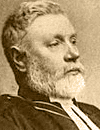
Blind Matheson Penned Immortal Hymn
George Matheson's experience of spiritual anguish and his subsequent writing of the hymn 'O Love That Wilt Not Let Me Go' is a powerful reminder of God's love and presence in our lives.
George Matheson, despite his blindness and deep personal anguish on the day of his sister's wedding, experienced a profound moment of inspiration that led him to pen the immortal hymn 'O Love That Wilt Not Let Me Go.' In his solitude, he felt an inward voice guiding him, allowing the words of comfort to flow effortlessly from his heart. The hymn reflects themes of love, light, joy, and the cross, encapsulating his struggle and ultimate surrender to God's will. Matheson's experience illustrates how pain can lead to profound spiritual expression and connection with God. His hymn has since become a cherished part of Christian worship.
Text
George Matheson was hurting. It was not physical pain that cut him, or regret for the blindness that had robbed him of sight by the time he was eighteen. Rather, it was anguish of spirit.
It was on this day, June 6, 1882, the day of his sister's marriage. His family was staying overnight in Glasgow, Scotland, leaving him alone in the Manse (a parsonage). Something happened to forty-year old George as he sat alone there in the darkness of his blindness, something known only to himself, something which caused him severe mental suffering. He never confided to anyone what the problem was, and yet his heart cried out to Christ.
As his heart moaned, words welled up in his mind, words of comfort. "I had the impression of having it dictated to me by some inward voice rather than of working it out myself," he said later. He jotted the lines down.
O Love that wilt not let me go,
I rest my weary soul in thee;
I give thee back the life I owe,
That in thine ocean depths its flow
May richer, fuller be.
O light that followest all my way,
I yield my flickering torch to thee;
My heart restores its borrowed ray,
That in thy sunshine's blaze its day
May brighter, fairer be.
O Joy that seekest me through pain,
I cannot close my heart to thee;
I climb the rainbow through the rain,
And feel the promise is not vain,
That morn shall tearless be.
O Cross that liftest up my head,
I dare not ask to fly from thee;
I lay in dust life's glory dead,
And from the ground there blossoms red
Life that shall endless be.
In less than five minutes, the poem was complete. The only revision he made was in line three, where he changed "I climb" to "I trace." The ease with which the stanzas came surprised him, because he had never before written verses without great difficulty. These verses written in pain became one of the great hymns of the church.
Sermon Outline
- George Matheson's Pain and Inspiration
- George Matheson's physical blindness and spiritual anguish
- The source of his pain and the cry to Christ
Key Quotes
“O Love that wilt not let me go;” — George Matheson
“I had the impression of having it dictated to me by some inward voice rather than of working it out myself,” — George Matheson
Application Points
- We can trust God to guide us through our darkest moments and use them for our spiritual growth.
- God's love is always available to us, even in the midst of pain and suffering.
- Our experiences, including our struggles and challenges, can be used to inspire and uplift others.