
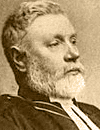
Law of Liberty
The sermon explores the concept of the law of liberty, emphasizing the relationship between love, freedom, and the human will.
George Matheson explores the concept of the 'law of liberty' as presented in James 2:12, arguing against the dichotomy of freedom and bondage. He emphasizes that true freedom is found in love, which binds us willingly while simultaneously empowering our will. Love, he asserts, is both a captivating force and a choice that reflects the deepest desires of our hearts. This union of liberty and law illustrates that our strongest will is expressed through love, which transcends mere obligation. Matheson concludes that love embodies the essence of freedom, merging the seemingly opposing concepts into a harmonious relationship.
Text
"...the law of liberty"
(James 2:12).
There are two theories in the world about the human will. One says, "Man is a slave; he is bound hand and foot; he is for ever under law." The other says, "Man is free; he is master of his own actions; law has no dominion over him." St. James suggests terms of peace between the opposing views. He says that each of them assumes something which is wrong--that "to be free" is the opposite of "to be bound." He declares that on the contrary there is such a thing as a "law of liberty"--a compulsion whose very essence consists in the strength of human will.
What is this mysterious union of contraries--this law of liberty? It can be expressed in one word--love. Love is at once the most free and the most bound of all things. We say habitually that one in love is "captivated"--made prisoner. And yet the prison is his own choice. He would not lose his chain for all the world. It is to him a golden chain--the badge not of his servitude but of his empire. It represents the freest thing in his nature--the desire of his heart. My love is my heart's desire, my heart's hunger, my heart's prayer. It is the strongest exercise of will conceivable. Nothing shows the power of my will like my love. It is the power of my personality to pass out of itself and to claim a share in yours--to say, "You are mine." James is right when he says that love is the marriage of opposites--liberty and law.
Sermon Outline
-
I
- Introduction to the law of liberty
- The two theories of the human will
- St. James' perspective on freedom and bondage
-
II
- Understanding the law of liberty
- The role of love in freedom
- Love as a choice and a commitment
-
III
- The paradox of love and freedom
- Love as a binding force
- The strength of will through love
-
IV
- Implications of the law of liberty in daily life
- Living out love as freedom
- The transformative power of love
Key Quotes
“There is such a thing as a 'law of liberty'--a compulsion whose very essence consists in the strength of human will.” — George Matheson
“Love is at once the most free and the most bound of all things.” — George Matheson
“It represents the freest thing in his nature--the desire of his heart.” — George Matheson
Application Points
- Recognize that true freedom is found in the choices we make through love.
- Embrace the law of liberty by allowing love to guide your actions.
- Understand that commitment in love can lead to greater personal empowerment.