
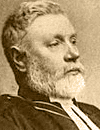
Natural Law
George Matheson's sermon highlights how God often uses natural laws and everyday events to deliver His messages and providence to humanity.
George Matheson explores the concept of natural law in the context of God's providence, using the example of the east wind that brought locusts to Egypt as a means of deliverance for His people. He questions why God chose to use a natural phenomenon instead of a more direct intervention, emphasizing that divine actions often come through ordinary channels. Matheson encourages believers to recognize that God's answers to prayers may manifest in everyday occurrences and interactions, urging them to remain open to the ways God communicates through the natural world. He reassures that even when divine help seems delayed or indirect, it is still a manifestation of God's supreme power and care. Ultimately, he calls for a deeper awareness of the divine in the mundane aspects of life.
Text
"The Lord brought an east wind...and when it was morning, the east wind brought the locusts"
(Exod. 10:13).
One is inclined to ask, Why bring the east wind at all? God was about to send a special providence for the deliverance of His people from Egypt. He was about to inflict the Egyptians with a plague of locusts. The locusts were to be His special providence, the evidence of His supreme power. Why then, does He not bring the locusts at once! Why evoke the intervention of an east wind! Would it not sound more majestic if it had simply been written, "God sent out a swarm of locusts created for the purpose of setting His people free"! Instead of that, the action of God takes the form of natural law, "The Lord brought an east wind; and, when it was morning, the east wind brought the locusts." Why send His message in a common chariot when it might fly on heavenly wings!
Is there not even something disappointing in the words "when it was morning"! Why should God's act have been so long in working the cure! Is not the whole passage an encouragement of men to say, "Oh, it was all done by natural causes"! Yes--and to add, "All natural causes are Divine causes." For, why is this passage written? It is just to tell us that when we see a Divine benefit coming through an east wind, or any other wind, we are not to say that on this account it comes less direct from God. It is just to tell us that when we ask God's help we ought to expect that the answer will be sent through natural channels, through human channels. It is just to tell us that when the actual heavens are silent we are not to say that there is no voice from our Father. We are to seek the answer to our prayers, not in an opening of the sky, not in an angel's wing, not in a mystic trance, but in the seeming accidents of every day--in the meeting with a friend, in the crossing of a street, in the hearing of a sermon, in the reading of a book, in the listening to a song, in the vision of a scene of beauty. We are to live in the solemn expectation that, any day of our lives, the things which environ us may become God's messengers.
Sermon Outline
-
I
- Introduction to the concept of natural law
- God's use of natural elements in His providence
- The significance of the east wind
-
II
- The role of locusts in God's plan
- Understanding divine intervention through natural means
- The timing of God's actions
-
III
- The relationship between natural causes and divine causes
- Encouragement to recognize God's presence in everyday life
- Living with expectation of divine messages
-
IV
- Examples of divine messages in daily experiences
- The importance of human channels in receiving God's help
- Conclusion and call to awareness
Key Quotes
“All natural causes are Divine causes.” — George Matheson
“We are to seek the answer to our prayers, not in an opening of the sky, not in an angel's wing.” — George Matheson
“The things which environ us may become God's messengers.” — George Matheson
Application Points
- Look for God's presence in the ordinary moments of your life.
- Recognize that divine intervention can come through natural means.
- Live with the expectation that everyday experiences can carry God's messages.