
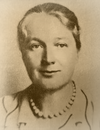
No Poison in the Cup of Suffering
Hannah Hurnard teaches that by embracing spiritual poverty and suffering with faith, believers can access the heavenly powers to transform their lives and serve others with divine strength.
In this devotional sermon, Hannah Hurnard explores the transformative power available to all disciples of Jesus through embracing spiritual poverty and suffering. She unpacks the heavenly principles found in the Beatitudes, illustrating how practicing these truths activates divine power in believers' lives. Using biblical examples and the testimony of saints like George Muller, Hurnard encourages listeners to surrender all to Christ and trust Him to work miracles through their weakness. This message inspires a deeper walk of faith and empowerment for ministry.
Full Transcript
Oh, our dear and wonderful Lord Jesus, on this first day of the week, this resurrection day, wilt thou give to each one of us a lovely quickening of thy power. Thou knowest how many of us have come here, Lord, just yearning to find and make contact with the power that will keep us, uphold us, and keep us from falling. The power which will break, perhaps, the habits of years past.
The power which will transform us. And the power which will flow through us. And help others.
And we ask thee this morning, Lord, that if there is anyone here with a special sense of dreadful weakness, that thou wilt most graciously manifest thyself to such. And may that power which is made more perfect in our weakness become their power. Our dear Lord, some of us have nothing to offer thee but weakness.
We love thee for wanting that, for cherishing that, for taking that as the channel for thy power. And some of us have nothing but foolishness to offer thee. And we thank thee so much that thou hast chosen the foolish things and the things that are despised to make thyself perfect in them.
So we know this morning, dear Lord, that whatever we offer thee, thou wilt take. And so we offer ourselves and every part of ourselves, that we may become charged with thy power. And we thank thee, Lord.
Amen. We have been thinking of the Lord who calls us to be his disciples. And he has told us it is enough for the disciple to be as his Lord.
And we have thought of the incarnation of our dear Lord and his growing hidden life, as he grew in grace and love and knowledge of God. We thought of his baptism with the Holy Spirit, an imagination so perfected in holiness and love, that he was changed into the perfect image of God's love. Now we come to his life, his lovely ministry of love and power.
Three and a half years he went about demonstrating all the wonderful power of love. And now I want to read one verse from John chapter 14 and 12, the words of the all-powerful Savior to those who are his disciples. Verily, verily, I say unto you, that the works that I do shall ye do also, and greater works than these shall ye do.
A disciple just has to be able to do the works of the Lord and Master. There's no escape from that fact if we are not able to do them. We are not yet fully developed in our discipleship.
You know every time I stand up and talk about this I feel right small and mean, because I haven't begun to be able to do anything like the least of the disciples could do. But he never gives me a moment's rest. Day after day, quiet time after quiet time, never a rest from this longing to grow in the power that he leads us to have.
Never a moment's satisfaction while still coming short of what a disciple of the Lord Jesus ought to be. Love won't let us off, you know. Love perfect that which he begins.
He's not going to let one of us in the end escape from being made as perfect as he is perfect, according to our degree and capacity. It's a wonderful thing, this love of the Lord. And so I want to talk to you this morning and tomorrow about this, these powers, the means by which the Lord Jesus was able to do his mighty work.
For you know I think that as he went about healing, performing wonderful miracles of all kinds, he was simply demonstrating for the first time here on earth that men and women can begin to set in operation heavenly powers down here on earth. Powers that are higher and far more mighty recreative powers that can begin to remake this creation which we have marred and spoiled by our own vain self-centered imagination. And I want to talk to you this morning about three of the heavenly powers.
Our Lord went about three and a half years simply demonstrating these nine heavenly powers which every one of us can begin here and now to practice and set in operation down here on earth. You see for such a long time, and those of you who have read Heavenly Powers, I hope you will excuse me this morning because I am going to talk about them, but for such a long time I thought that our dear Lord Jesus had these heavenly powers, let's call them what they were, supernatural powers, miraculous powers, just because he was the Son of God and that nobody else could have them. And then of course I saw how very foolish I'd been because he enabled his 12 best friends to have the same power and to practice and to manifest forth exactly the same supernatural works.
And I thought to myself there it ended. And I flapped over a few pages in my Bible and my eye fell on a verse which said then he called the other 70 also and taught them the same means of power and sent them up. And obviously he means it for all his disciples in every generation.
It's lovely that his spirit is quickening in us in our generation this longing to recover the secret of power and the secret of being able to use and demonstrate these heavenly powers is simply this, we must practice here on earth day by day in our own circumstances the heavenly principles which our Lord Jesus practiced. Every one of the nine heavenly principles when it is practiced begins to generate in us its own particular supernatural power. And when we practice these principles which Jesus taught his disciples over and over again, we too as we develop the power through practice, we shall be able to do the works that he did and even greater work.
Now the nine heavenly principles are summed up for us in the nine blessings in Matthew 5. The meaning of the word blessed I believe is happy and healthy and holy. And somebody told me recently there is a further meaning attached to it and that is to be congratulated. You are to be congratulated when you are this and this and this and this when you are practicing these heavenly principles.
And the first of the heavenly principles we know of course is blessed, says the Lord, are the poor in spirit. There's been a time in my life when the Lord Jesus frightened me. I was almost scared to sit down and begin to meditate on some of the things he said.
They're just like dynamite. I felt they're best not really handled very closely or they may go off and explode everything you've cherished and every standard that you've ever held. They'll just go off and shatter in pieces the standard that we've been taught even in our churches.
I was a bit afraid and I got more and more afraid of these sayings of Jesus. But mind you I've discovered there's something lovely about being shattered to pieces. That's the only way that horrible self-consciousness really gets destroyed.
And this is a bit of dynamite. This first heavenly principle that Jesus taught, blessed are the poor in spirit. It's really a horrible word he used.
Blessed are the beggars. You go to the holy land, well perhaps not now unless you go to those dreadful refugee Arab camps. You'll see what it means to be a beggar there.
But when I went to the holy land the first time in 1929, the first time in my life, I saw what Jesus meant by beggars. The road, the main road of the holy city Jerusalem was the main thoroughfare for beggars. They were either carried or crawled or swarmed their way there in the early morning and they sat there in the gutter until they either were carried or crawled or crept away in the evening.
And there they set their only means of subsistence. Sitting there and begging for what passers-by would give them. They had nothing they could call their own except their rags.
I was absolutely horrified because under the Turkish regime, the Ottoman Empire, all those hundreds of years, the beggary had been so terrible that often parents who were beggars, in order to make their children more piteous objects and draw out more pity and mercy from the passer-by, you know they would even cut off the hands and feet of their children soon after birth or put out their eyes. It was not a nice thing to walk along the main street of Jerusalem in those early days. It's changed now of course.
It was dreadful to be one who could say I have nothing at all that I can call my own. I'm dependent upon the pity and the giving of somebody else. And that is the word that Jesus used.
The first heavenly principle is that dreadful. That there is no way, said Jesus, into the kingdom of heaven. Blessed are the poor in spirit for theirs, theirs alone is the kingdom of heaven.
No way into the kingdom of heaven except as coming as a complete beggar. Coming as one who says I have nothing I can call my own. Indeed forever and ever I shall never be able to call anything my own.
They tell us that in the old city Jerusalem of our Lord's day there were many very wonderful and splendid gates you remember had been built in the city walls. Broad gates for those days although they're narrow for our days. Fine gates but there was one gate so narrow and so small that not even a donkey could pass through that gate until the basket strapped on it and hanging down its sides had been taken off.
Everything had to be unladed before anything could pass through the gate so narrow it was called the eye of a needle. And you know that is what our Lord Jesus said the gate into the kingdom of heaven is very very straight and narrow. There were years before I knew him when I almost hated him for saying a thing like that.
I loved my possessions. I nearly idolized some things which I called my own. And this thought of having to come up to the gate and lay aside everything I had ever been able to call my own before I could pass in.
And I used to say but didn't he say it's all of grace it's free. Of course it is. It's all of grace nobody can get into the kingdom of heaven apart from the grace of God which opens this little narrow gate freely to us.
But we can't pass in as long as we are holding on to anything. As long as self still says this is mine. And the narrow gate the gate into the kingdom of heaven is the Lord himself.
And when we see that it's all transformed we come to the feet the pierced feet of the one we love the most of all and thankfully we cast down at his feet everything we have called my own. A citizen of heaven you know can't say my about anything at all. Isn't that extraordinary? Here on earth we say my husband my wife my child my new house my automobile my dog Charles whom I love very much indeed.
In heaven we don't say my at all with the loveliest happiest faces we say our. Isn't that beautiful? Blessed are the poor in spirit who learn hands off everything. Poor self.
Oh yes self does hate that but what is self but the satan who takes the place of love himself from the Lord of love. And you know when we begin to practice this principle from now on not a single thing I've called my own is really mine. It's all my lord's.
We begin to set in operation here on earth a most wonderful power. The power of beginning to be able to possess all things that earth provides. Not for ourselves not for those whom self love but to be able to possess them to go about our father's work and do everything and give to everybody what our father wants.
It's the lovely power of being able to give instead of taking it is really most beautiful. Those of you who have heard of George Muller you will know how wonderfully he practiced this first heavenly principle. He was a German and Germany has produced some wonderful saints.
He came over to England we were privileged to get George Muller. He came and made his home in England and there he started homes for orphans. And he started his homes for orphans by laying down at the feet of Jesus everything he had ever called George Muller's.
Every single thing from now on lord I don't possess a single thing myself. He didn't have very much when he came to England but what he had and what he had called his own he laid down at the feet of Jesus. And he taught us in England that generation taught the whole British Isles.
This heavenly principle and demonstrated how it worked. It was most extraordinary it always is when supernatural powers get in train you know. But things began happening all over England Scotland and Ireland.
People were wakened up often in the middle of the night. The inner voice saying to them the moment it's day get up and send so many sacks of flour or so many loaves of bread or so many tons of potatoes and whatnot to the orphan homes of George Muller. And from all over the British Isles things began centering on Bristol where George Muller and his helpers without telling a single human person about their needs were quietly practicing this first heavenly principle.
And all those years that those homes were carried on and still are they never left. Thousands of orphans in the end I think while he was there there were over a thousand orphans to be fed every day. Sometimes they didn't have enough in the homes to provide the next meal.
But before it was mealtime there it was enough for a thousand people. It was simply wonderful how it happened but it got more and more wonderful. George Muller's principle was he wouldn't tell anybody any of the needs at all.
He wouldn't send out to anybody tidings of we need this and that and for the love of our common Lord would you like to give a gift. No he wasn't going to tell anybody but the one at whose feet he had laid all that he called his own. And you know it was most extraordinary.
Such a super abundance came flooding into Bristol that George Muller I believe annually was able to give more than a thousand pounds three thousand dollars it is now to Hudson Taylor of the China Inland Mission from what came in over and above for the orphans at Bristol. I don't know how much he gave to other works of the Lord elsewhere but Hudson Taylor gave away that secret in his autobiography or his biography. So we know that the China Inland Mission got this really large sum of money from the surplus that was over.
It's just like the Lord's feeding of the five thousand isn't it. They hadn't got anything but five loaves and two small fish. That didn't matter to one who was practicing the heavenly principle of possessing all things.
When they had all been fed and satisfied they took up was it seven baskets full of what remained over. These things are true. You see standing up here in front of you somebody who's only in the kindergarten class.
I didn't learn or understand about this until still quite recently. But you know even in the kindergarten class wonderful things happen. When you begin laying down at the Lord's feet all that you possess.
It isn't only money. It isn't only your car or your automobile or your dog. It's your weakness.
It's your foolishness. It's the things about you that other people despise and make fun of. Begin laying them down joyfully at the feet of Jesus and see what begins to come there.
Wonderful. Theirs is the kingdom of heaven. The power to possess all things and to give and to go on giving and giving and never having to say no.
My did you ever picture in these hard times but I'm not in England I'm in America. So I'll take that back. You're not really having hard times are you? But did you picture the time coming when you needn't ever say no to any real need that you know your Father wants to meet and satisfy.
To be able to give and give and give as Jesus gave because you draw all things to you at the feet of Jesus. And then the second heavenly principle. Blessed are those who mourn.
Happy, healthy, holy, and to be congratulated are the people who mourn and sorrow and suffer. Isn't that staggering? Whatever possessed our Lord I used to think to say such a thing as that. Blessed are those who mourn.
We pour our pity on those who mourn. We think they're most unfortunate and we hope the time will quickly come when they'll cease to mourn. Jesus said you just don't understand these things.
Blessed are those who mourn for they shall be comforted. How and why? By being able to set in operation the second heavenly power of being able to transform everything. Think of it.
Beginning to experience power to transform into something lovely. All the evil things that we come up against in this world. Being able to overcome evil and sorrow and change it into good and beauty.
Oh it's a most wonderful power but we can't set it in operation until we learn the heavenly way to react to our sorrow and to our suffering. It seems that nowadays there's a very strong idea about in many christian circles that God never means suffering at any time. It always comes from the evil one.
Well I imagine that certainly it does come. It is evil. It does come from the evil one whoever that may be.
It may come from me in my evil moments but it is God's will that we should rejoice and react with praise and thanksgiving. Praise and react with thanksgiving for evil things. Yes not because they're evil and praiseworthy but because here's an evil thing that we can begin to transform into something good and perfect and lovely and to the praise of God by reacting to it in the way that the Lord Jesus did.
Blessed are those who sorrow and suffer. Oh you know I read a book by Henry Sousa the other day or last year it is now. Henry Sousa was one of the old the old mystics.
He knew a lot about suffering. He knew a lot about sorrow and he knew a terrific lot about slander. He was slandered in the most dreadful way.
And Henry Sousa has written what I think is the loveliest chapter I've read anywhere on this question of suffering and sorrow. And Henry Sousa says there's no poison in the cup of suffering and sorrow. No poison at all.
All the heavenly ones say you may drink it up without fear. There is no poison in it. The only poison that can come into the cup of suffering is what we put there ourselves by dropping into it day by day and moment by moment the poison of self-pity and resentment and bitterness.
That'll poison it all right. That'll make sorrow and suffering our most terrible experience with no healing in it at all. But there's no poison in the cup of sorrow that God allows to come to any one of us.
And Henry Sousa said there's nothing more dreadful to experience than suffering and sorrow at the time. And there's nothing more heavenly than to have suffered and to have learned to react to it in the heavenly way. I will never forget talking to a friend of mine who was dying of cancer and was not healed.
And it was a terribly painful cancer and she was hardly ever out of intense suffering. And she was one who had always had a dread of physical suffering. She had this dreadful feeling that she wouldn't be able to bear it.
That her nerves would go all to pieces under it and she would deny her Lord and shame her Lord by her failure under suffering. And she had hoped and pleaded and prayed for years that God would spare her the cup of suffering. And now he had given it to her.
A long deep cup of suffering and very great suffering. And I had dreaded seeing her. But when I went into her room I saw one of the most radiant faces I have ever seen in my life.
And I said to her, tell me, how do you bear all the suffering? They tell me you're hardly ever out of pain. How do you bear it? And she said, Hannah, pick up that Bible that is lying on the table beside me and read me the verse that is underlying. And I read these words out loud.
Beloved, think it not strange concerning the fiery trial which is to try you, as though some strange thing happened unto you, but rather rejoice in that ye are partakers of Christ's suffering. And she looked at me and she said, you know, Hannah, how I have dreaded suffering because I didn't think he could bring me through. But you see, I've discovered that he can and with it he can give me radiant joy and now I'm ever so thankful he let me come this way.
I'm nearly home now where I won't suffer anymore. I wouldn't have missed this path because now I know him in a way I couldn't have known him. And I know that he is adequate and he can make you more than conqueror because he loves you so much.
Now you know I believe with all my heart it's his will to heal sickness. I believe he loves to work miracles. But you know I believe there are some people in whom he feels he can work a greater miracle even than healing the physical suffering.
That he can create in them something that he couldn't have created any other way. He lets this evil thing that he never willed, lets it become a means and an instrument of making them more lovely, more victorious, more fruitful in some ways than they ever could have been if he had healed them. I don't want you to misunderstand me.
I don't want to take away any faith in the Lord's will to heal. He always wills to heal unless he sees that he can do something still more lovely, still more to the praise of his glory. I can't help being thankful for that experience of my friend's suffering.
Something came into me that day which has altered my whole attitude and dread toward suffering. I still dread it but not with the utter despair that I used to. I know now that when he gets us there, if he lets us get there, he is able.
And it reminds me of something else which has helped me ever so much. You know we all admit that God allows the martyrs to suffer. We all know how many Christians there are alive in this twentieth century who have been undergoing and are undergoing unspeakable sufferings.
I remember somebody saying that in this twentieth century the number of martyrs has been greater than in all the preceding generations added together. There has never been anything like the number of those who have had to suffer for their Lord. And I remember one of the China inland missionaries coming home from China after the Communists had taken over.
And I heard her speak over in England. She was telling about some of the sufferings of the Chinese Christians. And she told wonderful examples of those who held out triumphantly, went through tortures and terrible persecutions and loss of all things, and death itself radiantly and triumphantly.
And she said, you know, I've been certain that those who are suffering and triumphing in their sufferings are pouring into the bloodstream of the whole body. Things that are going to strengthen us in our far, far lesser trials and testings back here in the home country. We don't know, she said, what we owe to those organs of the body of Christ who manufacture courage and endurance and joy and suffering and pour it into the bloodstream so that it can be carried to us.
And then she looked out challengingly on us and the great company that she was speaking to. And she said, you have also heard of the Chinese Christians who failed. Those who rejected their Lord under the test.
Some who even accepted property confiscated from their fellow Christian brothers and sisters. And you have wondered how they could have been so weak and failed. And I'll never forget the look on her face as she looked out at us and she said, you my Christian brothers and sisters here in England, and you my brothers and sisters here in this country, what have you been pouring into the bloodstream that can be carried round to strengthen those persecuted Christians in so many other countries? Have you been pouring into the bloodstream selfishness, lack of compassion, lack of forgiveness, covetousness, greed? What have you been contributing to the bloodstream that could possibly strengthen our persecuted Christian brothers and sisters elsewhere? God forgive me if I am being critical, but sometimes when I hear of millions of dollars being spent on church buildings, and I think of what is going on in other parts of the world, I wonder if we are not circulating poisons through the body of the bloodstream.
And when I think of my own selfishness and my own shrinking from anything costly, oh I wonder indeed, I wonder what the Lord of the body thinks about us and what we are contributing to help and strengthen the other members of the body in their time of special testing. But blessed are those whom all who experience sorrow and suffering and react to it in the right way by contributing, by manufacturing out of it strength and courage and forgiveness and joy and sorrow and pouring it into the bloodstream of the whole body for the sake of others. No wonder they'll be comforted.
Think what it'll mean for some of those Chinese Christians and those Christians, I'll be telling you about some of the Jewish Christians I think this week before I leave. Think what it will mean to them later on when they meet some of us who without their knowing about it and without us knowing about it have been strengthened by the way they reacted to their sufferings. What comfort to find that we, or they rather, have been able to strengthen the weak that the Lord has used them in this special way.
And then passing on to the third of the heavenly principles, and I shall be talking about three more of them tomorrow, let us come to the third heavenly principle. Blessed are the meek, for they shall inherit the earth. I suppose if there is one word the British and American people don't much like, it is this word meekness.
I belong to a nation that has a long tradition of not being meek. What is meekness? Well, the opposite of meekness is wanting your own way and to get your own way and to dominate over other people. It is simply self insisting on what self wants, and meekness is denying self what self wants.
Blessed are the meek, for they shall inherit the earth. We have changed that beatitude into blessed and to be congratulated are the strongest of all who can take what they want from the rest of the earth and get control over the rest of the earth. Jesus said blessed are the meek who don't insist on what they want and deny self will.
They begin to set in motion the heavenly power of being able to control all things on earth. Isn't that wonderful? The control of affairs is not my beloved friend in the hands of the president of this great nation, nor is it in the hands of those in Soviet Russia, nor is it in the hands of anybody else at all who exercise force and power. But it can be in your hands and in mine.
Isn't that wonderful? Little children in the kindergarten class. Little children are rarely the meekest of all people. I smile when I say that because the forefathers were certainly not meek children.
I never did understand what our Lord meant when he said except you become as a little child you can't enter into the kingdom of heaven. When we wanted anything, and it seems to me lots of other little children have the same attitude, we yelled for, we kicked, we struggled, we screamed, we made a great uproar wanting to get what we were so desirous of having. I never quite understood for a long time why the Lord thought that little children were so to be congratulated and imitated.
But there is one thing about a little child now that I understand. You watch a little child in a high chair. It doesn't even know how to find the way to its own mouth with its own spoon.
It'll dribble it onto the cheek, it'll put it in its eye, it may even go in at the ear before it discovers the way to the mouth. The little child has everything to learn and realize. And that is the lovely part about a little child.
And Solomon, the wisest man who ever lived, made this his heart's prayer. I am but a little child, Lord. I know not how to go out nor how to come in given to me a hearing heart.
And you know the meek are those who know they've everything to learn and want to be taught by the Lord himself and won't let self have any say in the matter at all. And blessed are the meek who won't assert themselves. You can take anything from a small child even though it kicks and screams.
The adult is so much stronger, it can take away the rattle, can take away whatever it desires to take away from the child. The adult can use force and strength but the child can't, not the little child. And there it is.
This is the third of the heavenly principles and when we practice it we begin to set in motion the heavenly power of changing and controlling all earthly situations. You and I can begin changing the situation in the world today by practicing meekness in our own circumstances. Isn't that wonderful? And as I close I just want to tell you again how I discovered how true this is.
That beginning to practice the heavenly principles literally begins to change to change natural powers and forces and replace them by supernatural powers and forces. I'm no scientist so forgive me any of you for what I'm going to say now because I'm not going to express it properly. But meekness and the heavenly principles can change the atoms.
It can change the whole pattern of what makes up this material world as we are conscious of it. It can begin to change the very vibrations and the movements of the atoms. Heavenly powers can change and recreate this material world.
And I'll tell you how I, even Hannah, I don't know anything about science at all. I never learned it at school and don't understand it when I read it now. But how I began to realize that this is true.
Soon after I began understanding about the principles and practicing them, I was driving by myself from the holy city Jerusalem back to my home in Galilee. I was driving in the car by myself and I chose to go a rather roundabout and by a very lonely road through the wild part of the country instead of the main road. And that lonely back road led me after a long time up a winding valley or wadi till we came out on the range of Mount Carmel.
And the road crosses Carmel at that point at a place which we have named the Megiddo Pass. And I knew that when I turned the corner and came out on the Megiddo Pass, I would look out on one of the loveliest scenes in the whole of Palestine. One of my favorite views.
There stretching away at my feet and stretching far far away there would be the great plain of Israel or Armageddon. And away on the left there would be the hills of Nazareth. And on a clear summer day as it was then, I knew I would see the White Houses of Nazareth shining on the hills away there in the far distance.
And straight in front of me would be Mount Tabor looking like Noah's Ark standing up at one end of the plain. And then there'd be a great gateway as it were through it and another mountain standing up the other portal of the gateway. And then on my right would be the continuation of the range of Mount Carmel.
And far away in the distance the dim blue hills of Transjordan and Syria. And it was a lovely view and I thought to myself I'll stop the car here and I'll get out and turn the corner and stand there and enjoy that lovely view. And there was a little wider space at the side of the road before I turned the corner.
I stopped the car and got out and walked forward, turned the corner and looked out on that scene. And at that moment without my expecting it, without my even understanding such a thing was possible, either some totally new sense that was latent in me was quickened into life or some veil was drawn aside. I don't understand it, but I looked out and saw something described by prophets and psalmists in the Bible.
I looked out on that scene and all those mountains were dancing like lambs. And the little hills were skipping. And the trees of the field were clapping their hands, a lovely loud clapping.
And they were singing. And the mountains were calling to each other. And the voice was echoing on from mountain to mountain.
Mount Carmel called it to Mount Idahi and Idahi echoed it on to Mount Tabor and Tabor on to the hills of Nazareth. And I could hear the words that they were singing and calling to one another. How beautiful upon the mountains are the feet of them that publish good tidings.
Here they come, they were saying. Here come the publishers of good tidings. And I looked and I blinked and I wondered what I was seeing and there they were.
I saw before my very eyes what the psalmist and the prophet described when they said the mountains shall dance and the little hills skip for joy and all the trees of the field shall clap their hands. And I know now that what I was allowed by my dear Lord to see, though I didn't understand it at the time, was this, that whenever a son or daughter of God appears who is beginning to practice the heavenly principles, all creation and nature recognizes it, thrills to it, and rejoices in anticipation. They know here is coming one of the creators who is helping to recreate a new heaven and earth.
And some vibration of joy and anticipation goes through them and they thrill. All creation groaneth and travaileth together until now, waiting for the manifestation of the sons and the daughters of God. Those who will understand the secret that's been lost for so long of setting in operation heavenly powers that will change the atoms, if that's the way to express it, will change everything, will begin to topple over everything that the evil imaginations have created and made and will begin to assemble and bring into being the new heaven and the new earth.
And you and I can be co-creators with our Lord and Savior if we will learn to practice in our circumstances. Isn't this preposterous and isn't it wonderful? In our own homes, in our business, in all the situations in which we find ourselves, in those circumstances which seem so frustrating and so sad and so horrible and so unjust, if we will begin to react with the heavenly reactions, practicing the heavenly principles, in those circumstances we are re-creating. You know there's a most lovely verse, and with this I close, in the last book of the Bible, where we see a great company standing with the Lord Jesus and they've all got hearts and they're singing a new song.
And I think that's the loveliest way of expressing it. These are the creators gathered with their Lord and the new creation depends on these harps, the lovely harmonious vibrations that are going out to topple over all the wrong things and to set in motion lovely creative powers. And the new song is the singing of the new creation into being, the lovely practice of these heavenly principles.
Oh that you and I may be in that choir. We've loved the singing, haven't we, of the choir. Oh that you and I may be practicing on our harps now until we are ready for the great day when at the hand of the Lord himself we break into this great symphony which destroys the old creation and sings in and brings in the new heaven and the new earth.
May every one of us be found in that choir for his name's sake. Amen. Oh Lord we do thank thee for the secrets thou art unfolding to us and that we have our part in these things.
Help us to rejoice in practicing these lovely heavenly principles and may thy power flow into every one of us making it possible. We thank thee Lord.
Sermon Outline
-
I. The Call to Discipleship
- Jesus calls disciples to do His works and greater
- Discipleship requires growth in spiritual power
- Love compels perfection in discipleship
-
II. The Nine Heavenly Powers
- Jesus demonstrated supernatural powers accessible to all disciples
- These powers are activated by practicing heavenly principles
- The Beatitudes summarize these principles
-
III. The First Heavenly Principle: Blessed Are the Poor in Spirit
- Being spiritually poor means total dependence on God
- Laying down all possessions and self for the Lord
- Example of George Muller’s faith and provision
-
IV. The Second Heavenly Principle: Blessed Are Those Who Mourn
- Mourning leads to comfort and transformation
- Suffering has no poison unless we add bitterness
- Sorrow can be a source of spiritual power
Key Quotes
“Verily, verily, I say unto you, that the works that I do shall ye do also, and greater works than these shall ye do.” — Hannah Hurnard
“Blessed are the poor in spirit: for theirs is the kingdom of heaven.” — Hannah Hurnard
“There's no poison in the cup of suffering and sorrow. No poison at all.” — Hannah Hurnard
Application Points
- Lay down all personal possessions and self-reliance at the feet of Jesus to access His power.
- Embrace suffering without bitterness to allow God to transform it into spiritual strength.
- Practice the heavenly principles daily to grow in the power to do the works of Jesus.