
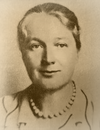
The Doorkeeper Who Learned To Forgive
Hannah Hurnard teaches that true Christian victory comes through accepting and embracing the unique cross God gives each believer, leading to forgiveness, transformation, and faithful witness.
In this devotional sermon, Hannah Hurnard shares a poignant testimony from her missionary work in Palestine, illustrating the Christian journey of accepting one’s unique cross. She explores Jesus’ call to deny self and take up the cross as the pathway to true victory. Through personal stories and biblical reflection, Hannah encourages believers to embrace their trials with humility and forgiveness, leading to transformation and fruitful service for God’s kingdom.
Full Transcript
Oh, our dear Lord, we do thank Thee for that lovely hymn we heard sung just now, and we thank Thee for the great company whom no man can number, who have been led by Thee and led by Thee into complete victory. They have triumphed gloriously through him who loves them. And we do ask that as this camp draws to an end and we go home to the old circumstances and the old situations, that we too may go to experience Thy lovely, perfect victory.
We ask, dear Lord, that those amongst us who feel the very weakest, who are conscious of the greatest failure in the past, in those circumstances, may be the ones who experience Thy greatest victory. All that we offer Thee, dear Lord, is our weakness, we've nothing else. And our trust in Thee.
And wilt Thou teach us this morning, we pray Thee, something about the lovely secret of being led by Thee into perfect victory. And we thank Thee so much, dear Lord. Amen.
Well, my glass is rather low this morning and I don't know why I need it. I keep crouching and rising up again. Now I'm going to read you, oh thank you, one more crouch will do it.
Now I'm going to read you some verses from the 16th chapter of the Gospel by Matthew. Matthew, the publican friend of the Lord Jesus. 16th chapter of the Gospel by Matthew, verse 21.
From that time forth began Jesus to show unto his disciples how that he must go unto Jerusalem and suffer many things and be killed and raised again the third day. Then Peter took him and began to say to him, Lord pity thyself. And when Peter said, Lord pity thyself, the dear Lord heard the voice of his great enemy speaking to him through the voice of his best friend.
And if ever you have a friend who tells you to feel sorry for yourself or to pity yourself, just think of what the Lord Jesus said to his best friend, at least to the one who'd been allowed to speak through his best friend. He turned and said, Get thee behind me, Satan. Thou art an offense unto me, for thou savorest not the things that be of God, but those that be of me.
Then said Jesus unto his disciples, If any man will or wants to come after me, then let him deny himself and take up his cross and follow me. You know, I expect that a great many of you here this morning who have had a wonderful time of fellowship and blessing in the Lord's company, I rather suspect that you are wondering how it is going to be when you get home again on Monday and in the days after that. I remember a girl saying to me once, Oh dear, it is really dreadful the way you evangelists go about all over the place preaching and getting us all stirred up and hopeful, expecting real victory and when you go away and pass on again, we go back into the old life and we just don't find the power and the victory.
And you know, she said, Can't you possibly tell me, can none of you really tell us the secret of victory? But the Lord Jesus has told it to us and it is one of his hard sayings, a very hard saying, so hard a saying that from that time many of his disciples went back and decided they wouldn't follow him anymore. And the hard saying about victory and triumph was this saying, If any man wills to come after me, that is to be like me, let him deny himself and take up his cross and follow me. You know there is no way to resurrection victory that can bypass your own particular cross.
No way at all to resurrection, life and victory, but by way of the particular cross that lies in front of you. It was Oswald Chambers who said when he was writing on this subject, Oh, this business of denying self and taking up the cross and being crucified, it wouldn't be half so dreadful if only each one of us might choose our own cross and have all the right people standing round and saying just look how wonderful. Would you have thought it possible that she could go through that so triumphantly? Well you know we never can choose our cross.
The cross is chosen for us and it is always the one thing that we would never have chosen ourselves. And you can never have the right people standing round your cross. They'll always be the very, very wrong ones.
The people who will misunderstand, who will even say just serves him or her right. No, we just can't choose who will know anything about crucifixion. It's the loneliest thing in the whole world.
And it's the one way, the one lonely way that Jesus has shown us that leads to real victory. I know that I am talking to a room full of people who have crosses. I rather suspect that some of you have been trying to bypass and evade your special cross maybe for years on.
Our crosses are the circumstances in which we find ourselves in life which frustrate us. Give us no opportunity to become the real sort of people that we know we were meant to be. Our crosses are those circumstances which simply deny everything we yearn for.
Everything we feel we have the right for that denies us fulfillment, some of us, even of nature's greatest longing as Saint Teresa described it. They are crosses which take away from us circumstances which take away from us every hope as we feel of having a full and happy and fruitful life. Demanding self-sacrifice, utter unselfishness and complete giving of ourselves to people who don't seem to realize the cost of it to us and take it all for granted and are even ungrateful.
These are the crosses. Some of you have such heavy, heavy crosses to bear that I feel absolutely unfit and unworthy to speak of them to you but your Lord knows about them. And these, these alone, by taking up and accepting these circumstances in this way alone can we know resurrection victory.
You know Jesus said to his disciples when he left them on the Mount of Olives, when he vanished out of their sight for the last time, he said to them, I have a great many Christian friends who, who interpret this in what seems to me to be a rather unexpected and strange way. They think if they will meet together and pray in prayer and longing desire that something remarkable will happen to them and they will suddenly begin to speak in other tongues and have a wonderful ecstasy and a tremendous experience. And they have what they call tarrying meetings.
But I wonder if that's just what the Lord meant. You know Jerusalem was the place where all his disciples had been ghastly failures. They found themselves suddenly pitched forth into temptations they hadn't expected to meet and every one of them had failed.
And the parting word of the Lord to them was don't try to escape from the circumstance and the place in which you've been a failure until you've received my power to triumph there. Don't you leave Jerusalem Peter my beloved friend until you have witnessed publicly just where you denied me three times. Don't any of you leave Jerusalem until you've come out in the open and testified with power and victory in the place where you all bestook me and fled.
And Jerusalem I think means the circumstances where you and I have been failed most of all. You know I remember when I went out to Palestine first. Before I joined the particular missionary society that I went out to help they asked me what sort of qualifications I had.
Well I hadn't got any of the lovely qualifications that so many of you have. What I volunteered to do was direct evangelistic work. But they didn't want an evangelistic worker at that time.
They asked if I would be willing to go out and fill gaps wherever anything, wherever wasn't anybody who was free for those kind of jobs. And I said yes I will fill any gap except two. Please don't ask me to cook and please don't ask me to be a nurse and help you in your medical work.
Well the bargain was accepted and I went out and lo and behold they gave me one free day in Haifa and on the second day of my arrival the doctor of our clinic over there came to me and said Hannah we're terribly short handed in the medical work. Will you come down and see if you can help us in any way? When you don't go abroad is the missionary to begin saying no I won't at once. So hauntingly and tremblingly I said yes.
I had some terrible experiences in that clinic. I won't tell you about all of them but obviously I wasn't suitable to help in the dressings and the nursing. I couldn't bear to hurt people.
When I had to probe into ulcers I never got down to the root of the trouble. When I had to hurt little babies I just couldn't do it. So they decided to give me the sort of work that I could do.
And they put me in the room where all the people who had rheumatism and arthritis came to have electric and heat and hot treatment and massage. Mind you I didn't know a thing about massage but somebody showed me the way that I should think about it. But I had never contemplated such work as this.
These were eastern, poverty stricken eastern people. Men and women as they came in behind the curtains I would have three or four of them at a time in front of the hot lamp. They had to strip off their clothes.
You know we have no rain for six months of the year and there's a great shortage of any water. And in those homes there was such a shortage that often those clothes hadn't been washed for months. There were all sorts of things came hopping out of those crowded gardens.
Creatures I had never dreamt existed and certainly never expected to meet face to face. And the smell. And the thing was this.
The moment they got a little warmed up under those lamps I had to take a special ointment with a smell which I simply loved. It made me feel sick the first moment I smelled it. And with my own hands I had to rub it into their hot bodies.
And then when they sat under the lamp for 15 or 20 minutes and they were just oozing ointment that was the time that I had to go and with my own hands I who so disliked touching bodies to massage it into them. And make sure all the ointment really disappeared into those aching bodies. My I had a good many long conversations with my Lord about taking me away from my evangelistic work all over England and putting me down into their clinic work.
But he said well you know this is a lovely way to get to understand the people you've come to help. Gives you a good chance to practice languages. They spoke between 30 and 40 different languages those Jewish immigrants.
And then at last after 18 months of it they got a fully trained nurse. My how hammered did cheer up. Gave the nurse and she took over this massage business and set me free.
And then the doctor called me aside. And he said now you're free and you've had some experience. We want you to become the door keeper.
You're going to give all the patients who come their numbers. And you're going to see that they come into my clinic in order. They don't push in out of order.
And you're going to see they go in to get their dressings in the nursing room in order. Now the position of door keeper is not only the loneliest position in an Eastern institution. But it is also easily the most nerve wracking.
Eastern people know nothing about discipline at all. I've come from orderly queues in England. Where you simply take your place and patiently wait your turn.
No Easterner ever dreams of doing that. If you hadn't come first, well God has given you two strong elbows and a loud voice. And you can clamor your way forward over those who are not so strong as yourself.
And this was a tremendous job. With people we would get anything up to 200 people I think a day at their clinic each morning. I had to give out the ticket numbers as they came in the order they came.
And 30 or 40 different languages explaining to me volubly that they must be first. I know now when I read the gospel stories what it must have meant to Peter and James and John and the others and the Lord. With these multitudes of people clonging around all wanting to get the Lord's help first of all.
Well I tolled away at that job of doorkeeper month after month. And I must say it was a nerve wracking job. And there was one particular man there who seemed the most difficult and the most awkward of all the patients.
He was hideously ugly poor man. He was covered with smallpox marks. But he had a dreadfully ugly face.
And he was the most nervous, excitable, big tempered one of all those patients. Whenever I saw him coming I knew we were in for trouble as he came every day. He came late.
You see they had to come early in the morning before breakfast to get their numbers. And our doctor didn't get there till half past eight or nine. He would come in just before our doctor arrived and then he would insist on going in first.
Infuriating about 154 other patients who had got there before him. I postulated with him. I argued with him.
It was simply dreadful. And one day when the east wind, the hot dry wind was blowing, when all your nerves get extra brittle, it blows straight off the hot desert and it feels as though it's really got evil spirits in it. Everybody is on edge.
One day when the unseen, the east wind was blowing, this man came elbowing through, pushing women and little children aside, straight up and saying to me, let me in at the doctor's door. And I exploded that day. I turned on that man.
By that time I had got a certain amount of German or Hebrew, I forget which it was he spoke. I said to him, do you think that you can come and talk to me, an English woman in this way, and order me about and expect to go in first? Nothing of the sort, I said, and you'll know this once for all. And I knocked on the doctor's door and I marched in and I said, doctor, come out and tell this man that he must wait his turn.
And the dear good doctor in the clinic, you know, he came out. He looked at my furious face. He looked at that man standing beside me and he put out his hand and he took the hand of that man and he said quietly, come inside.
And he looked at me and he said, I'll see him first and get him out of your way and shut the door. I nearly exploded. I detested that good kind doctor, that he shouldn't uphold discipline, that he should shame me in front of a room full of patients.
I sat down there and I nearly resigned. I told the doctor this was my last day as doorkeeper in his clinic. And then as I sat there I became conscious of my lord standing beside me.
And he was saying to me ever so gently and ever so solemnly, Hannah, what made you come to Palestine? What made you offer yourself as a missionary and representative of myself if you're going to behave like this? What have they seen, my Hannah, this morning? A proud English woman? Have they seen anything to do with myself? And, you know, I sat there feeling so grateful and all the patients, every patient in the room had heard me say it. And I sat there trembling and I said, Lord, what shall I do? Must I pack up and go home? No, he said, when that man comes out of the clinic, you tell him you are very, very sorry that you spoke to him in a way that I could never have spoken to him. Well, I said, Lord, I'll catch him as he comes out of the nursing room.
No, Hannah, said the Lord, every person in this clinic at the doctor's door heard what you said. Will you tell him you didn't act like myself in front of everybody? And I waited and the nursing door opened and the man came through and he was coming so jauntily along and he looked so triumphantly at me and I rushed up to him and I caught hold of his hand and I said, please, please, I want to ask your pardon. I just beg you, don't think that the Lord Jesus, whom we love so much here in this clinic, would ever have spoken to you in the way that I spoke.
I disgraced myself. I haven't acted like one of his followers and I ask you to forgive me. And you know that man suddenly burst into tears.
I'd never seen anything like it. He stood there with the tears pouring down his smallpox-marked face and this is what he said. You don't know how I hate myself, but I have this terribly itchy trouble all over myself.
I can't sleep all night long. I wait hour by hour for the moment when I can come along here and get that soothing dressing on my body and I can't wait, my nerves go to pieces. Sometimes I get some sleep for half an hour just in the morning when I should be coming here to get my number ticket and you don't know how I hate myself.
You know, there was the most extraordinary change that took place after that. Each day that man came along, he was a changed man and I was a changed Hannah. I can still see the little shy smile on his face every morning when he greeted me.
He never asked to be first, but you know all the other patients in the most extraordinary way used to stand back and let him go nearly first. Some who'd come for the first time and didn't understand, they held out, but not the others. And it was a most wonderful transformation, but what I'm getting at is this.
Just about two months after that, the Lord took me out of that work I felt so ill-fitting for. After giving just that little bit of victory and opened the way for me to begin my evangelistic work in the Holy Land. And from 1936 until 1946, I had the radiantly happy work of being allowed to go out and visit every village in Palestine, to go from door to door and house to house, just witnessing to Jews and Muslims of the Lord Jesus.
I was joined later. We were a little band of 12 going two by two and we reached every single place in the Holy Land able to witness for the Lord Jesus. And I think it was the first time since the dispersion of the Jews in A.D. 70 that it was possible for Christian witnesses to reach every village in Palestine and speak of the Lord Jesus.
It was a wonderful privilege. It's worthwhile accepting a little cross until we get the victory because it's going to open the door into something that we really are more fitted for and where we can feel that we are absolutely fulfilling God's purposes for our lives. So I want to talk to you, these few minutes, about accepting your cross.
You know, there are three things about accepting the cross and the circumstances which so frustrate us and make us so unhappy and make us feel we're being defrauded of life's best experiences. And the first thing is we must learn to accept the cross with all of the details. It's no good saying I'll accept this situation but certain things in it I will not accept.
There is no way of dying to self as long as you make one reservation about it. You can hang and dangle and hang and suffer on that cross year after year and know no victory at all. It simply means willingness to accept all of the circumstances.
I remember a girl telling me about her cross. You know, she said to me, you've been talking about victory, Hannah, and of living on the heavenly places as Paul calls it. A life on the heavenly places and she said, you know, I knew that for three days.
I lived in heaven for three days and then it all went. And what the good of a victory and life in heaven that only lasts three days. And she told me the circumstances of her cross and it had been a pretty heavy one.
She had become engaged and you know they had fixed the very day for the wedding and the invitations had gone out to their friends and the presents had all come in. And two or three days before her wedding that young man had changed his mind and had tilted her. And she said, you know, Hannah, the Lord helped me to accept it in the most wonderful way.
Indeed in such a wonderful way that was when I felt I was in heaven for three days. And Hannah, it only lasted three days and then it went completely wild. And I said to her, may I ask you one question? Will you tell me at the end of three days did you begin to change your mind and your thoughts about accepting that cross? Did you begin to change your thoughts in the matter of forgiving that young man? Did I change my thoughts, she said.
I should just think I did. Why, at the end of three days I discovered he was going around to all our friends and actually telling them it was I who broke the engagement. That was too much for me to accept.
I tell you, I changed my thoughts all right. And I said to her, yes my dear, and that's when you fell out of heaven, isn't it? And you know, she looked at me and she said, Hannah, do you mean if I had been willing even to accept that, that I could have remained in heaven all these three years since? And she could have done. That is the whole secret, being willing to accept the circumstances, to react to them in the heavenly way, not to sit down passively and say this has been allowed to happen, I just have to bear it, but to react to every circumstance in the heavenly way with thanksgiving and forgiveness and in exactly the same way that Jesus would.
Oh, it worked so wonderfully. Look at what he accepted beside his cross. They spat all over him.
They spat in his face. They stripped him naked and they kicked him and they boxed his ears and then they tortured him. They lacerated his back till it was bare and bleeding and torn.
And then, after they'd done that, not until they'd done that and mocked him with a crown of thorns pressed down into his head. When they'd done that, it was then they nailed his body on the cross and jerked it up and left him hanging there. And he accepted every one of the details, accepted it, saying, Father, forgive them.
Don't blame one of them, Father. Don't ever accuse one of them of nailing me to this cross. I accept it and I bear it.
I don't believe that anyone, we will never stand before our Father, I believe, and hear him point out anyone who nailed our Lord to the cross. It's forgiven and forgotten. It's blotted out of his memory because he accepted it and he bore it.
Oh, may I tell you, there is no way for you to know resurrection, victory, but to be like your Lord and to go home and accept all of the details. I feel ashamed, really, to turn to a personal experience after talking about our Lord's experience. But you see, we have to learn the secret according to our own capacity.
And perhaps if I tell you how I began to learn it and understand it, it will help you. I just got out to Palestine, only being out there a few months, when I heard from my father, who had loved me very much in a very special way, and who had sent me abroad as a missionary to Palestine with his blessing and his joy. I remember years later he told me, he wrote to me, I still cherish that page.
I cut it out and I have kept it. He wrote to me years later, towards the end of his life, and he said, I think there has been nothing in my life that has given me so much joy as to have seen my daughter a missionary in the Holy Land and witnessing to the Jewish people. He sent me with his blessing, and away I went.
And I had only been out there about six months, when one day I heard from my father. And he wrote, and out of the blue, I had no suspicion at all of what was coming when I opened that letter. I'm not one of these psychic people.
I can pick up stupendous letters without the least idea of what is going to come from them. I opened this letter and the bottom dropped out of my world. My father wrote and said he was going to marry again.
And the person he had chosen was a girl who was eight years younger than myself. A girl who hadn't had the advantages that I had had at all. And when I read that letter, the fury, the tempest, the rage which filled my heart, that my father, my own father should treat me in this way, should bundle me up to the mission field and then put that girl in my place and in my mother's place.
I had never conceived of the idea that I could feel such intense fury and resentment and hatred. I actually thought that I hated my own father for humiliating me in this way. If it had been somebody else, a woman, a respectable person, at least older than myself, and accustomed to the sort of life that we were accustomed to, but to put that chick out of this Sunday school class in my mother's place.
It was terrible, the feeling. But you know, all the time my inner self was simply sobbing. I was catching hold of the Lord's feet.
I was kneeling at his feet and I was saying, Lord, you called yourself Jesus, which means Savior, because you're able to save your people. You must save me from this awful hatred and resentment. And while I was praying, another huge wave of it would sweep over me.
And then when it had sort of swept over, I'd be clinging to him again and saying, Lord, you must do it. And you know, he said to me, I can do it, Hannah. I'll teach you the better way, the way of love.
And then there came another wave and it swept over me. It was these feelings, you know, that were so awful. And when that had sort of rolled over, I just gasped out.
I don't believe, Lord, I could go creeping and crawling along the way of love, because I feel so dreadful. I feel that I hate the Lord. And the Lord says to me, I'll teach you the secret of overcoming these feelings and going the way of love.
Now, Hannah, sit down and write home to your father and begin by telling him that you hope he and she will be ever so happy together. And you know, another wave came when that thought entered me. The most dreadful feeling.
And when it had sort of rolled over, I gasped again. If I write that, Lord, I'll be the world's greatest hypocrite, because I feel as though I want them both to be as miserable as it's possible for them to be. And do you know what he said to me, Hannah? It's never hypocrisy to write or speak or act as you want and pray to feel.
If you want to feel loving, begin to act as though you felt loving already. Sit down and write that letter. And I took pen and paper and I wrote to my father.
You know, he said, Hannah, this isn't going to make the least difference to you. And when I read that line in his letter, I just thought, isn't it? As if it's not going to make any difference. I can never go home again with that girl there.
And I took my pen and my paper and I wrote to him. But I did hope they would both be ever so happy together. And I was coming home on furlough, just as I had planned.
And you know, 16 years after that, when my father died and he'd asked me to go through his private papers, I came to a little drawer, a little tiny drawer, that evidently held my father's chief treasures. And amongst those treasured letters, I saw an envelope in my handwriting. And I opened it and I read it.
And it was that letter that I had written to my father. And when I read it, I couldn't help realizing Hannah hadn't written that letter. It was Hannah's Lord who wrote it.
Well, you know, the time came for me to go home. And I remember standing in the corridor of the train. And I was shaking from head to foot as it slowed down at the station of my hometown.
And you know, I was saying over and over again to my Lord, Oh Lord, I promise you I will love her. I will love her, Lord, if only you won't make me go and be in the same house with her. I feel so grateful that I'm afraid it will be terrible failure.
And you know, the answer that came to my thoughts so clearly, Hannah, if you will go all lengths in putting that young girl in your place, I wonder, my brother, would you close it? Thank you very much. Thank you, and God bless your dear little one. I remember standing there and this thought coming, Hannah, if you'll go all lengths in putting your young stepmother in your place and not making any reservations of any kind at all, I promise you perfect victory.
But if there comes a moment when you begin to think to yourself, No, they mustn't ask that of me. They mustn't expect me to give that right up. It wouldn't be fair.
Then, Hannah, I can't give you victory. And so with that ringing in my mind, go all lengths in putting her in your own place and make no reservations at all, the train slowed down and I got out, and there they were, and I went home. And I must admit that the first few days at home were very, very trying and hard.
Away in my own room, I wept many bitter tears. But you know, my brother and my sisters had always nicknamed me Howling Hannah because I wept so easily over everything that that didn't really count for much. But you know, the wonderful thing was that outwardly the Lord never let me shout.
And you know, after only a very short time, I began to make a remarkable discovery. I discovered that my Lord was putting in the heart of my young stepmother the very same desire to go all lengths in making it easy for me. And I suppose if there's one family situation in the world that's more embarrassing than having a young stepmother eight years younger than yourself, it must be having a rather horrible stepdaughter eight years older than you.
And my young stepmother accepted that position with all the grace of the Lord Jesus. You know, I'm only telling you this because I want to tell you what happened. There's nobody in the whole world that I love as much as I love my stepmother.
And I don't believe there's anybody in the world that she loved more than she loved me. And I'll tell you why. You just can't go all lengths in putting somebody else in your own place without learning to love them as yourself.
Oh, I think one of the loveliest things my father ever gave me was my stepmother. He's gone home now. Nine years ago my dear father went to the heavenly home but my stepmother writes to me every week of my life.
She said, Hannah, your father wrote to you from the time you were a schoolgirl. Never let a week go by and you're going to miss those letters. I know I can't take his place but I write to you every week.
I get her letter every week without fail. And you know, often she writes in it, especially now, these last two or three letters, I'm counting the days until you get home again. It's very, very wonderful what happens when you understand that a cross, that you thought was a cross, is the way to this lovely resurrection victory.
Whatever you lay down into death, my dear brother or sister, you're going to receive back again in some other lovely and wonderful form. I keep mentioning it this year because this is the tenth anniversary of going through the experiences of the siege in Jerusalem when we were cut off from everybody and shot out there in the city all alone. And you know, when I think of the fellowship that I reaped this year, 1958, when I think of Camps Father Scott, I didn't know anything about you people in 1948.
I never had the least idea that the Lord would pull me away from Palestine and send me traveling instead of being shot up between those old walls in a siege, giving me the whole world to travel in, and so many thousands of lovely brothers and sisters I never knew anything about before. What you lay down into death, you get back in some much more lovely and radiant form and if any man wants to follow me, said the Lord, in no complete victory, then let him or let her deny herself and take up the cross. And that's the way to no resurrection victory.
And then there's another thought, to take up the cross with perfect forgiveness. I suppose if there's one thing harder in the world than anything else, it's learning forgiveness. How to forgive and to forget.
And there's nothing else that produces such heavenly joy, because forgiveness is love's greatest power. When love learns to forgive fully and completely, love has become all the conqueror. In the end, nothing in the universe can hold out against forgiveness, not even hell.
Every hell will be burst open when one goes on forgiving long enough. The Son of God has proved it to us. He has the key, he says, of death and hell.
And the key is forgiveness. Oh, I used to think when he said, I have the key of hell and death, somehow or other I've been taught to think he was going to lock people into hell forever and ever. How can I? It could have been so idiotic.
I can't think. But I didn't know anything about love in those days. Anybody who holds the key, holds it triumphantly in order to throw open and set free not to make prisoners forever and ever.
Of course not. And we have this key put into our hands when we follow our Lord and are made like him. And the secret of forgiveness is just this.
That thing that has been done against you and which has wronged you, perhaps has frustrated you, has made you feel that the rest of your life is spent forever after, take that thing to the cross of the Lord Jesus and ask him to forgive it and then promise him you'll never touch it again, which means you'll never speak about it to anybody again as long as you live. Oh, you know this strange idea that we have when we say piously and virtuously, I forgive her, but I'm never going to speak to her again. Think what it would mean if God forgave us like that.
Why, when we ask his forgiveness, what we're longing for is he will treat us as though we've never done that horrible thing. That's exactly what forgiveness is. You can't forgive the wrong that somebody has done against somebody else.
We've got to have justice. We've got to teach people that they can't go about harming others and acting against them in cruel and spiteful and unjust ways, but we may and we must forgive those who sin against that person alone. And that is the lovely secret of forgiveness.
What we talk about, we can't predict. Oh my, sometimes I'm really troubled, even at temps furthest out. People come to me for counsel and lo and behold, they're telling me the story they told Louise Edelston last year and Genevieve Parkhurst the year before and Star Daily the year before or even a few minutes before they come and tell it to me.
It won't work, my brothers and sisters. It won't work. That isn't forgiveness.
That's the way we can get cancer and disease and all sorts of things. It isn't saying with our lips, I forgive somebody and then, but just let me tell you what they did. It won't do.
That isn't forgiveness. Some people say, but if I don't tell, I should bottle it up and it'll poison me. For goodness sake, don't bottle it up.
Turn it into love and compassion and you will find that you're practicing forgiveness and that nothing can resist the power of forgiveness. You know, I never could understand. There were lots of things our Lord said I couldn't understand.
In fact, I thought he said some things that were utterly without morality in them. They seemed so awful and this was one of them. Peter said to him, how often shall I forgive my brother in a day, Lord? Seven times, said Peter, feeling that it was going to be very difficult to manage it, even twice, I believe.
Seven times, Lord. And the Lord said, oh no, Peter, that may not be anything. Nine times.
Seventy times, seven. That shocked me. If I go on forgiving some spiteful, mean person all those times, it's just encouraging them to remain spiteful and mean.
I couldn't understand what the Lord meant about that until I learned this lovely secret. Forgiveness is the only power that can file through a person's love of sin and spite and malice and uncleanness. It's the only thing that can file through.
I don't know, I believe Star knows more about filing through things than I do. I've never even tried it, but I'm pretty certain you couldn't file through anything with just seven attempts at it. It needs a lot of patience, I understand.
And a lot of repetition. And forgiveness is the only thing that will file through love of sin. Look how Star the Father practices it time and again and time and again.
And there is no soul that can stand out really permanently against forgiveness. If I mention Star, you don't know the pit that I've come up from. You see in Star a man who didn't know anything but hating others and loving himself.
But in me you see a woman who was spiteful and mean and vain, glorious and lusting for admiration. You know what our Lord Jesus said? The one who's been forgiven much is the one who loves much. That's true.
Something went on filing through Hannah's self-love and self-worship until Hannah couldn't do it any longer. It was detestable to her. And it was the forgiveness of Hannah's Lord that did it.
You practice it. You learn this lovely secret if it takes you seventy times seven. Not just in the next twenty years.
Seventy times seven in one day. The selfishness, the meanness, the taking everything for granted, the humiliation. My brothers and sisters, the unfaithful love.
You can practice it. And you can see that forgiveness is the thing that wins out in the end. Nothing can hold us against the power of forgiveness.
Go home in the strength and grace and love of the Lord and practice it. And remember, if you mention it again to anybody, even your best friend, it's not forgiveness. You don't know what forgiveness is.
One last point. Go home and accept with joy. I sometimes think we misunderstand and misread all those stories in the gospel of the crucifixion of our Lord.
We dwell on his suffering and I believe we ought to dwell on his joy. The triumph of his joy even while he hung on the cross. I have a new vision of that which completely transforms my reading of those accounts in the gospel.
Those cries that he uttered, I don't believe they were to draw attention to his suffering. They were to draw attention to his triumph and his joy in the midst of suffering. He cried, I thirst, and they say there is no thirst so terrible as that of crucifixion.
But when they offered him a drink, he didn't take it. He didn't need it. He only let them know he was experiencing death, but then I see that love can be radiantly triumphant even in the midst of death.
He cried out, my God, my God, why hast thou forsaken me? Who for the joy that was set before him, look, the joy of saving you and I, making us more than conquerors in our circumstances and our situations. Who for the joy that was set before him, enjoy this cross. Go on suffering with every one of us until he raises us up in triumph and does it joyfully.
Let us take up the cross joyfully and follow him. And then either we shall triumph in those circumstances and no longer will they be able to torture us and tear our nerves to pieces, or we'll come down out of those circumstances and be set free to do the thing that he wants us to do. It's resurrection victory by going the way he went, denying ourselves and taking up the cross and following him.
May he give every one of you his grace, his lovely grace which is sufficient for each one of you as you go home and make you more than conquerors through his love and his grace. Amen. Oh our Lord, we just thank thee that thou art able to do exceeding abundantly above all that we can ask or think.
What we're asking Lord is this, the power of thyself in us to accept the cross and to practice forgiveness joyfully. And we thank thee Lord. Amen.
Sermon Outline
-
I. The Hard Saying of Victory
- Jesus predicts His suffering and resurrection
- The call to deny self and take up the cross
- Many disciples turned away because of this hard teaching
-
II. The Unchosen Cross
- The cross is always the one we would not choose
- It is a lonely and misunderstood path
- Our crosses are circumstances that frustrate and deny us
-
III. The Power of Acceptance and Forgiveness
- Hannah’s experience as a doorkeeper in Palestine
- Learning to forgive the difficult man who pushed ahead
- Transformation through humility and asking forgiveness
-
IV. The Victory Beyond the Cross
- Acceptance of the cross opens the door to God’s purpose
- Hannah’s evangelistic ministry following her cross
- Encouragement to embrace one’s own cross for true victory
Key Quotes
“If any man wills to come after me, that is to be like me, let him deny himself and take up his cross and follow me.” — Hannah Hurnard
“The cross is chosen for us and it is always the one thing that we would never have chosen ourselves.” — Hannah Hurnard
“I ask you to forgive me. I just beg you, don't think that the Lord Jesus, whom we love so much here in this clinic, would ever have spoken to you in the way that I spoke.” — Hannah Hurnard
Application Points
- Accept your unique cross as God’s chosen path for your growth and victory.
- Practice humility by seeking forgiveness when you fail to reflect Christ’s love.
- Trust that enduring trials faithfully opens doors to fulfilling God’s purposes.