
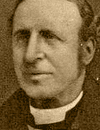
Moule, h.c.g. (Handley Carr Glyn) (1841-1920) Short Bio
H.C.G. Moule was a renowned evangelical scholar and leader who made significant contributions to theology and ministry.
H.C.G. Moule, a prominent evangelical leader and scholar, dedicated his life to serving God and the church, beginning as a curate and rising to become the Bishop of Durham. He was known for his ability to communicate complex theological concepts in a relatable manner, making significant contributions to Christian literature, including hymns and commentaries. His involvement in various church conferences and conventions showcased his commitment to unity among different Christian perspectives. Moule's legacy is marked by his scholarly work and his pastoral heart, emphasizing the importance of understanding and devotion in the Christian faith.
Text
Handley Carr Glyn Moule was the youngest of eight sons of the vicar of Fordington, Dorchester. He was educated at home with his brothers prior to attending university at Cambridge, where he excelled in his studies. He was ordained in 1867 and was curate at Fordington before being appointed as sub-dean of Trinity College, Cambridge in 1873. He became first principal of Ridley Hall Theological College, Cambridge, in 1881, and Norrisian Professor of Divinity in 1899. In 1901, he succeeded B.F. Westcott as Bishop of Durham.
Moule was a convinced evangelical, but was understanding of other views. He represented evangelicals at the Round Table Conference on Holy Communion (1900) and, in 1908, chaired the missionary section of the Pan-Anglican Congress.
He was closely associated with the Keswick Convention. Although he was a profound scholar, he could speak and write for ordinary people. He wrote many hymns and poems; and his works include expositions and commentaries on nearly all the Epistles, as well as books on devotion and a down-to-earth work on theology, Outlines of Christian Doctrine.
Sermon Outline
- Introduction to H.C.G. Moule
- Ministry and Contributions
- Legacy and Works
- Literary Contributions
- Devotional and Theological Writings
Key Quotes
“He was a convinced evangelical, but was understanding of other views.” — H.C.G. Moule
Application Points
- We can learn from Moule's ability to balance scholarship and communication with ordinary people.
- Moule's commitment to evangelicalism and ecumenism is an example for us to follow.
- His literary contributions remind us of the importance of writing and speaking in a way that is accessible to all.