
Not Conformity but Transformation
The sermon emphasizes the necessity of sacrifice for true transformation, urging believers to reject worldly passions and pursue lasting spiritual growth.
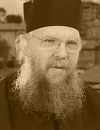
Hieromonk Damascene emphasizes the importance of sacrifice and transformation in the Christian life, drawing from Romans chapter 12 where presenting our bodies as living sacrifices leads to a renewal of the mind and a transformation away from worldly conformity. He delves into the meaning of 'the world' as the realm of passions and attachments to worldly desires, urging self-examination and confession to uproot these favorite passions. The preacher highlights the fleeting nature of worldly pleasures and the need to focus on enduring spiritual transformation, not conforming to passing fashions and appearances.
Text
Now we are ready to look at today-s theme in its full context. First comes sacrifice, then comes transformation. That is why, in Romans chapter 12, the first precedes the other in direct sequence: Present your bodies a living sacrifice, holy, acceptable to God--and be not conformed to this world, but be transformed by the renewal of your mind.
If we have put to death our "old man" on the altar of sacrifice, it follows that we will not be conformed to this world.
What is meant by "the world"? There are several meanings of the term "world" in Holy Scripture. It can mean the material universe, or the inhabited world. In its negative connotation, it can mean those who are opposed to God, and, according to some Holy Fathers, it can refer to the passions or to attachment to the things of the senses. St. Isaac the Syrian writes: "'The world' is the general name for all the passions. When we call the passions by a common name, we call them the world. But when we wish to distinguish them by their special names, we call them passions. The passions are the following: love of riches, desire for possessions, bodily pleasure from which comes sexual passion, love of honor which gives rise to envy, lust for power, arrogance and pride of position, the craving to adorn oneself with luxurious clothes and vain ornaments, the itch for human glory which is a source of anger and resentment, and physical fear. Where these passions cease to be active, there the world is dead'. Someone has said of the saints that while alive they were dead; for though living in the flesh, they did not live for the flesh. See for which of these passions you are alive. Then you will know how far you are alive to the world, and how far you are dead to it." [8]
With this Patristic teaching in mind, the words "Be not conformed to the world" can be understood to mean "Be not conformed to the passions." The Fathers say that all of us have our own favorite passions: our first favorite, our second favorite, etc. We are to examine ourselves to see what our favorite passions are, so that we can confess them in the Sacrament of Confession and root them out with God's help.
Be not conformed to this world, but be transformed. St. John Chrysostom, in commenting on this verse, points out the different roots of the words "conform" and "transform." In the English translation, the roots are the same, but in Greek they are very different. The word for "conform" comes from the root schema, which means an external pose, an appearance, an outward image, the putting on of an outward habit. It denotes not something lasting and fixed, but something unsubstantial that passes away. Another translation for this word might be "fashion," as in another passage of St. Paul, where he uses the same word: The fashion of this world passeth away (I Cor. 7:31). This translation has the connotation that our English word "fashion" has: that is, something that changes all the time, like fashions in clothing, etc.
According to St. John Chrysostom, when St. Paul says, "Be not fashioned according to this world," he chooses the word "fashion" in order to indicate the fleetingness of this world of passions. "Be not fashioned according to the passions," one might say. Also, the word St. Paul uses for "world" is aeon, which can also be translated as "age" or "the world according to time"--once again to indicate the fleetingness of worldly delights. St. John Chrysostom explains: "If you speak of riches, or of glory, or beauty of person, or of luxury, or of whatever other of the world's seemingly great things, it is a fashion only, not reality, a show and a mask, not any abiding substance." [9]
Think of the images that the entertainment media puts before us as worthy of admiration and emulation: the rich, the famous, the beautiful. Are not these what St. John is speaking of: "a fashion only, not reality, a show and a mask"? It all passes away.
Not so with spiritual transformation. St. Paul says, "Be transformed by the renewal of your mind." The word for "transformed" is metamorphosis in the original Greek. This denotes something lasting and enduring: not the change of one's appearance or image, as in worldly fashions, but the change of one's organic and substantial form. St. Paul is saying not that we are to change our fashion or appearance, but that we are to change who we are. According to St. John Chrysostom, St. Paul chooses his words to show that "the world's ways are a fashion, but virtue's ways are not a fashion, but a kind of real form with a natural beauty of its own, lacking the trickeries and fashions of outward things, which no sooner appear than they end up as nothing. If, then, you throw the fashion aside, you will speedily come to the form." [10]
In other words, do not live for what passes away, but for what endures for ever. Our Lord Jesus Christ said: Labor not for the food which perisheth, but for the food which endureth unto everlasting life, which the Son of Man shall give unto you: for Him hath God the Father sealed (John 6:27).
In the world--the world of the passions--much emphasis is placed on "image": you have to have the right outward "image" in order to be successful in this world. Our aim as Christians is entirely different. We are to be wholly transformed in order to be fit citizens for another world.
Sermon Outline
-
I
- Introduction to sacrifice and transformation
- Understanding the concept of 'the world'
- The relationship between sacrifice and transformation
-
II
- Exploring the meaning of conformity
- The significance of passions in our lives
- Self-examination and confession
-
III
- The difference between conformity and transformation
- The fleeting nature of worldly values
- The enduring nature of spiritual transformation
-
IV
- The role of media in shaping our perceptions
- The call to focus on lasting virtues
- Living for eternal rather than temporary rewards
Key Quotes
“'Be not conformed to the world, but be transformed by the renewal of your mind.'” — Hieromonk Damascene
“'The world's ways are a fashion, but virtue's ways are not a fashion, but a kind of real form with a natural beauty of its own.'” — Hieromonk Damascene
“'Labor not for the food which perisheth, but for the food which endureth unto everlasting life.'” — Hieromonk Damascene
Application Points
- Examine your life for any passions that may be leading you away from God.
- Focus on cultivating virtues that endure rather than chasing fleeting worldly desires.
- Engage in regular self-reflection and confession to foster spiritual transformation.