
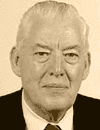
John Jewell
The sermon emphasizes the importance of following the institution of Christ in the Holy Communion, and warns against the idolatry and error of the Mass.
John Jewell, Bishop of Salisbury, passionately speaks against the practices of the Roman Catholic Church, particularly focusing on the Holy Communion and the Mass. He challenges the congregation to reflect on the discrepancies between the teachings of the Church of Rome and the original instructions of Christ and the apostles. Jewell urges the listeners to search the Scriptures, judge their own actions, and not be swayed by blind traditions or emotions. He emphasizes the importance of partaking in the Lord's Supper with true understanding and reverence, aligning with God's truth and worshiping in spirit and truth.
Text
John Jewell, Bishop of Salisbury, was born in 1522, at the village of Buden, near Ilfracombe, Devonshire. He studied at Oxford, and in 1546 openly professed the tenets of the Reformers. Having obtained the living of Sunningwell, Berks, he distinguished himself by his zeal and assiduity as a parish priest, but at the accession of Queen Mary, to avoid persecution as a heretic, he escaped to the Continent and became vice-master of a college at Strasbourg.
On the death of Mary he returned to England, and was received with great favour by Queen Elizabeth, who in 1560 appointed him to the Bishopric of Salisbury. He wrote several works against popery; the principal 'An apology for the Church of England', was translated into every European language, and had more effect, it was said, in promoting the Reformation than any other book ever published. Jewell died in 1571.
The sermon from which the following extract is taken was preached at St. Paul's Cross in 1559, and produced an immense sensation. It was afterwards repeated at Court - in it Jewell specified twenty-seven points of doctrine held by the Church of Rome, and offered to become a Papist if any person could produce sufficient evidence that any one of them was held in the Primitive Church for the first six hundred years after Christ. The text was 1 Corinthians 11:30.
On the Holy Communion and the Mass
'Oh that St. Paul were now alive and saw the behaviour of the priest at the mass! Think ye that he would take it and account it for the Lord's Supper? When he had espied but one fault in the holy communion among the Corinthians, straightway he rebuked them, and called them back to Christ's institution. 'This', saith he, 'I received of the Lord, and the same I gave over unto you'.
'But, if he saw the disorder that we have seen, would he not be moved as much against us now, as he was sometime against the Corinthians? Would he not pull us back to the institution of Christ as he did them? Would he not say unto us, Did I ever teach you to minister the holy communion in a strange language? Did I ever teach you to receive the communion privately to yourselves alone, and so to disdain and despise your brethren? Did I ever teach you to minister the communion to the people in one kind? Did I ever teach you to say mass, or to receive the sacrament for the people? Did I ever teach you the idle follies of your canon? Did I ever teach you to offer up the Son of God unto His Father? Did I ever teach you any other propitiatory sacrifice for sin, than that Christ offered upon the Cross? Did I ever teach you to minister the Lord's Supper wherein the people should do nothing else but look upon and behold your doings, without any kind of knowledge or comfort? Did I ever teach you to lift the sacrament above your head? Did I ever teach the people to fall down thereunto, and to worship they know not what? Be these the things that I delivered unto you? Be these the things that I received of the Lord?
'And if there be any here that have had or yet have any good opinion of the mass, I beseech you for God's sake, even as you tender your own salvation, suffer not yourselves wilfully to be led away, run not blindly to your own confusion. Think with yourselves, it was not for nought that so many of your brethren rather suffered themselves to die and to abide all manner of extremity and cruelty, than they would be partakers of that thing that you reckon to be so holy.
'Let their death, let their ashes, let their blood, that was so abundantly shed before your eyes, somewhat prevail with you, and move you. Be not ruled by your wilful affections. Ye have a good zeal and mind towards God; have it according to the knowledge of God. The Jews had a zeal of God, and yet they crucified the Son of God.
'Search the Scriptures, there shall ye find everlasting life. There shall ye learn to judge yourselves and your own doings, that ye be not judged of the Lord. If ever it happen you to be present again at the mass, think but thus with yourselves - What make I here? What profit have I of my doings? I hear nothing. I understand nothing. I am taught nothing. I receive nothing. Christ bade me eat; I eat nothing. Christ bade me drink; I drink nothing. Is this the institution of Christ? Is this the Lord's Supper? Is this the right use of the holy mysteries? Is this it that Paul delivered unto me? Is this it that Paul received of the Lord? Let us say but thus unto ourselves, and no doubt God of His mercy will open our hearts; we shall see our errors, and content ourselves to be ordered by the wisdom of God; to do that God will have us to do; to believe that god will have us to worship. So shall we have comfort of the holy mysteries; so shall we receive the fruits of Christ's death; so shall we be partakers of Christ's body and blood; so shall Christ truly dwell in us, and we in him; so shall all error be taken from us; so shall we join all together in God's truth; so shall we all be able with one heart and one spirit to know and to glorify the only, the true, and the living God, and His only begotten Son, Jesus Christ; to whom both, with the Holy ghost, be all honour and glory, for ever and ever. Amen.'
Sermon Outline
- The Mass and the Institution of Christ
- The Error of the Mass
- A Call to Repentance
- The True Use of the Holy Mysteries
- The Institution of Christ
- The Fruits of Christ's Death
- The Comfort of the Holy Mysteries
Key Quotes
“Oh that St. Paul were now alive and saw the behaviour of the priest at the mass!” — Ian Paisley
“Did I ever teach you to minister the holy communion in a strange language?” — Ian Paisley
“Search the Scriptures, there shall ye find everlasting life.” — Ian Paisley
Application Points
- We should be careful not to let our affections lead us away from the truth, but rather follow the wisdom of God.
- We should search the Scriptures to learn to judge ourselves and our own doings.
- We should partake in the Holy Mysteries in a way that is in line with the institution of Christ, and receive the fruits of Christ's death.