
Movements in Latin America - Part 1
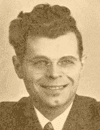
J. Edwin Orr highlights the powerful revival movements in Latin America, emphasizing God's faithfulness and the enduring impact of spiritual awakenings despite political and social challenges.
This sermon reflects on past revivals in Cuba and Brazil, highlighting the powerful movements of God that swept through these nations despite challenges and opposition. It emphasizes the importance of seeking revival and the faithfulness of God in sustaining His work even in difficult circumstances.
Full Transcript
One reaction we get from people who hear about these great times of revival in the past is, why don't the things happen like that today? Did you know that in Cuba, which is the problem child of the Americas, a great movement of revival began in 1950? In Santiago de Cuba, in the east, an evangelist came to hold two weeks of meetings. Soon there were 15,000 gathering each night, and a mighty wave of revival began sweeping all over Cuba. In Valles, a very small place, 10,000 people were gathered on the North Shore.
Great meetings, outdoors, everywhere. There wasn't a church or a theater able to accommodate the multitudes. In Hogan, a church of 2,400 was born in less than three weeks, and an offering of $9,000 was made by poor converts, even just enough to purchase a disused shoe factory, which they used as a sanctuary.
In 1951, another evangelist from Phoenix, Arizona, began with great overflowing crowds in Havana, and the work accomplished was reported as something that several missionaries couldn't have done in a lifetime. One of the leaders, H.C. Ball, insisted that all the churches in Cuba enjoy the benefits of this revival, which had strong Pentecostal charismatic overtones. Now, as I said to you before, there have been many great awakenings without all these accompanying signs.
But in Cuba, it had these overtones. For instance, the Episcopalians increased to 3,700, Presbyterians 3,200, Methodists 8,000, the Baptists 14,710. And by the end of the fifties, there were 264,927 evangelical Christians in the Cuban population.
And that, of course, would include only active church members. During the first two years of the awakening, there were prophetic messages with regularity that the revival would flow like waters from an artesian well all over the islands. But the trouble with the government would put a stop to this great flow of living water.
In 1952, Batista set up his dictatorship and began to suppress the churches. Many Christians were stoned, some were killed, others lost their homes just because they didn't support Batista. But then, of course, what happened was they thought they were going to be delivered by Castro.
And, of course, when Castro took over, he eased all the missionaries out. Yet the work of God has continued. You must not assume that under a communist dictatorship the work of God stops.
It does not. But it seems to be rather interesting that God sends revival like that before trouble comes. Not always the case.
I could talk to you about revival in other parts of the Caribbean, but there wouldn't be time. Perhaps I may give you something of a personal testimony of the great revival in Brazil that began in 1951. Now, in 1951, I had a strong urge to go to South America.
My wife wasn't too happy about it. We've been married 44 years. I'm sure I've been out of the country more than 22 of the 44.
Now, a missionary in the field has his wife with him. Sometimes they have to send their children home to school. But in this particular case, I've had these long separations for the sake of the gospel.
My wife said, you're just restless. I said, no, I feel I must go. So I gave her all the money I had.
I didn't have a salary. I didn't have much money, but I gave it to her. And I started off with San Diego.
I preached for Youth for Christ. They gave me a thank offering. Went across to Tijuana and flew on the Mexican Airlines down to Mexico and on down to San Jose in Costa Rica.
There I ran out of money. When I arrived there, Kenneth Strachan, a very famous Latin American missionary, said, you couldn't have come at a better time. They had just moved the language school from Colombia because of the Civil War to Costa Rica.
And so I had a week of meetings with American students of every denomination, and we saw a revival among those students. My big problem was, how do I go on from here? I went to Pan American on Saturday morning, and I said, I want to fly on Monday right across the top of South America across to Trinidad. I think the fare at that time was about $239, something like that.
I didn't have it. They said, because you're not Costa Rican, you must pay in American dollars. Where was I to get the money? I was told, also, you must get your ticket before 12 o'clock noon, because the plane leaves at 5 o'clock in the morning, and their new office is open on Monday morning.
I was walking up and down outside Pan American office when a jeep pulled up, and there was Kenneth Strachan with the president of the student body. They said, we've been looking for you. I said, well, here I am.
I'm down to talk about my travel. They said, you know, we took up an offering behind your back, and we didn't have time to bank it or give you a check, so we just brought it here in American dollars. I said, how much? It was 29 cents more than I needed.
Maybe I shouldn't have done it, but I blurted out, I said, what an answer to prayer it was. Kenneth Strachan said, look, I have an air credit card. You take my card and buy your ticket right around South America, back to Los Angeles.
I said, no, thank you. I'm not going to borrow money to do it. The Lord can provide.
Well, you've got to eat. They always feed you meals on the plane. So I traveled on down.
Went to Brazil, spoke in the cathedral in Rio. One minister got up and said, it's interesting to hear of these great revivals in other countries in other centuries, but we don't expect such revival in Brazil where Protestants are a minority. I got up again.
I said, I'm from Ireland, and in Ireland the Protestants are a minority, but we've seen great revivals in Ireland. We went to Sao Paulo, and after I left, got back to Los Angeles, I found that 81 churches had started weekly prayer meetings for revival in Brazil. So I said to my wife, let's go down there for a year.
She said, what about the children's schooling? And we'll find a place. So we went down. You say, how was it provided for? I got a letter from the Presbyterian Church of Brazil through the Presbyterian Church of the United States of America asking me to go down and help the Presbyterians celebrate their centenary.
I'm a Baptist minister. Why did they want me to come? Well, they said that 1959 would be the 100th anniversary of the first missionaries to Brazil. They thought the best way to prepare for it was tell them what to do to pray for revival.
I wrote and said, well, I'll come. If you invite the Baptists and the Methodists and the other denominations to join. When I got back down there, I was disappointed.
The commission told me, we don't want you to preach. I don't understand. They said, Brazil is very nationalistic.
There are more than 50 million of us here. And the people say, if this man wants to talk to us, why didn't he learn our language? He said, you couldn't learn it in time. But most pastors and theological students speak some English.
And you can lecture to them. I was disappointed. On Friday, the secretary of the commission...
Sermon Outline
-
I
- Overview of revival movements in Cuba in the 1950s
- Impact of political opposition on the church
- Growth of evangelical membership despite challenges
-
II
- Personal testimony of revival in Brazil starting in 1951
- Challenges faced in missionary work and travel
- Encouragement from local churches and prayer meetings
-
III
- The role of prayer and faith in sustaining revival
- God’s provision in difficult circumstances
- The importance of interdenominational cooperation
-
IV
- Lessons from past revivals for today’s church
- The continuing work of God under adverse regimes
- Call to seek revival earnestly in the present day
Key Quotes
“Did you know that in Cuba, which is the problem child of the Americas, a great movement of revival began in 1950?” — J. Edwin Orr
“You must not assume that under a communist dictatorship the work of God stops.” — J. Edwin Orr
“The Lord can provide.” — J. Edwin Orr
Application Points
- Trust God’s provision even when resources seem insufficient.
- Engage in regular prayer meetings to seek revival in your community.
- Remain faithful and active in ministry despite political or social opposition.
Frequently Asked Questions
What was the significance of the revival in Cuba?
The revival in Cuba during the 1950s saw massive gatherings and rapid church growth despite political oppression, demonstrating God's power to move even under difficult circumstances.
How did political regimes affect the revival movements?
Dictatorships like Batista's and Castro's government suppressed churches and missionaries, but the work of God continued, showing that revival can persist despite opposition.
Why did J. Edwin Orr go to Brazil?
He felt a strong calling to support the revival movement and was invited by the Presbyterian Church of Brazil to help prepare for their centenary through teaching about prayer and revival.
What role does prayer play in revival according to the sermon?
Prayer is essential for revival, as seen in the establishment of weekly prayer meetings and the emphasis on seeking God’s intervention for spiritual awakening.
Can revival happen where Christians are a minority?
Yes, the sermon highlights that revivals have occurred in places like Ireland and Brazil where Protestants are minorities, showing that God’s work is not limited by numbers.