
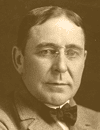
Fourth Day: 'The Lord Is My shepherd.'
J. Wilbur Chapman emphasizes the personal relationship with God as our Shepherd and the assurance of His guidance and love in our lives.
J. Wilbur Chapman emphasizes the profound ownership and comfort found in Psalm 23, illustrating through a touching story of a shepherd boy in Switzerland who held onto the promise 'The Lord is my Shepherd' until his last breath. Chapman encourages believers to claim the fullness of God's attributes and promises as their own, leaving no room for failure or straying from His path.
Text
This psalm belongs to us if we can truthfully say these first five words; then the rest of the psalm is our spiritual possession.
One of my friends was telling me the story of a traveler in Switzerland. He was a Christian. One day he came across a little shepherd boy to whom he told the story of the good Shepherd who had given his life for the sheep. He tried to teach him the twenty-third psalm but the little fellow could not read, and so made slow work of it. At last the man said to him, " I will tell you how to read a part of it on your fingers. Just take the first five words, and you will have a word for each finger." So the little fellow counted the words on his fingers, "The Lord is my Shepherd." This was only to keep them in his memory.
A while after that the same traveler was passing through Switzerland again, and thought he would look up his little shepherd boy. He came to the place where he had lived, and was met by the mother of the lad, who in answer to the inquiry concerning her boy said that he was dead. The gentleman expressed his sorrow, and said that he had hoped to see him again.
Then the mother said, "Are you the man that taught my boy to say something on his fingers?" He replied that he was, Then she said to him, "My boy, just before he died, told me to tell you, if you ever came this way again, that he died holding the fourth finger of his hand." The little fellow was just laying claim to the possessive pronoun "my."
I think I should like to die like that. But it is better far to know that we may live claiming this promise. He is my shepherd--all that he is is mine, his mind, his peace, his meekness, his gentleness, indeed, his spirit, all my own.
There is surely thus no excuse for failure, and there can be no reason why we should go astray.
"Thou art my light and my salvation;
Of whom shall I be afraid?"
SUGGESTIONS FOR TODAY.
1. Try to realize that everything in the good Shepherd is yours for today just as truly as if there were no one else to be considered but yourself.
2. By an act of appropriating faith lay claim to everything in him that you lack in yourself, his patience for your impatience, his strength for your weakness. In every case claim from him the grace opposite to your failing.
3. Remember that no mistake of yours in the past affects his love for today. The record is all clean; you can make it what you will.
Sermon Outline
- I points: - Understanding the significance of 'The Lord is my Shepherd' - The personal relationship with the Shepherd - The implications of claiming Him as our Shepherd
- II points: - The story of the shepherd boy and the traveler - The importance of memory in faith - The impact of teaching faith to others
- III points: - The assurance of His presence in our lives - Claiming His attributes as our own - Living without fear through faith
- IV points: - The promise of His guidance - The call to lay claim to His strength - Embracing His love regardless of past mistakes
Key Quotes
“He is my shepherd--all that he is is mine, his mind, his peace, his meekness, his gentleness, indeed, his spirit, all my own.” — J. Wilbur Chapman
“Thou art my light and my salvation; Of whom shall I be afraid?” — J. Wilbur Chapman
“Remember that no mistake of yours in the past affects his love for today.” — J. Wilbur Chapman
Application Points
- Realize that everything in the good Shepherd is yours for today.
- Lay claim to the attributes of Christ that you lack in yourself.
- Understand that God's love remains unchanged by your past mistakes.