
Questions/answers About the Trinity
The Trinity is a fundamental doctrine of Scripture, affirming one God in three persons.
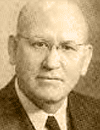
James Blaine Chapman delves into the question of the Trinity's eternal existence within the Godhead, drawing insights from Hebrews 1:4, 5 and John 1:1-14. He affirms that the Trinity, consisting of Father, Son, and Holy Ghost, has always existed in one essence but manifested in three persons, as revealed in the Scriptures. Chapman emphasizes the uniqueness of the Trinity as a divine mystery that cannot be fully understood through natural analogies or human consciousness.
Text
QUESTION #298 -- From Hebrews 1:4, 5 arose the question, "Did the Trinity always exist in the Godhead?" (Although John 1:1-14 seems to answer the question.)
ANSWER #298 -- Yes, I think John 1:1-14 does answer the question-in the affirmative. The adorable Godhead is one in essence, but is manifested in three persons, Father, Son and Holy Ghost, and we do not know any way there could be a change in either the essence or the manifestation in either the past or the future. But remember that the Trinity is simply a fact of the Scripture -- the Scriptures holding both that there is one God and also that the Father is God, the Son is God, and the Spirit is God -- and that we are not to look for analogies in nature or for differentiations in consciousness.
* * *
QUESTION #299 -- Is the Father, Son and Holy Ghost one being in three personalities? What is the teaching of the Church of the Nazarene concerning the trinity?
ANSWER #299 -- The Church of the Nazarene holds to the historic orthodox tenets regarding this difficult thesis. The basis of the matter in the Bible is this: the Bible teaches there is only one God. It also teaches that the Father is God, that the Son is God, and that the Holy Spirit is God. And the only way two such lines of teaching can be worked out is the way it has been done by Trinitarians down through the centuries. Those who hold to the idea that Jesus was but a man and the Holy Spirit is just an influence of course have no difficulty in believing and teaching the unity of God. But they do find it positively necessary to reject some of the very plainest statements of the Bible and ignore the clearest implications of Christian consciousness. But statements on this subject have to be made with great care lest they say either too much or too little. The most approved wording of the tenet is that God is one in essence and three in personal manifestation. He cannot be one and three in the same sense. The relation of the three persons in the Godhead is described as generation and procession. Jesus Christ is the only begotten Son of God. Angels are created sons, men may be redeemed sons, but Jesus is the only one with the relation of begotten. The Holy Spirit proceeds from the Father and from the Son, but in precisely what manner we cannot tell. Trinity is a doctrine of the Scriptures and has no analogies in nature. Some have said man is a trinity: spirit, soul and body. But here we have three essences in one person, while the trinity is three persons in one essence and that is no analogy. And it is like that with every illustration that has yet been proposed. So the whole subject stands just as first stated: God is one, but the Father is God, the Son is God and the Spirit is God-three in one, hence trinity. This is our faith as founded upon the holy Bible, and we are not polytheists, even though we worship three persons as God, for these three persons are one in essence.
Sermon Outline
- The Trinity: A Fact of Scripture
- Working Out the Trinity
- Understanding the Trinity
- The Church of the Nazarene's Teaching
- One in essence, three in personal manifestation
- The Holy Spirit proceeds from the Father and the Son
- Generation and procession
Key Quotes
“The Bible teaches there is only one God.” — James Blaine Chapman
“The relation of the three persons in the Godhead is described as generation and procession.” — James Blaine Chapman
“The Trinity is a doctrine of the Scriptures and has no analogies in nature.” — James Blaine Chapman
Application Points
- We must understand the Trinity as a doctrine of Scripture, rather than trying to find analogies in nature.
- The Trinity is not a polytheistic concept, but rather a way of understanding the one God in three persons.
- The relationship between the Father, Son, and Holy Spirit is one of generation and procession.