
Questions/answers on Fasting
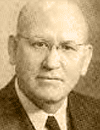
James Blaine Chapman discusses the principles and practices of fasting, emphasizing its spiritual significance and health considerations.
James Blaine Chapman discusses the practice of fasting, emphasizing the importance of considering one's health and personal circumstances when deciding to fast. He distinguishes between full and partial fasting, suggesting that each individual should choose the type of fasting that suits their situation. Chapman highlights that true holiness of heart and righteousness of conduct are more crucial than outward forms and practices like fasting, as seen in Isaiah 58. He encourages regular and systematic fasting as a spiritual discipline, comparing it to the importance of consistent Bible reading and prayer.
Text
QUESTION #78 -- I would like to ask a few questions on the subject of fasting: Should one fast even when to do so is to jeopardize the health? Does fasting involve complete abstinence from food and drink (I have been told that the Jews sometimes counted it fasting when they yet used water and simple food to keep up their strength)? What is the teaching of Isaiah 58 on fasting (does it teach that blessings are to be received on the condition of fasting, or does it teach that all forms are useless if the heart is sinful)?
ANSWER #78 -- No, I think one should not fast to the detriment of his health. Take a mother of children whose daily toll taxes her strength and her nerves: in my judgment such a one should confine herself to partial abstinence, and not undertake extended fasts. While people who have no children and no great drain upon the nervous system can assume a standard of fasting much more rigorous. Fasting was and is of both kinds: full and partial, and either kind is good, and one or the other is adapted to everyone. I would not take Isaiah 58 for a stronghold on fasting; for as you suggest in your alternatives, the thought there is that fasting and all outward forms and practices are mockery in the absence of true holiness of heart and righteousness of conduct.
* * *
QUESTION #79 -- Please explain Matthew 6:17: "But thou, when thou fastest, anoint thine head, and wash thy face."
ANSWER #79 -- You should read the following verse in connection with this one. It says, "That thou appear not unto men to fast, but unto thy Father which is in secret: and thy Father, which seeth in secret, shall reward thee openly." I judge you are not troubled about the literal side of this commandment, for that part of it was local and current, referring only to the customary way of indicating that you are prepared for the usual duties of the day. To us that would mean -- Well, this is fast day with me. Yet I got up this morning and shaved, put on a clean collar, and have made no appeal to anyone today -- not even to the mentioning that I am fasting. For I am not fasting unto men but unto God. That is what the text means to me.
* * *
QUESTION #80 -- Please give some suggestions regarding fasting. How often should one fast, and for how long?
ANSWER #80 -- A thoughtful minister said, "Fasting is to the soul what sleep is to the body." And if there is any truth at all in this comparison, then it seems that every Christian should fast at least once a week or oftener. There is only one limit I would place on the practice of fasting, and that is that one should not carry it far enough to jeopardize his health. I have found fasting a very great means of grace and an assistant to my efforts to pray.
* * *
QUESTION #81 -- Is any good accomplished by fasting one or more meals a week or should we wait until the Lord puts a fast on us?
ANSWER #81 -- There is advantage in the regular and systematic practice of fasting, just as there is advantage in regular and systematic Bible reading and prayer. The fact that the voluntary faster gets hungry in no wise detracts from the spiritual advantage of the practice, and, like prayer, one is much more likely to be trusted with a fast from the Lord if he is faithful in observing fasting as a rule than if he goes on without any regularity in the matter.
Sermon Outline
- I points: - Definition of Fasting - Types of Fasting - Health Considerations
- II points: - Biblical References to Fasting - Isaiah 58 Interpretation - Matthew 6:17 Context
- III points: - Frequency of Fasting - Duration of Fasting - Spiritual Benefits of Fasting
- IV points: - Fasting and Prayer Connection - Personal Experiences with Fasting - Encouragement for Regular Fasting
Key Quotes
“Fasting is to the soul what sleep is to the body.” — James Blaine Chapman
“I would not take Isaiah 58 for a stronghold on fasting.” — James Blaine Chapman
“The voluntary faster gets hungry in no wise detracts from the spiritual advantage of the practice.” — James Blaine Chapman
Application Points
- Consider incorporating regular fasting into your spiritual routine for deeper connection with God.
- Evaluate your health before deciding on the type and duration of fasting you undertake.
- Remember that fasting should be a private act of devotion, not a public display.