
Fire, Oil, Water & Wind: Trying to Control the Holy Spirit
The Holy Spirit's sovereignty and freedom in the Church should never be fettered by unscriptural rules, rituals, or liturgies, lest we quench His power and lose spiritual liberty.
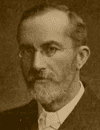
James Denney emphasizes the importance of recognizing the sovereignty of the Holy Spirit in the Church, highlighting the need for flexibility to allow the Spirit to move as He pleases, even if it means uncontrollable and unpredictable behavior symbolized by fire, oil, water, and wind. Denney warns against quenching the Spirit by imposing human controls, formalism, and ritualism, which can lead to the loss of the Church's power. He explains how the early Church's fervor and enthusiasm were often stifled by those seeking order and control, ultimately hindering the free expression of spiritual gifts and zeal.
Text
The Holy Spirit is the Representative of Christ in the Church. The local church should always recognize the sovereignty of the Spirit. By this we mean that He can do as He pleases, and that He will not always choose to do things in exactly the same way, though He will never act contrary to the Word. The symbols of the Spirit used in the Scriptures -fire, oil, water, wind -speak of uncontrollable and unpredictable behavior. Therefore the wise Christian will be flexible in order to allow the Holy Spirit this divine prerogative. It was so in the early church, but soon people became uneasy with meetings that were "free and social, with the minimum of form." Thus controls were added and formalism and ritualism took over. The Holy Spirit was quenched, and the church lost its power.
This shift from the freedom of the Spirit to human control has been described by James Denney. Commenting on the verse, "Quench not the Spirit," he says: "In the First Epistle to the Corinthians Paul describes a primitive Christian congregation. There was not one silent among them. When they came together every one had a psalm, a revelation, a prophecy, an interpretation. The manifestation of the Spirit had been given to each one to profit withal; and on all hands the spiritual fire was ready to flame forth. Conversion to the Christian faith, the acceptance of the apostolic Gospel, was not a thing which slightly effected men: it convulsed their whole nature to its depth; they were never the same again; they were new creatures, with a new life in them, all fervor and flame. In a primitive church anybody who pleased might speak -when it would have been better for him to be silent. It might lead him to break out in prayer or praise or exhortation, in a style which made the wise sigh. And for those reasons the wise, and such as thought themselves wise, would be apt to discourage the exercise of spiritual gifts altogether. Contain yourself,' they would say to the man whose heart burned within him, and who was restless till the flame could leap out; contain yourself; exercise a little self-control; it is unworthy of a rational being to be carried away in this fashion.
It is forbidden to pour cold water on such enthusiasm when it breaks forth in words of fire. That is the meaning of 'Quench not the Spirit.' The commandment presupposes that the Spirit can be quenched. Cold looks, contemptuous words, silence, studied disregard, go a long way to quench it. So does unsympathetic criticism. Everyone knows that a fire smokes most when it is newly kindled; but the way to get rid of the smoke is not to pour cold water on the fire, but to let it burn itself clear. When you meet with a disciple whose zeal burns like fire, very likely the smoke hurts your eyes; but the smoke will soon pass by; and it may well be tolerated in the meantime for the sake of heat. For this apostolic precept takes for granted that fervor of spirit, a Christian enthusiasm for what is good, is the best thing in the world. It may be untaught and inexperienced; it may have all its mistakes to make; it may be wonderfully blind to the limitations which the stern necessities of life put upon the generous hopes of man: but it is of God; it is expansive; it is contagious; it is worth more as a spiritual force than all the wisdom in the world.
I have hinted at ways in which the Spirit is quenched; it is sad to reflect that from one point of view the history of the Church is a long series of transgressions of this precept, checked by an equally long series of rebellions of the spirit. 'Where the Spirit of the Lord is,' the Apostle tells us elsewhere, 'there is liberty.' But liberty in a society has its dangers; it is, to a certain extent, at war with order; and the guardians of order are not apt to be too considerate of it. Hence it came to pass that at a very early period, and in the interests of good order, the freedom of the Spirit was suppressed in the Church. 'The gift of ruling,' it has been said, like Aaron's rod, seemed to swallow up the other gifts. The rulers of the Church became a class entirely apart from its "ordinary" members, and all exercise of spiritual gifts for the building up of the Church was confined to them. Nay, the monstrous idea was originated, and taught as a dogma, that they alone were the custodians of the grace and truth of the gospel; only through them could men come into contact with the Holy Ghost. In plain English, the Spirit was quenched when Christians met for worship. One great extinguisher was placed over the flame that burned in the hearts of the brethren; it was not allowed to show itself; it must not disturb, by its eruption in praise or prayer or fiery exhortation, the decency and order of divine service. I say that was the condition to which Christian worship was reduced at a very early period; and it is unhappily the condition in which, for the most part, it exists at this moment."
The Church then, should never fetter the Holy Spirit, either with unscriptural rules, stereotyped programs, rituals, or liturgies. How grieved the Holy Spirit must often be by rigid understandings that a meeting must end at a certain time, that a service must always follow a certain routine! Such regulations often attempt to manipulate and control the Church, resulting in the loss of spiritual power
Sermon Outline
-
I
- The Holy Spirit's sovereignty in the Church
- Recognizing the Spirit's uncontrollable and unpredictable behavior
-
II
- The symbols of the Spirit in Scripture
- Fire, oil, water, and wind - speaking of uncontrollable and unpredictable behavior
-
III
- The early church's freedom and flexibility
- The shift from freedom to human control and the loss of spiritual power
-
IV
- Quenching the Spirit
- Cold looks, contemptuous words, silence, and unsympathetic criticism
-
V
- The importance of fervor and enthusiasm in the Church
- The Spirit's power and freedom in worship
Key Quotes
“In the First Epistle to the Corinthians Paul describes a primitive Christian congregation. There was not one silent among them.” — James Denney
“Conversion to the Christian faith, the acceptance of the apostolic Gospel, was not a thing which slightly effected men: it convulsed their whole nature to its depth; they were never the same again; they were new creatures, with a new life in them, all fervor and flame.” — James Denney
“Where the Spirit of the Lord is, there is liberty.” — James Denney
Application Points
- We should be sensitive to the Holy Spirit's leading and allow Him to work freely in our lives.
- We should avoid rigid rules and regulations in our worship and create an atmosphere of freedom and flexibility.
- We should cultivate fervor and enthusiasm in our worship, recognizing that it reflects the Spirit's power and freedom.