
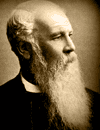
Expository Thoughts On John - JOHN 5:30-39
J.C. Ryle expounds on John 5:30-39, emphasizing the multiple divine testimonies that confirm Jesus as the Messiah and urging believers to recognize the evidences of Christ’s mission and the faithfulness of His servants.
In this expository sermon on John 5:30-39, J.C. Ryle carefully unfolds the multiple testimonies that affirm Jesus Christ as the promised Messiah. He highlights the divine witness of the Father, the faithful testimony of John the Baptist, the undeniable power of Jesus’ miracles, and the Scriptures that point to Him. Ryle challenges believers to recognize these evidences and trust in Christ’s mission while encouraging faithfulness amidst trials.
Text
I can do nothing on my own initiative. Just as I hear, I judge, and my judgment is just, because I do not seek my own will, but the will of the one who sent me.
"If I testify about myself, my testimony is not true. There is another who testifies about me, and I know the testimony he testifies about me is true. You have sent to John, and he has testified to the truth. (I do not accept human testimony, but I say this so that you may be saved.) He was a lamp that was burning and shining, and you wanted to rejoice greatly for a short time in his light.
"But I have a testimony greater than that from John. For the deeds that the Father has assigned me to complete--the deeds I am now doing--testify about me that the Father has sent me. And the Father who sent me has himself testified about me. You people have never heard his voice nor seen his form at any time, nor do you have his word residing in you, because you do not believe the one whom he sent. You study the scriptures thoroughly because you think in them you possess eternal life, and it is these same scriptures that testify about me.
In these verses we see the proof of our Lord Jesus Christ being the promised Messiah, set forth before the Jews in one view. Four different witnesses are brought forward. Four kinds of evidence are offered. His Father in heaven--His forerunner, John the Baptist--the miraculous works He had done--the Scriptures, which the Jews professed to honor--each and all are named by our Lord, as testifying that He was the Christ, the Son of God. Hard must those hearts have been which could hear such testimony; and yet remain unmoved! But it only proves the truth of the old saying--that unbelief does not arise so much from lack of evidence, as from lack of will to believe.
Let us observe for one thing in this passage, the honor Christ puts on His faithful SERVANTS. See how He speaks of John the Baptist. "He bore witness of the truth"--"He was a burning and a shining light." John had probably passed away from his earthly labors when these words were spoken. He had been persecuted, imprisoned, and put to death by Herod--none interfering, none trying to prevent his murder. But this murdered disciple was not forgotten by his Divine Master. If no one else remembered him, Jesus did. He had honored Christ, and Christ honored him.
These things ought not to be overlooked. They are written to teach us that Christ cares for all His believing people, and never forgets them. Forgotten and despised by the world, perhaps, they are never forgotten by their Savior. He knows where they dwell, and what their trials are. A book of remembrance is written for them. "Their tears are all in His bottle." (Psalm 56:8.) Their names are engraved on the palms of His hands. He notices all they do for Him in this evil world, though they think it not worth notice, and He will confess it one day publicly, before His Father and the holy angels. He that bore witness to John the Baptist never changes. Let believers remember this. In their worst estate they may boldly say with David--"I am poor and needy; yet the Lord thinks upon me." (Psalm 40:17.)
Let us observe, for another thing, the honor Christ puts upon MIRACLES, as an evidence of His being the Messiah. He says--"The works which the Father has given me to finish, the same works that I do, bear witness of me that the Father has sent me."
The miracles of the Lord receive far less attention, in the present day, as proofs of His Divine mission, than they ought to do. Too many regard them with a silent incredulity, as things which, not having seen, they cannot be expected to care for. Not a few openly avow that they do not believe in the possibility of such things as miracles, and would like to strike them out of the Bible as weak stories, which, like burdensome lumber, should be cast overboard, to lighten the ship.
But, after all, there is no getting over the fact, that in the days when our Lord was upon earth, His miracles produced an immense effect on the minds of men. They aroused attention to Him who worked them. They excited inquiry, if they did not convert. They were so many, so public, and so incapable of being explained away, that our Lord\
Sermon Outline
-
I. The Testimony of the Father
- Jesus does nothing on His own but follows the Father’s will
- The Father’s voice and works testify to Jesus’ divine mission
- Believers lack the word of God within due to unbelief
-
II. The Testimony of John the Baptist
- John as a burning and shining light
- Jesus honors faithful servants even after death
- Believers are never forgotten by Christ
-
III. The Testimony of Miracles
- Miracles as proof of Jesus’ Messiahship
- Contemporary skepticism about miracles
- Miracles attracted attention and inquiry in Jesus’ time
-
IV. The Testimony of the Scriptures
- Scriptures testify about Jesus as the Christ
- Jews study scriptures but fail to recognize Christ
- Unbelief stems from unwillingness, not lack of evidence
Key Quotes
“I can do nothing on my own initiative. Just as I hear, I judge, and my judgment is just, because I do not seek my own will, but the will of the one who sent me.” — J.C. Ryle
“He was a lamp that was burning and shining light.” — J.C. Ryle
“The miracles of the Lord receive far less attention, in the present day, as proofs of His Divine mission, than they ought to do.” — J.C. Ryle
Application Points
- Trust in the multiple divine testimonies that confirm Jesus as the Messiah.
- Remember that Christ honors and never forgets His faithful servants, even in hardship.
- Recognize the importance of miracles as evidence of God's power and Jesus’ divine mission.
Frequently Asked Questions
Why does Jesus say His testimony about Himself is not true?
Jesus explains that His testimony alone is insufficient; true validation comes from the Father and other witnesses like John the Baptist.
How does John the Baptist serve as a witness to Jesus?
John the Baptist is described as a burning and shining light who testified to the truth of Jesus’ mission.
What role do miracles play in proving Jesus’ identity?
Miracles are presented as divine works that confirm Jesus was sent by the Father and validate His Messiahship.
Why do people fail to believe despite the evidence?
Unbelief often arises not from lack of evidence but from a lack of willingness to believe.
How does Jesus view His faithful servants?
Jesus honors and remembers His faithful servants, even those persecuted or forgotten by the world.