
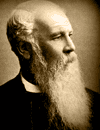
Expository Thoughts On John - JOHN 9:1-12
J.C. Ryle expounds on John 9:1-12 to reveal how Christ’s healing of the man born blind illustrates the spiritual blindness caused by sin and the urgency of responding to God’s work in our lives.
In this expository sermon on John 9:1-12, J.C. Ryle explores the profound spiritual lessons found in the healing of the man born blind. He highlights the sorrow sin has brought into the world and the divine purpose behind Christ’s miracle to reveal God’s glory. Ryle calls believers to recognize their own spiritual blindness, hate sin, and diligently work while there is opportunity, reflecting on Christ’s declaration as the Light of the World.
Text
Healing a Man Born Blind
Now as Jesus was passing by, he saw a man who had been blind from birth. His disciples asked him, "Rabbi, who committed the sin that caused him to be born blind, this man or his parents?" Jesus answered, "Neither this man nor his parents sinned, but he was born blind so that the acts of God may be revealed through what happens to him. We must perform the deeds of the one who sent me as long as it is daytime. Night is coming when no one can work. As long as I am in the world, I am the light of the world." Having said this, he spit on the ground and made some mud with the saliva. He smeared the mud on the blind man’s eyes and said to him, "Go wash in the pool of Siloam" (which is translated "sent"). So the blind man went away and washed, and came back seeing.
Then the neighbors and the people who had seen him previously as a beggar began saying, "Is this not the man who used to sit and beg?" Some people said, "This is the man!" while others said, "No, but he looks like him." The man himself kept insisting, "I am the one." So they asked him, "How then were you made to see?" He replied, "The man called Jesus made mud, smeared it on my eyes and told me, ‘Go to Siloam and wash.’ So I went and washed, and was able to see." They said to him, "Where is that man?" He replied, "I don’t know."
The chapter we now begin records one of the few great works of Christ which John has reported. It tell us how our Lord gave sight to a man who had been "blind from his birth." Here, as elsewhere in this Gospel, we find the circumstances of the miracle narrated with peculiar fullness, minuteness, and particularity. Here too, as elsewhere, we find the narrative rich in spiritual lessons.
We should observe, first, in this passage, how much sorrow sin has brought into the world. A sorrowful case is brought before us. We are told of a man "who was blind from his birth." A more serious affliction can hardly be conceived. Of all the bodily crosses that can be laid on man, without taking away life, none perhaps is greater than the loss of sight. It cuts us off from some of the greatest enjoyments of life. It shuts us up within a narrow world of our own. It makes us painfully helpless and dependent on others. In fact, until men lose their eyesight, they never fully realize its value.
Now blindness, like every other bodily infirmity, is one of the fruits of sin. If Adam had never fallen, we cannot doubt that people would never have been blind, or deaf, or mute. The many ills that flesh is heir to, the countless pains, and diseases, and physical defects to which we are all liable, came in when the curse came upon the earth. "By one man sin entered into the world, and death by sin." (Rom. 5:12.)
Let us learn to hate sin with a godly hatred, as the root of more than half of our cares and sorrows. Let us fight against it, mortify it, crucify it, and abhor it both in ourselves and others. There cannot be a clearer proof that man is a fallen creature than the fact that he can love sin and take pleasure in it.
We should observe, secondly, in this passage, what a solemn lesson Christ gives us about the use of opportunities. He says to the disciples who asked Him about the blind man, "I must work while it is called today--the night comes, when no man can work."
That saying was eminently true when applied to our Lord Himself. He knew well that his own earthly ministry would only last three years altogether, and knowing this He diligently redeemed the time. He let slip no opportunity of doing works of mercy, and attending to His Father\
Sermon Outline
-
I. The Reality of Sin’s Sorrow
- The man’s blindness as a serious affliction
- Blindness as a consequence of the Fall
- Sin as the root of human suffering
-
II. Christ’s Purpose in Healing
- Healing to reveal the works of God
- Jesus as the Light of the World
- The miracle as a sign of divine mercy
-
III. The Urgency of Doing God’s Work
- The call to labor while it is day
- Christ’s limited earthly ministry
- The importance of redeeming the time
-
IV. Lessons for Believers Today
- Hating sin with a godly hatred
- Recognizing spiritual blindness
- Responding promptly to God’s opportunities
Key Quotes
“A more serious affliction can hardly be conceived. Of all the bodily crosses that can be laid on man, without taking away life, none perhaps is greater than the loss of sight.” — J.C. Ryle
“Let us learn to hate sin with a godly hatred, as the root of more than half of our cares and sorrows.” — J.C. Ryle
“I must work while it is called today--the night comes, when no man can work.” — J.C. Ryle
Application Points
- Recognize and hate sin as the root cause of spiritual and physical brokenness.
- Respond promptly to God’s calling, making the most of every opportunity to serve Him.
- Trust in Jesus as the Light who brings both physical and spiritual sight.
Frequently Asked Questions
Why was the man born blind according to Jesus?
Jesus explained that neither the man nor his parents sinned, but he was born blind so that God’s works might be displayed in him.
What does the healing of the blind man teach about sin?
It shows that physical afflictions like blindness are consequences of sin entering the world, highlighting the deep sorrow sin brings.
What does Jesus mean by 'I must work while it is day'?
Jesus emphasizes the urgency of doing God’s work during the limited time available before the coming 'night' when no work can be done.
How does this passage reveal Jesus’ identity?
Jesus declares Himself the Light of the World, showing His divine power to bring spiritual and physical sight.
What practical lesson does Ryle draw from this miracle?
Believers should hate sin, recognize their spiritual blindness, and seize every opportunity to serve God diligently.