
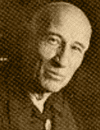
Detachment
John Follette's sermon emphasizes the importance of detachment and divine direction in the life of a believer as part of the Body of Christ.
John Follette emphasizes the importance of Christ being the Head of the Church, directing all actions and decisions. He highlights the need for the Body of Christ to receive direction from the Head rather than acting independently, leading to a feeble Church lacking life. Follette stresses the significance of detaching from self-direction and allowing the Lord to guide and execute through us as members of His body. He discusses the necessity of detachment in trials and difficulties, urging believers to step back, gain a new perspective from the Lord's view, and regain a proper sense of values and proportion.
Text
Christ is the Head of the Church, His Body. I thank God for this wonderful Body of His that is
throughout the earth. All direction for this Body is to come from the Head. The Lord does not expect
my hand to be my brain. Rather, He expects my hand to serve as my mind directs.
Thus, nothing should originate within the Body. However, there should be a receptivity within the
Body to perform that which is directed from the Head. We forget this when we become overly
concerned about this or that and begin to move about on our own. This is one reason why our Church,
the Body of Christ, is so feeble. It lacks life because it does not know how to live from the living Head.
Instead, it tries to produce what it feels the Head may want to do.
The program must originate with the Head. He only asks us to function. He clearly tells us that we are
the members, not the Head. "Now ye are the body of Christ, and members in particular" (I Cor 12:27).
It takes us a long time to discover this, because we are so accustomed to directing from our own Head,
and our body doing it. But the Lord is saying to us, "No, not this. Now you have become a particular
member in My great body of which I am the Head. All direction, all doings must originate with me."
He has to have us as a body through which He executes, lives, and moves.
What a burden would be lifted from us if only we could believe Him. We direct our own little traffic.
How do we know how to do this? Because we have always done this. Sometimes the Lord has to do
some very shocking things to get us out of this old groove of self-direction. Because we are not doing
bad things, we feel justified in our attempting to be the Head. It takes a long time for the Lord to get us
out of this, because we are geared to it.
My mother kept an album of pictures from when we were tiny tots, on up. When I went home to visit,
we would get out this album and look at the pictures. I would say, "Mom, I never looked like that." She
would answer, "Yes, you did." "Did I actually dress like that?" There were the pictures to prove it. I
look back in my spiritual life and say, "Lord did I really do that?" He said, "Yes." "Did I really think
that?" "Yes."
We will have gained a real victory when we are able to step out of ourselves; then look at ourselves, and
laugh. No one wants to be laughed at, but you can laugh with them. It will save you a lot of pain. This is
one of the first signs of maturity.
Alone with this is the idea of detachment. I was involved in the process of overcoming a difficulty that
I did not feel accountable for. I said, "Lord, this is none of my doings, and I want to get out of it." This
is because we want to save our hides. No one seeks trouble; we will side step it, just as long as we can,
until the Lord takes us by the ear and says, "It is necessary for you to go through this difficulty." Have
you ever been involved in trouble that wasn't your fault, and you had to suffer with it?
Some years ago, while I was going through an awful trial, the Lord taught me this lesson which I will
share with you. When a difficulty or trial comes into your experience, it may last weeks, months, or
several years, before it is consummated. When this happens, you become pressed, knowing you
cannot get out from it. Then the Lord came and showed me that when we become involved in a trial or
a testing like this, it becomes possessive and we get under its power. While you are held there, two
things will result. You will lose your sense of proportion - the way you evaluate your situation, and you
will loose your sense of values.
When you are involved like this; to make an escape, or to hurry to get through, will frustrate its
purpose. Your sense of values is too shallow and you will even compromise, because you are not able
to grasp the full value of the thing. The "trouble" has involved you so closely that you have no
perception as to its real character because you are too involved in it.
This is what the Lord told me. He said, "You are to learn 'detachment'. Now you are involved in
'Follette.' You are involved in your conception of this situation, and you are moved by your reactions
because it is affecting you. You will have to learn to gather yourself up and, by faith, step out of this
whole thing until you feel that you are detached from it. When you come over here by Me, you will
look at it from My side."
Right away, I will get an entirely new perspective, because I am no longer looking at it from within my
own experience, I am looking at it from the perspective the Lord has concerning this trial or test. Now
my perspective will be adjusted, and my senses of value will come back to what He has for me.
A parent, for instance, has a certain perception concerning his child which is right and good. But the
child is a projection of the parent. The parent will have an entirely different sense concerning his child
than a person who is absolutely detached. This person could really tell this parent several things, but
he cannot because the parent will defend the child.
Flesh has never hated itself, and this child is a projection of your flesh. This is why a question of
discipline is more clearly explained and helped by a dis-interested person who sees differently than the
parent. Our father and mother instinct will cover and smother a problem that needs to be dealt with. It
takes quite a depth for the parent to say, "Can you help me with this child?"
So it is with us; the Lord must bring us to the place where we will accept "detachment" and begin to see
our problem as He sees it. Then He can bring about the necessary changes in our experience that will
lead us to the spiritual wisdom and maturity that the Lord intended for us.
Sermon Outline
- I points: - Understanding the Body of Christ - The role of Christ as the Head - The importance of receptivity in the Body
- II points: - The dangers of self-direction - Recognizing our limitations as members - The need for divine direction
- III points: - The process of overcoming difficulties - The significance of trials in spiritual growth - Learning detachment from personal struggles
- IV points: - Gaining a new perspective through faith - The role of detachment in understanding - The importance of external viewpoints
- V points: - The relationship between parents and children - The challenge of seeing issues clearly - Accepting help and guidance from others
Key Quotes
“Now ye are the body of Christ, and members in particular.” — John Follette
“You are to learn 'detachment'.” — John Follette
“When you come over here by Me, you will look at it from My side.” — John Follette
Application Points
- Seek to understand your role as a member of the Body of Christ and rely on Christ for direction.
- Practice detachment in your trials to gain a clearer perspective and spiritual insight.
- Be open to receiving guidance from others to help you navigate personal challenges.